
Lawn Fungus Identification: Pictures, Symptoms, Fixes
See the symptom, name the disease, fix it. We cut the fluff and show you how to ID common lawn fungi fast—and what to do in the next 24 hours.
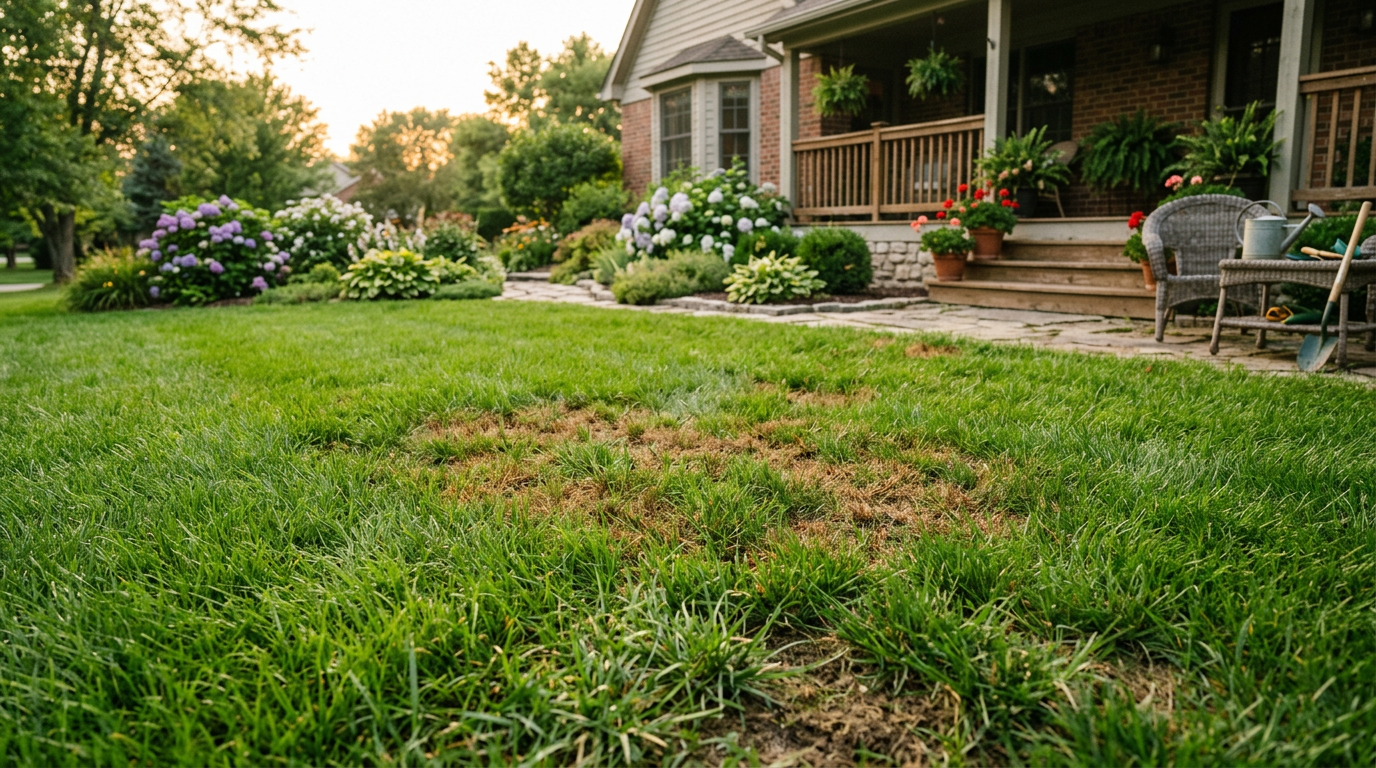
Stop guessing: identify the lawn fungus fast
Most “mystery dead spots” aren’t mysterious. If you can describe the patch shape, what’s on the leaf blade, and when it showed up, you can usually nail the disease in minutes—and fix it before it spreads. We’ve diagnosed hundreds of lawns; here’s the no-gatekeeping version.
Quick ID by symptom
- Brown patch (Rhizoctonia): Smoky brown circles/arcs, 6 in–3 ft. Gray “smoke ring” at dawn. Loves hot, humid nights.
- Dollar spot: Dozens of silver-dollar to bagel-sized straw patches. Leaf blades show hourglass lesions with bleached centers.
- Red thread: Thin pink/red “threads” binding leaves. Patches look ragged, 2–8 in, in cool, wet weather and low N.
- Rust: Orange powder rubs off on socks/mower. Thins turf without big patches at first.
- Snow mold: Circular matted patches after snow melt; gray/white or pink edges. See also Brown Patches in Lawn After Winter: Causes + Fixes.
- Pythium blight: Greasy, water-soaked streaks; cottony mycelium at dawn; explodes during heat + rain.
- Fairy ring: Dark-green rings with/or without mushrooms; sometimes dead zone inside. Mushrooms ≠ always disease; learn why in Why Mushrooms Growing in Lawn Happen + How to Stop Them.
The big 7 (what it hits, when, what it loves)
- Brown patch: Tall fescue, rye, bluegrass in hot, humid weather; overwatering and night irrigation turbocharge it.
- Dollar spot: All cool-season grasses in late spring/fall, especially under low nitrogen.
- Red thread: Fescues and rye in cool, wet periods with lean fertility.
- Rust: Kentucky bluegrass, rye, and zoysia in late summer when growth slows.
- Snow mold (gray/pink): After long snow cover or cool, wet fall.
- Leaf spot/melting out: Bluegrass in spring; worsens with low/mid mowing and stress.
- Pythium blight: Rye/bluegrass/bermuda in heat waves, poor drainage, heavy feeding.
By the numbers: Brown patch typically fires when daytime highs hit ~85°F, nighttime temps stay above 65°F, and leaf wetness exceeds ~10 hours. That’s why evening watering is a bad idea when summer flips “on.” (https://content.ces.ncsu.edu/brown-patch-in-turf)
What to do in the next 24 hours
- Water only at dawn, deeply but infrequently (0.5–1 in/week total). No evening irrigation.
- Mow high with a sharp blade (3–4 in cool-season; 1.5–2.5 in warm-season). Bag clippings if the disease is active and messy.
- Spoon‑feed nitrogen if turf is hungry: 0.25 lb N/1,000 sq ft with a quick‑release source. Dollar spot and red thread hate this.
- Improve airflow: prune, blow off morning dew, skip tarps/leaf piles.
- If patches are racing day-to-day, treat (see below) and mark edges with flags so you can confirm it’s stopped.
We’ve watched dollar spot disappear from our test plots within a week after a light N spoon‑feed and strict AM watering—even without fungicide. Basics matter.
Fungicides that actually work (and how to use them)
- Scotts DiseaseEx Lawn Fungicide (azoxystrobin, FRAC 11): ~$21–$24 for 10 lb, covers 5,000 sq ft. Great broad‑spectrum preventive/early curative.
- BioAdvanced Fungus Control for Lawns (propiconazole, FRAC 3): ~$22–$28, 32‑oz hose‑end treats ~5,000 sq ft. Strong on brown patch, leaf spot, rust.
- Headway G by Syngenta (azoxystrobin + propiconazole, FRAC 11 + 3): ~$85–$95, 30 lb covers ~15,000 sq ft at 2 lb/1,000. Pro‑level rotation anchor.
- Serenade Garden (Bacillus subtilis QST 713): ~$23–$28, 32‑oz concentrate. Lower risk, good as a preventive or between synthetics.
How to win with fungicides:
- Rotate FRAC codes (e.g., 11 → 3 → bio) every 2–3 weeks to avoid resistance.
- Water in granules lightly if label says so; keep foliar products on leaves if that’s the target.
- Treat preventively when conditions are prime or at first symptom, not after half the lawn is toast.
Prevention checklist (boring but undefeated)
- Water at dawn only; avoid nightly leaf wetness.
- Keep thatch under 0.5 in; aerate if spongy.
- Feed balanced; avoid heavy N before heat (brown patch) but don’t starve (dollar spot/red thread).
- Overseed with disease‑tolerant cultivars; mow at the high end for your grass type.
- Fix drainage and compacted areas; don’t scalp edges or hills.
Not fungus: quick look‑alikes
- Grubs: Irregular dead patches that peel up like carpet; check the soil. Start here: White Grubs in Soil Identification: Pictures, Look‑Alikes.
- Dog spots: Straw centers with bright‑green halo.
- Drought/scalping: Follows mower lines or sunny slopes.
- Weeds: Patchy look from invaders; see How to Get Rid of Crabgrass Permanently: Field-Tested Plan and How to Get Rid of Clover in Lawn (Without Wrecking It).
- Mushrooms: Often just feeding on thatch/wood, not turf disease; details in Why Mushrooms Growing in Lawn Happen + How to Stop Them.
Bottom line: identify the pattern, fix the watering and mowing, then pull the right product off the shelf. No mystery degree required.
Frequently asked
How do I tell lawn fungus from grub damage?+
Fungus usually shows patterns (rings, small spots, orange dust, pink threads) and blades with lesions. Grub damage forms irregular dead patches that lift up like a loose carpet, with white C‑shaped grubs in the top 2–3 inches of soil. Dig a square foot at the edge to check.
How fast will fungicide work on lawn diseases?+
If you catch it early and fix watering, progress often stops within 24–72 hours and new growth hides scars in 7–14 days. Advanced patches take longer. Follow label rates, water in or not per label, and rotate FRAC codes to avoid resistance.
Will lawn fungus go away on its own?+
Sometimes. When weather shifts (cooler, drier) and you correct watering, mild outbreaks fade. But aggressive diseases—brown patch, pythium—can spread fast and kill turf crowns. If patches are expanding daily or conditions are prime, treat rather than waiting it out.
Can I seed into an active fungal outbreak?+
You can, but success is low until disease pressure drops. Pause until you’ve stopped spread and conditions cool or dry out. Many fungicides are seed‑safe, but check the label. For fall renovations after snow mold or summer disease, rake out matting and overseed once stabilized.
What’s the best watering schedule to prevent fungus?+
Water deeply and infrequently—usually 0.5–1 inch once or twice a week—at dawn. Avoid evening irrigation that keeps leaves wet overnight. Use tuna cans or a rain gauge to measure output, and adjust for rainfall and your soil’s infiltration rate.