
Lawn Fungus Identification: Fast Visual Guide + Fixes
Brown spots? White cottony patches? Pink fuzz? Here’s how to ID common lawn fungi fast, and what to do this week so your grass bounces back.
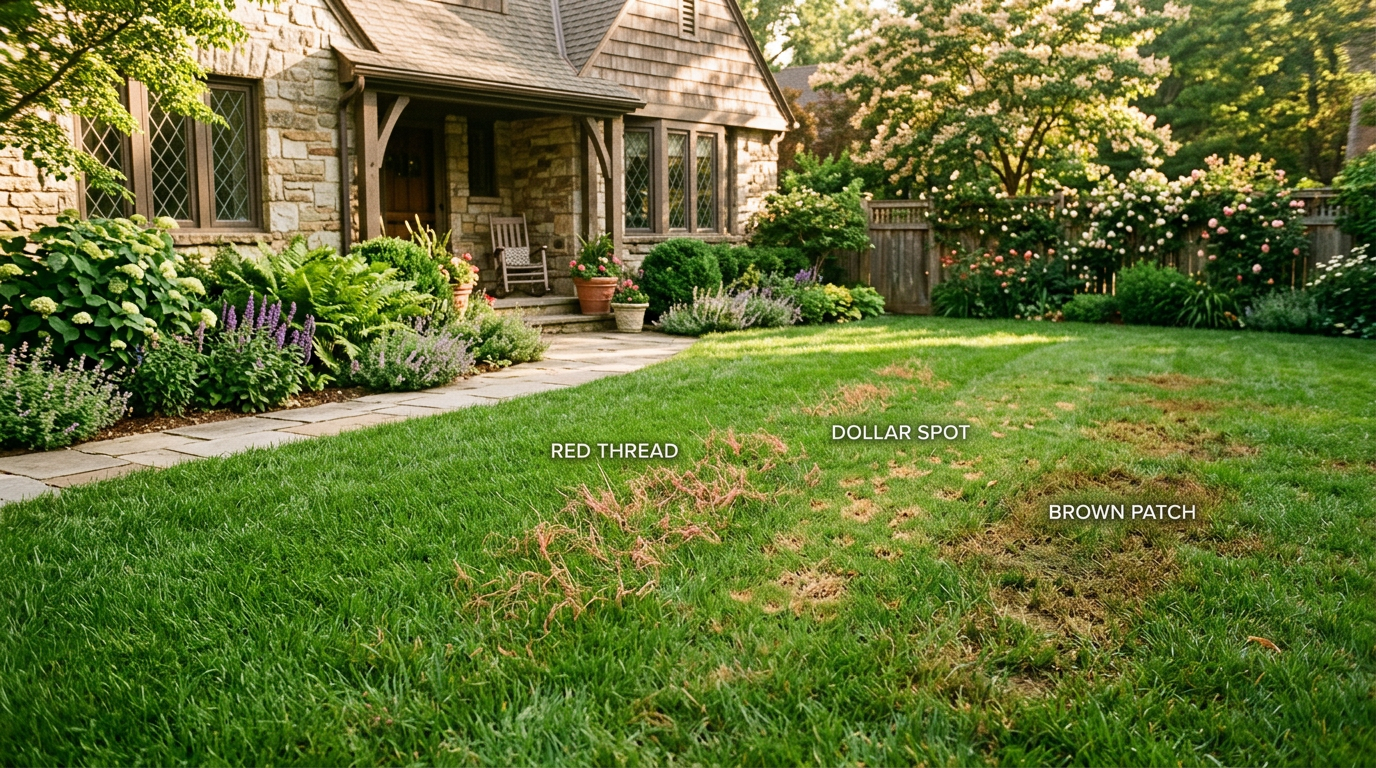
Fast intro: read the grass like a crime scene
We’ve rehabbed more lawn fungus outbreaks than we care to admit. The trick is pattern recognition. Color, ring shape, time of year, and your recent watering/fertilizing tell the story. Here’s a no‑gatekeeping, “what it looks like + what to do” guide for lawn fungus identification that actually saves your weekend.
Quick visual ID cheatsheet
- Brown patch (Rhizoctonia): Smoke‑ring edge on patches 6–24" wide; greasy leaves in humid heat. Night temps >68°F.
- Dollar spot: Silver dollars (1–3") that merge; leaves with hourglass lesions. Often low nitrogen.
- Red thread: Pink/red threads on leaf tips; patchy thin areas, mostly cool, wet springs.
- Rust: Orange powder on shoes/mower; slow growth, shade/low N.
- Snow mold: Matted tan patches after melt; pink (worse) or gray.
- Leaf spot/melting out: Purple‑brown leaf spots turning to thinned turf, spring.
- Pythium blight: Greasy, water‑soaked streaks with cottony fluff in hot, humid weather.
- Slime mold (not a fungus): Gray/black crusty spore masses on blades; harmless, just wipe off.
Not sure it’s disease? Compare with Brown Patches in Lawn After Winter: Causes + Fixes, and rule out mushrooms with Why Mushrooms Growing in Lawn Happen + How to Stop Them.
8 common culprits and the fast fix
- Brown patch: Raise mowing to 3–4". Water only at dawn, deep/infrequent. Light N only (0.25–0.5 lb N/1,000 sq ft). Spot‑treat with azoxystrobin or propiconazole.
- Dollar spot: Feed 0.5–0.75 lb N/1,000 sq ft; sharpen blade; morning irrigation only. Fungicide only if it’s racing across the yard.
- Red thread: It’s a low‑nitrogen flag. Feed 0.5–0.75 lb N/1,000. Usually no fungicide needed.
- Rust: Improve sun/airflow, feed lightly, mow more often to remove pustules.
- Snow mold: Rake matted spots, let dry, overseed if crowns died. Prevent with fall cleanup and a late‑fall mow.
- Leaf spot/melting out: Mow high, avoid spring nitrogen dumps; azoxystrobin or propiconazole if thinning.
- Pythium blight: Fix drainage immediately; no night watering. Use azoxystrobin; avoid heavy N in heat.
- Slime mold: Hose or broom it off. Done.
Numbers that matter (and why your lawn got sick)
Most cool‑season turf diseases need 8–12 hours of leaf wetness with temps 60–90°F. Brown patch lights up when nights stay >68°F with high humidity; dollar spot thrives at 60–85°F under low nitrogen; Pythium rips in hot, wet spells. Red thread correlates with low N and prolonged moisture (https://www.turffiles.ncsu.edu; https://extension.psu.edu/dollar-spot-on-turfgrass).
Rule out lookalikes before you spray
- Grubs: Random, irregular dead areas that peel up like carpet. Confirm with a shovel check. Start here: White Grubs in Soil Identification: Pictures, Look‑Alikes and How to Get Rid of Grubs in Lawn Naturally (That Works).
- Dog urine/drought: Straw‑yellow centers with dark green edges; no lesions on leaves.
- Weeds: Clover patches are alive and green with trifoliate leaves—different problem; see How to Get Rid of Clover in Lawn (Without Wrecking It).
What to do this week (our field‑tested playbook)
- Water smart: 1"/week total, mornings only. No evening sprinklers.
- Mow high and often: 3–4" for cool‑season; never scalp. A sharp blade reduces infection courts.
- Feed lightly: If the lawn is hungry, apply 0.25–0.5 lb N/1,000 sq ft with a slow‑release fertilizer.
- Spot‑treat, don’t carpet‑bomb: Use a systemic fungicide on active patches and 5–10 ft beyond.
Products we actually use (prices at time of writing):
- Scotts DiseaseEx (azoxystrobin, FRAC 11), 10 lb bag $24–$29, covers ~5,000 sq ft.
- BioAdvanced Fungus Control for Lawns (propiconazole, FRAC 3), 32‑oz hose‑end $20–$25.
- Bonide Infuse Granules (propiconazole, FRAC 3), 7 lb $20–$24.
- Headway G (azoxystrobin + propiconazole), 30 lb $120–$150 for large properties.
Pro move: Rotate FRAC groups. Alternate a Group 11 (azoxystrobin) with a Group 3 (propiconazole/myclobutanil) on 14–28 day intervals if disease pressure stays high. Don’t repeat the same group more than twice in a row.
Prevention that actually works
- Mow: 3–4" cool‑season; 2–3" warm‑season. Follow one‑third rule.
- Water: Deep, infrequent, dawn only. Keep leaves dry overnight.
- Fertility: 2.5–4 lb N/1,000 sq ft/year for cool‑season turf, split across spring/fall. Avoid heavy spring blasts.
- Air and sun: Core‑aerate compacted areas; thin dense shade. Dethatch if thatch >0.5".
- Seed better genetics: Overseed with disease‑tolerant cultivars; it’s the cheapest long‑term fungicide.
When to skip fungicides
Cosmetic diseases like red thread, rust, and mild dollar spot often fade with better mowing, watering, and a light feeding. If crowns are alive, those tan leaves will be replaced in 2–4 weeks. Save the fungicide for aggressive spread, high‑value turf, or repeat offenders.
Frequently asked
What does lawn fungus look like?+
Patterns tell the tale: smoke rings (brown patch), silver‑dollar spots (dollar spot), pink threads (red thread), orange powder (rust), or matted tan patches after snow (snow mold). Confirm by checking time of year, moisture habits, and whether leaf blades show lesions rather than clean, uniform yellowing.
Will lawn fungus go away on its own?+
Often, yes—if you correct the conditions. Many fungi stop when nights cool, leaves dry faster, and the lawn gets modest nitrogen. Cosmetic issues like red thread and rust usually clear with better mowing and a light feed. Aggressive diseases (Pythium, severe brown patch) may need a fungicide.
What’s the best fungicide for lawns?+
Use a systemic and rotate chemistries. Azoxystrobin (FRAC 11) and propiconazole or myclobutanil (FRAC 3) cover most problems. We spot‑treat active edges and a buffer zone, then reassess in 10–14 days. Avoid spraying the same FRAC group repeatedly to reduce resistance.
How fast will my lawn recover from fungus?+
If crowns are alive, you’ll see fresh green in 10–21 days with proper mowing, watering, and light feeding. Full fill‑in of thin patches can take 3–6 weeks. Dead crowns won’t regrow—rake, overseed, and keep new seedlings evenly moist until established.
How do I tell fungus from grub damage?+
Grub patches lift like a carpet and feel spongy; birds/skunks may dig. Fungal patches don’t peel up, and you’ll see leaf lesions, rings, or colored growths. If you find 6–10+ grubs per square foot, treat for grubs; otherwise tackle moisture and mowing for disease.