
How to Kill Crabgrass: A 2-Step Guide That Actually Works
Forget pulling it by hand. We're showing you the one-two punch of pre- and post-emergent herbicides that will knock out crabgrass for good, starting this season.
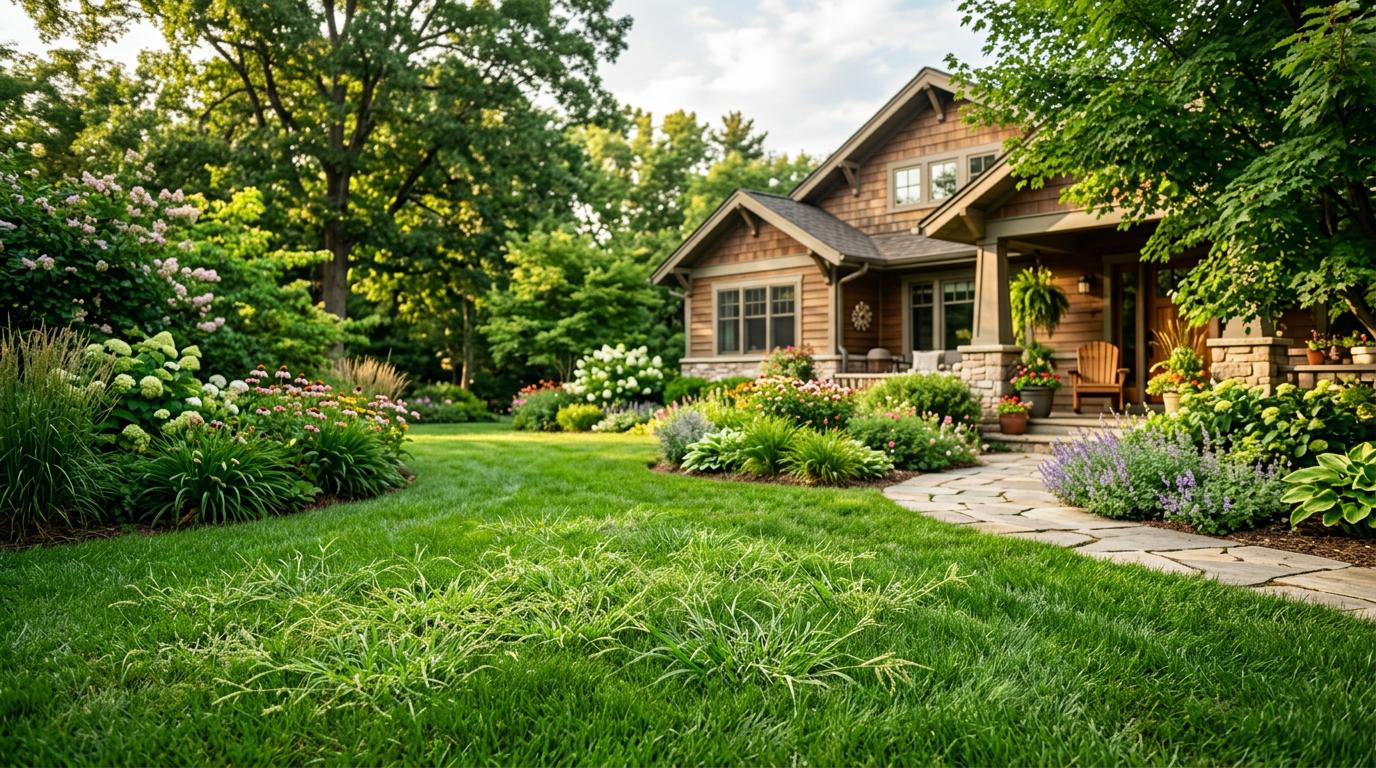
Let's be honest. Nothing sours the satisfaction of a freshly mowed lawn like the sight of crabgrass. It’s that coarse, ugly, sprawling weed that looks like a lime-green starfish of disappointment. It elbows its way into your pristine fescue, creating ugly patches that mock your hard work.
Plenty of folks will tell you to just pull it by hand. If you have three plants, sure. If you have an infestation, that’s a recipe for a sore back and zero progress. We're here to tell you there's a better way. Killing crabgrass effectively comes down to a simple, two-step strategy: preventing it before it starts and killing what slips through the cracks.
First, Let's Be Sure It's Crabgrass
Before you start spraying, let's confirm the diagnosis. Crabgrass (Digitaria spp.) is a summer annual weed. This means it sprouts in the spring, grows like a monster all summer, drops thousands of seeds in the late summer/fall, and then dies at the first frost.
Key identifiers:
- Color: A lighter, almost yellowish-green compared to Kentucky bluegrass or fescue.
- Blades: Much wider and coarser than your desirable turf grass blades.
- Growth Habit: Instead of growing upright, it grows low and sprawls outwards from a central point, forming a dense, ugly mat. The stems look like they have little joints or "knuckles."
Sometimes crabgrass die-off in the fall can be confused with other issues. If you're seeing dead spots emerge from the cold season, it might be something else entirely, like brown patches in your lawn after winter or even a lawn fungus.
The 1-2 Punch: Pre-Emergent vs. Post-Emergent Strategy
Think of this like a boxing match. Your strategy has two parts:
- Defense (Pre-Emergent): This is your main event. You apply a barrier that stops crabgrass seeds from ever germinating. This is the single most effective thing you can do.
- Offense (Post-Emergent): This is for cleanup. If some crabgrass slips past your defenses or you missed the prevention window, a post-emergent herbicide is what you use to kill the live plants.
Using both is the key to winning the war, not just a single battle.
Step 1: Prevent It Before It Starts (Pre-Emergent Herbicides)
This is where the magic happens. A pre-emergent doesn't kill the seed itself; it stops the germinating seed from developing roots, so it dies before you ever see it.
The Golden Rule of Timing: Timing is absolutely critical. Apply your pre-emergent when the soil temperature (measured 2-3 inches deep) is consistently between 55°F and 60°F. Too early, and it washes away before the seeds sprout. Too late, and you’ve missed the boat. The old-timer’s trick is to apply it when the forsythia bushes in your neighborhood are in full bloom.
Why is this so important? A single crabgrass plant is a seed factory. According to Purdue University's turfgrass science experts, a single plant can produce 150,000 seeds in one season, with some research showing up to 700,000. These seeds can then lie dormant in the soil for years. (source: https://turf.purdue.edu/crabgrass/)
Top Pre-Emergent Products:
- For Homeowners: Products with dithiopyr (like Dimension) or prodiamine are your best bets. Scotts Halts Crabgrass & Grassy Weed Preventer (~$25 for 5,000 sq ft) is a widely available option containing pendimethalin. Apply it with a broadcast spreader for even coverage.
- For Pro-Level Results: We often use a granular product with prodiamine, like Andersons Barricade Professional-Grade Pre-Emergent. A 40 lb bag costs around $70-80 but covers a huge area and provides a longer-lasting barrier.
Apply it to dry turf and then water it in with about a half-inch of irrigation or rainfall to activate the chemical barrier in the soil.
Step 2: Kill What's Already There (Post-Emergent Herbicides)
Okay, so you missed the pre-emergent window, or a few stubborn plants broke through your barrier. It’s time for a post-emergent spray.
The Golden Rule of Application: Spray when the plants are young and actively growing. A small, new crabgrass plant with only 2-4 leaves is much easier to kill than a mature, dinner-plate-sized monster. Also, AVOID spraying on hot, sunny days (over 85°F). You risk damaging or killing your good grass along with the weeds. We’ve learned this the hard way and scorched patches of our own lawn spraying in the July heat. Don’t be like us. Apply on a cooler morning or evening.
Top Post-Emergent Products:
- The Go-To Chemical: Look for products containing quinclorac. This is the active ingredient in most effective consumer-grade crabgrass killers. Ortho Weed B Gon Plus Crabgrass Control is a classic example, available in a ready-to-spray hose-end bottle for about $20. It's safe for most common lawn types (read the label!) and very effective.
- The Specialty Chemical: Mesotrione is another fantastic option, sold famously as Tenacity Turf Herbicide. It's more expensive (~$60 for a small 8oz bottle) but is incredibly effective and can even be used during seeding for some grass types. Be warned: it will turn the crabgrass (and sometimes your good grass, temporarily) bright white as it works. It's startling, but it's a sign that it's doing its job.
With any post-emergent, you may need a second application 2-3 weeks later to finish the job. Remember to include a surfactant (a fancy term for a drop or two of dish soap in your tank sprayer) to help the chemical stick to the waxy leaf surface of the crabgrass.
The Real Secret: A Thick, Healthy Lawn
The most powerful weed control product on the planet is a dense, healthy turf. Crabgrass is an opportunistic weed that thrives in thin, weak, stressed-out lawns. If you focus on lawn health, you'll put the odds in your favor.
- Mow High: Set your mower to 3.5-4 inches. Taller grass blades shade the soil, keeping it cool and preventing crabgrass seeds from getting the light they need to germinate.
- Water Deeply & Infrequently: Water your lawn for long periods once or twice a week, instead of short, shallow watering every day. This encourages deep root growth in your turf, making it more resilient, while letting the soil surface dry out, which crabgrass hates.
- Fertilize Properly: Feed your lawn a balanced fertilizer throughout the year to keep it thick and vigorous.
- Address Other Problems: A weak lawn is a welcome mat for all sorts of issues. If your lawn is struggling, figure out why. You might need to learn how to get rid of grubs in your lawn that are eating the roots, or deal with other weeds like clover that compete for resources. A holistic approach is the only way to achieve real, lasting results.
This holistic approach is the core of how to get rid of crabgrass permanently, not just for one season. It’s about building a lawn that defends itself.
What About Hand-Pulling or "Natural" Methods?
Can you just yank it out?
If you have a few isolated plants, absolutely. It's best to pull them after a good rain when the soil is soft. Try to get the whole root. If you leave the root, it can just grow back.
What about corn gluten meal?
Corn gluten meal is often touted as a "natural" pre-emergent. While university studies have shown it can have a slight suppressive effect, the application rates required are massive (20 pounds per 1,000 sq ft), it's expensive, and its results are highly inconsistent. For a serious infestation, it's simply not an effective primary solution compared to prodiamine or dithiopyr.
Frequently asked
What is the best temperature to kill crabgrass?+
For post-emergent sprays that kill existing plants, apply when temperatures are between 65°F and 85°F. Avoid spraying in high heat, as it can burn your lawn. For pre-emergent prevention, apply in spring when soil temperatures reach a consistent 55°F.
When is it too late for crabgrass preventer?+
It's generally too late to apply a crabgrass pre-emergent once you see visible crabgrass plants or when soil temperatures have consistently been above 70°F. At that point, the seeds have already germinated, and you must switch to a post-emergent killer.
How long does it take for crabgrass killer to work?+
Post-emergent crabgrass killers containing quinclorac usually show results within 5 to 7 days, with the weed fully dying in 2 to 3 weeks. Products with mesotrione (Tenacity) will turn the crabgrass white in 3 to 5 days before it dies off.
Will vinegar kill crabgrass?+
Yes, household vinegar can burn the top growth of a young crabgrass plant, but it will not kill the root system. Horticultural vinegar (20% acetic acid) is more effective but is non-selective and will kill any part of your good grass it touches.
Can I just pull crabgrass out?+
You can hand-pull crabgrass, and it's effective for a few isolated plants. It's best to do it after rain when the soil is soft. For widespread infestations, hand-pulling is not practical as it's labor-intensive and difficult to remove every plant completely.