
How to Get Rid of Crabgrass Permanently: Pro Plan
Crabgrass is an annual. Kill this year’s plants, block next year’s seedlings, and starve the seed bank. Here’s the no‑fluff, field‑tested plan.
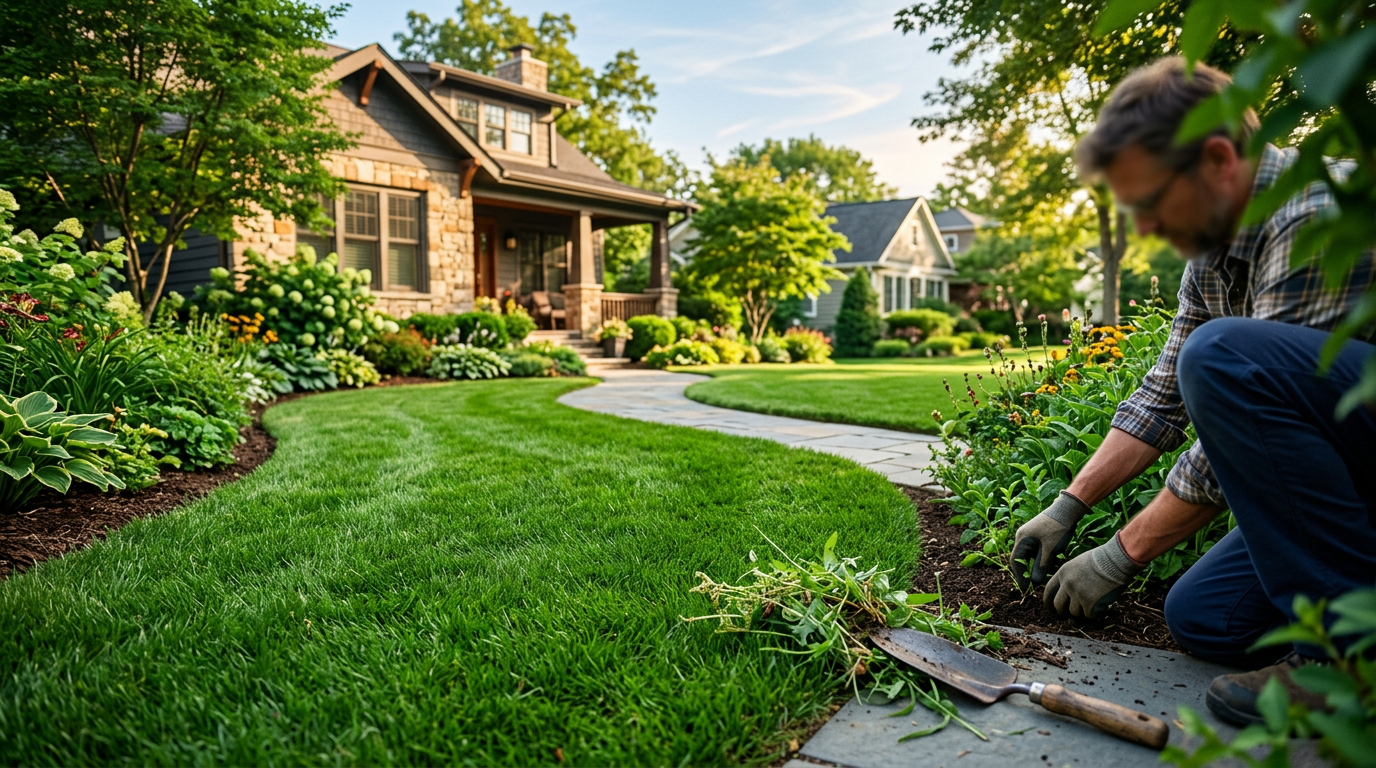
The short truth about “permanent”
Crabgrass is an annual. That’s good news. Adults die each winter; the problem is the seed bank they leave behind. “Permanent” control = block new sprouts, kill survivors, and thicken turf so future seeds can’t germinate. Two disciplined seasons usually does it.
We’ve run this play on client lawns and our own test plots. Done right, crabgrass pressure drops >90% by year two, and stays there with light maintenance.
Know the enemy: ID and life cycle
Crabgrass seedlings are lime‑green, low, and sprawl into a wagon wheel. Pull a clump: it often has a shallow, fibrous root and tillers. It’s not a perennial—every plant started from a seed this year.
Key timing: seeds start germinating when soil at 0–2 inches hits about 55°F for several days and surge at 65–70°F. That’s your pre‑emergent window.
Time your pre‑emergent (this is 80% of the battle)
- Cool‑season lawns (fescue, bluegrass, rye): apply pre‑emergent when soil hits ~55°F for 3–5 days. Forsythia bloom is a decent folklore cue, but we prefer a soil temp map (Greencast or a $15 probe).
- Warm‑season lawns (Bermuda, zoysia): same soil‑temp rule; split applications are gold because your season is longer.
Product picks we actually use:
- Prodiamine (Barricade) for longest barrier. Example: The Andersons Barricade 0.48% DG, ~40 lb, $70; covers ~12k sq ft (~$6 per 1,000).
- Dithiopyr (Dimension) if you’re late; it gives early post‑emergent control. Example: The Andersons 0.21% Dimension, 50 lb, ~$60.
Tip: Split apps beat one big dump. Half at 55°F, the rest 6–8 weeks later. Water in with 0.25–0.5 inches.
Kill what’s already up (post‑emergent choices)
If you missed the window or see escapes:
- Quinclorac melts young crabgrass in cool‑ and warm‑season turf. “Quinclorac 75 DF” 1 lb jar runs ~$45 and treats a whole lawn multiple times. Add a surfactant (Southern Ag Surfactant ~$16) for better uptake.
- Mesotrione (Tenacity) bleaches crabgrass and is safe on new cool‑season seed. 8 oz bottle ~$65. Great for overseed windows.
- Combo store picks: BioAdvanced All‑in‑One Lawn Weed & Crabgrass Killer (~$22 concentrate) or Ortho WeedClear for Crabgrass (~$20). Follow labels. Spray on warm, dry days; don’t mow right before.
Manual: Hand‑pull before seedheads form if infestations are small. Bag those plants.
Thicken turf so crabgrass can’t move in
- Mow higher: 3.0–4.0 inches for cool‑season; 1.5–2.5 inches for Bermuda/zoysia. Taller grass shades soil and blocks germination.
- Water deeper, less often: 1 inch/week in 1–2 soakings. Avoid daily sprinkles.
- Fertilize on schedule: feed cool‑season in fall; warm‑season in late spring/summer. Starve weeds, feed grass.
- Overseed bare spots. Cool‑season: early fall overseed is the big one; skip pre‑emergent beforehand or use mesotrione. Warm‑season: plug/sod thin areas late spring.
Related fixes if your lawn has other issues: Brown Patches in Lawn After Winter, Why Mushrooms Growing in Lawn Happen + How to Stop Them, and if hardscapes are a mess, How to Stop Weeds Growing Through Gravel — Fast. Fighting broadleaf weeds too? See How to Get Rid of Clover in Lawn.
A simple 2‑year schedule we use
Year 1
- Early spring: Pre‑emergent split app (prodiamine or dithiopyr).
- Late spring–summer: Spot‑spray escapes with quinclorac; repeat in 3–4 weeks if needed.
- Early fall (cool‑season): Overseed + mesotrione at seeding. Fertilize.
Year 2
- Repeat spring pre‑emergent splits. You’ll have fewer escapes; spot‑spray lightly.
- Keep mowing high, watering deep. Overseed any thin patches in fall again.
Year 3
- One spring pre‑emergent pass + normal lawn care is usually all you need.
Numbers that matter (and why timing wins)
Crabgrass starts germinating around 55°F soil temperatures; major flushes occur 65–70°F. A single plant can produce up to 150,000 seeds in a season. Hitting pre‑emergent timing prevents the seedling stage that refills the bank, which is why two disciplined seasons work (NC State: ces.ncsu.edu; UC IPM: https://ipm.ucanr.edu/PMG/WEEDS/large_crabgrass.html).
Common mistakes (skip these)
- Spreading pre‑emergent then not watering it in. It needs 0.25–0.5 inches to bind.
- Aerating or heavy raking after pre‑emergent. You’ll break the barrier.
- Overseeding right after prodiamine/dithiopyr (cool‑season). Either delay or use mesotrione at seeding.
- Mowing too low. You’re turning on the crabgrass greenhouse.
- Skipping a second year. The seed bank won’t quit after one season—you shouldn’t either.
Safety and label sanity
Wear gloves, measure lawn square footage, and follow the label. Don’t exceed annual rates, especially with prodiamine. Keep pets/kids off until granules are watered in and turf is dry.
Frequently asked
Does vinegar kill crabgrass?+
Household vinegar (5%) burns leaves but rarely kills roots, so regrowth is common. Strong horticultural vinegar (20%+) can scorch entire plants but also damages grass and is unsafe without PPE. For lawn-friendly control, use quinclorac or mesotrione and follow the label.
Can I overseed after using pre‑emergent?+
Not with prodiamine or dithiopyr—both block desirable seed too. Wait until their seeding interval on the label, or overseed using mesotrione at seeding (it’s seed‑safe for cool‑season grasses). Warm‑season lawns should plug/sod thin areas during active growth.
Will crabgrass die in winter and come back?+
Yes and no. Crabgrass plants die with frost; they do not regrow from roots. But they drop a lot of seed that sprouts next spring. That’s why pre‑emergent timing and two seasons of suppression are key to draining the seed bank.
Is corn gluten meal a good crabgrass pre‑emergent?+
Evidence is mixed in real lawns. It can act as a mild nitrogen source, but consistent, research‑grade pre‑emergent control is unreliable. If you use it, don’t expect the same results as prodiamine or dithiopyr, and watch your nitrogen load.
Should I bag clippings if I have crabgrass?+
If plants are immature, mulching is fine; seeds aren’t there yet. Once you see seedheads, bag clippings in affected areas to avoid spreading. Long‑term, prevention via pre‑emergent and dense turf matters far more than clipping management.