
How to Get Rid of Clover in Lawn: DIY + Pro Options
Clover pops up when your lawn is hungry or stressed. Here’s how we actually clear it—without trashing the turf—and keep it from coming back.
The short version
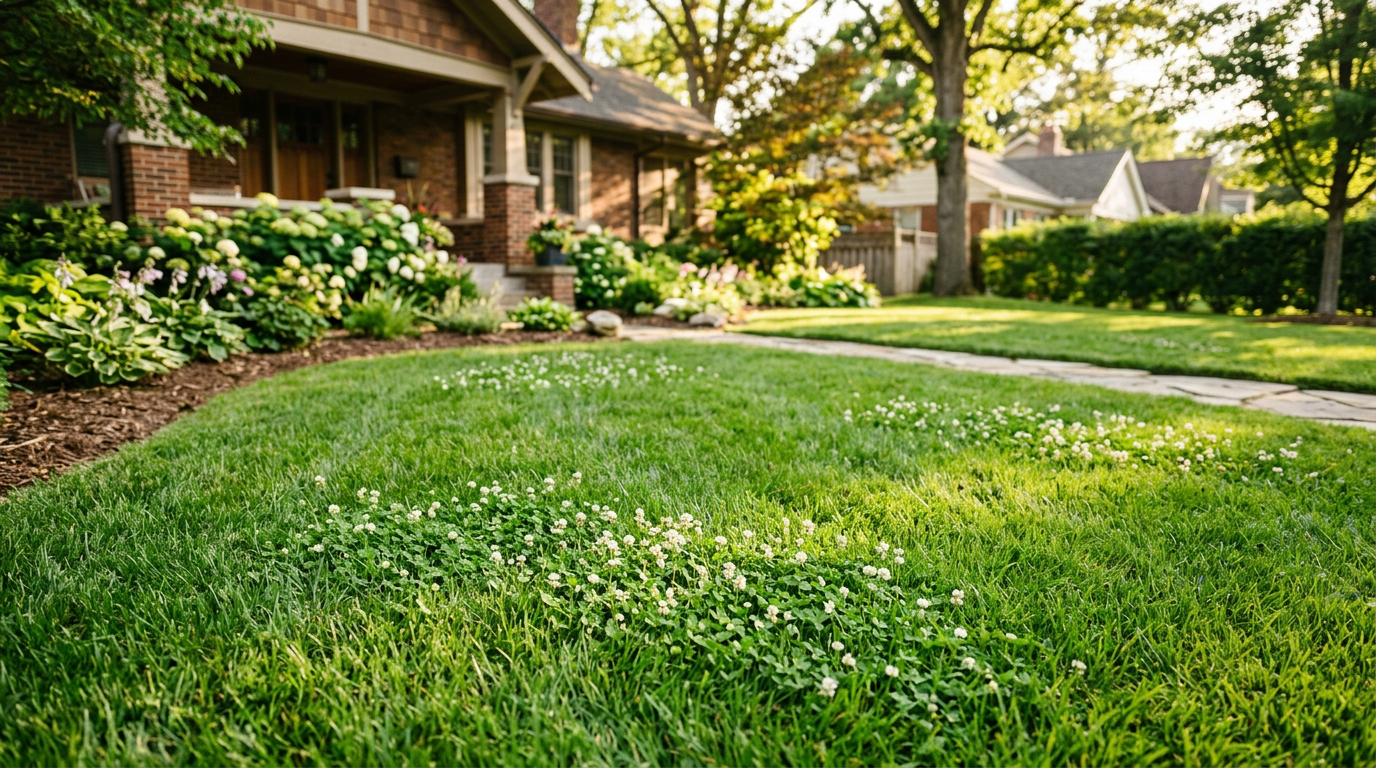
Clover shows up where grass is hungry, thin, or compacted. We fix the underlying problem first (feed and mow right), then spot‑spray the clover patches, and finally overseed so grass takes the space back. That sequence kills clover fast without wrecking the lawn.
Should you kill clover at all?
Clover isn’t evil. It feeds pollinators and self‑fertilizes. If you like the look, microclover seed blends can make a tough, green lawn. But if you want uniform turf or your HOA says “nope,” keep reading. We’ll show you how to remove it without collateral damage.
Why clover takes over (and how to reverse it)
- Low nitrogen: Clover is a legume. If your lawn’s starving, clover wins. Feed 0.5–1.0 lb N per 1,000 sq ft in early fall and again spring if needed.
- Low mow: Scalping under 3" lets clover out‑compete grass. Mow 3.5–4".
- Compaction: Aerate fall if your soil is tight or high traffic.
- Irrigation: Water deeply, 1"/week in growing season; don’t sprinkle daily.
- Sun: Thin shade grass invites clover; overseed with shade‑tolerant cultivars.
Stats you can use: White clover can fix about 50–150 lb nitrogen per acre per year (≈1.1–3.4 lb per 1,000 sq ft). That’s a built‑in advantage when you under‑fertilize (source: Penn State Extension, https://extension.psu.edu/white-clover).
Manual removal that actually works
- Small patches: Hand‑pull after rain. Get the crown and runners.
- Tools: Fiskars Xact Weed Puller (~$35) yanks deep crowns; a classic dandelion weeder (~$9) works for tight spots.
- Pro tip: Loosen with a hori‑hori knife, then tug low and slow. We do this around ornamentals where sprays are risky.
Best herbicides for clover (and when to use them)
For cool‑season lawns (Kentucky bluegrass, fescue, rye):
- Ortho Weed B Gon Chickweed, Clover & Oxalis Killer (triclopyr) Concentrate, ~$12–$15. Great for spot‑spray. Add a non‑ionic surfactant (~$12) to improve stick.
- Bonide Weed Beater Ultra (triclopyr), ~$20–$25.
- SpeedZone Lawn Weed Killer (2,4‑D + dicamba + MCPP + carfentrazone), ~$40–$50/quart, fast on mixed broadleaf patches.
- Tenacity (mesotrione), ~$60–$70/8 oz. Bleaches clover; safe on most cool‑season grasses. Good for new seedings—check label.
For warm‑season lawns (St. Augustine, centipede, zoysia, Bermuda):
- Atrazine products labeled for St. Augustine/centipede (e.g., Image Atrazine, ~$20–$25) can control clover. Avoid triclopyr on St. Augustine/centipede—injury risk. Always match product to your grass.
Our results: We’ve spot‑sprayed triclopyr on white clover and saw wilt in 3–7 days, fade by 10–14 days. Stubborn patches needed a second hit at 14–21 days.
Application basics that matter:
- Spray when temps are 60–85°F and no rain 24 hours.
- Don’t mow 24 hours before or after.
- Spot‑spray, don’t broadcast—saves money and grass.
- Seed timing: Many weed killers restrict seeding for 2–8 weeks. Read the label.
“Natural” options: what helps, what’s hype
- Feed the grass: The most “natural” clover killer is a well‑fed lawn. Apply slow‑release nitrogen.
- Corn gluten meal: Overhyped. It’s a weak pre‑emergent and clover is perennial—doesn’t reliably stop it.
- Vinegar/soap mixes: Non‑selective. They burn grass as fast as clover. Hard pass for lawns.
- Iron (FeHEDTA) herbicides: May ding some broadleaves; clover response is inconsistent.
- Mulch/solarize: Works in beds, not practical for lawns.
The step‑by‑step plan (fast + safe)
- Mow to 3.5–4" and leave clippings. Feed 0.5 lb N/1,000 sq ft now if you haven’t.
- Spot‑spray clover with triclopyr (cool‑season) or an atrazine product (St. Augustine/centipede), following label.
- Wait 14–21 days and re‑treat survivors.
- Overseed thinned areas (cool‑season: late summer/fall; warm‑season: late spring).
- Fertilize in fall: 0.75–1.0 lb N/1,000 sq ft to lock in grass dominance.
Need help with other lawn invaders? See our field‑tested plan for crabgrass. If you’re also seeing toadstools, here’s why mushrooms pop up. Thin, patchy areas after thaw? Diagnose brown winter patches. Suspect root‑eaters? Start with white grub ID and our guide to natural grub control.
Aftercare: keep clover from coming back
- Fertility: Test soil every 2–3 years. Keep nitrogen steady; balance P & K if low.
- Mowing: 3.5–4" on cool‑season; 2.5–3" on many warm‑season types. Sharpen blades.
- Water: 1"/week. Deep, infrequent.
- Overseed annually (cool‑season) to thicken the stand.
- Spot‑check monthly and hit new clover early.
We’re not into gatekeeping: it’s feed, height, and selective spot‑spray—done consistently. That’s the whole trick.
Frequently asked
Why does clover keep coming back in my lawn?+
Clover thrives in low‑nitrogen, thin, or compacted turf. If you don’t fix those conditions—feed, mow higher, aerate—sprays are a temporary Band‑Aid. Fertilize 0.5–1.0 lb N/1,000 sq ft, mow 3.5–4 inches, water deeply, and overseed so grass outcompetes new clover.
What is the best herbicide to kill clover without killing grass?+
On cool‑season lawns, triclopyr or 2,4‑D/dicamba mixes work well when temps are 60–85°F. For St. Augustine/centipede, use atrazine‑labeled products; avoid triclopyr. Spot‑spray, avoid mowing 24 hours before/after, and repeat in 2–3 weeks for stragglers. Always confirm label safety for your grass type.
Will vinegar, salt, or dish soap kill clover?+
They may scorch clover, but they’ll also damage your grass and soil. Vinegar and salt are non‑selective; dish soap is just a surfactant. For lawns, stick to selective herbicides (triclopyr or 2,4‑D mixes) and cultural fixes so you remove clover without creating bare, hydrophobic patches.
Can I get rid of clover without chemicals?+
Yes, for small patches: hand‑pull after rain, mow high, feed the lawn, aerate compacted soil, and overseed thin spots. This takes persistence. For larger infestations, a selective spot‑spray speeds things up, then cultural practices keep clover from re‑invading.
When is the best time to treat clover?+
Treat when clover is actively growing and temps are 60–85°F. Fall is ideal for perennial broadleaf control because plants are moving energy to roots, improving herbicide uptake. Spring treatments work too; follow up in 2–3 weeks and plan fall fertilization and overseeding.