
How to Get Rid of Clover in Lawn Fast (Without Wrecking It)
Clover shows up when lawns are hungry and thin. We’ll show you how to wipe it out quickly, then fix the soil and lawn care habits that invited it.
The short version
Clover isn’t a moral failing. It’s a sign your lawn is hungry and thin. Kill it cleanly, then fix the soil and density so it stays gone. We’ve done this on client lawns and our own: spot‑spray, feed lightly, mow higher, and overseed. Two weeks later, the clover is fading and grass is filling in.
Identify what you’re fighting
Most people are dealing with white clover (Trifolium repens):
- Three leaflets with pale crescent marks
- Low, creeping stolons that form mats
- White/pink pom‑pom flowers If your “clover” has heart‑shaped leaves and yellow flowers, that’s oxalis/wood sorrel—same approach still works.
Fastest way: spot‑spray with the right active
Clover shrugs off a lot of basic broadleaf mixes. Look for triclopyr or a strong 2,4‑D blend with dicamba. Our go‑to for homeowners:
- Ortho Weed B Gon Chickweed, Clover & Oxalis Killer (triclopyr): ~$11 for a 24‑oz RTU; great for spot‑spray.
- Bonide Chickweed, Clover & Oxalis Killer (triclopyr): ~$12 RTU.
- Mesotrione (Tenacity) is a premium option for cool‑season turf: ~$60 for 8 oz concentrate; very effective but pricier. How we do it: On a dry day above 60°F, we spot‑spray clover patches to wet the leaves but avoid dripping. Expect whitening/wilt in 3–7 days and brown‑down by 10–14 days. Re‑spray survivors after 2 weeks. Do not blanket‑spray the entire yard unless it’s truly infested—save your grass and wallet.
Natural or low‑tox options that actually work
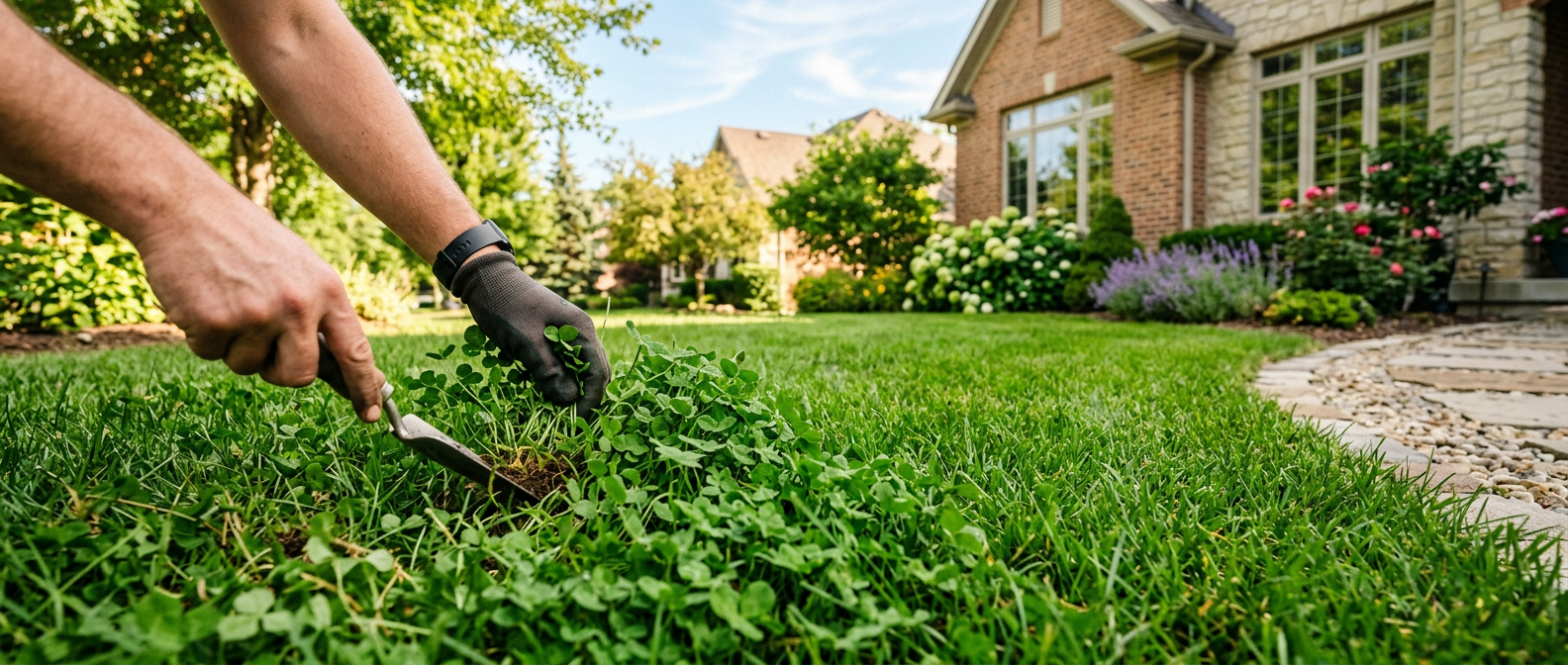
- Hand‑pull small patches after rain. Use a fishtail/dandelion weeder to pop stolons; bag the debris.
- Smother mats: Lay a piece of cardboard for 2–3 weeks, then remove and overseed.
- Boost lawn vigor: A light nitrogen feed (0.5 lb N per 1,000 sq ft) and regular irrigation will edge out clover without chemicals. If you like the look and benefits, consider letting some clover stay or overseeding microclover into the lawn mix. It’s a legit low‑input strategy.
Fix the cause so it doesn’t come back
Clover loves low‑nitrogen, thin turf. Fix that, and it can’t compete.
- Fertility: Feed 0.5–1.0 lb N per 1,000 sq ft in late spring or early fall depending on your grass type. Use a slow‑release lawn food.
- Mowing: Raise the deck to 3–4 inches. Taller turf shades clover seedlings.
- Overseed: After the clover is toast, scratch the soil and overseed bare areas with your grass type. Keep seed moist 10–14 days.
- Water: Deep and infrequent (1 inch/week including rain) beats daily spritzing.
- Soil: If compaction is bad, aerate in fall.
Numbers that matter (and receipts)
- We see visible clover injury in 3–7 days and control by 10–14 days with triclopyr spot‑sprays.
- Ortho Weed B Gon CCO RTU runs about $10–12 for 24 oz; Tenacity 8 oz is about $55–65; Scotts Turf Builder Lawn Food 5,000‑sq‑ft bag runs ~$25–30—typical retail ranges as of this year (https://www.ortho.com/en-us/products/weed-control/ortho-weed-b-gon-chickweed-clover-oxalis-killer-lawns, https://www.syngenta-us.com/herbicides/tenacity, https://www.scotts.com/en-us/products/fertilizer/turf-builder-lawn-food).
Timing: best seasons to hit clover
- Spring: Great for knockdowns as clover is actively growing. Follow with light feeding and early overseeding if needed.
- Early fall: Our favorite—cool‑season turf surges, herbicides work well, and overseeding takes off.
- Summer heat: Go gentle. Spot‑spray only and water your grass. Avoid heavy nitrogen when temps are high.
Common mistakes that waste time (and money)
- Preemergent for clover: Nope. White clover is perennial; preemergent won’t stop it.
- Blanket spraying the whole lawn: Overkill. Spot treat and protect the grass.
- Starving the lawn: Low nitrogen invites clover. Feed lightly and consistently.
- Mowing too low: Scalping opens sunlight to clover and other weeds. Raise the deck.
Related lawn problems you might actually have
Clover often shows up alongside other issues. If you’re also seeing mystery culprits, we’ve got you:
- Weird tufts and off‑color patches? Here’s your plan: How to Get Rid of Crabgrass Permanently
- Random mushrooms after rain? Why Mushrooms Growing in Lawn Happen + How to Stop Them
- Tiny holes overnight? Tiny Holes in Lawn at Night: What’s Making Them + Fixes
- Grub damage suspicion? Start here: White Grubs in Soil Identification
- Winter hangover? Brown Patches in Lawn After Winter: Causes + Fixes
Our field note
We spot‑sprayed a 2,500‑sq‑ft cool‑season lawn with triclopyr RTU, fed 0.75 lb N/1,000 sq ft, raised mowing to 3.5 in, and overseeded thin seams. Two weeks later, clover was down, grass was up, and we didn’t scorch a single stripe.
Frequently asked
What kills clover but not grass?+
Spot‑spray triclopyr products labeled for lawns (e.g., Ortho or Bonide clover/oxalis killers). Strong 2,4‑D/dicamba blends or mesotrione (Tenacity) also work. Follow label directions, treat when clover is actively growing, and avoid blanket spraying to protect turf.
Why does clover keep coming back in my lawn?+
Clover thrives in low‑nitrogen, thin turf. If you only kill it and don’t feed or thicken the lawn, it returns. After control, apply 0.5–1.0 lb N per 1,000 sq ft, mow at 3–4 inches, irrigate properly, and overseed bare spots to prevent re‑infestation.
Is clover good or bad for lawns?+
It depends on your goals. Clover fixes nitrogen and supports pollinators, but it can look patchy in traditional lawns and stains clothing. Many people keep a microclover mix for a low‑input yard. If you want uniform turf, control it and boost grass density.
Will preemergent stop clover?+
No. White clover is a perennial that spreads via stolons and reseeds. Preemergent targets new seedlings, not established perennials. Focus on spot‑treating existing plants and improving lawn fertility and density to crowd out future clover.
Can I use vinegar to kill clover?+
Household vinegar mostly burns leaves and often regrows, while stronger horticultural vinegar can damage turf and soil biology. If you want selective control that spares grass, use a labeled lawn herbicide like triclopyr and apply carefully.