
How to Fix Bare Spots in Lawn: A 5-Step Pro Guide
Stop staring at those dead patches. We'll show you how to diagnose the cause of bare spots in your lawn and permanently fix them with the right seed, soil, and technique.
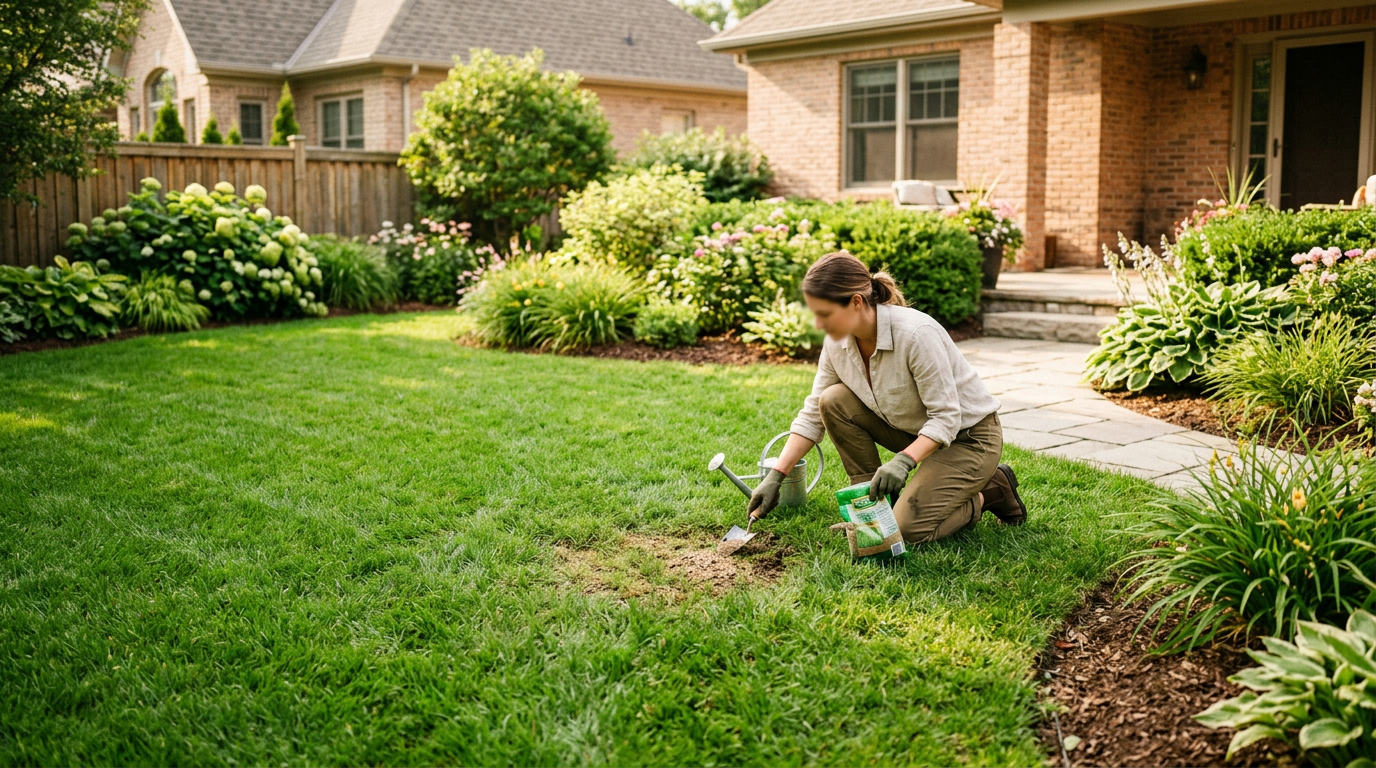
A perfect, uniform lawn is the goal. A dead, brown, or bald patch is the reality for most of us. These frustrating bare spots can make an otherwise healthy lawn look neglected. But here's the secret: fixing them is easy. The hard part—the part most people skip—is figuring out why the spot appeared in the first place.
Don't just throw seed on it and hope for the best. That's a waste of time and money. We're going to walk you through the entire process, from diagnosis to watching your new grass thrive. Let's get this done right.
First, Play Detective: Why Do You Have Bare Spots?
Before you buy a single bag of seed, you need to understand the culprit. Patching a spot without addressing the root cause means you'll just be patching it again next year.
Here are the usual suspects:
- Heavy Foot Traffic: Is the bare spot on a path the kids, the dog, or the mail carrier use to cut across the yard? Compacted soil from constant traffic suffocates grass roots and prevents anything from growing. The fix here involves both seeding and redirecting the traffic with a path or stepping stones.
- Pest Problems: Several critters love to destroy lawns from below. Grubs are a major cause, eating roots and leading to dead patches that roll up like a carpet. You can dig up a small section to check. If you see more than 5-10 C-shaped critters, you've found your problem. See our guide to white grubs in soil identification to be sure. Moles and voles also create tunnels and mounds that kill the grass on top. We have a no-nonsense guide on how to get rid of moles in your yard that actually works.
- Lawn Diseases: Fungal diseases like Brown Patch, Dollar Spot, or Red Thread can create distinct circular or irregular dead zones. These often appear during periods of high humidity, heat, or excessive moisture. If the patch has a specific shape or colored border, consult our lawn fungus identification guide to diagnose it.
- Weed Competition: Aggressive weeds can choke out your desirable grass. If you recently killed a large patch of clover or crabgrass, you'll be left with a bare spot. While this is a good problem to have, you still need to fill it in. If you're still fighting the battle, check our guides on how to get rid of clover in your lawn before you reseed.
- Environmental Issues: This is a catch-all for a few common problems:
- Dog Urine: High nitrogen content in dog pee acts like a fertilizer burn, creating small, round dead spots, often with a dark green ring around the edge. Flush the area with water immediately after it happens to dilute the nitrogen.
- Chemical Spills: Did you accidentally spill gasoline while filling the mower? Or maybe got a little sloppy with herbicide? These will kill grass instantly, and the soil may need to be physically replaced.
- Poor Drainage: Low spots where water pools will drown grass roots.
- Dense Shade: Most grass types need at least 4-6 hours of direct sun. If the bare spot is under a dense tree, you may need to switch to a shade-tolerant fescue or a groundcover alternative.
Your Shopping List: Tools & Materials for the Fix
Once you've got a diagnosis, it's time to gather your supplies. We've tried all the 'all-in-one' patch kits, and honestly, the best results always come from doing it yourself with quality components. You get better seed, better soil, and a better outcome.
Tools:
- Hard-tined Rake / Garden Rake: For clearing debris and scarifying the soil. A must-have.
- Hand Trowel or Small Shovel: For digging out any bad soil or amending small areas.
- Wheelbarrow: Optional, but helpful for mixing soil and compost.
Materials:
- Topsoil & Compost: A 50/50 mix is ideal. You don't need fancy, just a quality bagged topsoil (around $5/bag) and compost or soil conditioner (around $8/bag). This will provide a nutrient-rich bed for the new seed.
- Grass Seed: This is not the place to cheap out. Get seed that matches your existing lawn. For most lawns, a Tall Fescue blend like Jonathan Green Black Beauty Ultra (around $30 for a 7 lb bag) is a fantastic, drought-tolerant choice. Check the label for the "Tested" date and make sure it's from the current year. Old seed has a much lower germination rate.
- Starter Fertilizer: Do NOT use regular lawn fertilizer. A starter fertilizer like Scotts Turf Builder Starter Food for New Grass (around $25 for a 5,000 sq. ft. bag) is lower in nitrogen and higher in phosphorus to promote strong root growth, which is exactly what new seedlings need.
- (Optional) All-in-One Patch Mix: For very small spots (less than 1 sq. ft.), a product like Scotts EZ Seed Patch & Repair (around $20) can be convenient. It contains seed, starter fertilizer, and a moisture-holding mulch. It's more expensive per square foot but simpler for quick fixes.
The 5-Step "Dirt Cheap Genius" Method to Patching Your Lawn
Alright, you've done your homework and bought your supplies. Now for the easy part. Follow these five steps precisely for the best results.
Step 1: Prep the Patient (The Spot) This is the most important step. Take your hard rake and vigorously scrape out all the dead grass, thatch, and any other debris from the bare spot. Then, use the rake tines or a trowel to loosen the top 2-3 inches of the underlying soil. The goal is to create a loose, crumbly bed. Grass seed needs direct contact with soil to germinate; it won't grow on a hard, dead mat of thatch.
Step 2: Amend the Soil Spread a 1/2-inch to 1-inch layer of your topsoil/compost mixture over the prepped area. Rake it in slightly to mix it with the loosened native soil. This fresh layer provides readily available nutrients and helps hold moisture, giving your new seeds a huge advantage.
Step 3: Seed Generously (But Not Too Generously) Shake your grass seed bag to mix the varieties. Apply the seed over the amended soil. How much? The goal is about 15-20 seeds per square inch. It should look like you're heavily salting a steak, not burying it in a pile of salt. Too much seed leads to competition, and the seedlings will choke each other out, resulting in weak, spindly grass. Read the bag for overseeding rates and follow them.
Step 4: Fertilize for a Head Start Sprinkle your starter fertilizer over the seeds according to the directions on the bag. A little goes a long way. This provides the essential phosphorus needed for rapid root development.
Step 5: Tamp and Water Lightly tamp the entire area down with the back of your rake or by walking on it. This presses the seed firmly into the soil, ensuring that all-important seed-to-soil contact. Immediately after, water the area gently with a soft spray from a hose or watering can. You want to moisten the top inch of soil thoroughly, but not so much that you create puddles or wash the seeds away.
Post-Op Care: How to Keep Your New Grass Alive
Seeding is just the beginning. The next 3-4 weeks are critical.
- Watering: This is non-negotiable. You must keep the top inch of soil consistently moist until the grass is well-established. This usually means watering lightly once or twice a day (morning and afternoon) for the first 2 weeks. Don't let the seedbed dry out, even for a few hours on a hot day. Once the grass is about an inch tall, you can switch to deeper, less frequent watering.
- Mowing: Let the new grass grow! Don't mow the patched area until the new blades are at least 3.5 to 4 inches tall. For the first few mows, make sure your mower blade is sharp to avoid pulling the young seedlings out of the ground.
- Weeds & Herbicides: Do not apply any weed killer to the new grass for at least 4-6 weeks, or after you have mowed it 3-4 times. Pre-emergents and post-emergents will prevent your new grass from growing or kill it outright.
When to Repair: Timing is Everything
You can patch a lawn anytime, but for the highest success rate, timing is crucial. The absolute best time to seed cool-season grasses (like Fescue, Ryegrass, and Kentucky Bluegrass) is late summer to early fall (typically August 15th to October 1st). The reason is simple science. According to turfgrass specialists at university extensions like the University of Maryland, the ideal soil temperature for cool-season grass germination is between 55°F and 65°F. In the fall, the soil is still warm from the summer, but the air is cooling, and weed pressure from things like crabgrass has subsided. This gives your new grass a perfect window to establish roots before winter.
Spring is the second-best time. The main drawback of spring seeding is that you'll be racing against the germination of summer annual weeds like crabgrass. If you seed in spring, you cannot apply a crabgrass pre-emergent, leaving your new turf vulnerable. For warm-season grasses (like Bermuda, Zoysia, St. Augustine), the reverse is true: seed in late spring or early summer when soil temperatures are consistently above 65-70°F.
Frequently asked
What is the fastest way to fix a bare spot in my lawn?+
Use an all-in-one patch product like Scotts EZ Seed, which combines seed, starter fertilizer, and mulch. While a DIY approach with separate components is often better, these kits are fastest for small spots. Ensure good soil prep and consistent watering for the best, quickest results.
Can I just throw grass seed on bare spots?+
No. Simply throwing seed on compacted, dead ground will result in almost zero germination. You must clear debris and loosen the top 2-3 inches of soil to ensure good seed-to-soil contact, which is absolutely essential for the seeds to root and grow successfully.
What's the best grass seed for patching?+
Use the same type of grass seed that's already in your lawn for a seamless look. If you don't know, a high-quality Tall Fescue blend is a durable, versatile choice for most sun/shade conditions. Always buy fresh, certified seed from the current year for best results.
When is the best time of year to fix bare patches?+
Early fall is the best time for cool-season grasses (Fescue, Bluegrass). The soil is warm, and weed competition is low. Spring is the second-best option. For warm-season grasses like Bermuda or Zoysia, late spring into early summer is the ideal time to seed.
How long does it take for bare spots to fill in?+
You should see germination in 7 to 21 days, depending on the grass type and conditions. With proper watering and care, the patch should be well on its way to filling in within 4-6 weeks and should be fully established and blended with the lawn after a few months.