
How to Get Rid of Crabgrass Permanently: Step-by-Step
Crabgrass isn’t immortal. Time your pre-emergent, spot-spray escapes, and thicken your turf. Here’s the exact, repeatable plan we use on real lawns.
The short answer
If you want crabgrass gone for good, you need timing and repetition. Block new seedlings with a spring pre-emergent, kill the ones that sneak through, then keep your grass so dense that sunlight never hits bare soil. Do that 2–3 seasons, and the seed bank taps out.
Know your enemy: what makes crabgrass “permanent”
Crabgrass is an annual warm-season grass. It germinates when topsoil is ~55°F for several days, grows fast in heat, then dies with frost—but not before dropping a pile of seed. One mature plant can produce tens of thousands of seeds, and those seeds can stay viable several years. That’s why one sloppy spring leads to summers of regret.
Stats that matter: germination starts ~55–60°F; peak ~70°F. Seeds can persist 3+ years, so you need multiple clean seasons in a row to exhaust the bank (University of Maryland Extension: https://extension.umd.edu/resource/crabgrass-and-goosegrass-lawns).
The permanent plan (field-tested)
- Early spring: apply a pre-emergent to stop germination.
- Late spring–summer: spot-spray visible crabgrass escapes.
- All season: mow high, water deep/infrequent, and feed to thicken turf.
- Fall (cool-season lawns) or late spring (warm-season lawns): overseed or encourage spread to close gaps.
- Repeat next year. That’s the part people skip.
We run this play on client lawns and our own. It’s boring. It works.
Timing: when to pull the trigger
- Pre-emergent: 1–2 weeks before soil holds 55°F for 3–5 days. If you don’t track soil temps, use forsythia bloom as a rough cue. Late? Use a product with early post-emergent activity (dithiopyr) to catch seedlings.
- Post-emergent: spray young crabgrass (2–4 tillers) in late spring/early summer. Big, mature plants are harder and may need a second hit 14–21 days later.
What to use (and what it costs)
Pre-emergents (stop seeds):
- The Andersons Barricade 0.48% Prodiamine Granular (18-0-4): $45–$55 per 50 lb, covers ~12,500 sq ft. Long barrier; not for use if you plan to seed soon.
- Lesco 19-0-7 with 0.27% Dithiopyr (Dimension): $45–$60 per 50 lb. Shorter barrier but offers early post-emergent action.
- Dimension 2EW (dithiopyr) liquid: $65–$95 per quart for precise tank-mixing.
Post-emergents (kill plants):
- Quali‑Pro Quinclorac 75 DF: $45–$60 per 1 lb. Excellent on established crabgrass in cool- and many warm‑season lawns; add MSO surfactant ($12–$20) per label.
- Tenacity (mesotrione): $65–$90 per 8 oz. Good on young crabgrass; safe to use at seeding on many cool‑season grasses. Expect temporary whitening.
- Celsius WG (for warm‑season lawns like Bermuda/Zoysia/St. Augustine): $125–$150 per 10 oz; more forgiving on St. Augustine than quinclorac.
- Budget hose‑end: Ortho WeedClear with Crabgrass Killer: $12–$18, decent for small lawns if you don’t want to mix.
Tools we actually use: a 2‑gal pump sprayer ($25–$40) and a cheap soil thermometer ($10–$15). No gatekeeping.
Important: Always check your grass type on the label. Quinclorac can injure St. Augustine/centipede. Atrazine (various brands) is another St. Augustine option in many regions—read your local labels.
Overseeding + herbicides: don’t trip over the labels
Pre-emergents block ALL grass seed, not just crabgrass. Typical wait windows:
- Prodiamine: often 3–6 months before seeding (depends on rate).
- Dithiopyr: often 4–12 weeks before seeding (rate-dependent).
- Mesotrione (Tenacity): unique—can be used at seeding on many cool-season grasses. That’s why we pair Tenacity with fall overseeding.
If you must seed in spring, skip prodiamine/dithiopyr and accept more post‑spray work, or use starter fertilizer with mesotrione (e.g., Scotts Turf Builder Starter + Weed Prevent, ~$49–$63 per 15 lb) and expect to spot‑spray escapes later.
Cultural fixes that actually prevent crabgrass
- Mow higher: keep cool-season lawns ~3.0–4.0"; warm-season ~2.0–3.0" (per cultivar). Taller turf shades soil and blocks germination.
- Water deep and infrequent: 1–1.5" per week total. Shallow daily watering favors weeds.
- Feed smart: 2–4 lb N/1,000 sq ft per year (split), matched to grass type. Thick, fed turf wins the light war.
- Fix bare spots fast: patch within 2 weeks or mulch them—sun on soil = crabgrass. If you need help with other weeds, see our guide: How to Get Rid of Clover in Lawn.
Pull or patch? When manual removal makes sense
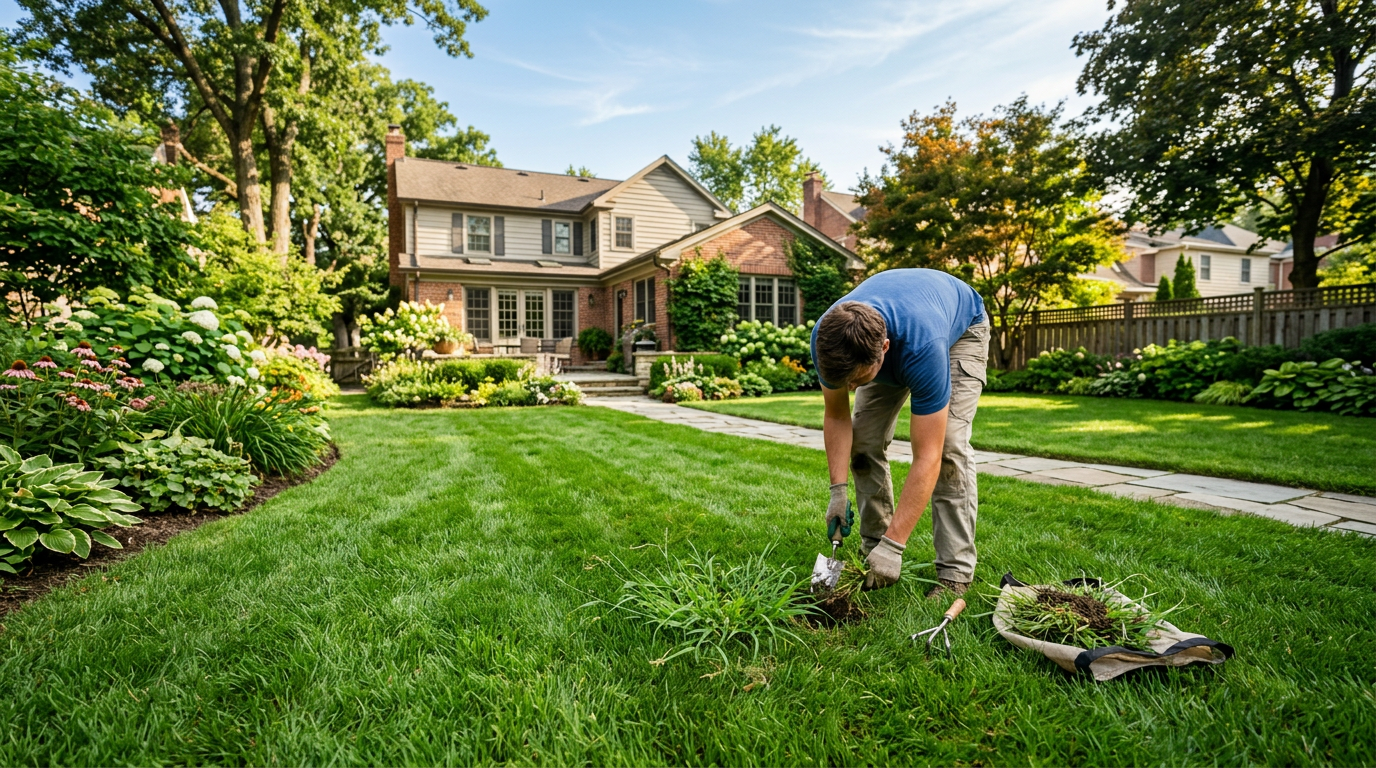
Got a few clumps? Hand‑pull before they seed. A $12 stand‑up weeder is faster than re‑spraying. For mats in late summer, yank, topdress, and plan a fall overseed for cool‑season grass or a spring fill‑in for Bermuda/Zoysia. If winter left scars, see Brown Patches in Lawn After Winter.
Common mistakes we see (and fix)
- Missing the pre‑emergent window, then blaming the product.
- Blanket‑spraying post‑emergents at noon in July—hello turf burn.
- Seeding right after prodiamine, then wondering why nothing germinated.
- Scalping the lawn “short to save mowing time.” You just fed the crabgrass.
Want to stop weeds in non‑lawn areas the fast way? Different playbook: How to Stop Weeds Growing Through Gravel — Fast. Building lawn resilience against pests helps too: How to Get Rid of Grubs in Lawn Naturally (That Works).
Frequently asked
Does crabgrass die in winter on its own?+
Yes. Crabgrass is an annual that dies with frost. The problem is the seed it left behind—tens of thousands that can survive several years. That’s why pre-emergent in spring and a dense lawn are required if you want it gone for good, not just dead plants this year.
What temperature should I apply crabgrass pre-emergent?+
Apply when topsoil holds around 55°F for several days, ideally 1–2 weeks before sustained warming. If you don’t track soil temps, use forsythia bloom as a proxy. Late? Choose dithiopyr (Dimension) for early post-emergent activity to catch just‑sprouted seedlings.
What’s the best crabgrass killer to spray?+
For cool-season lawns, quinclorac is excellent on established plants; mesotrione is great on young plants and safe at seeding. For warm-season lawns, Celsius WG is a solid option and gentler on St. Augustine. Always check your grass type and the label for safety and rates.
Can I overseed after using prodiamine or dithiopyr?+
Not immediately. Prodiamine can block seed for 3–6 months depending on rate; dithiopyr often 4–12 weeks. If you must seed sooner, use mesotrione (Tenacity) at seeding on eligible cool-season grasses, or delay pre-emergent and accept more spot-spraying.
Will vinegar or boiling water kill crabgrass?+
They can top-burn leaves but they also kill desirable turf and don’t touch the seed bank. You’ll create bare soil—perfect crabgrass conditions. Use labeled post-emergents for escapes and focus on pre-emergent plus turf density for a truly permanent solution.