
Dollar Spot Lawn Treatment: Your No-Nonsense Guide
Seeing silver-dollar-sized brown spots on your lawn? We'll show you exactly how to identify and treat dollar spot fungus, and how to prevent it from ever coming back.
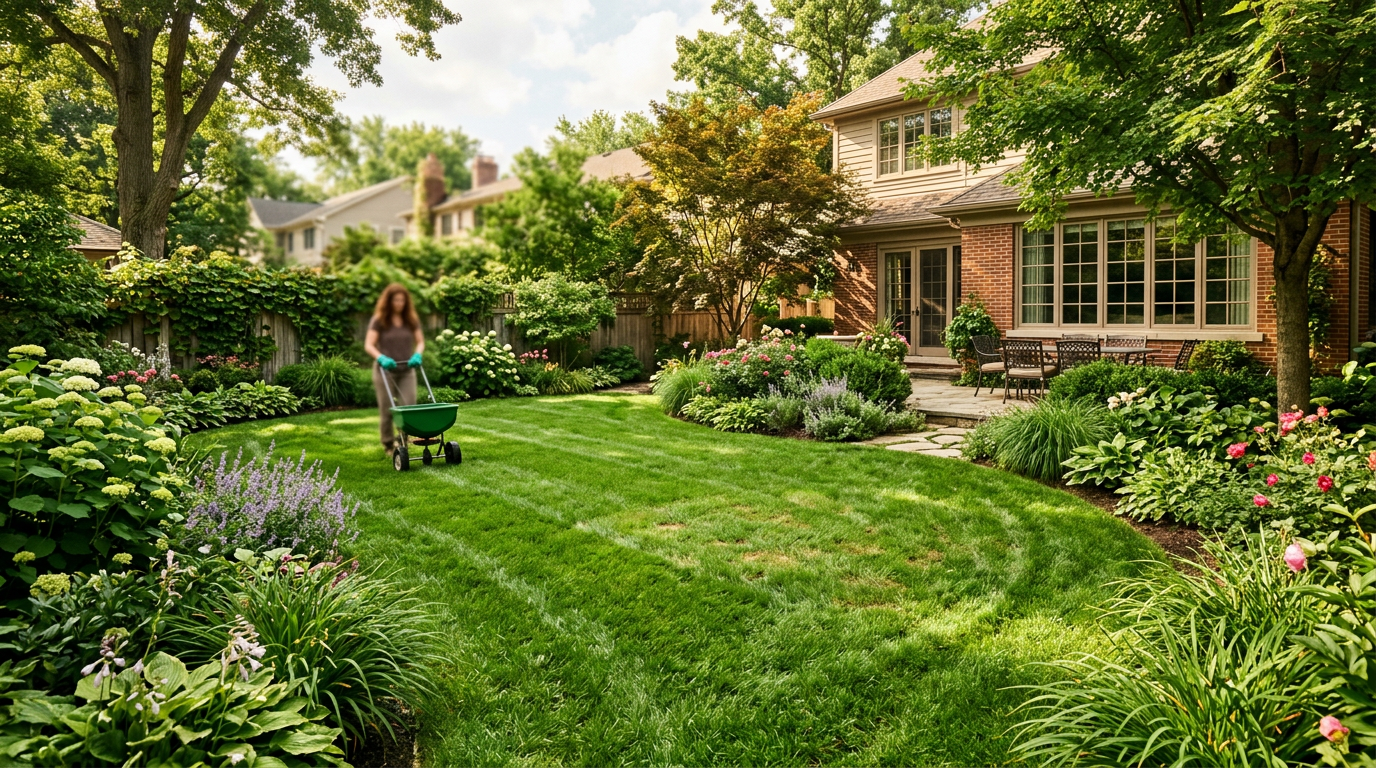
You walk out onto your lawn one morning, coffee in hand, and see it. A smattering of bleached, straw-colored spots, each about the size of an old silver dollar. Your heart sinks. Is this it? Is the whole lawn about to die?
Take a breath. You're probably looking at dollar spot. It's one of the most common lawn diseases out there, but it's also one of the most misunderstood. The good news is that you don't need to hire a pricey lawn service or douse your yard in a chemical cocktail to fix it.
We're here to cut through the noise and give you a straightforward, field-tested plan. We'll show you exactly what causes dollar spot, the fastest way to treat it (starting with the free stuff), and how to make sure it never darkens your turf again.
What is Dollar Spot, Anyway? (And Why You Have It)
First, let's confirm the diagnosis. Dollar spot, caused by the fungus Clarireedia jacksonii (formerly Sclerotinia homoeocarpa for you trivia nerds), shows up as distinct, circular patches of tan or straw-colored grass. They're typically 2 to 5 inches in diameter. When the disease is really active, these small spots can merge into large, ugly, irregular patches.
A dead giveaway for dollar spot is the presence of mycelium. This looks like a faint, cobwebby fuzz on the affected spots, and it's most visible in the early morning when the dew is still heavy. If you see those cobwebs, you can be 99% sure you're dealing with dollar spot and not damage from dog urine or grubs.
So why did this fungus pick your lawn? Because you accidentally created the perfect resort for it. Dollar spot thrives in very specific conditions:
- Low Nitrogen: This is the big one. Dollar spot is a disease of hunger. It preys on lawns that are under-fertilized.
- High Moisture: Long periods of moisture on the grass blades are a major trigger. We're talking 10+ hours of continuous wetness from dew, evening watering, or light, frequent rain.
- The Right Temps: It loves warm days (70-90°F / 21-32°C) followed by cool, humid nights.
- Too Much Thatch: A thick layer of thatch acts like a sponge, holding moisture against the base of the plant and giving the fungus a place to hang out.
- Compacted Soil: Poorly aerated soil stresses the grass and hinders drainage, making it more susceptible to disease.
Recognizing the fungus is the first step. For a broader look at what might be ailing your turf, our lawn fungus identification guide can help you tell dollar spot from its nasty cousins like brown patch or pythium blight.
The Wrong Way to Treat Dollar Spot (Don't Do This)
Before we get to the fix, let's talk about what not to do. In a panic, people often make the problem much, much worse. Avoid these common mistakes:
- Watering it More: It looks dry, so you should water it, right? Wrong. Dollar spot loves moisture. Watering in the evening or giving it light, frequent sprinkles is like rolling out the welcome mat for the fungus. You're just making the grass blades stay wet longer, which is exactly what the disease wants.
- Blasting it with Random Fungicide: Grabbing the first bottle of "Fungus Be Gone" you see is a waste of money and time. Different fungicides target different diseases. Using the wrong one won't work, and overuse of any single type can lead to resistant strains of fungus that are even harder to kill.
- Scalping the Lawn: Mowing too short stresses the turf, making it an easy victim. You might think you're cutting out the disease, but you're actually weakening the entire lawn's defense system.
- Ignoring It: Dollar spot rarely goes away on its own. If conditions are right, it will spread. Those little silver dollars will merge into giant, dead-looking blotches that can take the rest of the season to recover.
Step 1: Cultural Controls (The Free Fixes)
This is where we always start. You can often beat dollar spot without spending a dime, just by changing a few habits. This is about working smarter, not harder.
- Change Your Watering Schedule: This is non-negotiable. Water only in the early morning, between 4 a.m. and 9 a.m. This gives the grass blades the entire day to dry out before nightfall. Water deeply and infrequently—a good soaking once or twice a week is far better than a light sprinkle every day.
- Manage Morning Dew: Remember that cobwebby mycelium? It uses dew as a superhighway to spread. You can stop it in its tracks by simply removing the dew. Drag a hose across the lawn, use a leaf blower on a low setting, or whip the grass with a long, flexible pole. We've literally used a 10-foot piece of PVC pipe for this. It looks silly, but it works.
- Check Your Mower Height & Sharpness: Raise your mower deck. Mowing taller encourages deeper roots and a more resilient plant. A good rule of thumb is to never remove more than one-third of the blade height at a time. Also, make sure your mower blades are sharp. A dull blade tears grass, creating jagged wounds that are easy entry points for disease.
Step 2: The Right Fertilizer Strategy
If you do only one thing to treat and prevent dollar spot, this is it. Feed your lawn. Since dollar spot is a low-fertility disease, a simple application of nitrogen is often all it takes to stop it cold. The added nutrients kickstart grass growth, allowing it to literally outgrow the fungus and repair the damage.
Don't just grab any bag of fertilizer, though. You want to apply the right amount.
According to turfgrass science programs across the country, like the one at Purdue University, applying a light dose of nitrogen is a primary cultural control for dollar spot. The standard recommendation is to apply 0.5 to 1.0 lb of actual nitrogen per 1,000 sq. ft. to suppress active dollar spot. For a typical 5,000 sq. ft. lawn, that's 2.5 to 5.0 lbs of actual nitrogen. (Source: Purdue University Extension, PLR-117-W). For a quick curative effect, a water-soluble nitrogen source can work fast, but for long-term health, we prefer slow-release.
A great, low-risk choice is a slow-release nitrogen fertilizer. Products like Milorganite (around $18 for a 32 lb. bag that covers 2,500 sq. ft.) or Scotts Turf Builder Lawn Food (about $25 for a 12.5 lb. bag covering 5,000 sq. ft.) are perfect. They feed the lawn steadily over weeks, preventing the surge of growth that can invite other problems like brown patch. If your lawn is looking generally sad, it might also be a sign of other seasonal stress, similar to the issues that cause brown patches in lawn after winter.
Step 3: When to Use Fungicides (And Which Ones)
We view fungicides as a last resort or for highly valuable turf that needs to be perfect (like a golf green). If you've tried the cultural controls and a nitrogen application and the disease is still spreading aggressively, then it's time to bring in the big guns.
There are two main types of fungicide applications:
- Curative: You apply it at a higher rate to stop an active, raging infection.
- Preventative: You apply it at a lower rate before you expect the disease to show up, based on weather conditions.
For homeowner use, you want to look for products with specific active ingredients known to be effective against Clarireedia jacksonii. The two most common and effective are Propiconazole and Azoxystrobin.
- BioAdvanced Fungus Control for Lawns: This is a liquid product containing Propiconazole that attaches to your hose for easy application. It's excellent for a quick curative knockdown. A 32 oz. hose-end sprayer bottle costs about $25 and treats 5,000 sq. ft.
- Scotts DiseaseEx Lawn Fungicide: This is a granular product containing Azoxystrobin that you apply with a spreader. It's fantastic as both a curative and a longer-lasting preventative treatment. A 10 lb. bag costs around $28 and also covers 5,000 sq. ft.
Pro Tip: To prevent the fungus from developing resistance, it's best to rotate between different fungicide groups. We've had great success on stubborn lawns by hitting an active infection with a liquid Propiconazole product, then following up 3-4 weeks later with a granular Azoxystrobin product for long-term prevention.
Long-Term Prevention: Your 4-Point Plan
Treating dollar spot is one thing; keeping it away for good is another. This requires a holistic approach to lawn health. Make these four practices part of your annual routine.
- Aerate and Dethatch: Thatch is a fungal paradise. Use a core aerator every 1-2 years, especially if you have clay soil. This reduces compaction, improves drainage, and allows air and nutrients to reach the root zone. If your thatch layer is over 1/2 inch thick, rent a dethatcher or power rake to remove it.
- Test Your Soil: Stop guessing. A simple $20 soil test kit will tell you your soil's pH and nutrient levels. Lawns are most efficient at absorbing nutrients when the pH is between 6.0 and 7.0. If your pH is off, you're wasting fertilizer.
- Commit to a Fertilizer Schedule: Don't just fertilize when you see a problem. A healthy, dense lawn is the best defense against everything from fungus to weeds. A thick stand of turf leaves no room for invaders like clover or crabgrass. A proper feeding schedule helps you avoid having to deal with issues like how to get rid of clover in lawn later on.
- Watch for Other Pests: A stressed lawn is a target. Pests like grubs can damage roots, making the grass weak and susceptible to disease. Knowing how to spot them is key, so familiarize yourself with white grubs in soil identification to stay ahead of the game.
By following this plan—starting with the easy cultural fixes and moving to fertilizers and fungicides only when necessary—you can knock out dollar spot and build a lawn that's resilient, healthy, and the envy of the neighborhood.
Frequently asked
Will dollar spot go away on its own?+
Rarely. Without intervention, dollar spot will likely worsen and spread, especially if conditions remain favorable (low nitrogen, high moisture). Correcting the underlying cultural issues, especially fertility, is key to stopping its progression and preventing a larger, more damaging outbreak in your lawn.
What is the main cause of dollar spot?+
The primary trigger for dollar spot is low nitrogen fertility. The fungus, Clarireedia jacksonii, preys on nutrient-starved turf. This is often combined with long periods of leaf wetness, such as from evening watering or heavy morning dew, and excessive thatch buildup.
Can I fertilize a lawn with dollar spot?+
Yes, you absolutely should. Applying a quick-acting or slow-release nitrogen fertilizer is the most effective cultural treatment. Applying 0.5 to 1.0 pound of actual nitrogen per 1,000 square feet often stops the disease in its tracks and helps the turf recover and outgrow the damage.
What’s the best fungicide for dollar spot?+
For homeowners, fungicides containing Propiconazole (like BioAdvanced Fungus Control for Lawns) or Azoxystrobin (like Scotts DiseaseEx) are highly effective. Always apply according to the label. For best results, rotate between different chemical groups to prevent the fungus from developing resistance to a single product.