
Brown Patches in Lawn After Winter: Causes and Fixes
Spring shows up, your lawn looks like a leopard. We’ll help you ID why brown patches appear after winter and fix them fast without wrecking the turf.
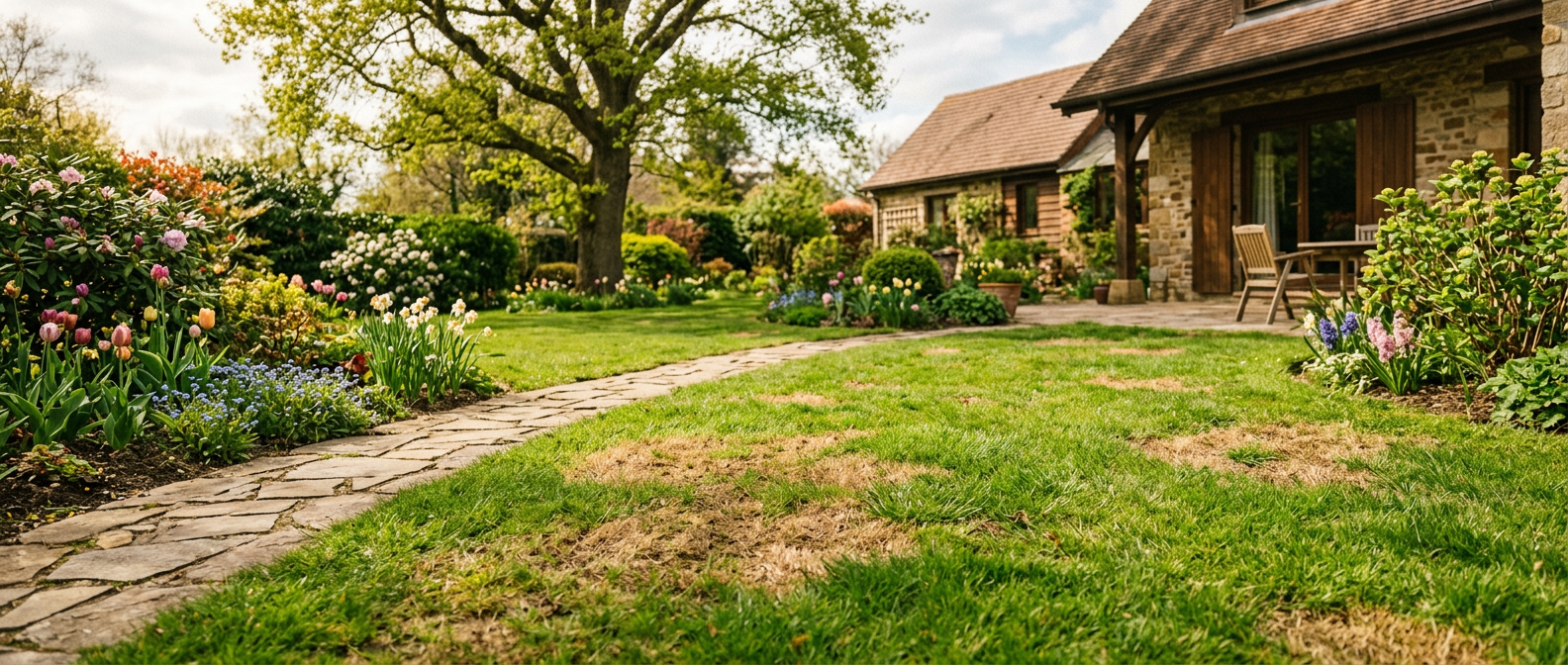
Why your lawn has brown patches after winter
We see this every spring: thaw happens, and your turf looks like a quilt of tan circles and straw. Don’t panic. Most brown patches after winter are temporary and fixable without nuking your lawn or your wallet.
Quick ID: what kind of brown patch is it?
- Snow mold: Circular, matted, grayish or pinkish patches. Grass blades are bleached and stuck together. Common after long, wet snow cover.
- Vole runways: Snaky, straw-colored trails. You may see tiny holes. Grass is clipped and tunneled at the surface.
- Winterkill/desiccation: Exposed, windswept areas (hills, south/west edges) look crispy. Crowns may be dead.
- Spring dead patch (warm-season lawns): Bermudagrass or zoysia shows round tan patches that green slowly at the edges.
- Salt burn: Brown strips along sidewalks/driveways where plows piled slush. Soil is crusty; weeds move in first.
- Dog spots: Small 3–6 inch burnt centers with dark green edge ring.
- Grubs: Turf peels up like a carpet; you’ll see C-shaped larvae under sod. Often with skunk/raccoon damage.
If you want to compare symptoms fast, check our visual guide: Lawn Fungus Identification: Pictures, Symptoms, Fixes.
Fix it now: 10‑minute triage
- Rake matted patches lightly to lift blades and improve air. Snow mold hates drying out.
- Tug test. If grass crowns hold and you see white shoots, it’s alive—give it 2–3 weeks.
- Dead for real? Overseed. Scratch soil, sprinkle seed (see rates below), topdress 1/4 inch compost, and keep moist.
- Salt zones (by pavement): Deeply water 1–2 inches twice a week for 2–3 weeks to leach salts. Then overseed.
- Hold off on heavy spring nitrogen. A light 0.5 lb N/1,000 sq ft is plenty to wake it up.
Products we actually use:
- Scotts DiseaseEx Lawn Fungicide (azoxystrobin) — $24 for 10 lb. Preventative in late fall for repeat snow mold lawns.
- Luster Leaf Rapitest Soil Test Kit — ~$15. Check pH; cool-season lawns like 6.0–7.0.
- Superior Grass Seed (Perennial Rye mix) — ~$30 for 10 lb. Fast spring patching.
We’ve raked and overseeded hundreds of snow‑molded spots; most green up in 2–4 weeks. If a patch stays straw-brittle after 4 weeks, reseed it.
When it’s pests (grubs, voles, moles)
- Grubs: Cut a 1‑sq‑ft flap 2–3 inches deep in a brown area. Count grubs. If you’ve got a lot, treat and then overseed.
- ID first: White Grubs in Soil Identification: Pictures, Look‑Alikes
- Natural fixes that work: How to Get Rid of Grubs in Lawn Naturally (That Works)
- Fast rescue (chemical): BioAdvanced 24‑Hour Grub Killer Plus (trichlorfon) — ~$23 for 10 lb.
- Season‑long prevention: Scotts GrubEx1 (chlorantraniliprole) — ~$28 for 14.35 lb (apply spring).
- Voles/moles: Surface runways = voles; raised ridges = moles. Level runways, rake, and the lawn often recovers. For wildlife culprits and fixes: Tiny Holes in Lawn at Night: What’s Making Them + Fixes.
Salt, plows, and pet spots
- Salt burn: Flush heavily (1–2 inches of water per session), repeat for 2–3 weeks. Replace top 1–2 inches of soil in severe areas. Gypsum can help displace sodium in sodic soils, but flushing is the win.
- Dog spots: Water immediately after pee events; for repairs, rake, add a cup of fresh soil, reseed.
- Snow piles: Don’t heap snow on the same corner all winter; spread piles to melt faster and reduce suffocation.
Prevent next winter’s brown patches
- Fall mow last cut at 2.5–3 inches to reduce matting.
- Remove leaves before first snow. Wet leaf blankets = fungal hotel.
- Feed in late fall (1 lb N/1,000 sq ft, slow‑release) for better winter survival.
- If snow mold is annual, do a late‑fall fungicide pass (azoxystrobin or propiconazole). No need in spring unless disease is active and spreading.
- Switch de‑icer near turf: use calcium magnesium acetate or calcium chloride over rock salt.
Numbers that matter (and sources)
- Microdochium patch (pink snow mold) develops at 32–45°F, and gray snow mold is favored by long snow cover; raking and drying are first steps (https://extension.umn.edu/plant-diseases/snow-molds-turfgrass).
- Treat grubs when counts exceed about 10 per square foot; spot‑checks in damaged areas guide whether to treat or just reseed (https://extension.psu.edu/white-grubs-in-turfgrass).
Reseed vs. resod: when to start over
- If more than ~40–50% of a spot is truly dead, reseed or plug it. For cool‑season patching: perennial rye 5–9 lb/1,000 sq ft; Kentucky bluegrass 2–3 lb/1,000 sq ft.
- Warm‑season lawns with spring dead patch: wait for sustained warmth, then power‑rake, topdress, and plug/overseed when soil is 65°F+.
If mushrooms pop after wet thaws, that’s just decay doing its thing—this helps explain it: Why Mushrooms Growing in Lawn Happen + How to Stop Them.
Frequently asked
Will brown grass come back after winter?+
Often, yes. If crowns are alive, raking and warmth will green it up in 2–4 weeks. Snow mold usually looks worse than it is. Truly dead areas (crowns brittle, no white shoots) need overseeding or plugging once soil warms to the 50s.
How do I tell snow mold from salt damage?+
Snow mold shows circular, matted patches, sometimes with gray or pink fuzz. Salt damage forms linear/striped brown zones along sidewalks/driveways. Salt areas improve after heavy flushing; snow mold thins but recovers after raking and drying.
Should I apply fungicide in spring for snow mold?+
Usually no. By the time you see it, the infection has run its course. Rake, dry, and reseed. If you get snow mold every year, apply a preventative fungicide in late fall before lasting snow cover, not in spring.
When should I fertilize after winter damage?+
Go light in spring: about 0.5 lb nitrogen per 1,000 sq ft once the lawn starts growing. Too much spring nitrogen encourages disease and thatch. Save your bigger feeding (1 lb N/1,000) for late fall to bolster winter survival.
Do I need to dethatch after winter?+
Only if thatch exceeds 0.5 inch. Light raking is enough for most snow mold mats. If you can pinch more than half an inch of springy brown thatch, rent a dethatcher and overseed the same day to refill bare spots.