
Brown patches in lawn after winter: diagnose + fix fast
Winter ends, your lawn looks like leopard print. Here’s how to tell if it’s snow mold, grubs, salt burn, or winterkill—and exactly how we fix each fast.
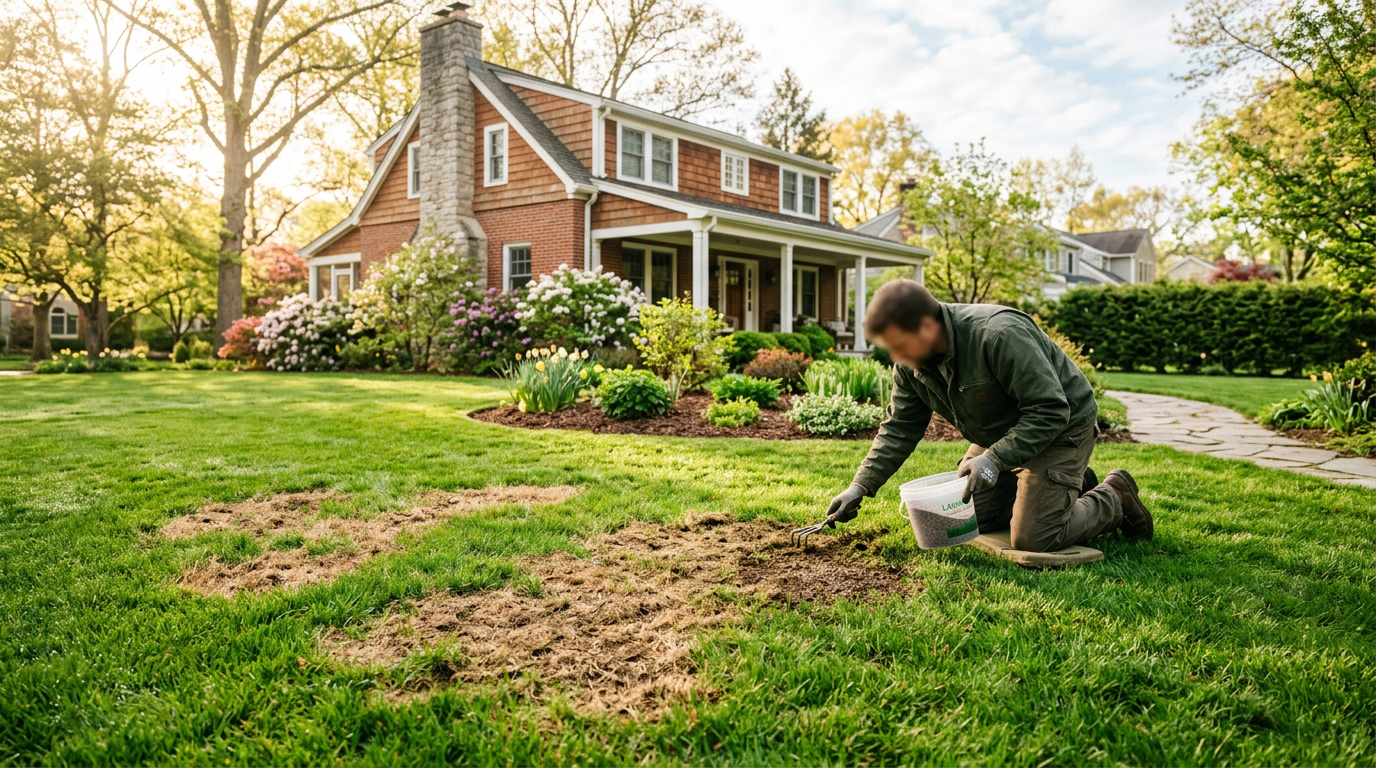
Brown patches in lawn after winter: start here
You didn’t ruin your lawn. Winter did. Brown patches after snowmelt are usually one of four things: snow mold (matted, gray/pink fuzz), salt or dog pee burn (edge strips or dotted spots), grubs (loose "carpet" turf that lifts easily), or winterkill (exposed, wind-burned areas). We’ve rehabbed this exact mess after an ugly late snow in Zone 5—most of it bounced back fast.
Spot the cause in 60 seconds
- Snow mold: Circular straw-brown patches with grayish or pinkish webbing; blades are matted flat.
- Salt/urine burn: Bright straw-yellow to white tips right by sidewalks/driveways or where the dog goes. Often ringed with darker green.
- Grub damage: Turf peels up like a rug, roots are gone. You’ll find C-shaped white grubs under the thatch.
- Winterkill/desiccation: Wind-exposed or high spots; no matting, just dry, dead turf that doesn’t tug up easily.
- Voles/moles: Surface runways or raised ridges; soil pushed up. If you see tiny overnight pits, read Tiny Holes in Lawn at Night.
- Not sure? Compare symptoms in our Lawn Fungus Identification guide.
Fast fixes by cause
- Snow mold: Let it dry, then rake lightly to lift matted blades. In our yard, 80% of spots greened up in 2–3 weeks with no fungicide. Stubborn areas: overseed.
- Salt or dog urine: Flush with water (15–20 minutes). If crowns are toast, rake, add a thin compost layer, and overseed. Train a pee zone or dilute with a quick hose rinse next winter.
- Grubs: Do a tug test, then peel back a 1 ft² flap. If you count 6–10+ grubs/ft², treat and overseed. Curative products (trichlorfon) knock back active grubs; preventive (chlorantraniliprole) goes down in late spring for summer hatch. See White Grubs in Soil Identification and How to Get Rid of Grubs in Lawn Naturally.
- Winterkill: It’s not coming back. Rake, topdress, and overseed. On sunny, sloped, or wind-tunneled areas, consider switching to a more durable mix (tall fescue) next time.
Rake, dethatch, and overseed timing
- Rake: As soon as the lawn is no longer soggy. Light passes only—don’t scalp.
- Dethatch: Only if thatch is >0.5 inch. Otherwise skip and save the roots.
- Overseed: When soil hits ~50–55°F (cool-season). We shoot for daytime highs 60–75°F. Keep seed and top 0.25 inch of soil moist for 14–21 days.
- Bare spots: Scratch soil, spread 3–5 seeds/in², topdress 1/8–1/4 inch compost, press in with your foot. Protect from traffic and heavy pet use for 3–4 weeks.
- Pre-emergent warning: If you’re overseeding now, skip crabgrass preventer on those spots or use a seed-safe option (siduron). If you’re not seeding, apply pre-emergent on time—see How to Get Rid of Crabgrass Permanently.
Products we actually use (no gatekeeping)
- Rake: Ames 14-Tine Steel Rake — about $24.
- Dethatcher: Earthwise 13" 12-amp Dethatcher/Scarifier — about $139.
- Seed (cool-season): Jonathan Green Black Beauty Ultra, 7 lb — about $29; or Scotts Turf Builder Sun & Shade Mix, 20 lb — about $52.
- Starter fertilizer: Scotts Turf Builder Starter Food 24-25-4, 15 lb — about $24.
- Fungus help (snow mold holdouts): BioAdvanced Fungus Control for Lawns (propiconazole) — about $23; or Scotts DiseaseEx (azoxystrobin) — about $24.
- Grubs: BioAdvanced 24-Hour Grub Killer Plus (trichlorfon) — about $22; preventive: Scotts GrubEx1 (chlorantraniliprole) — about $24. Prices are typical U.S. big-box as of this season; shop what’s available locally.
The numbers behind spring brown patches
Grub check: Peel back turf in a 1 ft² area. If you count more than 6–10 grubs per square foot, treatment is justified. Preventive treatments target young grubs and are timed to beetle egg hatch; curatives act on existing grubs but have a shorter window. Re-check after 7–10 days and spot-seed damaged areas. (https://extension.umn.edu/yard-and-garden-insects/white-grubs-turf)
Prevent brown patches next winter
- Fall fertilizer: One well-timed fall application builds roots and spring color.
- Clean leaves before first snow: Reduces snow mold pressure.
- Mow right: Final cut at ~2.5–3 inches for cool-season lawns (not scalped).
- Traffic control: Shovel paths for people and pets to avoid crushed, matted turf.
- Salt smarter: Use calcium magnesium acetate or sand near turf; avoid throwing rock salt into the lawn.
- Grub prevention: If you’ve had spring grub damage, apply preventive in late spring/early summer and water in. If you see surface runs or mounds, you may have critter help; start with our Tiny Holes in Lawn at Night guide.
We’ve turned post-winter leopard lawns into solid green with that exact playbook. Start with a rake, confirm grubs or not, seed the truly dead spots, and keep it consistently moist. The lawn wants to live—give it a nudge, not a full reboot.
Frequently asked
Will snow mold kill my lawn permanently?+
Usually no. Most snow mold only blights leaf blades. Rake to lift matted turf and let it dry. In 2–4 weeks of active growth, most patches green up. Truly dead spots can be overseeded once soil hits ~50–55°F and kept moist until germination.
How do I tell grub damage from winterkill?+
Do a tug test. Grub-damaged turf peels up like a carpet with few roots and often reveals C-shaped grubs beneath. Winterkill feels anchored but dry and straw-like. If you count 6–10+ grubs per square foot, treat and overseed the area.
Can I use crabgrass preventer if I plan to overseed?+
Standard pre-emergents block grass seed, too. If you’re seeding, skip them on those spots or use a seed-safe product like siduron (Tupersan) on the seeded areas only. Otherwise, apply pre-emergent on schedule to unseeded areas to prevent weed takeover.
What’s the best grass seed for repairing winter damage?+
Match your region and sun. Cool-season lawns: turf-type tall fescue mixes for durability, or Kentucky bluegrass plus perennial rye for speed and fill. Use a reputable blend (pure seed, low crop/weed content), add a starter fertilizer, and keep evenly moist.
Should I dethatch in spring after snow mold?+
Only if thatch exceeds about 0.5 inch. Light raking is enough to break up snow mold matting. Aggressive dethatching on tender spring grass can rip out healthy crowns and delay recovery. Save heavy dethatching for early fall if needed.