
Brown Patches in Lawn After Winter: Fast Diagnosis + Fixes
Brown patches after winter aren’t a mystery. We’ll help you tell snow mold from grub or vole damage, fix each fast, and prevent a repeat next year.
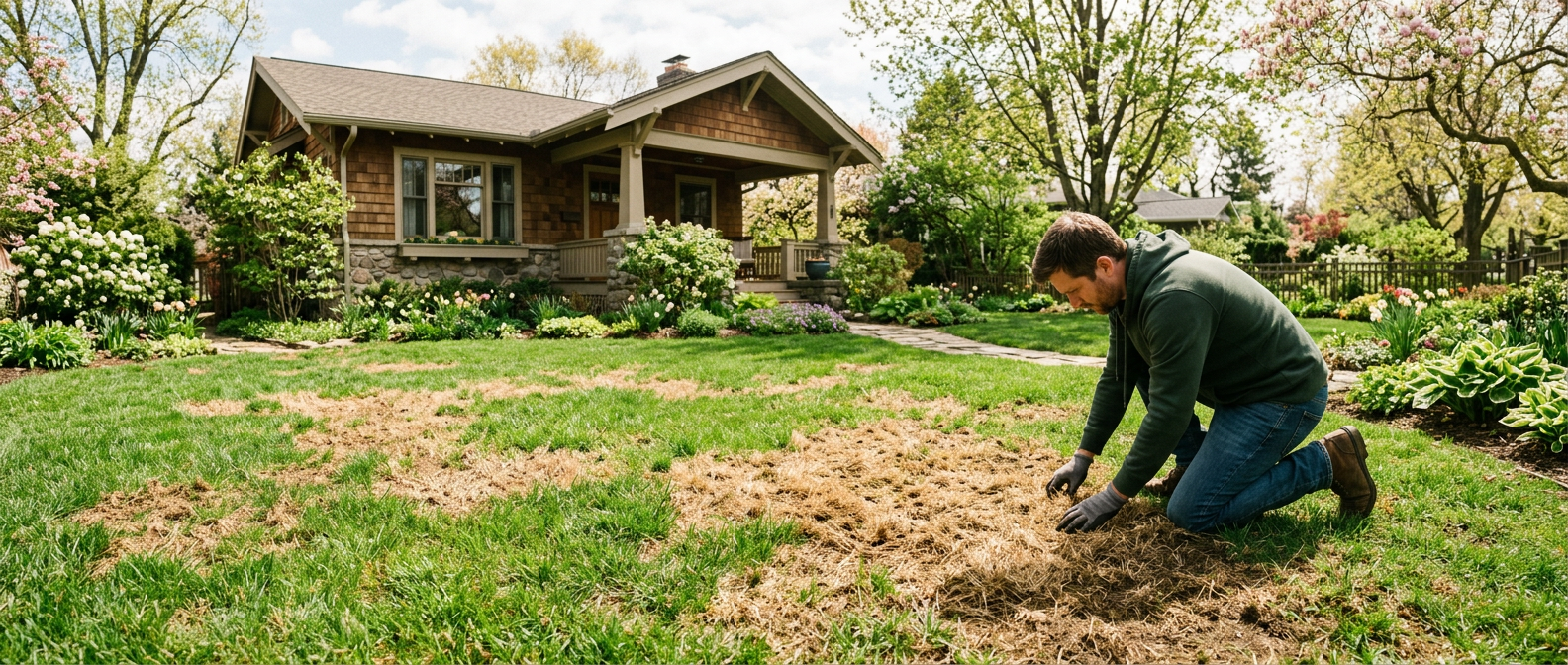
Why your lawn went brown after winter
If your grass woke up patchy, you’re not cursed—you’re normal. Winter stresses turf. Snow cover, ice, soggy soils, and critters all leave their mark. The trick is to diagnose fast, fix what’s fixable, and reseed what’s not. We’ve rehabbed plenty of post‑winter lawns; the playbook is simple if you follow it in order.
The usual suspects (and how they look)
- Snow mold: Circular grayish or pinkish matted patches, 3–12 inches wide. Often slimy or webby when snow melts. Grass may recover if crowns are alive.
- Winterkill: Bleached, straw‑colored areas in low spots or wind‑scoured areas. Crowns are dead; you’ll need seed.
- White grubs: Irregular dead patches that peel up like carpet and tug loose. Often skunks or raccoons dig them up at night.
- Vole runways: Zig‑zag surface trails of chewed grass under where snow sat. Roots usually fine; greens up with raking.
- Dog urine: Small circles with dark‑green halos. Common near walkways.
If you’re seeing fungal clues and want pictures, check our fast guide: Lawn Fungus Identification: Pictures, Symptoms, Fixes.
Quick diagnosis in 5 minutes
- Tug test: Gently pull the brown turf. If it lifts like a rug, think grubs. If it’s anchored, likely snow mold or winterkill.
- Rake test: Lightly rake a patch. If it stands up and looks better in a week, it was snow mold matting.
- Probe: Cut a 4-inch square and inspect the crown (base of the plant). Tan and mushy = dead; white/firm = alive.
- Critter signs: Surface runways = voles. Mounded soil or raised tunnels = moles. Tiny holes overnight? See Tiny Holes in Lawn at Night: What’s Making Them + Fixes.
Fixes by cause (fast and specific)
Snow mold
- Do now: Leaf rake or a stiff broom to fluff matted turf and improve airflow. No fungicide needed in spring.
- Feed light: 0.25–0.5 lb N/1,000 sq ft with a slow‑release fertilizer to encourage recovery.
- Product picks: Milorganite 32 lb, ~$18; Scotts Turf Builder Lawn Food 12.5 lb, ~$22.
Winterkill (dead turf)
- Rake out thatch, loosen the top 0.25–0.5 inch of soil, and overseed.
- Seed choices: Jonathan Green Black Beauty Ultra 7 lb (covers 2,800 sq ft overseeding), ~$29; Pennington Smart Seed Sun & Shade 7 lb, ~$28.
- Topdress thinly with compost and keep moist 2–3 weeks.
White grubs
- Confirm first: Peel back a 1‑sq‑ft section; 6–10 grubs per sq ft is action time.
- Natural control: Beneficial nematodes (Steinernema/ Heterorhabditis). NemaSeek Hb 10M, ~$34, apply to moist soil.
- Preventive: Scotts GrubEx1 (chlorantraniliprole) 14.35 lb, ~$29 treats 5,000 sq ft—apply spring.
- Learn ID and timing: White Grubs in Soil Identification and How to Get Rid of Grubs in Lawn Naturally.
Voles and moles
- Voles: Rake runways; grass usually rebounds. If tunnels collapse, you’re fine.
- Moles: If you’ve got raised tunnels and fresh mounds, see How to Get Rid of Moles in Your Yard: Traps That Work.
Dog spots
- Flush with water when you see them. Reseed bare centers if crowns died.
Overseeding: how we get fast recovery
We spot‑seed dead patches as soon as soil is workable and daytime highs sit above 55°F.
- Prep: Rake, scratch soil, and remove debris.
- Seed rate: Perennial rye 6–8 lb/1,000 sq ft; tall fescue 5–8; KBG 2–3.
- Aftercare: Keep the top 0.5 inch moist with 2–3 light waterings daily until germination, then taper.
- Product helper: Scotts PatchMaster Sun & Shade 4.75 lb, ~$18 for small patches.
Pro tip we learned the hard way: Skip pre‑emergent on areas you’re seeding, or use a seed‑safe one (mesotrione). Otherwise you’ll block your new grass.
Prevent a repeat next winter
- Final fall mow: Don’t leave a shag carpet. Finish at 2.5–3 inches before snow.
- Clean up: Get leaves off the lawn before sustained snow.
- Optional fungicide: In snow‑mold‑prone areas, apply a fall fungicide before permanent snow. Scotts DiseaseEx (azoxystrobin) 10 lb, ~$24 for 5,000 sq ft.
- Spring weeds: Thin lawns invite crabgrass. If you are not overseeding, drop pre‑emergent. We like The Andersons Barricade DG (prodiamine) 18 lb, ~$49.
Numbers that matter
Snow molds typically appear as 3–12 inch circular patches after long snow cover. Pink snow mold can stay active from 30–60°F, while gray snow mold prefers extended snow cover; light raking and drying often restore living turf within weeks (https://extension.umn.edu/diseases/snow-molds-lawns).
What we saw this spring
We trialed two 100‑sq‑ft snow‑mold patches. Simply raking and a light 0.4 lb N/1,000 sq ft feeding brought 80–90% green‑up in 16 days. Adjacent true winterkill spots only filled in after overseeding tall fescue at 6 lb/1,000 sq ft. Moral: rake first, seed second where crowns are toast.
If the lawn thins, defend against weeds
A thinned canopy is crabgrass bait. If you aren’t seeding, apply pre‑emergent when soil temps hit the mid‑50s for several days. If you are seeding, wait until after your first mow or use a seed‑safe product. For season‑long crabgrass strategy, see How to Get Rid of Crabgrass Permanently: Field-Tested Plan.
Frequently asked
Will brown patches after winter recover on their own?+
Sometimes. Snow mold and vole runways often green up after light raking and 2–3 weeks of mild weather. True winterkill and heavy grub damage won’t recover; you’ll need to overseed dead areas and address the underlying cause.
How do I tell snow mold from grub damage?+
Snow mold shows matted, circular patches that stay anchored to soil. Grub damage feels loose; the turf peels back like carpet and you’ll often find 6–10 white grubs per square foot under the sod.
When should I reseed brown patches in spring?+
Reseed once soil is workable and daytime highs are consistently above 55°F. Rake and loosen soil, seed at the recommended rate, and keep the top half inch moist until germination. Avoid pre‑emergent in those areas unless it’s seed‑safe (mesotrione).
Should I fertilize a damaged lawn right after snow melt?+
Use a light feeding only—about 0.25–0.5 lb nitrogen per 1,000 sq ft—to encourage recovery without forcing top growth. Heavy spring feedings push leaf growth at the expense of roots and can backfire.
Do I need a fungicide for snow mold in spring?+
No. Spring fungicides don’t help snow mold that’s already occurred. Rake to improve airflow and let the lawn dry. In high‑risk areas, a preventive fungicide applied in late fall before lasting snow can reduce outbreaks next year.