
Brown Patches in Lawn After Winter: Diagnose and Fix Fast
Seeing ugly brown blotches after the snow melts? Here’s how to tell what killed your grass over winter, fix it fast, and stop it from happening again.
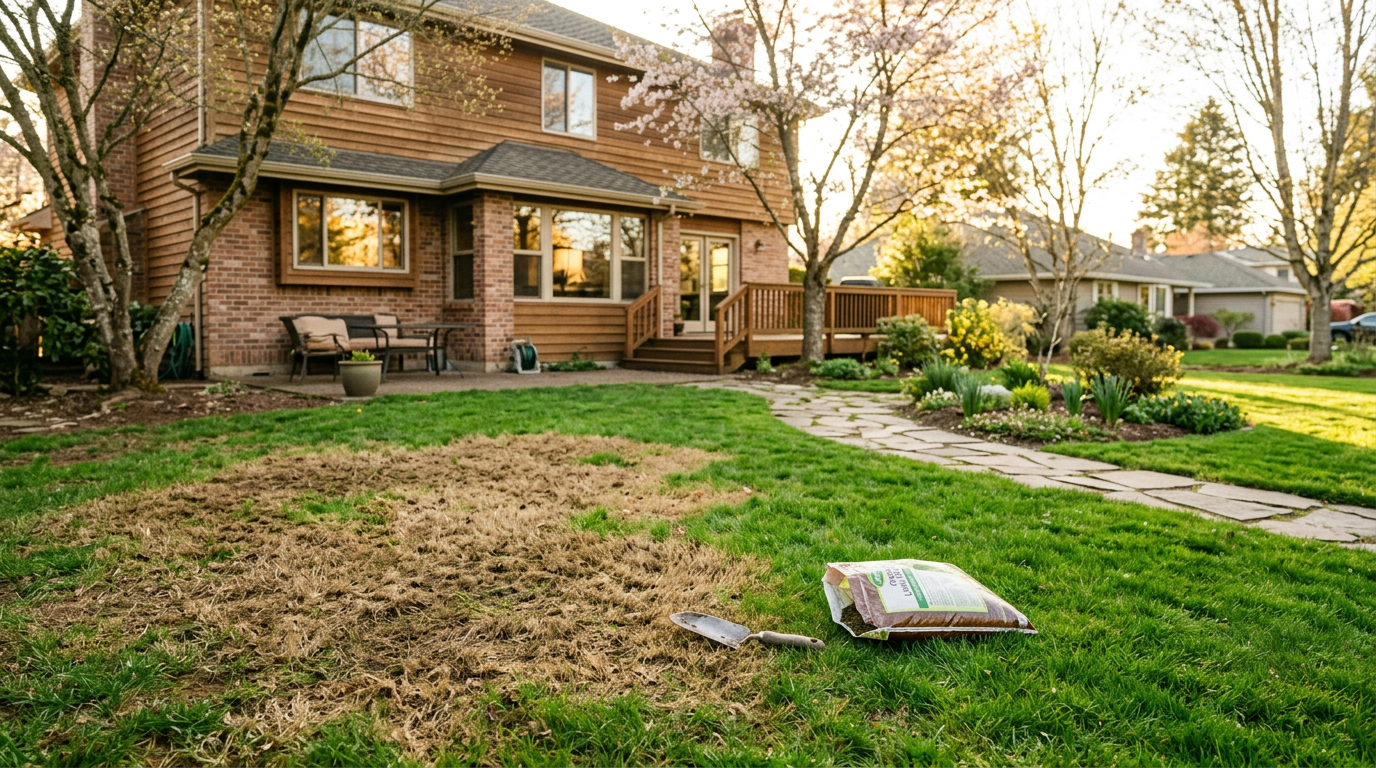
Why your lawn has brown patches after winter
Winter is rough on turf. Those brown patches usually come from one (or a combo) of these: snow mold (matted, gray/pink crust), vole runways (snaky tan trails), grub damage (patches roll up like a carpet), salt/urine burn (edge bands or spots), or plain winterkill from ice, wind, or desiccation.
We see this every March: rake first, diagnose second, reseed third. Most cool-season lawns (Kentucky bluegrass, fescue, rye) bounce back with airflow and a little seed.
Fast diagnosis checklist
- Snow mold: Circular matted patches, gray or pink crust, especially where snow sat. Smells musty.
- Voles: Quarter‑width surface runways carved under snow. Grass crowns are chewed, but roots often intact.
- Grubs: Brown areas from late summer that stayed dead; turf lifts easily with no roots and C‑shaped larvae present.
- Salt/urine: Straw bands along sidewalks/streets or coin‑size dots where pets went.
- Winterkill/ice: Exposed slopes or low spots that ponded ice; grass crowns are mushy or desiccated.
If you’re not sure, skim our photo guide: Lawn Fungus Identification.
Dormant or dead? Two quick tests
- Tug test: Grab a handful and pull. If leaves come off but the crown stays anchored, it’s alive. If the whole tuft lifts with no roots, it’s dead—plan to reseed.
- Scratch test: Use a knife to nick the crown. Green/white inside = alive; brown all through = dead.
Start repairs once soil temps hit 50–55°F—your seed will actually germinate.
Fix it by cause (field-tested)
Snow mold
- Rake matted areas lightly to stand blades up and let them dry.
- For severe cases on high-value turf, a spring fungicide pass with propiconazole or azoxystrobin helps. Try BioAdvanced Fungus Control for Lawns (32 oz hose‑end, ~$24).
- Prevention: In fall, cut final mow to 2.25–2.5 in, dethatch if thatch > 0.5 in, and avoid heavy late‑fall nitrogen.
Voles (not moles)
- Rake, then topdress thin runways with compost and overseed. The roots are usually fine; it fills in fast.
- Reduce cover (leaf piles) and trap near edges if needed. Victor Easy Set Mouse Traps (4‑pack, ~$6) work with peanut butter.
- If tunnels are heaving soil, that’s moles hunting grubs/earthworms—see How to Get Rid of Moles in Your Yard.
Grubs
- Peel back suspect edges. If you count 6–10 grubs per square foot, treat.
- Natural options: Beneficial nematodes (NemaSeek Hb, 10 million, ~$29) in late spring/early summer, or Milky Spore (10 oz, ~$39) for long‑term Japanese beetle control.
- Then rake, topdress, and overseed. Full plan: How to Get Rid of Grubs in Lawn Naturally.
Salt and dog urine
- Flush with 1–2 inches of water over a few days. Gypsum (Espoma Garden Gypsum 6 lb, ~$9) can help displace sodium in soils.
- Rake dead spots, add a handful of compost, and reseed.
Winterkill, ice, and desiccation
- Trim ragged edges, rake debris, topdress with 1/4 inch compost, and overseed.
- Cover seed with straw or a seed blanket if frost still swings.
Numbers that matter
Snow mold pathogens can grow at 30–60°F; gray snow mold (Typhula) often needs 60+ days of continuous snow cover, while pink snow mold (Microdochium) can hit with or without snow whenever it’s cool and wet (UW–Madison Extension: https://hort.extension.wisc.edu/articles/snow-molds).
Spring repair: our fast, cheap sequence
- Rake the whole lawn with a spring‑tine rake (Ames 2915712, ~$21). Airflow alone revives 30–50% of “dead” look.
- Spot‑dethatch matted areas and bag debris.
- Topdress bare patches with compost.
- Overseed: For cool‑season mixes, Scotts Turf Builder Sun & Shade Mix (3 lb, ~$19) or Jonathan Green Black Beauty Patch & Repair (4.5 lb, ~$17).
- Lightly roll or step seeds in; keep moist 2–3x daily until germination.
- Starter fertilizer at label rate once seedlings hit first mow. Skip if you fertilized late fall.
Note: If you plan crabgrass pre‑emergent, use a “seeding‑safe” mesotrione product or delay pre‑emergent on the spots. See crabgrass strategy here: How to Get Rid of Crabgrass Permanently.
Prevent it next winter (simple checklist)
- Final fall mow: 2.25–2.5 in for cool‑season lawns.
- Dethatch if > 0.5 in thatch.
- Balanced fall fertilization; avoid heavy nitrogen within 4 weeks of ground freeze.
- Move snow piles around so one area doesn’t stay buried for months.
- Keep sidewalks salted, not turf. Use calcium chloride/pelletized options sparingly.
- Reduce vole cover: clean up leaves, keep edges tidy. If you see tiny holes or pecked spots, check this: Tiny Holes in Lawn at Night.
When to stop hoping and reseed/sod
If the tug test fails across large areas, or more than ~30% of crowns scratch brown, reseed. For instant cover, sod works once soil is workable. We’ve rehabbed football‑sized dead zones in 4–6 weeks with aggressive raking, compost topdressing, and a solid overseed—cheap and done.
Frequently asked
Will brown patches from snow mold recover on their own?+
Often, yes. Light raking to break the crust and improve airflow is usually enough. If crowns are alive, new leaves push through in 1–3 weeks of mild weather. Severely matted or crown‑damaged spots may need spot overseeding and, rarely, a one‑time fungicide.
How can I tell if grubs caused the spring brown patches?+
Try the carpet test: the dead patch lifts easily with little to no roots. Slice a square foot and count grubs; 6–10 per sq ft can cause damage. If you find that level, treat with nematodes in late spring, then topdress and overseed the area.
Is dog urine damage worse after winter?+
Yes. Concentrated urine plus low winter moisture burns crowns. In spring, flush spots with water, rake, and reseed. Training a “potty zone,” watering immediately after pee, or using a gravel corner saves the lawn. Avoid miracle supplements—hydration and dilution work.
Can I apply crabgrass pre-emergent and still overseed bare patches?+
Standard pre‑emergents block new grass seed. Use a mesotrione‑containing product labeled for seeding, or skip pre‑emergent on the patched areas and treat the rest of the lawn. Seed once soil is 50–55°F, keep moist, then spot treat weeds after the third mow.
Do moles cause brown patches in spring?+
Moles don’t eat grass; they dislodge roots while chasing grubs and worms, which can dry patches. Collapse tunnels, overseed disturbed areas, and address the mole with an effective trap if needed. For a proven method, see our mole guide with trap recommendations.