
Brown Patches in Lawn After Winter: Fixes + Causes
Brown blotches after the thaw aren’t a mystery. We’ll help you identify whether it’s snow mold, dormancy, grubs, salt, or critters—and fix it fast.
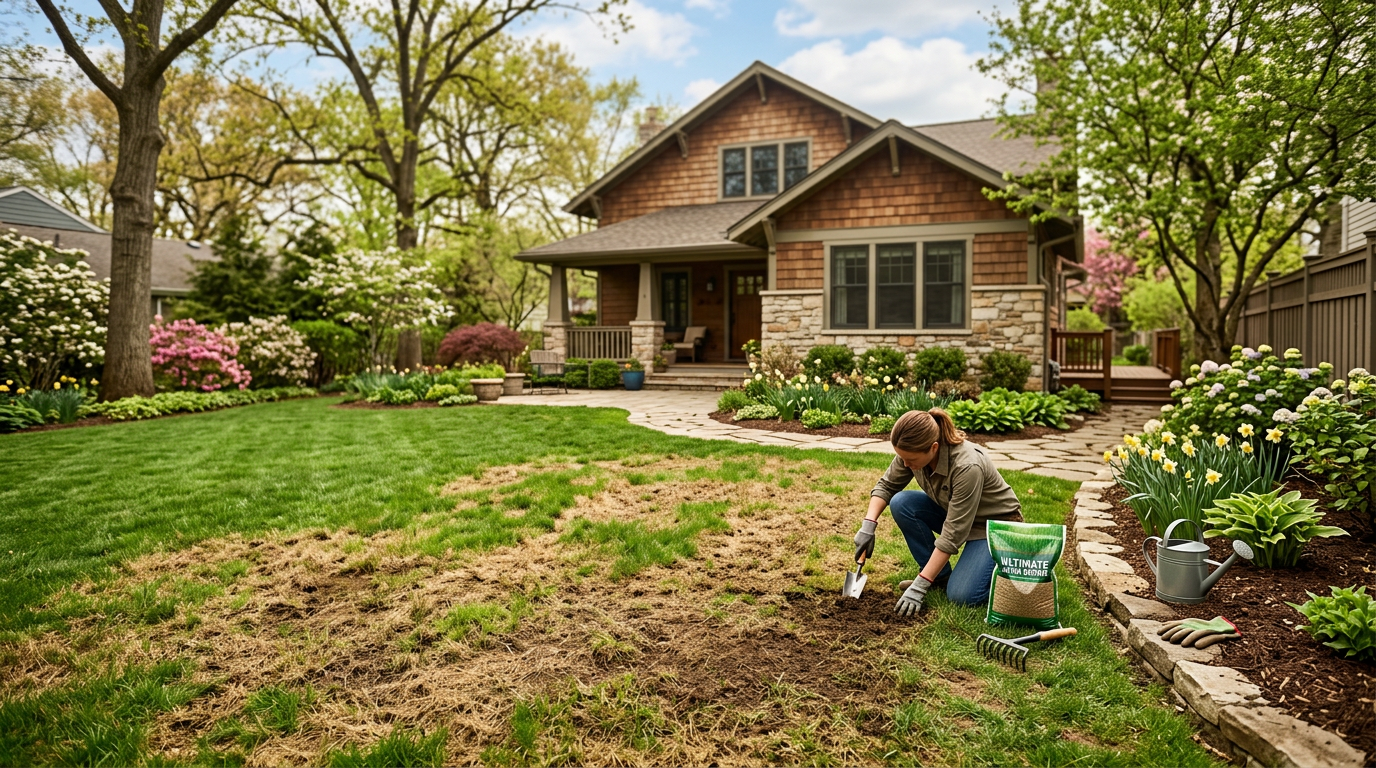
Why your lawn has brown patches after winter
Winter is rough on turf. Brown patches show up for a few predictable reasons: snow mold (matted, straw‑tan circles), plain dormancy (especially warm‑season grasses), winter desiccation/wind burn, salt splash near sidewalks, vole trails under snow, and—less often—grub damage. The fix depends on which you’ve got, so let’s sort it fast without any turf‑pro gatekeeping.
We see this every spring: 70% of “dead” patches are just matted, oxygen‑starved grass that recovers with raking and airflow. The rest need targeted help.
Diagnose it in 60 seconds
Do this quick:
- Look for matting and gray/pink fuzz after snow melt = likely snow mold. See Lawn Fungus Identification for pictures.
- Tug test: grab the brown turf and pull. If it peels up like a loose carpet, grubs probably ate the roots. If it resists, it’s not grubs. Confirm with a shallow 1‑ft square peel and count grubs.
- Edges clean and in lines or serpentine trails? Voles. Random spots near sidewalks/driveways? Salt burn.
- Grass type matters: bermuda/zoysia stay brown longer into spring; kentucky bluegrass/perennial rye pop sooner. Warm‑season lawns may just be late to green.
Quick fixes now (spring triage)
- Rake out matted areas with a leaf rake (Fiskars Ergo, ~$24). Get air in; don’t scalp.
- Lightly dethatch if thatch > 0.5 inch. A budget tool like Sun Joe AJ801E (~$129) works.
- Overseed dead patches once soil is 50–55°F+. We like Jonathan Green Black Beauty Ultra (25 lb, ~$99). Topdress with 0.25–0.5 inch of Scotts Turf Builder Lawn Soil (1 cf, ~$8). Keep moist.
- Fertilize lightly after seedlings emerge—think slow release at 0.5 lb N/1000 sq ft. Milorganite (~$15/bag) is gentle. Skip heavy nitrogen right away on stressed turf.
- Pre‑emergent caution: If you seed, skip traditional pre‑emergents in those spots or use a mesotrione‑safe option on label. Otherwise you’ll block your new seed.
We patch our own dog‑trails this way every year. The combo of rake + seed + patience beats panic.
If it’s fungus (snow mold): what to do
Most home lawns don’t need fungicide post‑snow. Do this:
- Gently rake to break up mats and let it dry.
- Let the sun and airflow work. Pink/gray mold rarely kills crowns; the leaf blades look ugly but regrow.
- Spot‑seed any areas that don’t bounce back in 2–3 weeks.
For high‑value turf (or repeat problems), a labeled fungicide before first persistent snow can help. Look for azoxystrobin or propiconazole labeled for snow mold, e.g., Scotts DiseaseEx (azoxystrobin, 10 lb, ~$19–$23). Always follow the label.
If it’s insects or critters: what to do
- Grubs: Confirm by counting. If you find many larvae and loose sod, act. For a natural route, apply Heterorhabditis bacteriophora beneficial nematodes, like NemaSeek Hb (10 million, ~$35), when soil is > 50°F and keep it moist. For curative chemical control in spring, trichlorfon (BioAdvanced 24‑Hour Grub Killer Plus, ~ $22) works; for prevention, apply chlorantraniliprole (Scotts GrubEx, ~$29) in spring/early summer. Learn IDs in White Grubs in Soil Identification and options in How to Get Rid of Grubs in Lawn Naturally.
- Voles: Rake and roll the runways flat; most turf recovers. If you see tiny holes or tunneling, cross‑check with our guide: Tiny Holes in Lawn at Night.
- Salt burn: Flood the area with water to leach salts, then overseed if crowns died. Consider calcium magnesium acetate instead of rock salt next winter.
The numbers (so you know we’re not guessing)
University of Minnesota pegs grub damage thresholds at about 6–10 grubs per square foot; more than that risks visible turf loss (https://extension.umn.edu/turfgrass-insects/grubs-turf). Snow mold thrives with long snow cover and cool, near‑freezing temps; UW Extension notes gray and pink snow molds developing under snow with extended cover and matted turf (https://hort.extension.wisc.edu/articles/snow-molds-in-lawns/).
Prevent it next winter
- Fall mow right: finish the season at 2.5–3 inches for cool‑season turf; don’t leave a shag carpet going into snow.
- Remove leaves before snow. Matted leaves = snow mold party.
- Improve drainage and airflow: fix low spots, thin dense shade, and avoid piling snow on the same turf area.
- Fertilize smart: a modest late‑fall slow‑release feed is fine, but avoid heavy quick‑release within ~6 weeks of consistent snow cover in snow‑prone areas.
- Seed early fall so new turf is mature before winter; young seedlings winterkill easier.
- Patch bare spots fast in spring; bare soil invites weeds. If crabgrass is your usual problem, plan your pre‑emergent strategy around where you will and won’t seed. Our full plan: How to Get Rid of Crabgrass Permanently.
Bottom line: most brown patches after winter bounce back with a rake and a little seed. Confirm the oddball cases—fungus, grubs, salt, or critters—and you’ll fix the rest without wasting money.
Frequently asked
Will brown patches after winter recover on their own?+
Many do. Snow mold usually damages leaves, not crowns, so raking and drying bring recovery in 2–3 weeks. If the crowns died (or grubs ate roots), they won’t regrow—overseed those spots. Warm‑season grasses also green up later, so give them time as soil warms.
Should I apply fungicide for snow mold in spring?+
Usually no. By the time snow melts, the disease has run its course. Rake and let it dry. Use a preventive fungicide labeled for snow mold in late fall only if you’ve had repeat severe issues or manage high‑value turf. Always follow the product label.
How do I know if grubs caused the brown patches?+
Do the tug test: if sod lifts easily and you see C‑shaped white grubs in the top inch, that’s your culprit. Count them. Above roughly 6–10 per square foot, damage is likely. Treat curatively in spring with trichlorfon, or prevent with chlorantraniliprole in spring/early summer.
Can I use pre‑emergent and still overseed the patches?+
Traditional pre‑emergents block grass seed, too. If you need both, either skip pre‑emergent where you’ll seed, or use a product labeled safe for seeding (like mesotrione) and follow timing exactly. Otherwise, seed first, establish, then use pre‑emergent next season.
What about salt damage along sidewalks and driveways?+
Salt draws water out of grass and roots. Flush those areas with water in early spring to leach salts, then rake and overseed if crowns died. Next winter, switch to calcium magnesium acetate or shovel earlier to reduce salt use. Edge strips benefit from a gypsum topdress.