
Brown Patches in Lawn After Winter: Causes and Fixes
Spring brown-outs aren’t a mystery. We’ll help you tell dead vs. dormant grass, spot snow mold, salt or dog burn, grubs, or vole damage—and fix each fast.
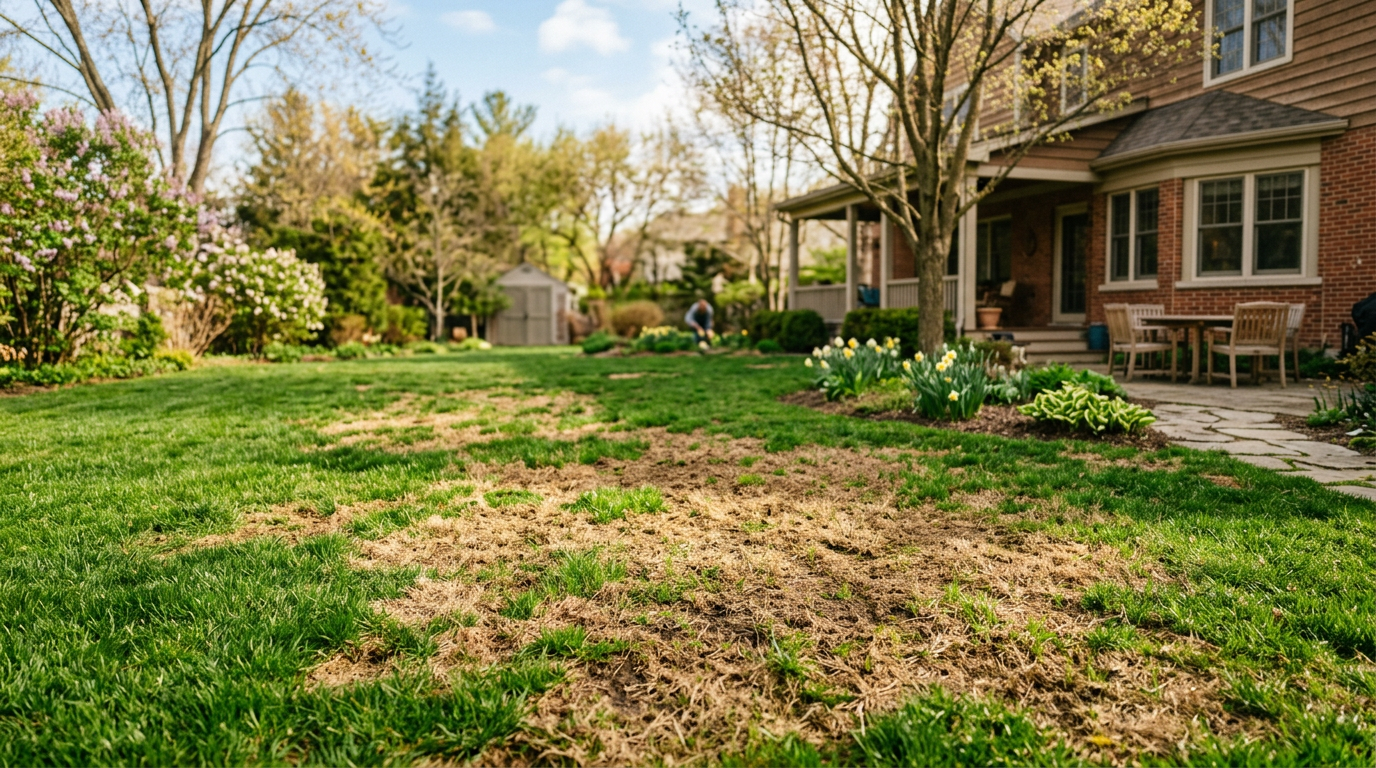
Why you’ve got brown patches after winter
Brown patches in spring boil down to a handful of usual suspects:
- Snow mold (gray/pink): matted, gray/white webbing, circular patches. Often recovers with raking and drying out.
- Salt or dog urine burn: straw‑colored, often along sidewalks/driveways or favorite “pee lanes.” Dead crowns = needs reseeding.
- Winterkill/crown hydration: low spots or sunny south/west faces; plants desiccated or refroze after a thaw.
- Voles/moles: snaking surface runways under snow (voles) or raised, soft runs (moles). Grass may be chewed/killed in tracks.
- Grubs: turf lifts like a carpet; wildlife/patchy die‑off late fall into spring.
We’ve repaired dozens of these each spring. The fix is almost always: rake, diagnose, then reseed what won’t bounce back.
Diagnose in 5 minutes
- Tug test: Grab brown blades. If crowns are white/firm and resist, it’s dormant/stressed, not dead. If they crumble and pull free, reseed.
- Rake test: Lightly rake. If the area opens and shows green at the base after a week of sun, it’s recovering snow mold.
- Location clues: Edges near roads/walks = salt. Dog paths = urine. Low/wet = crown hydration. Meandering runways = voles.
- Flip a flap: If sod peels up easily and you see C‑shaped larvae, it’s grubs. Count per square foot.
Numbers that matter
A healthy lawn tolerates about 5 grubs per square foot; more often means thinning or dead patches that won’t self‑repair (University of Wisconsin Extension: https://hort.extension.wisc.edu/articles/white-grubs-lawns/). Use that threshold before you reseed over a problem that will just keep eating.
Fixes by cause (fast + cheap)
- Snow mold: Rake to fluff matted turf and improve airflow. Skip watering cool, wet weeks. Fungicide is rarely needed in spring; save it for fall if you had chronic issues.
- Salt/urine: Flood the spot with 1–2 gallons of water per square foot to leach salts. Scratch in compost, then reseed. Gypsum can help with infiltration but isn’t magic; the key is water + seed.
- Winterkill: Rake debris, topdress thin spots with 1/4" compost, overseed.
- Voles/moles: Rake runways flat; most vole damage regrows. If tunnels keep appearing, address the critter pressure. See How to Get Rid of Moles in Your Yard and Tiny Holes in Lawn at Night.
- Suspected fungus: Snow mold is the spring headliner, but other diseases can ride along. Compare symptoms with our Lawn Fungus Identification visual guide before you spray anything.
- Grubs: Confirm first. Start with our White Grubs in Soil Identification. If you’re over threshold, use a curative (trichlorfon) in spring or go natural mid‑summer with beneficial nematodes/milky spore. Then reseed. Here’s our field plan: How to Get Rid of Grubs in Lawn Naturally.
Reseed or wait? Timing that actually works
- Cool‑season lawns (fescue/rye/bluegrass): Overseed when soil is 50–65°F and nights are above 45°F. That’s when seed wakes up fast and disease pressure is low.
- How to patch: Loosen top 1/2", spread 3–5 seeds/sq in, press for seed‑to‑soil contact, and top with a light peat/compost dusting.
- Watering: Mist 1–2x daily to keep the top 1/4" moist until germination, then taper.
- Patience: Perennial rye pops in 5–10 days; tall fescue in 7–14; Kentucky bluegrass can take 14–28.
Prevent next winter’s brown spots
- Mow right: Final mow before lasting snow around 2.5–3" to reduce matting/snow mold.
- Don’t overfeed late: Skip heavy nitrogen within ~6 weeks of consistent snow cover; keep fall feeding earlier and slow‑release.
- Manage leaves: Mulch thin layers; remove heavy mats.
- Traffic: Avoid walking/driving on saturated thawed turf.
- Salt smart: Use sand or calcium magnesium acetate near turf; shovel first, salt sparingly.
Products we actually use (prices as of this season)
- Scotts Turf Builder Sun & Shade Mix, 7 lb — about $29: reliable spring patch seed.
- Jonathan Green Black Beauty, 3 lb — about $19: fescue‑forward, drought‑tough patches.
- Espoma Organic Garden Gypsum, 6 lb — about $8: helps with infiltration after salt, then water heavily.
- Scotts DiseaseEx Lawn Fungicide, 10 lb — about $26: only if you’ve had repeat snow mold; apply in late fall as prevention.
- Luster Leaf Rapitest Soil Test Kit — about $15: checks pH before you blame the weather.
- Ames 14" Steel Dethatching Rake — about $24: the “wake‑up” tool for matted turf.
- Safe Paw Ice Melt, 8 lb — about $20: pet‑safe near lawn edges.
We’ve turned spring brown quilts into green carpets with nothing fancier than raking, seed, and patience. Start simple; only escalate when the evidence says so.
Frequently asked
Will brown grass come back after winter?+
If crowns are alive (white/firm and resist a tug), yes—especially after raking and a week of sun. If the tug test pulls plants up easily or the crowns are mushy/straw, they’re dead and need reseeding. Salt/urine burn and severe winterkill usually won’t self-recover.
How do I tell snow mold from dog urine spots?+
Snow mold patches are circular/matted with gray-white webbing and often scattered across the yard. Dog spots are straw-colored, often ringed with a darker green edge, and cluster along routes/favorite areas. Snow mold often recovers after raking; urine-burned crowns are usually dead and need reseeding.
Should I use fungicide for snow mold in spring?+
Usually no. Once snow melts and you rake to dry/air the turf, snow mold goes dormant and the lawn outgrows it. Save fungicides for fall prevention if you’ve had chronic outbreaks. Mow properly, avoid heavy late nitrogen, and manage leaf/thatch to reduce risk next winter.
Is gypsum good for road salt damage?+
Gypsum can help flocculate some soils and improve infiltration, but it doesn’t magically neutralize chloride. The real fix is heavy leaching water plus reseeding dead spots. Use gypsum as a helper, not a cure-all, and consider pet-safe deicers or sand near turf edges next winter.
When should I fertilize a lawn recovering from winter?+
Hold off until the lawn is actively growing and you’ve addressed dead patches. A light slow-release feeding after green-up helps recovery. Avoid heavy nitrogen early if you’re reseeding—young seedlings burn or surge weakly. Feed new seed 4–6 weeks after germination, then resume your normal schedule.