
Brown Patches in Lawn After Winter: Causes + Fixes
Brown patches after winter are normal—but not all are equal. We’ll help you ID the cause (snow mold, grubs, salt, critters) and fix it fast without wrecking your lawn.
Quick intro
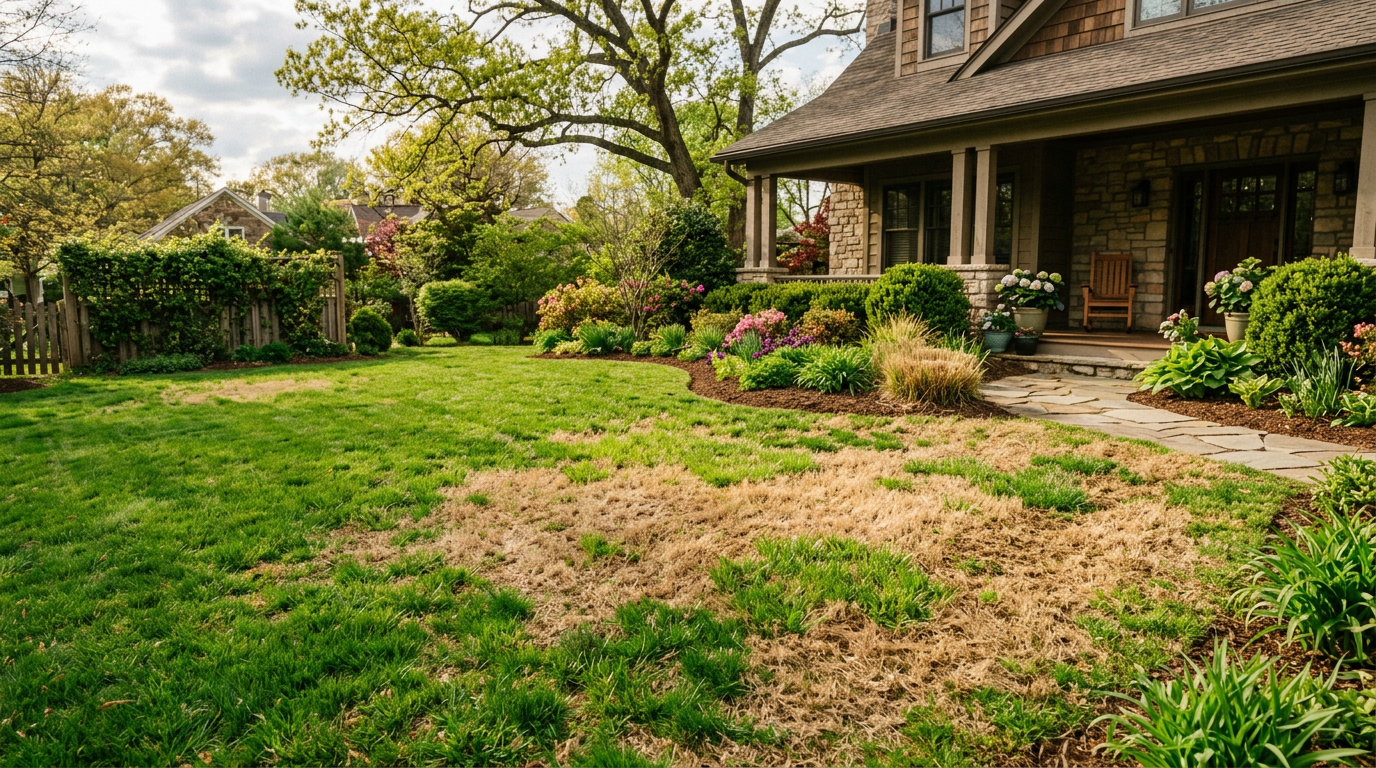
Brown patches in lawn after winter are common. The trick is to ID the cause so you don’t waste a weekend (and money) on the wrong fix. We’ll show you the fast way to diagnose, repair, and prevent them next year.
Diagnose by pattern (1 minute walk‑through)
- Rings or circles, often pink/gray crust on matted blades = snow mold.
- Random straw‑colored blotches where snow piled or wind hit = winterkill/desiccation.
- Streaky runs or surface tunnels under thatch = vole activity.
- Burned patches along sidewalks/driveways = road salt.
- Small yellow-to-brown polka dots in high-traffic pet areas = dog urine.
- Dead patches that peel up like a carpet with C‑shaped larvae under = grubs.
- Whole lawn tan but greening at edges = warm‑season grass dormancy (normal).
Not sure if disease is involved? See our fast visual guide: Lawn fungus identification.
Fast fixes by cause
Snow mold (pink/gray)
- Rake lightly to lift matted blades and boost airflow.
- Let it dry out; most clears in 2–3 weeks without chemicals.
- Stubborn bare spots: overseed and topdress.
- Recurrent severe cases: apply a fall fungicide before first snow (e.g., BioAdvanced Fungus Control for Lawns, 32 oz hose‑end, ~$20–$25).
Winterkill/desiccation
- Rake out dead grass. Scratch soil to 1/8–1/4".
- Overseed: perennial rye 4–6 lb/1,000 sq ft or KBG 2–3 lb/1,000.
- Keep seed moist 10–14 days.
Vole runs
- Collapse runs with your foot, rake, and seed the tracks.
- If tunnels keep appearing, address predators/cover; for deeper tunneling or heaved mounds, consider How to Get Rid of Moles in Your Yard.
Salt/dog burn
- Flood the patch: 1–2 inches of water over a few days to leach salts.
- For bad burns, replace top 1–2" soil; seed or patch.
- Gypsum (Soil Doctor 40 lb, ~$15) can help soil structure but water is the real fix.
Grubs
- Do the tug test. If sod lifts easily and you count multiple C‑shaped grubs, it’s them. Confirm species here: White grubs in soil identification.
- Natural treatment: beneficial nematodes (Steinernema/ Heterorhabditis), e.g., NemaSeek Hb, ~$35–$45 for 2,000 sq ft. Water in and keep soil moist.
- Synthetic option: BioAdvanced Season Long Grub Control (imidacloprid), 10 lb bag ~$20–$25. Apply per label.
- See full plan: How to Get Rid of Grubs in Lawn Naturally.
The numbers that matter
Grub thresholds: treatment is generally justified when you find about 6–10 white grubs per square foot, depending on species and turf vigor (Purdue Extension E‑271). Counting beats guessing. Source: https://extension.entm.purdue.edu/publications/E-271.pdf
Overseeding targets: perennial rye germinates in 5–10 days for quick cover; Kentucky bluegrass is slower (14–21 days) but durable long‑term. Mixes hedge bets.
Repair bare spots the easy way
- Rake and dethatch lightly. We use a $30 spring‑tine rake or a $129 electric dethatcher for small lawns.
- Scratch soil, spread seed, and topdress with 1/8" compost.
- Product picks: Scotts EZ Seed Patch & Repair Sun + Shade (10 lb, ~$30–$35) or Jonathan Green Black Beauty Sun & Shade (7 lb, ~$35–$40).
- Keep evenly moist (2–3 light waterings/day) until sprouted, then taper.
- A light starter feed helps: Scotts Turf Builder Starter (24‑25‑4), 15 lb, ~$25–$30.
We’ve patched hundreds of spring bare spots; with rye/KBG mixes and consistent moisture, we see visible fill‑in by week 2 and mowable turf by week 4–5.
Prevent a repeat next winter
- Last fall mow: finish at 2.5–3" to reduce matting.
- Remove leaves before snow; matted leaves = mold hotel.
- Fix drainage; downspouts and low spots keep crowns wet.
- Avoid heavy N late fall in warm regions; in cold regions, use a true “late fall” feed only when top growth stops.
- If snow mold is annual: fall fungicide before first long snow cover.
- Train pets to one area; water spots promptly.
- Keep salt off the turf edge; use sand or calcium chloride near grass.
When to wait vs. take action
- Cool‑season lawns: if the crown is white/firm, it will likely rebound—give it 2–3 warm weeks.
- Warm‑season lawns (bermuda, zoysia): whole‑lawn tan until soil >55°F is normal; don’t scalp early.
- Act now if sod peels up (grubs), you see tunneling (voles/moles), or salt/dog spots aren’t greening after a week of heavy watering.
Related troubleshooting
- Seeing pinholes with soil crumbs? Read Tiny holes in lawn at night to ID the culprit fast.
Frequently asked
Will brown patches after winter come back on their own?+
Often, yes. Snow mold and light winter desiccation usually recover in 2–3 weeks after raking and drying. If areas stay bare, overseed. Act immediately if sod lifts easily (grubs), if there are tunnels (voles), or if salt/dog burns don’t respond to heavy watering.
How do I know if it’s grubs or just winterkill?+
Do the tug test. Grub‑damaged turf peels up like a carpet and you’ll see C‑shaped larvae under the thatch/soil. Winterkill doesn’t lift; it’s dead blades attached to firm soil. Count grubs per square foot before treating; thresholds are roughly 6–10 per sq ft.
What should I put down first in spring: fertilizer or seed?+
If you’re patching, seed first and use a starter fertilizer the same day. Avoid pre‑emergent herbicides where you seed—they block grass seed too. Fertilize the rest of the lawn lightly after green‑up; go easy until you see steady growth.
Can I prevent snow mold without fungicides?+
Yes. Mow the final fall cut to 2.5–3 inches, remove leaves, avoid late heavy nitrogen, and improve drainage. Spread out snow piles in spring so spots dry faster. Reserve fall fungicides for lawns with repeat severe snow mold or high‑value turf.
Do gypsum products fix salt damage in lawns?+
Gypsum can improve soil structure in sodic soils, but the primary fix for salt/dog burn is leaching with water. Drench the area with 1–2 inches of water over a few days. For severe cases, replace the top inch or two of soil and reseed or patch.