
Brown Patches in Lawn After Winter? Causes + Fixes
Brown patches after winter aren’t random. They’re a handful of repeatable problems with simple fixes. Here’s how we diagnose in minutes and repair fast.
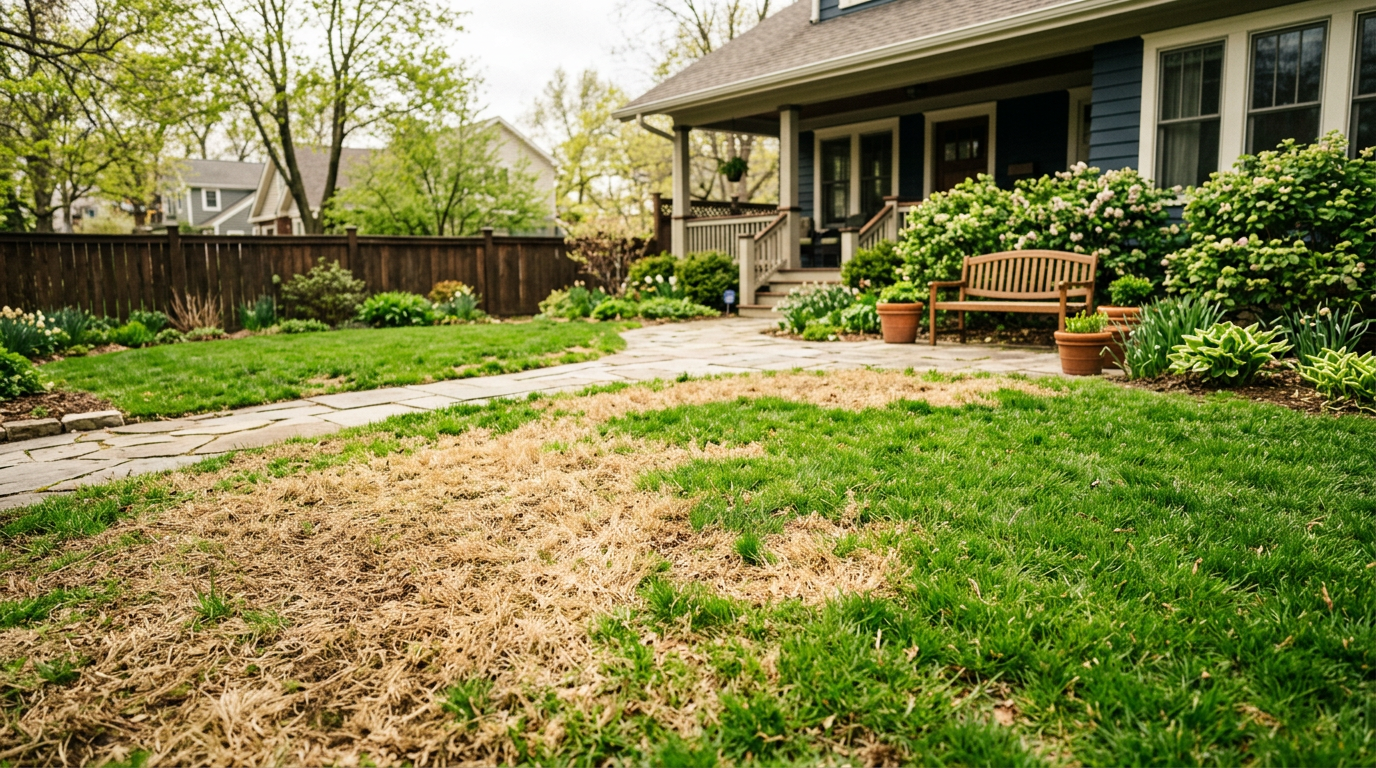
Why your lawn turns brown after winter
Not a mystery. Spring brown patches usually trace to one of five culprits:
- Snow mold (matted, gray/pink fuzz right after melt)
- Grubs (sod peels up like carpet; critter digging)
- Salt burn (dead crescent along driveway/sidewalk)
- Voles/moles (surface runways or raised tunnels)
- Winterkill/desiccation (windy slopes or spots that ponded/iced)
We see all five in our test plots every spring. Good news: each has a fast, specific fix.
Diagnose it in 5 minutes
- Rake the spot. Matted blades with gray/pink webbing = snow mold. See our quick ID cues in Lawn Fungus Identification.
- Tug test. If the turf lifts easily and roots are gone, it’s grub damage. Confirm with a 6x6-inch peel and count. Start with White Grubs in Soil Identification.
- Look for runways/tunnels. Shallow trails = voles; raised, spongy runs = moles. We trap moles here: How to Get Rid of Moles in Your Yard.
- Scan the edges. Brown bands near pavement point to salt injury. Flush and gypsum (details below).
- Tiny holes and torn turf? Night feeders dug for grubs. See causes in Tiny Holes in Lawn at Night.
Fix it by cause (products we actually use)
Snow mold
- Rake to lift mats; let dry; mow 2.5–3 in. Most lawns recover without fungicide.
- Seed bare spots: Scotts Turf Builder Sun & Shade Mix, 7 lb — ~$26; or Jonathan Green Black Beauty Ultra, 7 lb — ~$39.
- Recurring severe cases? A spring fungicide is optional: Scotts DiseaseEx, 10 lb — ~$24; BioAdvanced Fungus Control (propiconazole), 32 oz — ~$25. Spot-treat only.
Grubs
- Threshold matters: if you count >10 grubs/ft², treat. For a natural curative, apply beneficial nematodes (Steinernema), 10 million — ~$32; see how we do it in How to Get Rid of Grubs in Lawn Naturally.
- Preventive (late spring/early summer): Scotts GrubEx (chlorantraniliprole), 14.35 lb — ~$35.
- After control, topdress 1/4 in compost and overseed.
Salt burn
- Deeply flush the area (1" of water, 2–3 times over a week). Apply gypsum: Pennington Fast Acting Gypsum, 30 lb — ~$20, then overseed.
- Swap rock salt for calcium magnesium acetate (CMA): Snow Joe Melt-2-Go CMA, 25 lb — ~$28 next winter.
Voles/moles
- Vole trails typically green up after raking. Reshape, lightly topdress, and seed thin spots.
- Moles? Set traps on active runs; see trap picks and placement in How to Get Rid of Moles in Your Yard.
Winterkill/desiccation
- Water deeply, then topdress 1/4 in compost and overseed. Starter fertilizer helps: Scotts Starter 24-25-4, 15 lb — ~$30 for 5,000 sq ft.
When to overseed and topdress
- Cool-season lawns (most of us): Seed as soon as soil is workable and consistently >50°F. Fall is best, but spring repair beats staring at dirt.
- Pre-emergent conflicts: If you must block crabgrass and seed, use siduron. Scotts Starter with Weed Preventer (siduron), 15 lb — ~$54 covers 5,000 sq ft.
- After seeding: Keep top 1/2 in of soil moist (2–3 light waters/day) until germination, then taper.
The numbers (so you can ignore lawn myths)
Gray snow mold thrives after >60 days of continuous snow cover (https://hort.extension.wisc.edu/articles/snow-molds-in-lawns/). Annual bluegrass can die after ~45 days under ice while creeping bentgrass may survive ~90+ days (https://www.usga.org/content/usga/home-page/course-care/green-section-record/2014/02/how-long-can-turfgrass-survive-under-ice.html). Treat grubs when counts exceed ~10/ft² (https://www.canr.msu.edu/news/how_many_grubs_are_too_many).
Prevent it next winter: simple calendar
- Late fall: Final mow at 2.5–3 in; remove leaves; fertilize once (a “winterizer”).
- Early summer: Prevent grubs before they hatch (chlorantraniliprole), or use nematodes timed to larvae; details here: How to Get Rid of Grubs in Lawn Naturally.
- Winter: Don’t pile snow salted from the driveway onto the lawn. Use CMA near turf. Break up long-lasting ice sheets.
- Spring: Rake early, fix low spots to prevent ponding, and address fungus fast via cultural steps. If you see flushes of fruiting bodies after heavy spring rain, here’s why: Why Mushrooms Growing in Lawn Happen.
We’ve repaired dozens of post-winter lawns using exactly this flow: diagnose, correct the cause, then seed/topdress. It’s not magic; it’s a checklist.
Frequently asked
Will brown patches after winter recover on their own?+
Often, yes. Snow mold and vole trails usually green up after light raking, drying, and a normal mow or two. True kill (grubs, heavy salt, winterkill) won’t regrow. If turf lifts easily, crowns are mushy, or edges near pavement stay bare, plan to overseed and correct the cause.
How do I tell snow mold from grub damage fast?+
Snow mold shows matted grass with gray/pink fuzz right after snowmelt; roots are usually intact. Grub damage fails the tug test—sod peels up like carpet and roots are chewed off. Confirm by peeling a 6x6-inch section and counting grubs per square foot.
Can I seed and use crabgrass pre-emergent together?+
Only with siduron (Tupersan). Standard pre-emergents (like prodiamine or dithiopyr) will block your grass seed. Use a starter fertilizer with siduron if you must seed in spring, or delay pre-emergent until seedlings are mature after a late-summer overseed.
Do I need a fungicide for snow mold?+
Usually no for home lawns. Raking and drying clear most cases. Consider fungicide only if snow mold severely recurs and you’re protecting a high-value area. Apply preventively before long snow cover or early at melt, and spot-treat to avoid unnecessary chemistry.
What’s the quick fix for salt-burned edges?+
Leach salts with 1 inch of water two or three times in a week, apply gypsum to displace sodium, then overseed. Next winter, switch to calcium magnesium acetate (CMA) near turf and avoid piling salted snow on the lawn. Edges usually bounce back with this routine.