
When to Apply Lawn Fertilizer: The Definitive Schedule
Stop guessing and start feeding. We'll break down the exact fertilizer schedule your lawn needs to thrive, whether you've got Kentucky Bluegrass or Bermuda.
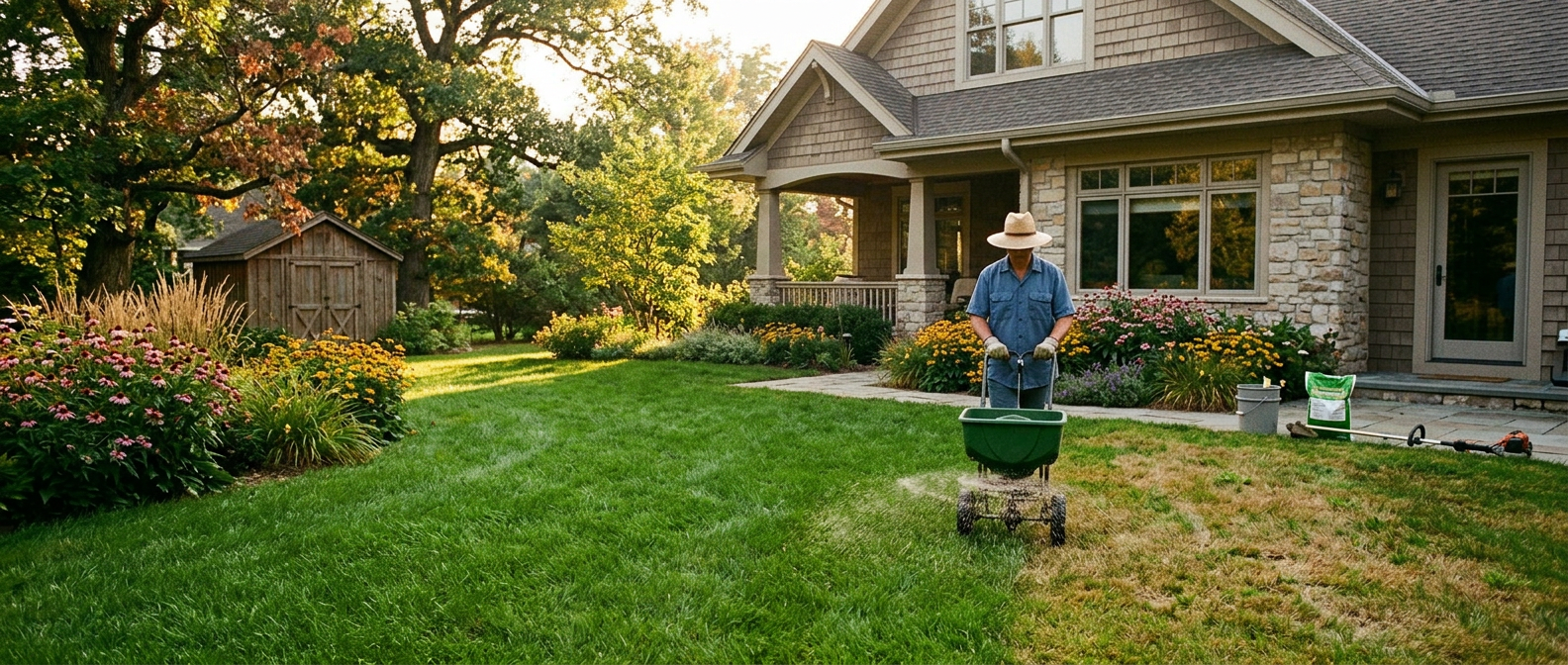
Walk down the fertilizer aisle at any big box store and you'll be hit with a wall of brightly colored bags all promising the same thing: a lush, green lawn that will make your neighbors weep with envy. The advice you get online or from the guy next door is just as confusing. "Fertilize on Memorial Day!" one says. "No, fertilize on Halloween!" says another.
Here's the dirt: fertilizing at the wrong time is, at best, a waste of money. At worst, it can scorch your lawn, invite diseases, and cause a weed explosion. It's one of the most common ways people accidentally sabotage their own yard.
We're here to cut through the noise. Forget the random holiday advice. The real answer to "when to apply lawn fertilizer" depends entirely on one thing: the type of grass you have. We'll show you how to identify your grass type and give you a simple, effective schedule that works.
First, Do You Have Cool-Season or Warm-Season Grass?
This is the most important question you need to answer. Everything else flows from here. Lawns are not one-size-fits-all. Grasses fall into two major families based on the climate they prefer.
Cool-Season Grasses
These grasses, as the name implies, do their best growing in the cooler temperatures of spring and fall, when soil temps are between 50°F and 65°F. They'll often stay green through mild winters but can go dormant and turn brown during intense summer heat.
- Examples: Kentucky Bluegrass, Perennial Ryegrass, Tall Fescue, Fine Fescue.
- Where they live: The northern half of the U.S., the Pacific Northwest, and other regions with cold winters and mild summers. Think states like Connecticut, Colorado, and Ohio. If you live somewhere with four distinct seasons and snow, you probably have cool-season grass. Check out our guide on the best grass types for Connecticut for a deeper dive on these varieties.
Warm-Season Grasses
These are the heat-lovers. They thrive when it's hot, with soil temperatures between 70°F and 90°F. They grow aggressively all summer long and then go dormant, turning brown or tan after the first frost in the fall.
- Examples: Bermuda, Zoysia, St. Augustine, Centipede, Bahiagrass.
- Where they live: The Sun Belt, from the Carolinas across to Texas and Southern California. If your lawn turns completely straw-colored in the winter, you have warm-season grass. For a look at what thrives in the heat and humidity, see our roundup of the top 5 grass types for Florida.
Figured out your team? Great. Now let's feed it.
The Best Time to Fertilize Cool-Season Grass
For cool-season grasses, the mantra is simple: feed in the fall, and again in the spring. Their active growth happens when it's cool. Fertilizing during peak summer heat is a big mistake.
Here’s our recommended four-step annual schedule:
-
Early Spring (April - May): Apply your first feeding after the lawn has greened up and you’ve mowed it a couple of times. This is the perfect time to use a combination product that includes a pre-emergent crabgrass preventer. We like Scotts Turf Builder Halts Crabgrass Preventer with Lawn Food (around $35 for a 5,000 sq. ft. bag). It feeds the waking-up grass while stopping crabgrass seeds from ever germinating.
-
Late Spring (May - June): Your lawn is in its peak growth phase. A second application of a balanced, slow-release nitrogen fertilizer now will support that growth and help it store energy before summer stress arrives.
-
Early Fall (September): This is the single most important application of the year. Your lawn is recovering from summer stress and eagerly soaking up nutrients to repair itself. The cool air and warm soil are perfect for root growth. This feeding helps the lawn thicken up and choke out any weeds that may have appeared.
-
Late Fall (October - November): This is the "winterizer" application. Apply it right before the ground freezes, even after the top growth has stopped. The roots are still active below ground. This dose of nutrients (especially potassium) strengthens the root system over the winter, leading to better disease resistance and a much faster green-up next spring. This is also the ideal time to overseed your lawn to fill in thin spots.
The Best Time to Fertilize Warm-Season Grass
For warm-season grasses, the schedule is flipped: feed all summer long. You start later in the spring and stop earlier in the fall. Fertilizing too early just feeds cool-season weeds, and fertilizing too late can prevent the grass from going dormant properly, making it vulnerable to winter damage.
Here’s the ideal three-step annual plan:
-
Late Spring / Early Summer (May - June): Wait until the lawn is fully and actively growing. Don't jump the gun! Applying fertilizer while it's still partially dormant will just fuel a weed invasion from things like dandelions and poa annua. A good rule of thumb is to wait until you've mowed your green lawn at least twice. This is also a good time to get a handle on any existing broadleaf weeds, which you can learn about in our guide on how to get rid of dandelions.
-
Mid-Summer (July): This is peak growing season. The grass is hungry and will put a good feeding to use immediately. A standard slow-release fertilizer will keep it thick, green, and healthy enough to outcompete invading weeds and pests.
-
Late Summer (August): Apply the final feeding of the year about 6-8 weeks before your historical first frost date. This gives the grass one last meal to store energy before it begins to slow down and prepare for winter dormancy. Do not fertilize after this point.
A Crash Course in N-P-K (The Numbers on the Bag)
You'll see three numbers on every bag of fertilizer, like 29-0-3 or 10-10-10. This is the N-P-K ratio, representing the percentage by weight of Nitrogen, Phosphorus, and Potassium.
- N (Nitrogen): Promotes vigorous, green, leafy growth. This is the main ingredient for established lawns.
- P (Phosphorus): Stimulates strong root formation. It's essential for new seed or sod, but many established lawns have enough. In fact, many states restrict phosphorus use to protect waterways from algae blooms. Don't use it unless a soil test says you need it.
- K (Potassium): The multi-vitamin for grass. It improves overall hardiness, drought tolerance, and disease resistance.
For most established lawns, a fertilizer high in nitrogen, with zero or low phosphorus, and a moderate amount of potassium is perfect. A product like The Andersons PGF Complete 16-4-8 (about $60 for 10,000 sq. ft.) is a fantastic, pro-grade choice with slow-release nitrogen.
The single best way to know what your lawn really needs is a soil test. According to the University of Massachusetts Amherst Turf Program, a standard soil test can cost as little as $20-$30 and provides crucial data on your soil's pH and existing nutrient levels. This completely eliminates guesswork, saves you money, and prevents the over-application of nutrients that can harm the environment (Source: https://ag.umass.edu/services/soil-plant-nutrient-testing-laboratory/lab-services). A test will tell you if you actually need phosphorus or if your soil pH needs adjusting with lime or sulfur.
How Weather Screws Up the Perfect Schedule
Your schedule is a guide, not a commandment. Always pay attention to Mother Nature.
- Drought & Extreme Heat: Never, ever fertilize a stressed lawn. If your grass is dormant, crunchy, or turning yellow from heat stress, applying nitrogen is like throwing gasoline on a fire. It will burn the grass and cause severe damage. Wait until the weather breaks and the lawn begins to recover. We learned this the hard way one year in July. We pushed a mid-summer feeding on our fescue lawn during a heatwave, thinking it would 'help.' Instead, we ended up with a bunch of brown patches and some very happy crabgrass. Don't be us.
- Heavy Rain: Check the forecast. Don't apply fertilizer right before a major storm. A torrential downpour can wash all those pricey nutrients right off your lawn and into the storm drains, which is bad for your wallet and the local ecosystem.
- Watering: After applying a granular fertilizer, you need to water it in. This washes the prills off the grass blades and down to the soil where they can get to work. Aim for about a quarter-inch of water. If you don't have rain in the forecast, running your sprinklers for a short cycle is crucial. For more tips, see our guide on the best time to water grass.
By matching the right product to the right grass type and applying it at the right time, you take the guesswork out of the equation. You'll use less product, get better results, and build a healthier, more resilient lawn that's the envy of the neighborhood—no gatekeeping required.
Frequently asked
Can I fertilize my lawn every month?+
No, this is usually too much. Over-fertilizing can burn your grass, cause a thatch buildup, and create weak growth. Stick to a schedule of 3-4 applications per year during your grass type's active growing season for the best results.
Does it matter if I use granular or liquid fertilizer?+
Both work well. Granular is often slow-release, requiring fewer applications and is generally easier for beginners. Liquid fertilizer is fast-acting for a quick green-up but may need to be applied more frequently. For a consistent, long-term feeding program, we prefer slow-release granulars.
Should I fertilize before or after mowing?+
Fertilize after you mow, not before. Mowing first ensures more of the fertilizer granules reach the soil surface. It also prevents you from sucking up the product with your mower. Wait at least 24 hours after fertilizing before you mow again.
What happens if I fertilize at the wrong time?+
Fertilizing at the wrong time can burn your lawn, especially in high heat. It can also fuel the growth of weeds instead of grass (e.g., feeding a dormant warm-season lawn in early spring) or lead to weak growth that's susceptible to disease and pests.
Can I apply fertilizer and grass seed at the same time?+
Yes, but you should use a 'starter' fertilizer. These are high in Phosphorus (the 'P' in N-P-K), which is vital for new seedling root development. Do not use a 'weed and feed' product, as the herbicide will prevent your new grass seed from germinating.