
How to Aerate Lawn Without a Machine: A Manual Guide
Think you need a gas-guzzling machine to aerate your lawn? Think again. We'll show you how to get oxygen, water, and nutrients to your grassroots using elbow grease and a few clever tools.
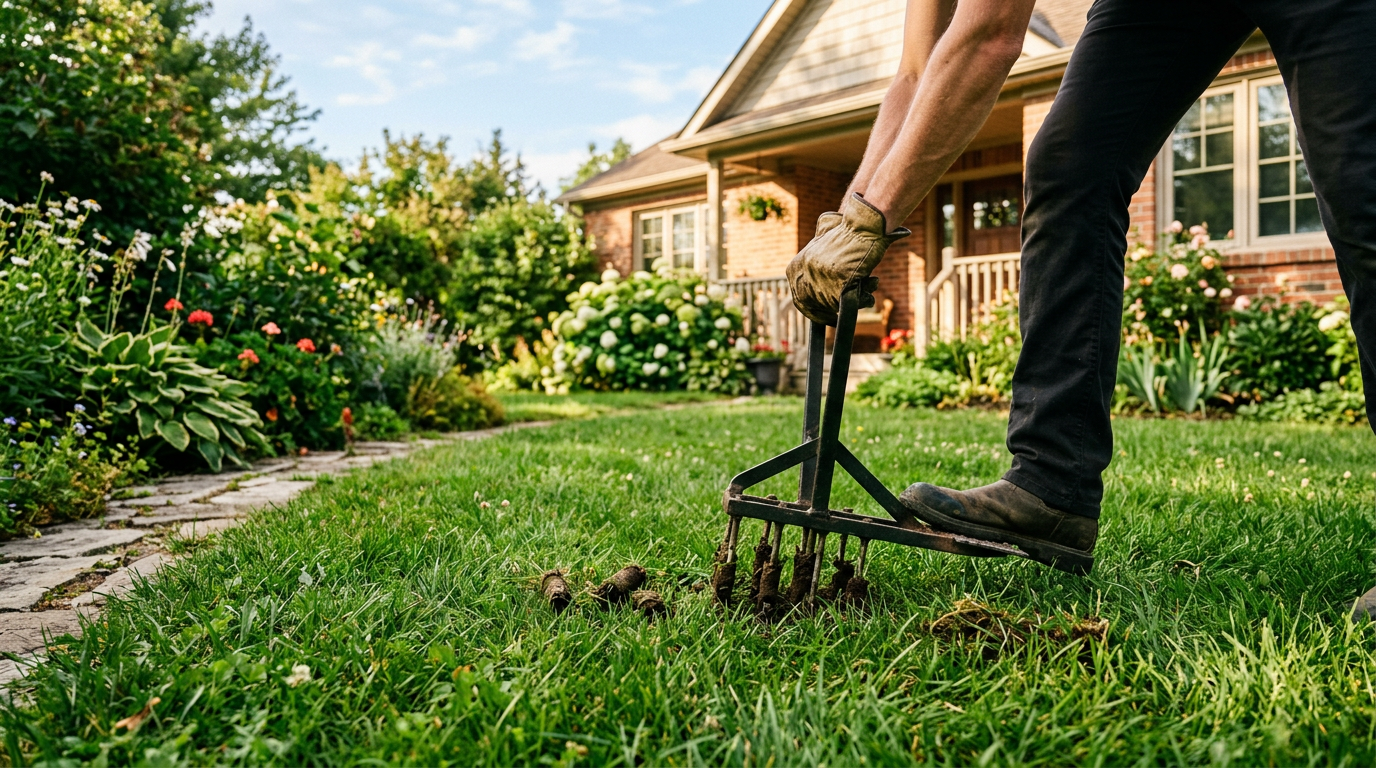
Let's be honest. Nobody wants to rent a lawn aerator. It's a whole adventure you didn't ask for: driving to the rental shop, figuring out how to get a 200-pound beast into your truck, wrestling it across your lawn while it bucks like a rodeo bull, and getting it back before you're charged for another day. It's expensive, loud, and frankly, overkill for most yards.
We're here to tell you there's a better way. You can achieve a perfectly aerated, healthy lawn without a machine. All you need is the right knowledge and a little bit of muscle. This is the no-nonsense guide to breaking up your compacted soil and letting your lawn breathe again, all by hand.
Why Bother Aerating in the First Place?
Over time, your lawn's soil gets squished. Foot traffic from kids and pets, summer BBQs, and even just regular mowing compacts the soil particles together. This creates a hard, dense layer that chokes your grassroots. Think of it like this: healthy soil is a sponge, full of tiny pockets for air and water. Compacted soil is a brick.
When soil is compacted:
- Water runs off instead of sinking in. You waste water and your grass gets thirsty.
- Oxygen can't reach the roots. Grass roots need to breathe, too!
- Fertilizer and nutrients just sit on the surface. They wash away instead of feeding your lawn.
- Roots grow shallow, creating a weak, stressed-out lawn that's susceptible to drought and disease.
A thick layer of thatch—a mix of dead and living grass shoots, stems, and roots that builds up on top of the soil—makes the problem even worse. If your thatch is over half an inch thick, it acts like a waterproof barrier. (If that sounds like your yard, you should learn how to dethatch a lawn before you aerate).
Aeration is the fix. By poking holes and breaking up that compacted layer, you create channels for air, water, and nutrients to get down where they belong: the root zone.
Spike vs. Core Aeration: What's the Difference (And Which is Better)?
When you go manual, you have two choices. This is probably the most important thing to understand, so don't skip this part.
Spike Aeration: This is exactly what it sounds like. You use a tool with solid spikes (like a pitchfork or those goofy-looking shoe attachments) to poke holes in the ground. It's better than nothing, but it has a major drawback. By forcing a solid tine into the ground, you're actually increasing compaction around the edges of the hole. It's a temporary fix at best.
Core Aeration (or Plug Aeration): This is the gold standard. A core aerator uses hollow tines to pull small plugs, or "cores," of soil out of the lawn and deposit them on the surface. Instead of just poking holes, you're physically removing soil to create space. This truly relieves compaction, allowing the surrounding soil to expand. The roots have more room to grow, and the channels stay open longer.
The Verdict: If you have the choice, always go with core aeration. We almost always recommend it over spike aeration. It's simply a better, more lasting solution for your lawn's health.
The Best Manual Lawn Aeration Tools
You don't need a four-figure tool budget. Here are the most effective manual aerators, from dirt cheap to a modest investment.
-
The Humble Garden Fork or Pitchfork (Spike Aeration)
- Cost: ~$30-$50 (or free if you already have one).
- How it works: You just push the tines into the ground, wiggle it a bit, and repeat. And repeat. And repeat.
- Best for: Very small lawns, spot-treating problem areas (like a path worn by the mail carrier), or if your budget is zero. It's a serious workout, but it does introduce some immediate holes for water to penetrate.
-
Spike Aerator Shoes (Spike Aeration)
- Cost: ~$20-$30 for a pair like the GoPPa Spike Aerator Shoes.
- How it works: You strap these contraptions—basically sandals with 2-inch spikes on the bottom—to your boots and... walk around. You'll look ridiculous, but you'll be aerating.
- Best for: Lightly compacted lawns or a fun workout. For best results, you need to walk slowly and deliberately, ensuring you get good penetration. We find they're more effective on soil that's already pretty soft. On hard, clay soil, they can be tough to use.
-
Manual Core Aerator Tool (Core Aeration)
- Cost: ~$40-$60. The Yard Butler Manual Core Aerator is the classic and our top pick.
- How it works: This T-shaped tool has two hollow tines at the bottom. You step on the foot bar, drive the tines into the ground, and pull it out. Two perfect little plugs of soil are ejected as you take the next step. It's simple, effective, and weirdly satisfying.
- Best for: This is the best bang-for-your-buck for any lawn up to about 5,000 square feet. It provides true core aeration without the rental hassle. We've spent more Saturday afternoons than we can count wrestling with rental aerators, and frankly, we're over it. For our test plots and even our own backyards (under a quarter-acre), we've switched almost exclusively to this tool. It’s a workout, sure, but the control you get is fantastic, and you save about $100 on a rental every time.
-
Rolling Spike Aerator (Spike Aeration)
- Cost: ~$80-$120 for a model like the Agri-Fab 45-0545 Push Spike Aerator.
- How it works: It looks like a small push reel mower, but with a drum of spikes instead of blades. You simply push it across your lawn.
- Best for: Larger lawns where a fork or hand tool is just too tedious. It's faster than the other manual options, but remember, it's still spike aeration, not core. You'll often need to add a cinder block or weight to the top tray to get deep enough penetration.
How to Aerate Your Lawn Manually: A Step-by-Step Guide
Ready to get to work? Following the right process is just as important as choosing the right tool.
Step 1: Get the Timing Right
Aeration is a form of stress on your lawn, so you want to do it when the grass is in its peak growing season so it can recover quickly.
- For Cool-Season Grasses (Kentucky Bluegrass, Fescue, Ryegrass): Aerate in the early fall. The combination of still-warm soil and cool air is perfect for root growth.
- For Warm-Season Grasses (Bermuda, Zoysia, St. Augustine): Aerate in the late spring or early summer. These grasses thrive in the heat. For instance, if you're trying to find the best grass for Alabama, you'll be dealing with warm-season varieties that love a summer aeration.
Step 2: Prep the Lawn
A little prep work makes the job a whole lot easier.
- Water Well: Aerating dry, hard soil is nearly impossible and ineffective. Water your lawn thoroughly one to two days before you plan to aerate. You want the soil to be moist enough to allow the tines to sink in 2-4 inches deep, but not sopping wet and muddy. If you're unsure, check out our guide on the best time to water grass.
- Mow: Cut your lawn a little shorter than usual. This helps you see what you're doing and allows the soil plugs to break down more easily.
- Mark Obstacles: Use small flags to mark sprinkler heads, shallow utility lines, or anything else you don't want to puncture.
Step 3: Get to Work
Grab your tool of choice and adopt a system. Don't just wander around randomly.
Work in a consistent pattern, like you're mowing the lawn. Go over the entire area once. For heavily compacted areas (like where you always walk from the driveway to the door), make a second pass perpendicular to the first.
According to turfgrass specialists at Penn State Extension, heavy clay soils or lawns with high traffic may need aeration once or even twice a year. They recommend aiming for 20 to 40 holes per square foot for effective core aeration. (Source: https://extension.psu.edu/lawn-aeration). With a manual tool, this means your steps should be about 6-8 inches apart.
Step 4: The Aftermath
Your lawn will look a bit messy, especially after core aeration. This is a good thing!
- Leave the Plugs: Do NOT rake up the soil plugs. They contain valuable soil microorganisms. Let them lie on the lawn. They will break down and disappear back into the soil in a week or two, returning nutrients to your turf. Mowing over them will speed up the process.
- Fertilize and Overseed: This is the golden opportunity! With thousands of holes in your lawn, it's the absolute best time to apply fertilizer and seed. The seed and nutrients will have direct contact with the soil. This is how you go from a decent lawn to a spectacular one. If you're not sure how, our guide on how to overseed a lawn will walk you through it.
- Water: Keep the lawn lightly watered for the next couple of weeks, especially if you've overseeded, to help the new seeds germinate and the existing grass recover.
Signs Your Lawn is Begging to Be Aerated
Not sure if your lawn really needs it? Here are the tell-tale signs:
- Puddling Water: Water pools on the surface after a light rain instead of soaking in.
- Hard Soil: Try the screwdriver test. If you can't easily push a screwdriver 4-6 inches into your moist lawn soil, it's compacted.
- Struggling Grass: You have bare patches, thinning grass, or areas that just won't green up no matter how much you water or fertilize.
- Heavy Traffic: Your lawn is the neighborhood football field or a racetrack for your dog.
- Weed Invasion: Many weeds, like dandelions and crabgrass, thrive in compacted soil where turfgrass struggles. A yard full of them is often a sign of underlying soil issues. If you've got a bumper crop, here's how to get rid of dandelions in your lawn while you address the root cause.
How Often Should You Aerate Manually?
This isn't necessarily an every-year chore for everyone.
- For heavy clay soil or high-traffic lawns: Plan on aerating annually.
- For sandy soil or low-traffic lawns: You can likely get away with aerating every 2-3 years.
Ultimately, let your lawn tell you. If it's showing the signs of compaction we listed above, it's time to aerate, regardless of when you last did it.
By skipping the rental machine and using one of these manual methods, you not only save money and hassle, but you also get a great feel for your lawn's health. You'll know exactly which spots are the most compacted and where the trouble areas are. So grab a tool, wait for a good rain, and give your lawn the air it's been gasping for.
Frequently asked
Can I just poke holes in my lawn with a pitchfork?+
Yes, you can use a pitchfork. This is called 'spike' aeration and it's better than nothing, especially for small, compacted spots. However, it can sometimes increase compaction around the holes. For best results, a manual core aerator that removes plugs of soil is the superior choice.
How do I know if my lawn needs aerating?+
Check for signs of compaction. If water puddles on your lawn after rain, or if you can't easily push a screwdriver 4-6 inches into moist soil, it's likely compacted. High foot traffic areas and lawns with heavy clay soil are prime candidates for regular aeration.
What is the best month to aerate my lawn?+
Aerate during your grass's active growing season. For cool-season grasses like Fescue or Bluegrass, aerate in early fall. For warm-season grasses like Bermuda or Zoysia, aerate in late spring or early summer. This timing ensures the grass recovers quickly and fills in vigorously.
Should I leave the soil plugs on my lawn after core aerating?+
Absolutely. The soil plugs contain valuable microorganisms. Let them lie on the lawn to break down naturally. They will decompose within a week or two, returning nutrients to the soil. Mowing over them can help break them up faster. Do not rake them up.
Is it better to aerate or dethatch first?+
If your lawn needs both, you should always [dethatch first](/cluster/how-to-dethatch-a-lawn). Dethatching removes the thick layer of dead organic matter on the surface, which allows the aerator tines to penetrate the soil more effectively. Following dethatching with aeration creates the perfect conditions for a healthy lawn.