
The 5 Best Grass Types for Idaho Lawns (2024 Guide)
Stop guessing what grass to plant. We'll show you the toughest, greenest grass types that actually thrive in Idaho's unique climate, from Boise to Coeur d'Alene.
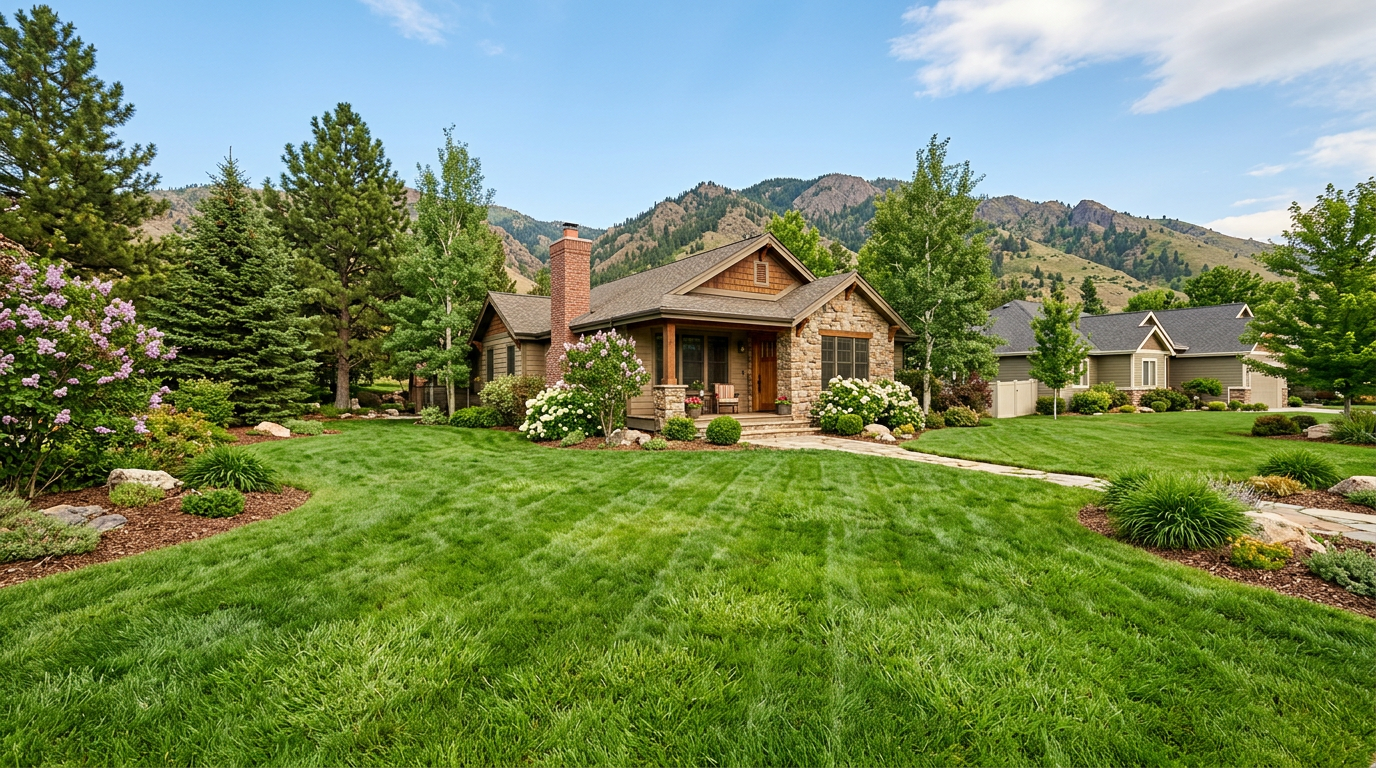
Let's be direct. Growing a great lawn in Idaho isn't for the faint of heart. You've got scorching, dry summers in the Treasure Valley, deep freezes in the Panhandle, and alkaline soil almost everywhere in between. It’s a state of extremes. But getting a carpet of green that your neighbors will envy is 100% achievable. You just have to ditch the generic advice and pick the right grass for the job.
We’re not here to sell you a fantasy. We're here to give you the no-nonsense guide to the best grass types that will actually survive and thrive in Idaho, whether you’re in Boise, Pocatello, or Coeur d'Alene.
Understanding Idaho's Unique Climate
Before you throw a single seed, you have to understand the battlefield. Idaho is firmly a cool-season grass state. This means grasses that do their best growing in the spring and fall when temperatures are between 60-75°F. Any warm-season grass you see thriving down south—like Bermuda or Zoysia—will check out for good after one Idaho winter.
The state spans several USDA Hardiness Zones, from a chilly 3b in the mountains to a more moderate 7b in areas like Lewiston. Most of the population lives in zones 5-7. This means your grass needs to handle:
- Cold Winters: Sub-zero temperatures are a given. The grass must go dormant and survive being frozen.
- Hot, Dry Summers: Low humidity and high temps, especially in southern Idaho, will stress your lawn and your water bill.
- Alkaline Soil: Much of Idaho's soil, particularly in the south, is alkaline (high pH). This can make it hard for grass to absorb nutrients.
Your strategy must account for these challenges from day one.
1. Kentucky Bluegrass (KBG): The Idaho All-Star
When you picture a perfect, dense, dark-green lawn, you're probably picturing Kentucky Bluegrass. For sunny areas in Idaho, KBG is the gold standard for a reason.
- Appearance: Rich, blue-green color with a medium texture.
- Durability: It spreads via underground stems called rhizomes, allowing it to fill in bare spots and self-repair from damage. This makes it great for yards with kids and pets.
- Cold Tolerance: Excellent. It handles Idaho winters like a champ.
The Catch: KBG is a bit of a diva. It has a relatively shallow root system, making it thirsty during those dry Boise summers. It also requires more fertilizer than other types to look its best and can be slow to establish from seed. How long does grass seed take to grow? Well, KBG is on the slower end of that timeline, often taking 14-30 days to germinate.
Our Pick: Scotts Turf Builder Kentucky Bluegrass Mix Grass Seed. You can find a 7 lb. bag at a Home Depot in Twin Falls for around $45. It's a high-quality seed that delivers that classic KBG look.
2. Tall Fescue: The Drought-Fighting Workhorse
If you're in an area with watering restrictions or just want a lower water bill, Turf-Type Tall Fescue (TTTF) is your new best friend. Don't confuse this with the old, clumpy, wide-bladed Kentucky 31 variety. Modern TTTFs are much more attractive and a fantastic choice for Idaho.
- Drought Tolerance: This is its superpower. Tall Fescue grows incredibly deep roots—some up to 3 feet deep—that can access water far below the surface. This makes it a standout performer in the arid parts of the state.
- Heat & Traffic Tolerance: It holds its color well in the summer heat and stands up to foot traffic better than most.
- Low Maintenance: It requires less fertilizer than KBG.
The Catch: Tall Fescue is a bunch-type grass. It doesn't spread with rhizomes like KBG, so it won't self-repair. If you get a bare spot, you'll need to reseed it. That's why overseeding your lawn every few years is a great practice with fescue-heavy lawns.
Our Pick: Pennington Smart Seed Tall Fescue Grass Seed Blend. This one costs about $80 for a 20 lb bag, which covers up to 5,000 sq. ft. It's a solid investment for a water-wise lawn.
3. Fine Fescues: The Shade Specialists for Idaho
Got big, mature trees casting shadows on your yard? Fine Fescues are the answer. This is a group of grasses that includes Creeping Red, Chewings, and Hard Fescue. They are the most shade-tolerant of all the cool-season grasses and are perfect for those problem areas where nothing else will grow.
- Shade Tolerance: Unmatched. If you have a shady lawn, a blend with a high percentage of Fine Fescue is non-negotiable.
- Low Input: They require very little water or fertilizer to look good. They have the lowest needs of any grass on this list.
- Drought Tolerance: Excellent, especially Hard Fescue.
The Catch: Fine Fescues generally don't tolerate heavy foot traffic well. They're best for the parts of your yard that don't see a lot of action. They can also get a bit matted if you let them grow too long.
Our Pick: Find a blend specifically for shade, like the Jonathan Green Shady Nooks Grass Seed Mix. It's a smart choice for filling in under those big maples or aspens. For more options, check out our guide to the best grass seed for shade.
4. Perennial Ryegrass: The Fast Starter
Perennial Ryegrass is the sprinter of the grass world. It germinates and establishes faster than any other cool-season grass, often showing green in just 5-7 days. Because of this, you'll almost never see it sold as a standalone product for a full lawn. Instead, it's a critical component of high-quality seed mixes.
- Speed: Provides quick ground cover, helping to prevent weed growth and soil erosion while the slower KBG establishes.
- Wear Tolerance: It has good durability for high-traffic areas in the short term.
The Catch: It’s the least cold-hardy of the main Idaho grasses. In the coldest parts of the state (think Island Park or Stanley), it can suffer from winterkill. It’s also a bunch grass, so it doesn't self-repair.
The Takeaway: Don't plant a 100% Perennial Ryegrass lawn. Use it as intended: as a valuable player in a seed blend to give your lawn a running start.
5. The Idaho Champion: A High-Quality Seed Blend
So what's the final verdict? We've seen it time and again in the field: a homeowner plants a pure KBG lawn and struggles with a slow start or a patch that gets too much shade. The neighbor next door uses a quality blend and has a great-looking, resilient lawn with half the headache. For 99% of Idaho lawns, a blend is the smartest choice.
A good blend leverages the strengths of each grass type to create a stronger, more resilient whole:
- KBG provides density and repair-ability.
- Perennial Ryegrass provides rapid green-up.
- Fescues provide drought and shade tolerance.
According to the University of Idaho Extension, a highly recommended seed mix for sunny lawns in southern Idaho consists of 60-80% Kentucky bluegrass, 10-20% perennial ryegrass, and 10-20% fine fescue by weight. (Source: uidaho.edu) This formula gives you the beautiful look of bluegrass with the toughness and quick start of the other varieties.
Look for mixes from local suppliers who understand the regional challenges. Stores like Zamzows in the Treasure Valley or D&B Supply carry their own branded mixes (like Zamzows 'Perfect Lawn' or 'Shady Lawn' mixes) specifically formulated for Idaho's climate. These are often your best bet.
Planting and Care for Your New Idaho Lawn
Getting the seed right is half the battle. The other half is execution.
- Timing is Everything: The absolute best time to seed a lawn in Idaho is late summer to early fall (mid-August through September). The soil is warm, the autumn air is cool, and weed competition is low. Spring is the second-best option, but you'll be fighting more weeds and the oncoming summer heat.
- Prepare the Soil: Don't just toss seed on hard dirt. Rake the area, remove rocks and debris, and consider a soil test to check your pH. Till in some compost to improve soil structure.
- Water Correctly: New seed needs to stay consistently moist. Once established, water deeply and infrequently (e.g., 1-2 times per week) to encourage deep root growth. This is far better than a light, daily sprinkle.
- Mow High: Set your mower to one of its higher settings. Mowing at 3-4 inches helps the grass blades shade the soil, keeping it cooler and reducing water evaporation. Scalping your lawn is a death sentence in the July sun. Need a mowing schedule? Read our guide on how often to mow your lawn.
Frequently asked
What is the most drought-tolerant grass for Idaho?+
Turf-Type Tall Fescue is the most drought-tolerant grass for Idaho. Its extensive and deep root system allows it to access water far below the surface, making it ideal for the state's dry summers and for homeowners looking to conserve water.
When is the best time to plant grass seed in Idaho?+
The best time to plant grass seed in Idaho is from mid-August to mid-September. The warm soil encourages quick germination, while the cooling air temperatures reduce stress on new seedlings. This timing also minimizes competition from summer weeds.
Can I grow Zoysia or Bermuda grass in Idaho?+
No, you cannot successfully grow Zoysia or Bermuda grass in Idaho for a permanent lawn. They are warm-season grasses that cannot survive the state's cold winters and freezing temperatures. Stick to cool-season varieties like KBG, Fescue, and Ryegrass.
What is a good low-maintenance grass for Idaho?+
Fine Fescues (Creeping Red, Chewings, Hard) are the best low-maintenance grass for Idaho, especially in shady areas. They require minimal water and fertilizer. For sunny, low-maintenance areas, Turf-Type Tall Fescue is also an excellent choice due to its low water needs.
How much does it cost to seed a new lawn in Idaho?+
On average, quality grass seed in Idaho costs between $5 and $10 per pound. For a typical 5,000 sq. ft. lawn, you might need 25-40 lbs of seed, putting your total seed cost between $125 and $400, depending on the specific blend you choose.