
Best Grass for Hawaii: 5 Top Picks for a Paradise Lawn
Tired of a patchy lawn that can't handle the heat, humidity, and salt spray? We'll show you the five best grass types that actually flourish in the Hawaiian islands.
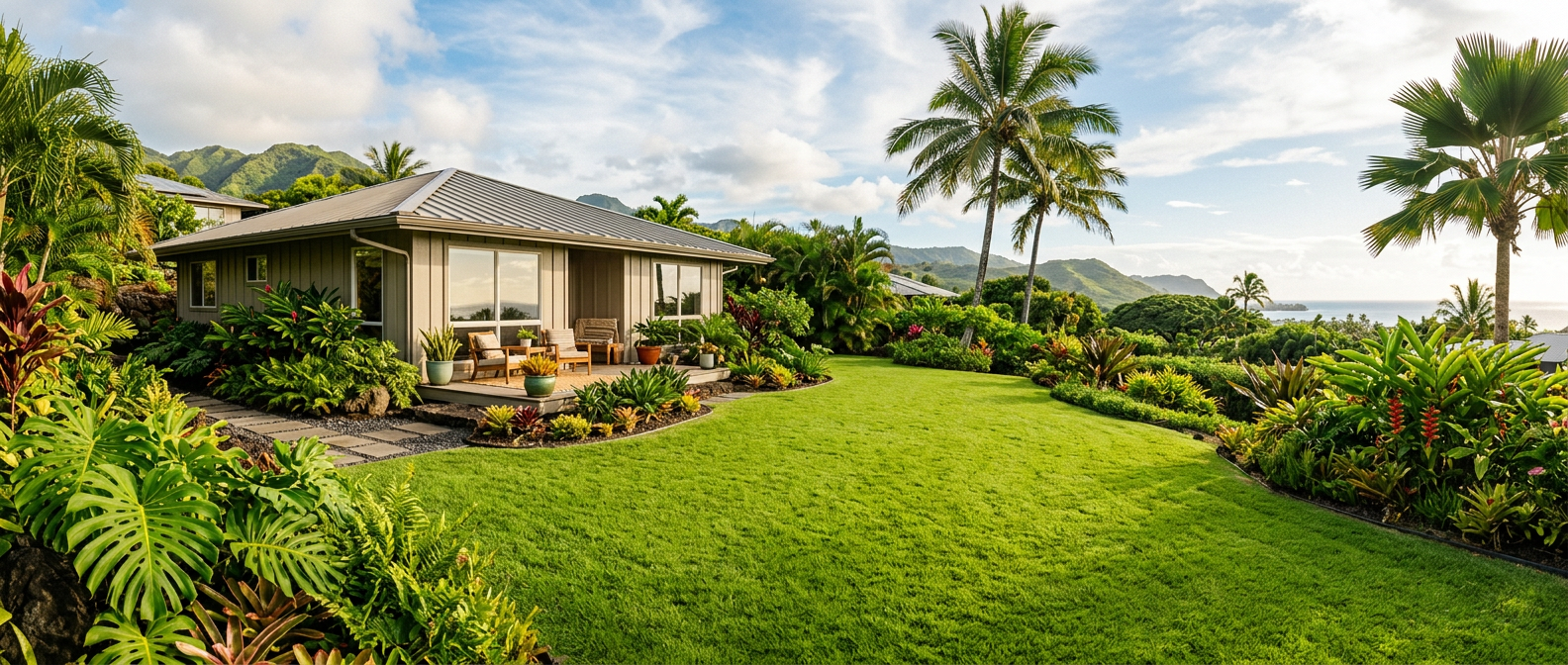
Let's be direct: keeping a lush, green lawn in paradise is harder than it looks. Between the intense sun, the torrential downpours, the salt spray, and the volcanic soil, Hawaii can be a brutal place for the wrong kind of grass. Most of the advice you read online is for mainland climates and is completely useless here. We're here to cut through the noise and give you the real-deal, no-nonsense guide to the best grass for Hawaii.
We've installed and repaired lawns from Hilo to Hanalei, and we know what works. Forget the fescue and bluegrass your cousin grows in Ohio. In the islands, you need a tough, tropical, warm-season grass that can handle the pressure. This guide will break down the top 5 contenders so you can spend less time fighting your yard and more time enjoying it.
Understanding Hawaii's Unique Lawn Challenges
You can't win the game if you don't know the rules. And in Hawaii, the rules are written by Mother Nature in a language of sun, salt, and rain.
- Intense Sun & Heat: We're in the tropics. The UV index is no joke. Your grass needs to be able to photosynthesize without getting scorched, especially on the leeward sides of the islands.
- High Humidity & Rainfall: While great for that jungle look, constant moisture creates a five-star resort for fungal diseases like dollar spot and brown patch. Windward areas can get absolutely drenched, requiring grass that can handle wet feet without rotting.
- Salt Spray: If you live anywhere near the coast (and who doesn't want to?), salt tolerance is non-negotiable. Salt-laden winds can desiccate and kill most common turfgrasses. You need a specialist.
- Volcanic Soil: Our soil can be... unique. It ranges from acidic and organic-rich on the Hilo side to rocky and alkaline in other areas. It's often compacted and may require significant amendment before planting.
- Microclimates: The difference between mauka (towards the mountain) and makai (towards the sea) is huge. A lawn in rainy Mānoa on Oahu has completely different needs than one in sunny Kīhei on Maui. Your elevation and which side of the island you're on are critical factors.
The 5 Best Grass Types for Your Hawaii Lawn
Okay, enough with the problems. Let's talk solutions. These five warm-season grasses are the proven winners for Hawaiian landscapes. We've ranked them based on their performance and versatility across the islands.
1. Seashore Paspalum (The Coastal King)
If you have a waterfront property or live anywhere the salt flies, stop reading and just get Seashore Paspalum. It's the undisputed champion of salt tolerance. In fact, it can be irrigated with brackish water, which is a game-changer. It creates a beautiful, dense, bright green turf that looks like a high-end golf course—because it's used on many of them, like the famous Poipu Bay Golf Course on Kauai.
- Pros: Extreme salt tolerance, good drought tolerance, beautiful color, can be mowed low.
- Cons: Can be expensive, requires regular mowing to look its best, doesn't have great shade tolerance.
- Best For: Coastal homes, especially on the windward sides.
2. Zoysia Grass (The All-Around MVP)
Zoysia, particularly the 'El Toro' and 'Zeon' cultivars, is probably the most popular and versatile high-quality grass in Hawaii. 'El Toro' is a workhorse known for its durability and drought tolerance, making it perfect for sunny, leeward yards. 'Zeon' Zoysia is finer-bladed and has slightly better shade tolerance. Both form a dense, carpet-like lawn that feels amazing underfoot and naturally chokes out weeds.
We've had great success with 'El Toro' Zoysia from Hawaiian Turfgrass on Oahu. It holds up well to foot traffic and bounces back quickly from dry spells.
- Pros: Excellent drought tolerance, low water needs once established, good wear resistance, dense growth habit.
- Cons: Slow to establish and recover from damage, can build up thatch over time.
- Best For: Sunny to lightly shaded yards, families with kids and pets, homeowners who want a low-maintenance but beautiful lawn.
3. St. Augustine Grass (The Shade Solution)
Got a massive monkeypod tree or a yard that's shaded by your neighbor's two-story house? St. Augustine is your go-to. While most warm-season grasses need full sun, varieties like 'Floratam' and 'Palmetto' St. Augustine can handle partial shade better than any other option on this list. It has wide, coarse blades and a blue-green color, creating a classic tropical lawn look. It's a solid choice that reminds many of lawns in the American South, making it a good parallel to our guide on the best grass for Florida.
- Pros: The best shade tolerance among warm-season grasses, vigorous grower, establishes quickly.
- Cons: Prone to pests like chinch bugs, requires more water than Zoysia, doesn't tolerate low mowing.
- Best For: Yards with significant shade from trees or buildings.
4. Bermuda Grass (The Sun Worshipper)
If your yard is a full-sun, high-traffic area, Bermuda grass is a fantastic, durable option. Cultivars like 'Tifway 419' are used on athletic fields for a reason: they can take a beating and recover fast. Bermuda grass creates a fine-textured, dense, dark green lawn. The catch? It needs at least 6-8 hours of direct sun per day and is an aggressive grower, meaning it requires more frequent mowing and edging to keep it from invading flower beds. If even a corner of your yard is shady, this is not the grass for you; consider reading our guide to the best grass seed for shade for alternative ideas in those spots.
- Pros: Extremely drought and heat tolerant, withstands heavy foot traffic, recovers quickly from damage.
- Cons: Poor shade tolerance, high maintenance (mowing, fertilizing), can be very invasive.
- Best For: Full-sun yards, athletic fields, play areas.
5. Centipede Grass (The Low-Effort Option)
The nickname for Centipede is "the lazy man's grass," and for good reason. It's a slow grower that requires less mowing and less fertilizer than other grasses. It also thrives in the acidic, low-fertility soils common in many parts of Hawaii, especially on the Big Island's Hilo side. The trade-off is that it has a coarser texture and a lighter, apple-green color that some people don't prefer. It also has poor salt tolerance, making it a bad choice for coastal areas.
- Pros: Low maintenance, low fertilizer needs, good for acidic soils.
- Cons: Poor salt and wear tolerance, slow to recover, lighter color.
- Best For: Large, low-traffic areas where low maintenance is the top priority, particularly in high-rainfall, acidic soil regions.
Choosing the Right Grass for Your Island in Hawaii
While the list above is a great starting point, your specific location in Hawaii matters. The islands are not a monolith.
- Oahu: In the dense urban and suburban areas, 'El Toro' Zoysia is a fantastic all-around choice. For the rainy valleys like Mānoa, St. Augustine is king. Along the Kailua and Lāni'kai coast, Seashore Paspalum is the only logical choice to combat the constant salt spray.
- Maui: The hot, dry climate of South Maui (Kīhei, Wailea) is perfect for Zoysia or Bermuda. Upcountry in Kula, where it's a bit cooler, Zoysia still performs well. For the wetter, windward side near Hāna, St. Augustine or Centipede can work well.
- Big Island: This is the island of extremes. The Kona and Kohala coasts are hot, dry, and rocky, making Zoysia a tough, water-wise choice and Paspalum a must for oceanfront lots. On the Hilo side, which receives immense rainfall, Centipede grass is a popular, low-input choice that handles the acidic soil.
- Kauai: The Garden Isle's frequent rainfall means you need a grass that resists fungal disease. Zoysia and St. Augustine are both excellent choices. Local suppliers like Farm & Garden Kauai in Puhi can provide plugs and advice tailored to the island.
According to the University of Hawaii's College of Tropical Agriculture and Human Resources (CTAHR), some areas on the windward side of the islands can receive over 300 inches of rain annually, while leeward coastal areas might get as little as 10 inches. (Source: http://www.ctahr.hawaii.edu/maui/weather/rainfall.aspx). This extreme variation is why choosing a grass suited to your specific microclimate is non-negotiable.
Planting and Maintaining Your Hawaii Lawn
Once you've picked your grass, you need to get it in the ground and care for it properly. In Hawaii, planting with sod is far more common and effective than seed. The constant sun and heavy rains can make it difficult for seeds to establish evenly. Sod gives you an "instant lawn" and a better chance of success.
Expect to pay between $1.00 to $1.75 per square foot for high-quality sod like Zoysia or Paspalum from a reputable grower. While more expensive upfront than seed, it saves you months of headaches.
Key Maintenance Tips:
- Mowing: Each grass has a preferred height. Mowing Zoysia or Bermuda too high will make it thin and leggy, while scalping St. Augustine will damage it. Check our guide on how often to mow your lawn for general principles, but stick to the specific height for your grass type.
- Watering: Even in paradise, you need to water smart. Water deeply but infrequently to encourage deep roots. The best time to water grass is early in the morning to reduce evaporation and prevent fungal growth. If your grass looks healthy but suddenly develops yellow patches, it might be a sign of overwatering or disease, two of the main culprits we cover in Why Is My Grass Turning Yellow?.
- Fertilizing: Get a soil test from UH CTAHR. Don't just guess. Most Hawaiian lawns need a balanced fertilizer, but the specific ratio depends on your soil. Fertilize during the active growing season (which, let's be honest, is most of the year here).
Choosing the right grass is the single most important decision for a successful lawn in Hawaii. Pick the one that matches your sun exposure, your proximity to the ocean, and your tolerance for maintenance. Do that, and you'll have a lawn that's the envy of the neighborhood.
Frequently asked
What is the most low-maintenance grass for Hawaii?+
Centipede grass is generally considered the most low-maintenance option due to its slow growth and low fertilizer needs. However, for a higher quality look with minimal effort, 'El Toro' Zoysia is a close second, as it's drought-tolerant and naturally resists weeds.
Can you grow cool-season grass like Fescue or Bluegrass in Hawaii?+
No. Cool-season grasses cannot survive the year-round heat, humidity, and intense sun in Hawaii. They will quickly die out. You must use warm-season turfgrasses like Zoysia, Bermuda, St. Augustine, Seashore Paspalum, or Centipede grass for a permanent lawn.
How much does new sod cost in Hawaii?+
The price of sod in Hawaii typically ranges from $1.00 to $1.75 per square foot, depending on the grass type and the supplier. Premium varieties like 'Zeon' Zoysia or Seashore Paspalum will be at the higher end of that range.
What's the best grass for a shady lawn in Hawaii?+
St. Augustine grass, specifically cultivars like 'Palmetto' or 'Floratam', is the best choice for shady lawns in Hawaii. It has the highest shade tolerance among all the recommended warm-season grasses and thrives in yards with large trees or shadows from buildings.
How do I deal with salt spray on my lawn in Hawaii?+
The best way to deal with salt spray is to choose a salt-tolerant grass from the start. Seashore Paspalum is the absolute best option. If you have a less tolerant grass, you can try to rinse the blades with fresh water after major salt exposure events.