
Best Grass for Hawaii: 5 Expert Picks for Island Lawns
Forget what works on the mainland. We're breaking down the five best grass types that actually thrive in Hawaii's sun, salt, and volcanic soil.
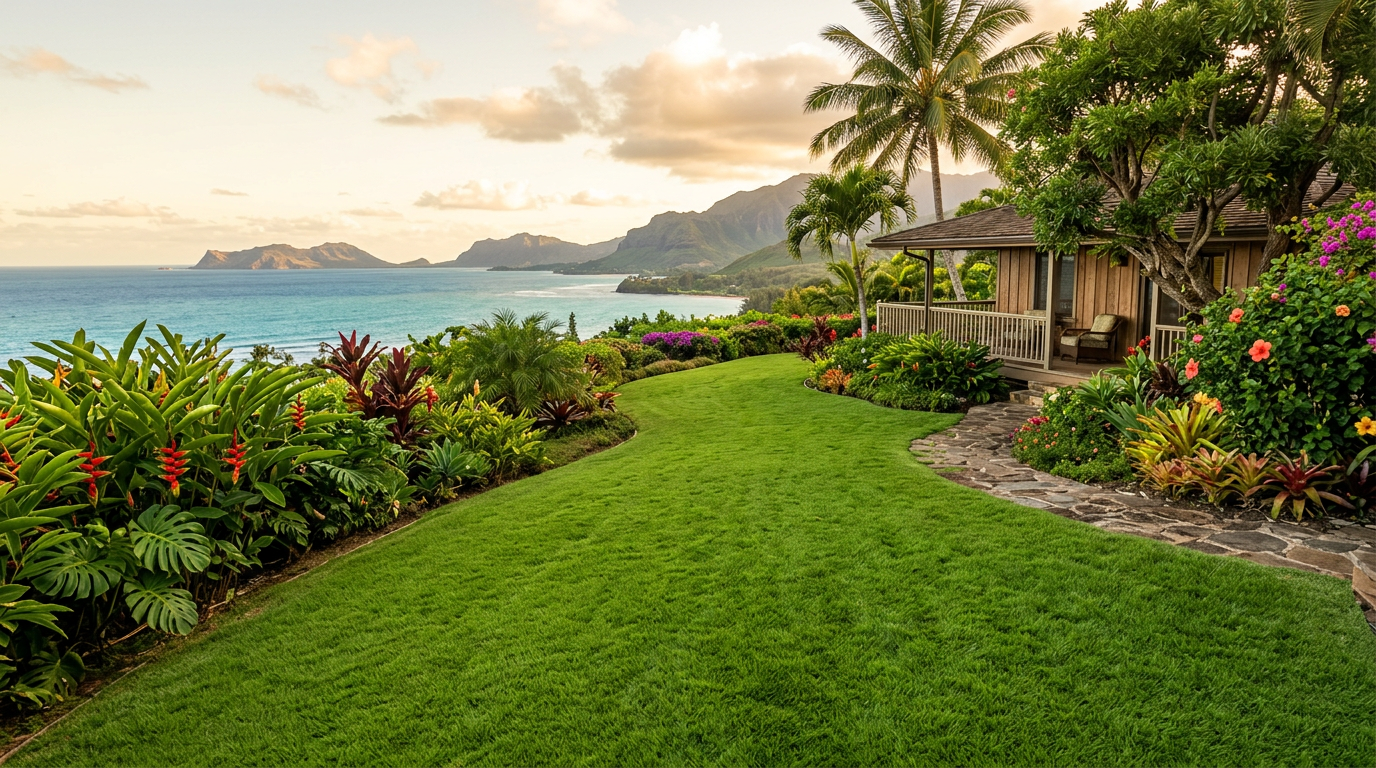
Aloha. If you're trying to grow a lush, green lawn in paradise, you've probably already figured out it's not as simple as just throwing down some seed and watering. The rules are different here. That's why we're digging in to find the absolute best grass for Hawaii, whether you're on the rainy Hilo side of the Big Island, the sunny shores of West Maui, or in a Honolulu suburb.
We've seen too many newcomers try to plant Kentucky Bluegrass from the mainland, only to watch it cook in the tropical sun. Don't make that mistake. The key is choosing a warm-season grass that can handle the intense sun, humidity, salt spray, and unique volcanic soils of the islands. Let's get to it.
Understanding Hawaii's Unique Lawn Challenges
Before you pick a grass, you have to respect the aina. A lawn in Kaneohe faces totally different challenges than one in Kailua-Kona. Here’s what makes growing grass in Hawaii a special kind of job:
- Microclimates: The most critical factor. The windward (east) sides of the islands are wet and lush. The leeward (west) sides are hot, dry, and sunny. A grass that loves the constant moisture in Hilo might struggle in the arid conditions of Kihei.
- Volcanic Soil: While rich in some minerals, Hawaiian soil is often young, thin, and can be acidic (low pH). It also drains incredibly fast, which means nutrients can leach out quickly. You'll likely need to amend your soil with compost and organic matter to give your lawn a fighting chance. If your grass is turning yellow, a soil test is your first move to check for nutrient deficiencies.
- Salt Spray: If you're lucky enough to live near the coast, salt from the ocean breeze is a constant pressure on your plants. Most grasses can't handle it. You need a specifically salt-tolerant variety to avoid a perpetually brown, crunchy lawn.
- Year-Round Growing Season: There's no winter dormancy here. Your grass grows 12 months a year, which means your lawn care schedule for mowing, fertilizing, and watering is constant. You'll need to figure out how often to mow your lawn to keep up with the vigorous growth.
- Water Use: Fresh water is a precious resource on the islands. Some counties have restrictions on landscape irrigation, and even if they don't, being water-wise is just good practice. Choosing a drought-tolerant turf is smart for your water bill and the environment.
The Top 5 Grass Types for Hawaii Lawns
Okay, let's talk grass. You won't find these in a bag of generic seed mix at a big box store. For the best results in Hawaii, you're almost always going to be buying sod or plugs from a local turf farm. Here are the champions that have proven themselves across the islands.
1. Seashore Paspalum
- Best For: Coastal properties, high-salt areas, full sun.
If your property gets hit with salt spray, stop reading and choose Seashore Paspalum. It's the undisputed king of salt tolerance. It can literally be irrigated with brackish water. It creates a beautiful, dense, fine-textured turf that looks like it belongs on a high-end resort—because it's often used there. It thrives in full sun and handles the Hawaiian heat with ease. Its main downside is that it requires regular maintenance (mowing, fertilizer) to look its best and has poor shade tolerance.
2. Zoysia Grass ('El Toro', 'Emerald')
- Best For: All-around performance, drought tolerance, high-traffic areas.
Zoysia is arguably the most popular and versatile choice for residential lawns in Hawaii. Varieties like 'El Toro', which was developed at the University of Hawaii, are exceptionally well-adapted. Zoysia is known for its dense growth habit that chokes out weeds, its excellent wear resistance (great for kids and pets), and its superior drought tolerance once established. It has better shade tolerance than Bermuda or Paspalum, making it a good choice for yards with partial sun. It does tend to build up thatch over time, so you may need to learn how to dethatch a lawn every few years.
3. St. Augustine Grass ('Raleigh', 'Floratam')
- Best For: Yards with moderate shade, lush appearance.
Got a big, beautiful monkeypod tree shading your yard? St. Augustine is your go-to. It's the most shade-tolerant of the common warm-season grasses, though it still needs at least 4-5 hours of sun. It has a coarser, broader blade than Zoysia or Bermuda, creating a classic tropical lawn look. It establishes quickly and holds its color well. The major watch-out for St. Augustine is its susceptibility to pests, particularly chinch bugs, which can cause significant damage if not managed.
4. Bermuda Grass ('Tifway 419', 'Celebration')
- Best For: Full sun, high-traffic sports fields, rapid recovery.
Bermuda grass is a sun worshipper and an athlete. It needs at least 8 hours of direct, blazing sun per day. If you have that, it will reward you with an incredibly dense, durable, and self-repairing turf that can handle almost anything. This is the grass used on most golf course fairways and athletic fields in Hawaii for a reason. 'Tifway 419' is a classic, while 'Celebration' offers better drought tolerance and a unique blue-green color. The trade-off is high maintenance—Bermuda requires frequent mowing, fertilizing, and dethatching to prevent it from becoming a tangled mess.
5. Centipede Grass
- Best For: Low maintenance, acidic soils, low-fertility areas.
Often called the "lazy man's grass," Centipede is the lowest-maintenance option on this list. It thrives in the acidic, low-fertility volcanic soils common across Hawaii and requires significantly less fertilizer and mowing than Bermuda or Zoysia. It spreads by stolons to create a fairly dense, light green turf. However, it's not a top performer. It has poor salt tolerance, doesn't stand up well to heavy traffic, and is slow to recover from damage. But if your goal is a low-effort green space, Centipede is a solid, practical choice.
Comparing the Best Grasses for Hawaii
Here’s a quick-reference table to help you decide. One star (★) is low/poor, five stars (★★★★★) is high/excellent.
| Grass Type | Sun Needs | Salt Tolerance | Drought Tolerance | Wear Tolerance | Maintenance | | ------------------- | :-------: | :------------: | :---------------: | :------------: | :---------: | | Seashore Paspalum | ★★★★★ | ★★★★★ | ★★★ | ★★★★ | ★★★★ | | Zoysia Grass | ★★★★ | ★★★★ | ★★★★★ | ★★★★★ | ★★★ | | St. Augustine Grass | ★★★ | ★★ | ★★★ | ★★★ | ★★★ | | Bermuda Grass | ★★★★★ | ★★★ | ★★★★ | ★★★★★ | ★★★★★ | | Centipede Grass | ★★★★ | ★ | ★★★ | ★★ | ★ |
Where to Buy Grass & Sod in Hawaii
You won't be seeding these lawns. For Zoysia, St. Augustine, and the rest, you'll be buying sod or plugs. This provides an "instant lawn" and is far more effective for these creeping-type grasses. Your best bet is a dedicated local producer.
On Oahu, Hawaiian Turfgrass in Mililani is the premier supplier. They grow and sell certified varieties like 'El Toro' Zoysia and 'Celebration' Bermuda. On Maui, you might check with Ho'oulu Aina Farms. On other islands, local landscape suppliers and garden centers like Koolau Farmers or City Mill can order sod or point you to a local source.
Cost: Prepare for sticker shock compared to a bag of seed. Sod is sold by the square foot. Prices vary by island and variety, but as a general rule, expect to pay $1.00 to $2.50 per square foot for high-quality turf. A 1,000 sq. ft. lawn could cost you $1,000 to $2,500 for the material alone, before labor.
A Lawn Care Calendar for Hawaii
Since there's no true off-season, lawn care is a year-round affair. Your schedule is dictated more by wet/dry seasons than cold/hot ones.
- Watering: This is constant. The key is to water deeply and infrequently to encourage deep roots. The best time to water grass is always early in the morning (4 AM to 8 AM) to minimize evaporation. How much depends on your location. The Honolulu Board of Water Supply estimates that outdoor watering can account for up to 50% of household water use, so installing a smart irrigation controller is a fantastic investment. (Source: https://www.boardofwatersupply.com/conservation/water-sensible-tips)
- Mowing: You'll be mowing year-round, possibly weekly during the rainier, faster-growing months and maybe every 2-3 weeks during drier periods. Never remove more than one-third of the blade height at a time.
- Fertilizing: Most Hawaiian lawns benefit from 2-4 applications of a balanced fertilizer per year. A 16-16-16 formula works well for many applications. For Centipede, use a low-nitrogen formula. You can get something like a 40lb bag of Down to Earth All Purpose 4-6-2 from a local shop for around $40-$50.
- Pest & Weed Control: Be vigilant. The warm, humid climate is a breeding ground for pests like chinch bugs and diseases like brown patch. Spot treat problems as they arise. The dense growth of Zoysia and Bermuda helps naturally suppress weeds, but you'll still have to do some hand-pulling.
Frequently asked
What is the most low-maintenance grass for Hawaii?+
Centipede grass is the most low-maintenance option for Hawaii. It requires less fertilizer and less frequent mowing than other warm-season grasses. It's well-suited to the acidic, low-fertility volcanic soils common on the islands, making it a practical, low-effort choice.
How much does sod cost in Hawaii?+
The cost of sod in Hawaii typically ranges from $1.00 to $2.50 per square foot, depending on the grass variety and the island. High-performance grasses like certified Zoysia or Seashore Paspalum will be at the higher end of that range. Local turf farms are the best source.
What's the best grass for a shady yard in Hawaii?+
St. Augustine grass is the best choice for yards with moderate shade in Hawaii. While all warm-season grasses need sun, St. Augustine performs the best with only 4-5 hours of direct sunlight per day, making it ideal for planting under the canopy of large trees.
Can you plant grass seed in Hawaii?+
While you technically can, it's not recommended. The best grass types for Hawaii (Zoysia, Bermuda, etc.) are creeping grasses that establish far more effectively via sod or plugs. Seed is also more susceptible to washing away in heavy rains and being outcompeted by weeds.
How do I prepare volcanic soil for a new lawn?+
Volcanic soil is often rocky and drains quickly. To prepare it, remove large rocks and till the soil. It's crucial to amend it heavily with organic matter like compost. This improves water retention and adds vital nutrients. A soil test is recommended to check the pH and nutrient levels.