
The 5 Best Grass Types for Hawaii Lawns (2024 Guide)
Living in paradise doesn't mean a perfect lawn comes easy. We break down the top 5 grass types that can actually handle Hawaii's unique climate, from salty sea spray to volcanic soil.
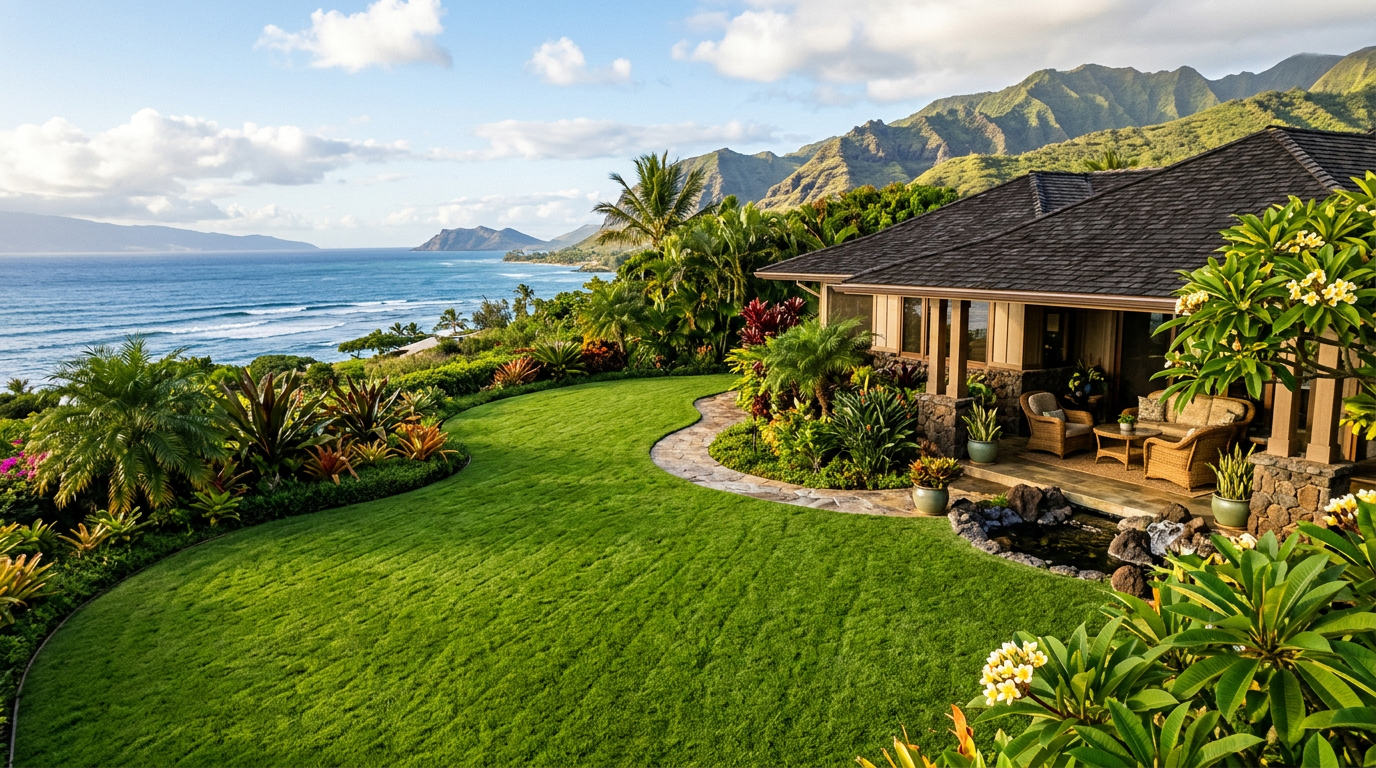
Living in Hawaii is amazing, but keeping a lawn green here is a whole different ball game than on the mainland. Forget everything you know about Kentucky Bluegrass. Here, you're battling intense sun, torrential downpours, salt spray, and quirky volcanic soil. But don't worry, a lush, green carpet is possible without selling a kidney. We're going to break down the absolute best grass for Hawaii so you can get a lawn that's the envy of the neighborhood.
Understanding Hawaii's Unique Lawn Challenges
Before you can pick a winner, you have to know the players. In Hawaii, your lawn is up against a tough team:
- Intense Sun & Heat: Year-round high temperatures and UV radiation mean you need a grass that won't fry in the sun. All the grasses on our list are warm-season varieties for this reason.
- Salt Spray: If you live anywhere near the coast (and let's be real, most of us do), salt in the air and soil can kill the wrong type of grass. Salt tolerance is a non-negotiable trait for many Hawaii lawns.
- Heavy Rainfall & Humidity: The windward sides of the islands get a ton of rain, which can lead to fungal diseases and waterlogged roots. Leeward sides are drier, demanding drought tolerance. High humidity everywhere is a breeding ground for lawn diseases.
- Volcanic Soil: While rich in some minerals, our soil can be acidic, fast-draining, and low in organic matter. This means nutrients can leach out quickly, and the soil might not hold water efficiently.
The 5 Best Grass Types for Your Hawaii Lawn
Alright, let's get to the good stuff. We've installed and maintained all of these across the islands, and this is our no-nonsense ranking. You'll notice these are all sold as sod or plugs; seeding is a tough gamble with our tropical downpours.
1. Seashore Paspalum
This is the undisputed king for coastal Hawaii homes. If you can smell the ocean from your lanai, this is your grass. It was literally bred to tolerate salt.
- Best For: Oceanfront properties, areas with saltwater irrigation.
- Sun Needs: Full sun.
- Maintenance: Medium to high. It needs regular mowing and specific fertilizer to look its best.
- Pros: Unbeatable salt tolerance, beautiful dark green color, dense growth.
- Cons: Requires more frequent mowing, can be expensive.
Our Take: We've seen Seashore Paspalum thrive in places where other grasses just give up. Local supplier Hawaiian Turfgrass offers varieties like SeaStar® that are perfectly adapted. It's an investment, but it's the right one for a coastal lawn.
2. Zoysia Grass (El Toro, Zeon, Meyer)
Zoysia is probably the most popular premium lawn choice in Hawaii for a reason. It's tough, beautiful, and feels great under your bare feet. It forms a very dense, carpet-like turf that's great at choking out weeds.
- Best For: Sunny yards, families with kids and pets, high-traffic areas.
- Sun Needs: Full sun to very light shade.
- Maintenance: Medium. It's slow-growing but develops a thick thatch layer over time that needs to be managed. See our guide on how to dethatch a lawn for tips.
- Pros: Excellent drought tolerance, wear-resistant, low fertilizer needs once established, weed resistant.
- Cons: Slow to establish, can build up thatch, goes dormant (brown) in prolonged drought.
Our Take: Zeon® Zoysia is the top-shelf variety for its fine-bladed look, while El Toro is a workhorse. If your grass keeps turning yellow, Zoysia's low nutrient requirement might be the solution.
3. St. Augustinegrass (Floratam, Raleigh)
If you have large trees or a yard that doesn't get baked by the sun all day, St. Augustine is your best bet. It has the best shade tolerance of any warm-season grass suitable for Hawaii.
- Best For: Yards with partial shade, wetter windward locations.
- Sun Needs: 4-6 hours of sun.
- Maintenance: Medium.
- Pros: Best shade tolerance for a warm-season grass, lush blue-green color, spreads quickly.
- Cons: Not very drought-tolerant, susceptible to chinch bugs and gray leaf spot, doesn't handle heavy traffic well.
Our Take: It's a great problem-solver for those shadier spots where Zoysia or Bermuda would fail. While we have a guide for the best grass seed for shade, for Hawaii you'll want to stick with sod or plugs for St. Augustine.
4. Bermudagrass (Tifway 419)
Bermudagrass is the athlete of the turf world. It's used on golf courses and sports fields for its ability to recover from abuse quickly. If you have a full-sun yard and constant foot traffic, it's a strong contender.
- Best For: High-traffic, full-sun areas, athletic fields.
- Sun Needs: Full, direct sun only.
- Maintenance: High. It's an aggressive grower that needs frequent mowing and edging to keep it from invading garden beds.
- Pros: Very durable, recovers quickly from damage, excellent drought and heat tolerance.
- Cons: Absolutely needs full sun, can be invasive, requires a lot of maintenance (mowing, fertilizer).
Our Take: Only choose Bermuda if you can commit to the upkeep. If you don't keep it in check, it will take over everything. Knowing how often to mow your lawn is critical with this fast-grower.
5. Centipedegrass
Often called "the lazy man's grass," Centipede is a low-maintenance option that does well in the acidic, low-nutrient volcanic soils common in many parts of Hawaii, especially on the Big Island.
- Best For: Low-maintenance landscaping, acidic soils.
- Sun Needs: Full sun to light shade.
- Maintenance: Low.
- Pros: Very low fertilizer needs, slow-growing (less mowing), fairly drought-tolerant.
- Cons: Not very wear-tolerant, shallow root system, can be a lighter apple-green color.
Our Take: If you want a patch of green that you don't have to fuss over constantly, Centipede is an excellent choice. It won't give you the perfect golf-course look, but it's reliable and well-suited to our local soil conditions.
Sod vs. Seed in Hawaii: No Contest
On the mainland, you have options. In Hawaii, sod is almost always the better choice. Our frequent, heavy rains can easily wash away expensive grass seed before it has a chance to germinate. Sod provides instant gratification, erosion control, and is ready for light use in just a few weeks. Expect to pay between $0.90 to $1.60 per square foot for quality sod from a local farm like Hawaiian Turfgrass on Oahu or other suppliers on the neighbor islands. Plugs are a good middle-ground, cheaper than sod but with a much higher success rate than seed.
According to the University of Hawaiʻi's College of Tropical Agriculture and Human Resources (CTAHR), a typical 1,000-square-foot lawn in the islands can require up to 620 gallons of water per week to stay green during dry periods. (Source: https://www.ctahr.hawaii.edu/hawaiianwater/LawnIrrigation.htm) Establishing a lawn from sod requires significant initial watering, but it becomes water-wise much faster than a seeded lawn, ultimately saving water and money. Check with your county's Board of Water Supply for any current watering restrictions.
Essential Lawn Care for Hawaii
A beautiful lawn in Hawaii is a year-round commitment. Here are the basics:
- Watering: Water deeply but infrequently to encourage deep root growth. The best time to water grass is early in the morning (before 9 AM) to reduce evaporation and prevent fungal growth.
- Mowing: Never remove more than one-third of the grass blade at a time. Mowing height varies by type—Zoysia can be kept short (1-2 inches) while St. Augustine prefers to be taller (3-4 inches).
- Fertilizing: Use a slow-release fertilizer like a 16-16-16 or a formulation specific to your grass type. Because our soils leach nutrients quickly, spoon-feeding with smaller, more frequent applications is often better than a single heavy dose.
- Weed Control: A healthy, dense lawn is the best weed defense. For pesky invaders, manual removal is best for small patches. For larger issues, use an herbicide that is safe for your specific grass type. The principles for getting rid of broadleaf weeds are similar everywhere, even for things like getting rid of dandelions.
Choosing the right grass is 90% of the battle. Pick one from this list that matches your yard's conditions and your tolerance for maintenance, and you'll have a slice of green paradise to call your own.
Frequently asked
What is the most low-maintenance grass for Hawaii?+
Centipedegrass is widely considered the most low-maintenance grass for Hawaii. It requires less mowing, has very low fertilizer needs, and is well-adapted to the acidic volcanic soils found on the islands. It's a great choice if you want a green lawn without constant upkeep.
What is the best grass for a shady yard in Hawaii?+
St. Augustinegrass is the best choice for yards in Hawaii with partial shade. It can thrive with just 4-6 hours of direct sunlight per day, whereas other popular options like Bermuda and Zoysia require full sun. It's the go-to for lawns with large trees or shade from buildings.
How much does it cost to put a lawn in Hawaii?+
The cost depends on the method, but sod is most common. Expect to pay between $0.90 and $1.60 per square foot for quality sod like Zoysia or Seashore Paspalum. For a 1,000 sq. ft. lawn, the material cost would be around $900 to $1,600, plus labor for installation.
Can you grow Kentucky Bluegrass in Hawaii?+
No, you cannot successfully grow Kentucky Bluegrass or other cool-season grasses in Hawaii. These grasses are not adapted to the year-round heat and humidity. You must choose a warm-season grass like Zoysia, Bermudagrass, or Seashore Paspalum to have a healthy, thriving lawn.
What is the best grass for beachfront property in Hawaii?+
Seashore Paspalum is, without question, the best grass for beachfront property in Hawaii. It has exceptional tolerance to salt spray and can even be irrigated with brackish water. Its dense, beautiful growth makes it the top choice for any lawn exposed to coastal conditions.