
The 5 Best Grass Types for Hawaii Lawns (2024 Guide)
Choosing the right grass for Hawaii isn't just about picking something green. It's about matching a turf variety to your specific island's sun, rain, and soil conditions.
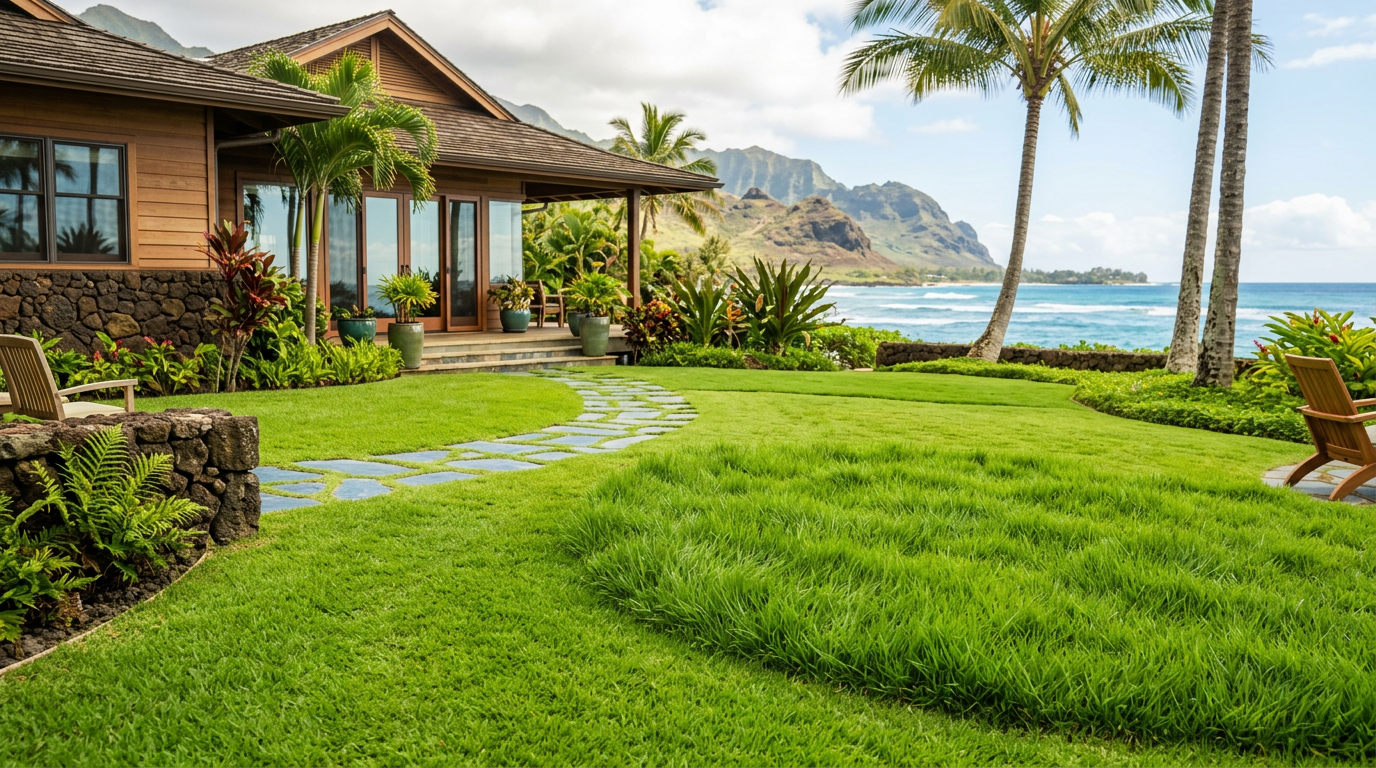
Let's be direct: growing a perfect lawn in paradise is harder than it looks. Here in Hawaii, we're blessed with incredible beauty, but our lawns face a unique onslaught of intense sun, torrential downpours, salt spray, and quirky volcanic soils. You can't just throw down any old bag of seed from the mainland and hope for the best. We've seen too many homeowners on Oahu try to fight their climate, ending up with a patchy, yellowing mess.
Choosing the best grass for Hawaii means picking a team captain that can handle the local conditions. It's about strategy, not just luck. You need a warm-season turfgrass that thrives in heat and humidity. This guide will break down the top 5 contenders so you can stop fighting your yard and start enjoying it.
Understanding Hawaii's Unique Lawn Challenges
Before you can pick a winner, you have to understand the game. A lawn in Kailua-Kona faces a totally different set of challenges than one in Hilo or upcountry on Maui. Here’s what your grass is up against:
- Intense UV Radiation: Hawaii's proximity to the equator means the sun is strong. Grasses without good heat and drought tolerance will scorch, turning that dreaded shade of yellow and brown.
- Extreme Rainfall Variation: The islands have distinct windward (wet) and leeward (dry) sides. A grass in a rainy area like Hilo needs to resist fungal diseases and handle wet feet, while a grass in a dry area like Kihei needs to be drought-tolerant. According to the University of Hawaii, some parts of the islands receive less than 10 inches of rain per year, while others are drenched with over 400 inches. (Source: University of Hawaii at Manoa, College of Tropical Agriculture and Human Resources)
- Salt Spray: If you live near the coast, salt-laden breezes are a constant reality. Most plants, including many types of grass, can't handle the salt, which dehydrates their cells and burns their leaves. You need a specialist.
- Volcanic Soil: While rich in some minerals, Hawaii's soils can be rocky, acidic, and have unusual drainage properties. They can also be low in key nutrients like nitrogen, requiring a smart fertilization plan.
- Vigorous Weeds: Nutgrass, crabgrass, and other tropical weeds grow with alarming speed in our climate. A dense, aggressive turf is your best natural defense.
Now, let's meet the players who are up to the challenge.
1. Seashore Paspalum: The Coastal Champion
If your property gets even a whiff of salt spray, stop reading and circle this name. Seashore Paspalum is, without a doubt, the undisputed king of coastal lawns in Hawaii. It’s what you see on many of the world-class golf courses lining the shores of Maui and the Big Island.
- Pros: Unmatched salt tolerance (it can literally be irrigated with brackish water), beautiful dark green color, fine texture, and dense growth. It handles high traffic well and establishes quickly.
- Cons: It demands full sun; it will thin out considerably in shade. It can also require more frequent mowing and specific nutrient management to stay in top form.
- Best For: Oceanfront properties, homes in coastal communities, and anyone who wants a premium, golf course-quality look in a full-sun area.
- Local Notes: Varieties like 'SeaStar' and 'Platinum TE' are popular choices available from local sod farms. Expect this to be a premium option.
2. Zoysia Grass: The All-Around Contender
For most residential lawns in Hawaii that aren't directly on the beach, Zoysia is the answer. It strikes an incredible balance between beauty, drought tolerance, and relatively low maintenance once established. We love it because it forms a thick, dense carpet that feels amazing underfoot and is fantastic at choking out weeds.
- Pros: Excellent drought and heat tolerance, dense growth habit, good wear resistance, and lower fertility needs than Bermuda or Paspalum. It's a slow grower, which means less mowing.
- Cons: It's slow to establish and recover from damage. The dense growth that chokes out weeds can also build up thatch over time, potentially requiring you to dethatch your lawn every few years.
- Best For: The vast majority of sunny or mostly sunny yards in Hawaii. It’s a fantastic choice for families with kids and pets.
- Local Notes: 'El Toro' Zoysia has been a workhorse in Hawaii for decades due to its toughness. Newer varieties like 'Zeon' Zoysia offer a finer texture and are becoming increasingly popular. You can find both from suppliers like Hawaiian Turfgrass.
3. Bermuda Grass: The Sun-Loving Athlete
If you have a wide-open space that gets baked in the sun all day, Bermuda grass is your gladiator. This is the grass of athletic fields for a reason: it's tough, repairs itself quickly, and thrives in high-traffic, full-sun conditions.
- Pros: Extremely fast-growing and self-repairing. Excellent heat and drought tolerance. Handles heavy foot traffic like a champ.
- Cons: It needs sun. It has zero shade tolerance. It’s also very aggressive and will eagerly invade flower beds and walkways if not edged properly. It requires frequent mowing and a consistent fertilizer schedule to look its best.
- Best For: Large, full-sun lawns, play areas, and homes in the hottest, driest parts of the islands.
- Local Notes: 'Tifway 419' is a classic, durable variety. While you can find Bermuda seed at big box stores like Lowe's in Honolulu for around $35 for a 5lb bag, establishing from seed can be tough. Sod is a much more reliable option.
4. St. Augustine Grass: The Shade Specialist for Hawaii
Finding a grass that can handle shade in a tropical climate is tough. Among the warm-season options suitable for Hawaii, St. Augustine is the clear winner. While it's not a deep-shade plant, it will tolerate dappled light under large trees where Bermuda or Paspalum would fail.
- Pros: The best shade tolerance of any suitable Hawaii grass. Establishes quickly and has a unique, broad-leafed, blue-green appearance.
- Cons: It's a thirsty grass and has poor drought tolerance compared to Zoysia or Bermuda. It’s also highly susceptible to pests, particularly chinch bugs, which can devastate a lawn quickly. It doesn't handle heavy foot traffic well.
- Best For: Yards with large, mature trees or areas that get only partial sun.
- Local Notes: 'Raleigh' and 'Floratam' are common varieties. Be prepared to monitor for chinch bugs, especially during dry periods. You’ll need a good pest control strategy in place.
5. Centipede Grass: The Low-Maintenance Option
Often called "the lazy man's grass," Centipede is for the homeowner who wants a decent-looking lawn without a ton of work. It’s particularly well-suited to the acidic, often infertile volcanic soils found across the islands.
- Pros: Very low fertilizer requirement; too much nitrogen will harm it. It's a slow grower, so mowing frequency is reduced. It has a naturally lighter green, apple-green color.
- Cons: Poor salt and wear tolerance. It's slow to recover from damage and doesn't like high-pH soils. Its open growth habit is less effective at preventing weeds compared to Zoysia.
- Best For: Homeowners in areas with acidic soil (like parts of the Big Island) who prioritize low maintenance over a perfect, dark green carpet.
Hawaii Grass Costs: Sod vs. Seed vs. Plugs
Getting grass established in Hawaii is an investment. Here’s a realistic breakdown of your options:
- Sod: This is the most popular and effective method in Hawaii. You get an instant lawn that's much better at competing with weeds and resisting washout from heavy rains. Expect to pay between $0.80 to $1.50 per square foot for high-quality turf from a local farm like Sod Solutions Hawaii or Hawaiian Turfgrass. For a small 1,000 sq. ft. lawn, that's $800 - $1,500 plus delivery and installation.
- Plugs/Sprigs: This is a middle-ground option. You buy small plugs or sections of grass and plant them every 6-12 inches. They will slowly spread to fill in the area. It's cheaper than sod but requires months of diligent weeding and care before you have a full lawn.
- Seed: This is the cheapest but riskiest option. A sudden downpour can wash all your seed away. Weed competition is fierce. Seeding is really only viable for tough, fast-germinating grasses like Bermuda in a controlled setting. For most of these premium grasses (especially St. Augustine and many Zoysias), viable seed isn't even available; they are propagated vegetatively.
Essential Care for Your Hawaii Lawn
Once you've chosen your grass, success comes down to proper maintenance tailored for our tropical environment.
-
Watering: Don't just water on a fixed schedule. Water when the grass needs it—when the blades start to fold or look dull. Water deeply and infrequently to encourage deep roots. The best time to water your grass is early morning, between 4 a.m. and 9 a.m., to minimize evaporation and fungal growth.
-
Mowing: You'll be mowing year-round. Never remove more than one-third of the grass blade at a time. Mowing heights vary: keep Bermuda and fine-textured Zoysia around 1-2 inches, while St. Augustine and Centipede prefer a taller cut of 2.5-3.5 inches.
-
Fertilizing: Get a soil test through the University of Hawaii's CTAHR program. It's inexpensive and tells you exactly what your specific soil needs. Most Hawaii lawns need nitrogen and iron, but a test removes the guesswork.
-
Pest and Weed Control: Be vigilant. Integrated Pest Management (IPM) is key. A healthy, dense lawn is your best defense. Hand-pull weeds when you can, and spot-treat problems before they become infestations. If your St. Augustine lawn gets chinch bugs, you'll need to act fast with an appropriate insecticide.
Frequently asked
What is the most low-maintenance grass for Hawaii?+
Centipede grass is often called the "lazy man's grass" because it requires minimal fertilizer and grows slowly. Zoysia is also a strong low-maintenance contender once established, thanks to its drought tolerance and dense growth that prevents weeds.
Can I grow cool-season grass like Kentucky Bluegrass in Hawaii?+
No. Cool-season grasses like Kentucky Bluegrass, Fescue, and Ryegrass cannot tolerate Hawaii's year-round heat and humidity. You must use warm-season grasses that are adapted to tropical climates to have a successful lawn.
What's the best grass for a shady yard in Hawaii?+
St. Augustine grass (like the 'Floratam' variety) offers the best shade tolerance among the warm-season grasses suitable for Hawaii. While it still needs several hours of sun, it will perform much better than Bermuda or Seashore Paspalum in dappled light.
How do I deal with salt spray on my lawn in Hawaii?+
The best defense is choosing a salt-tolerant grass from the start, like Seashore Paspalum. If you have a less tolerant grass, deep, regular watering helps flush salts from the root zone. Avoid watering with brackish (salty) water.
Is Zoysia or Bermuda better for a Hawaii lawn?+
It depends on your priorities. Zoysia is better for overall residential use with its dense feel, lower maintenance, and slightly better shade tolerance. Bermuda is better for high-traffic, full-sun areas where fast recovery is essential, but it requires more work to keep it looking good and contained.