
The 5 Best Grass Types for Hawaii Lawns (2024 Guide)
Forget mainland advice. We'll show you which grasses actually thrive in Hawaii's sun, salt, and humidity, from the beaches of Maui to the volcanic slopes of the Big Island.
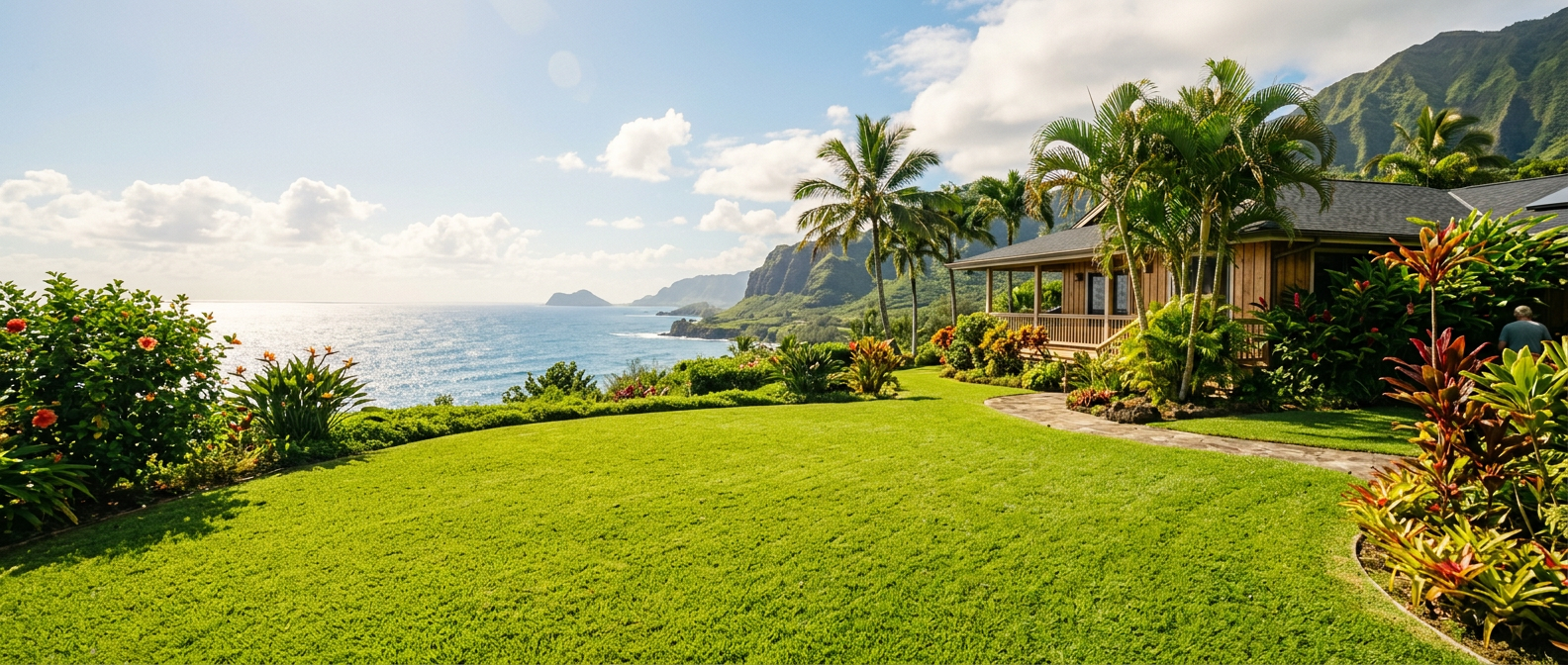
Living in Hawaii is paradise, but growing a perfect lawn here can feel like a battle against the elements. The constant sun, the salt spray, the shockingly diverse microclimates from one side of an island to the other—it's a world away from the landscaping challenges in, say, Alabama. If you've been struggling to get that postcard-perfect green carpet, it's probably not your fault. You just need the right grass for the job. And we're here to tell you exactly which ones work.
We're not gatekeeping the secrets to a lush Hawaiian lawn. This is about matching the right plant to the right place. Whether you're on the rainy Hilo side of the Big Island, the sunny shores of West Maui, or in a Honolulu suburb, there's a grass variety that will thrive. Let's dig in.
Understanding Hawaii's Unique Lawn Challenges
Before you can pick a grass, you have to respect the aina. Hawaii's environment is unlike anywhere else in the US. We're talking USDA hardiness zones 10b through 13a, which means no frost, ever. Your grass will be growing, in some capacity, 365 days a year.
Here's what you're up against:
- Intense Sun & Heat: Most of the state gets blasted with sun. Your grass needs to be able to handle it without turning into a crispy, yellow mess. If you're seeing yellow spots, it could be the heat, but there are other culprits, too. Check out our guide, Why Is My Grass Turning Yellow? 6 Common Causes & Fixes, to diagnose the problem.
- Salt Spray: If you're lucky enough to live near the coast, you're dealing with constant salt in the air and soil. Most grasses will simply die in these conditions. You need a variety that is specifically adapted to salinity.
- Microclimates: The distinction between windward (like Hilo or Kaneohe) and leeward (like Kona or Waianae) sides is crucial. Windward areas get tons of rain and are very humid, promoting fungal growth. Leeward areas are hot, dry, and desert-like, demanding drought-tolerant grasses.
- Volcanic Soil: While rich in some minerals, volcanic soil can be acidic and have weird drainage properties. It's often rocky and may require significant amendment with organic matter before planting.
The 5 Best Grasses for a Hawaii Lawn
Forget everything you know about Kentucky Bluegrass or Fescue. In Hawaii, it's a warm-season world. Here are the top contenders that can actually handle the islands.
| Grass Type | Salt Tolerance | Drought Tolerance | Shade Tolerance | Maintenance | |---|---|---|---|---| | Seashore Paspalum | Excellent | Moderate | Low-Moderate | High | | Zoysia Grass | Good | Excellent | Moderate | Moderate | | St. Augustine Grass | Moderate | Low | Good | High | | Bermuda Grass | Good | Good | Very Low | High | | Centipede Grass | Poor | Moderate | Moderate | Low |
1. Seashore Paspalum
If you live on the coast, this is your grass. Full stop. Seashore Paspalum is the king of salt tolerance. It's the turf you see on world-class Hawaiian golf courses lining the ocean. It can literally be irrigated with brackish water, a feature that is almost unbelievable. It has a beautiful dark green color and a fine texture.
- Best for: Oceanfront properties, areas with salty irrigation water.
- Downsides: It requires a lot of maintenance to look its best, including frequent mowing with a reel mower, regular fertilization, and dethatching. It also doesn't love shade.
2. Zoysia Grass ('El Toro' & 'Zeon')
For a fantastic all-around residential lawn in Hawaii, Zoysia is tough to beat. Varieties like 'El Toro' Zoysia and 'Zeon' Zoysia are superstars here. 'El Toro' is a medium-bladed, tough-as-nails variety developed for heat and drought tolerance. 'Zeon' is finer-bladed and has slightly better shade tolerance. Both form an incredibly dense mat of turf that feels amazing underfoot and naturally chokes out weeds. We've installed 'El Toro' Zoysia on projects from Kailua to Kapolei, and its ability to stay green with less water is a huge selling point for homeowners.
- Best for: Most residential lawns, high-traffic areas, homeowners wanting a beautiful, dense lawn with good drought resistance.
- Downsides: It's a slow grower, so establishing it from plugs can take time. Sod is the preferred method.
3. St. Augustine Grass ('Floratam')
Got a big monkeypod or mango tree shading your yard? St. Augustine is your best bet. It's the most shade-tolerant of the common warm-season grasses, though it still needs at least 4-5 hours of direct sun. It has very wide, coarse blades and a blue-green color. It spreads with aggressive above-ground runners called stolons. Use a fertilizer like Scotts Southern Turf Builder to keep it healthy.
- Best for: Yards with partial shade.
- Downsides: It is very thirsty and requires a lot of water to stay green. It's also susceptible to pests like chinch bugs and diseases like gray leaf spot, especially in humid, windward climates.
4. Bermuda Grass ('Tifway 419')
Bermuda is the athlete's choice. If you have a wide-open, full-sun yard and want something that can handle heavy traffic from kids and pets, Bermuda is it. It's used on athletic fields for a reason—it recovers from damage very quickly. It's extremely heat and drought-tolerant and forms a durable, fine-textured lawn.
However, this grass is a high-maintenance beast. It needs to be mowed short and frequently, requires a lot of nitrogen fertilizer, and is very invasive. Its runners will creep into flower beds and cracks in your driveway if you don't edge it religiously. While some people do it, we find overseeding Bermuda isn't as effective in Hawaii's year-round climate as it is on the mainland. If you're curious about the process, you can read our guide on how to overseed a lawn.
- Best for: Full-sun, high-traffic lawns, athletic fields.
- Downsides: Extremely high maintenance and very invasive. Has zero shade tolerance.
5. Centipede Grass
Often called the "lazy man's grass," Centipede is the lowest-maintenance option on this list. It requires less mowing, less fertilizer, and has decent drought tolerance once established. It's a good choice for large, low-traffic areas where you just want a green groundcover without a ton of work. It spreads by stolons and is a light green color.
- Best for: Low-maintenance, low-traffic areas.
- Downsides: It has poor salt tolerance and doesn't stand up well to wear and tear. It's also sensitive to iron deficiencies in alkaline soils, which can be an issue in some coastal or coral-heavy areas of Hawaii.
Where to Buy Grass in Hawaii
You won't find bags of grass seed for these varieties at your local hardware store. In Hawaii, lawns are established with sod, plugs, or sprigs. Your best bet is to go to a professional turf farm.
On Oahu, Hawaiian Turfgrass in Mililani is the go-to source for homeowners and landscapers. They grow and sell most of the top varieties, including 'El Toro' and 'Zeon' Zoysia, 'SeaStar' Seashore Paspalum, and 'Tifway 419' Bermuda. You can expect to pay anywhere from $1.50 to $3.00 per square foot for sod, not including delivery or installation. On the neighbor islands, you may need to source from smaller local nurseries or arrange for shipping from Oahu, which can add significant cost.
A Year-Round Lawn Care Schedule for Hawaii
There's no off-season here. You need to be thinking about lawn care all year. Knowing how often to mow your lawn and the best time to water grass are fundamental.
- Mowing: You'll likely be mowing every 7-10 days for most of the year. During the hottest, sunniest parts of the summer, growth might slow slightly, but it never stops.
- Watering: Water early in the morning (4 AM to 8 AM) to reduce evaporation and prevent fungal growth. How much water you need depends entirely on your location. According to the University of Hawaii's College of Tropical Agriculture and Human Resources (CTAHR), a lawn in a dry, leeward area might need up to 1.5 inches of water per week, while a lawn on the windward side may need very little supplemental irrigation. (Source: https://www.ctahr.hawaii.edu/hawaiiscape/downloads/Turf_Care.pdf)
- Fertilizing: Plan to fertilize 2-4 times a year with a slow-release fertilizer balanced for Hawaii's soils. Don't overdo it, as runoff is a major concern for our reefs.
- Pest & Disease Control: Be vigilant. In humid areas, watch for fungus. Armyworms can be a problem statewide, appearing seemingly overnight to devour your lawn. A product like BioAdvanced Complete Insect Killer can be effective if applied quickly.
Ultimately, choosing the best grass for Hawaii means being honest about your location, your budget, and how much work you're willing to put in. A Seashore Paspalum lawn in Lanikai can be a showstopper, but an 'El Toro' Zoysia lawn in Mililani is far more practical for most families. Choose wisely, and you'll have a slice of paradise right outside your door.
Frequently asked
What is the most common grass in Hawaii?+
Zoysia grass, particularly 'El Toro' Zoysia, and Seashore Paspalum are extremely common in Hawaii for residential lawns and golf courses. Their durability, salt tolerance, and suitability for the tropical climate make them top choices. Bermuda grass is also prevalent in sunny, high-traffic areas.
Can you grow cool-season grass like Fescue in Hawaii?+
No, it is not recommended. Cool-season grasses like Fescue, Ryegrass, and Kentucky Bluegrass cannot tolerate Hawaii's year-round high heat and humidity. They will quickly die out. You must use warm-season turfgrasses for a successful lawn in the islands.
What's the best low-maintenance grass for Hawaii?+
Centipede grass is the best low-maintenance option for Hawaii. It requires less frequent mowing, fertilization, and watering than other popular varieties like Bermuda or St. Augustine. However, it is less durable and not ideal for high-traffic areas or coastal salt spray.
How much does sod cost in Hawaii?+
Sod prices in Hawaii vary by island and supplier, but you can generally expect to pay between $1.50 and $3.00 per square foot for popular varieties like Zoysia or Seashore Paspalum. Delivery and professional installation will be an additional cost.
What grass is used on Hawaiian golf courses?+
Many high-end golf courses in Hawaii, especially those along the coast, use Seashore Paspalum for its incredible salt tolerance and beautiful appearance. Bermuda grass and 'Zeon' Zoysia are also very popular for fairways and tee boxes due to their durability and fine texture.