
The 5 Best Grass Types for Hawaii Lawns (2024 Guide)
Picking the right grass for paradise isn't just about looks—it's about surviving salt spray, volcanic soil, and intense sun. Here are the top contenders for a truly Hawaiian lawn.
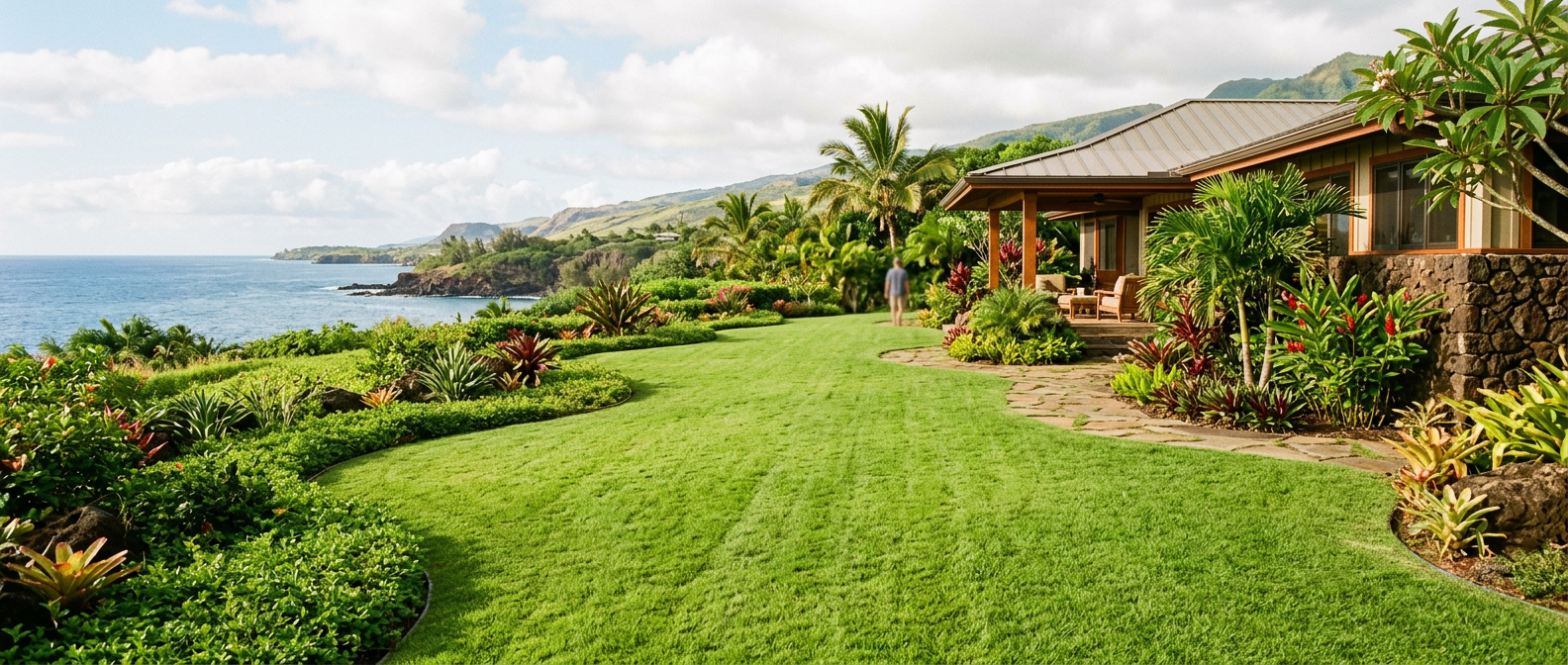
Let's get one thing straight: growing a picture-perfect lawn in paradise is a unique challenge. Your mainland friends don't have to deal with salt spray, volcanic soil, and a year-round growing season that can turn a lazy Saturday into a mandatory mow-fest. But getting a lush, green carpet of grass in Hawaii is absolutely doable. You just have to pick the right team player. Forget the cool-season grasses you see on TV; they'll wither and die faster than a tourist's sunburn fades. Here in Hawaii, we need tough, warm-season grasses that can handle the heat, humidity, and everything else the islands throw at them.
We've installed, repaired, and cursed at lawns from Kauai to the Big Island. This guide is the culmination of that experience—no fluff, just the facts on what actually works for a Hawaiian lawn.
Understanding Hawaii's Unique Lawn Challenges
Before you can pick a winner, you need to know the playing field. A lawn in Hawaii faces a different set of rules:
- Year-Round Growth: There's no winter dormancy here. Your grass is always growing, which means it needs year-round attention. This also means you'll need to know How Often to Mow Your Lawn to keep it from becoming a jungle.
- Extreme Microclimates: You can go from a rain-soaked jungle in Hilo to a dry, arid coastline in Kona in just a few hours. Your specific location—windward vs. leeward, mauka (mountain side) vs. makai (ocean side)—dramatically impacts your choice.
- Salt Spray: If you're anywhere near the coast, salt tolerance isn't a bonus; it's a requirement. Salt-laden breezes can kill the wrong type of grass in weeks.
- Diverse Soils: Hawaiian soils are a wild mix. You might have acidic, volcanic soil on the Big Island, heavy clay in central Oahu, or sandy, coral-based soil near the beach. A soil test from a local garden center or the University of Hawaii's College of Tropical Agriculture and Human Resources (CTAHR) is a smart first step.
The 5 Best Grass Types for a Hawaiian Lawn
Okay, let's get to the contenders. We're focusing on grasses you can actually source and grow successfully here. For most of these, you'll be looking at sod or plugs, as seeding warm-season grasses can be a gamble.
1. Zoysia Grass ('El Toro', 'Zeon')
The All-Around Champion. Zoysia is the dependable workhorse of Hawaiian lawns. It forms a dense, traffic-tolerant carpet that feels great underfoot. We love it for family homes because it can handle kids and pets.
- Pros: Excellent drought tolerance once established, good shade tolerance for a warm-season grass, chokes out weeds, feels luxurious.
- Cons: Slow to establish and recover from damage, prone to thatch buildup over time.
- Best For: Most residential lawns on any island, especially if you have a mix of sun and partial shade.
- Local Tip: 'El Toro' Zoysia is a very popular variety in Hawaii for its durability. For a finer-bladed, more manicured look, 'Zeon' Zoysia is the top-shelf choice. Expect to pay a premium. Sod from a supplier like Hawaiian Turfgrass on Oahu will give you the best start.
2. Seashore Paspalum
The Coastal King. If your property gets hit with salt spray, this is your grass. Full stop. Seashore Paspalum is the most salt-tolerant turfgrass available, which is why you see it on nearly every high-end coastal golf course in Hawaii. It has a beautiful dark green color and can be mowed low for a pristine look.
- Pros: Unmatched salt tolerance (can even be irrigated with brackish water), beautiful color and texture, thrives in full sun.
- Cons: Requires more maintenance (frequent mowing, more fertilizer) to look its best, doesn't tolerate shade.
- Best For: Oceanfront properties or any area with high soil or water salinity.
According to the University of Hawaii, Seashore Paspalum can tolerate soil salinity levels up to 35,000 ppm, which is nearly the concentration of full-strength seawater. This incredible trait allows it to thrive on world-class golf courses from Kapalua on Maui to the Mauna Kea Resort on the Big Island, where other grasses would simply die. (Source: https://www.ctahr.hawaii.edu/oc/freepubs/pdf/L-16.pdf)
3. St. Augustine Grass ('Raleigh', 'Floratam')
The Shade Dweller. While most warm-season grasses crave sun, St. Augustine is your best bet for those shadier spots under large mango or monkeypod trees. It has a coarse, broad blade and a distinctive blue-green color, and it spreads with aggressive above-ground runners called stolons.
- Pros: The best shade tolerance among warm-season grasses, establishes quickly, beautiful color.
- Cons: Doesn't handle foot traffic well, susceptible to pests like chinch bugs and diseases like gray leaf spot. That's often Why Is My Grass Turning Yellow?.
- Best For: Shady, low-traffic areas, common in lush valleys like Manoa on Oahu or near Hilo.
- Local Tip: Be vigilant for chinch bug damage in the hot, dry summer months. It looks like big, yellow, dried-out patches. Treat immediately if you spot them.
4. Bermuda Grass ('Tifway 419', 'Celebration')
The Sun Worshipper. If you have a property that gets blasted by sun all day long and you need something tough as nails, Bermuda is your answer. It's incredibly drought-tolerant and repairs itself quickly from damage, making it great for high-traffic areas.
- Pros: Extremely drought, heat, and traffic tolerant. Spreads rapidly to fill in bare spots. Can be mowed very low.
- Cons: Requires full, direct sun—it hates shade. It's also very aggressive and will creep into garden beds if not edged properly. Its rapid growth and tendency to produce thatch mean you'll need to know How to Dethatch a Lawn regularly.
- Best For: Hot, dry, sunny areas like Ewa Beach, Kihei, or Kona. Perfect for active family yards and athletic fields.
5. Centipede Grass
The Low-Maintenance Option. If the idea of constant mowing and fertilizing makes you want to pave your yard, Centipede grass is worth a look. It's called "lazy man's grass" for a reason. It requires significantly less fertilizer and mowing than the other grasses on this list.
- Pros: Very low maintenance, grows slowly, prefers acidic soil (common in volcanic areas).
- Cons: Not salt-tolerant at all. Doesn't stand up to foot traffic. It's a lighter, apple-green color that some people don't prefer. Slow to recover from damage.
- Best For: Low-traffic, "utility" lawn areas where you want green coverage without a lot of work. A decent choice for parts of the Big Island or Upcountry Maui.
How to Plant Your New Hawaiian Lawn
Forget scattering seeds. In Hawaii's climate, the most reliable way to establish a beautiful lawn is with sod, plugs, or sprigs. Sod gives you an "instant lawn," while plugs and sprigs are a more budget-friendly (but slower) way to get started.
- Prep the Soil: Remove all old grass and weeds. Till the soil 4-6 inches deep, and amend it based on your soil test. You may need to add organic compost to improve water retention or lime to adjust pH.
- Lay Sod or Plant Plugs: Lay sod pieces tightly together, staggering the seams like bricks. For plugs, plant them 6-12 inches apart. The grass will fill in the gaps over time.
- Water, Water, Water: This is the most critical step. The soil needs to stay consistently moist for the first few weeks. Check out our guide on the Best Time to Water Grass for pro tips. Early morning is always best.
Local suppliers like Sod U Kauai, Green Pono on Maui, or the aforementioned Hawaiian Turfgrass on Oahu are your best resources for fresh, locally grown turf.
Maintaining Your Lawn in the Aloha State
A Hawaiian lawn doesn't sleep, so your maintenance routine needs to be consistent.
- Mowing: During peak growth (most of the year), you may need to mow every 5-7 days. Never remove more than one-third of the blade height at a time.
- Fertilizing: Warm-season grasses don't need a ton of nitrogen. A slow-release fertilizer is best. We've had good results with products like Scotts Turf Builder Southern Gold, which costs about $75 for a 32-lb bag at the Honolulu Home Depot. A soil test will tell you exactly what your lawn needs.
- Watering: Once established, water deeply and infrequently (1-2 times per week) to encourage deep root growth. Always adhere to any county water restrictions, especially during dry seasons on Maui and the Big Island.
Choosing the right grass is the single most important decision for a successful lawn in Hawaii. Match the grass to your specific conditions—sun, salt, and soil—and you'll spend more time enjoying your paradise and less time fighting with it.
Frequently asked
What is the most low-maintenance grass for Hawaii?+
Centipede grass is the most low-maintenance option for Hawaii. It requires less frequent mowing and fertilizing than other warm-season grasses like Bermuda or Zoysia. However, it does not tolerate salt spray or heavy foot traffic well.
Can you grow Kentucky Bluegrass or Fescue in Hawaii?+
No, you cannot successfully grow cool-season grasses like Kentucky Bluegrass or Fescue in Hawaii. They are not adapted to the year-round heat and humidity and will quickly die out. You must use warm-season varieties like Zoysia or St. Augustine.
What is the best grass for a rental property lawn in Hawaii?+
For a rental property, durability is key. We recommend 'El Toro' Zoysia or Bermuda grass. Both are tough, handle foot traffic well, and are drought-tolerant once established, reducing the maintenance burden and surviving potential neglect better than other types.
How much does sod cost in Hawaii?+
Sod prices in Hawaii vary by island and grass type. Generally, you can expect to pay between $0.80 to $1.50 per square foot for the sod itself. Professional installation can bring the total cost to $10 to $15 per square foot, including ground preparation.
What grass is used on Hawaiian golf courses?+
Most high-end golf courses in Hawaii, especially those near the coast, use Seashore Paspalum for its incredible salt tolerance and beautiful appearance. Inland courses or older courses might use varieties of Bermuda grass like Tifway 419 on fairways and greens.