
The 5 Best Grass Types for Hawaii Lawns (2024 Guide)
Choosing the right turf for the islands means balancing sun, salt, and foot traffic. We'll break down the top contenders for a perfect Hawaiian lawn, from beachfronts to upcountry.
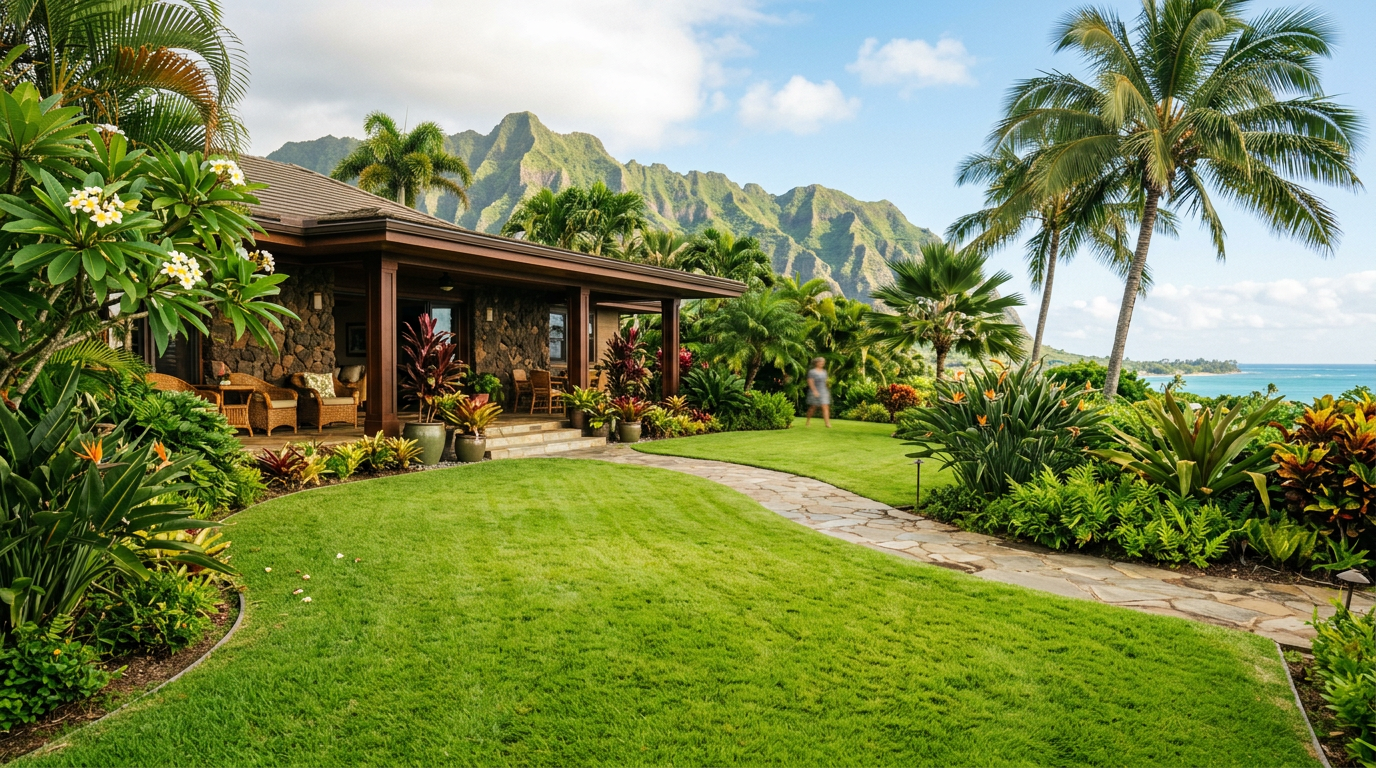
Aloha. If you're trying to grow a mainland-style lawn in the middle of the Pacific, you've probably realized it's not exactly straightforward. The postcard vision of a perfect green carpet meeting a turquoise ocean is achievable, but you can't just throw down any old bag of seed from the big box store. Growing a great lawn in Hawaii requires picking a grass that loves the heat, humidity, and unique challenges of island life.
Forget everything you know about cool-season grasses like Fescue or Ryegrass. They don't stand a chance here. We're in the tropics, and that means we need tough, resilient, warm-season grasses. We've installed and maintained lawns across the islands, from windward Oʻahu to the dry side of Maui, and we know what works. This is our no-nonsense guide to the best grass for your Hawaii home.
Understanding Hawaii's Unique Lawn Challenges
Before you can pick a winner, you have to understand the game. A lawn in Honolulu faces very different pressures than one in, say, Alabama or Colorado. Here's what we're up against in Hawaii:
- Intense Sun & Heat: We're close to the equator. The UV index is no joke, and the year-round warmth means grass never goes dormant. It needs to be able to handle relentless sun without scorching.
- High Humidity: While great for tropical plants, high humidity creates a breeding ground for fungal diseases like brown patch and dollar spot. Your grass needs to be naturally resistant.
- Salt Spray: If you're anywhere near the coast (and let's be real, most of us are), salt-laden winds are a constant reality. Most grasses will turn brown and die with even a little salt exposure. You need a salt-tolerant variety.
- Varied Rainfall: The microclimates in Hawaii are extreme. Hilo gets over 120 inches of rain a year, while just across the island, Kawaihae gets less than 10. Your grass choice must match your location's water availability, or you'll be spending a fortune on your water bill.
- Volcanic & Clay Soils: Our soils can be rocky, acidic, and either drain too fast (lava rock) or hold too much water (heavy clay). Amending the soil is often necessary, but starting with a grass that can handle these conditions is key.
The 5 Best Grass Types for Your Hawaii Lawn
Okay, let's get to the contenders. These are the turfgrasses that have proven they can thrive in paradise. We'll give you the pros and cons of each so you can make the right call.
1. Zoysia Grass (The All-Around Winner)
If there's one grass that dominates the high-end residential and resort landscape in Hawaii, it's Zoysia. It's tough, beautiful, and feels amazing under bare feet.
- Top Cultivars: 'El Toro' Zoysia is the workhorse—strong, dense, and relatively drought-tolerant. 'Zeon' Zoysia is a finer-bladed, more shade-tolerant version that gives a true carpet-like appearance, often seen on golf courses. We've installed countless lawns across the islands, from Kāʻanapali to Kailua, and our go-to for most residential projects is 'El Toro' Zoysia for its durability.
- Pros: Excellent wear tolerance, good drought resistance once established, forms a very dense sod that chokes out weeds, moderate salt tolerance.
- Cons: Expensive to install (sod is the only real option), slow to recover from damage, and can build up thatch over time, requiring you to dethatch your lawn.
2. Seashore Paspalum (The Coastal King)
Live on the water? This is your grass. No other turfgrass comes close to Seashore Paspalum's ability to handle salt. It can literally be irrigated with brackish water, a trait that is almost unbelievable.
- Pros: Unmatched salt tolerance, beautiful dark green color, good wear tolerance, can be mowed at very low heights.
- Cons: Requires consistent watering (though it can be with poor quality water), needs regular fertilizer to maintain its color, and can be susceptible to dollar spot fungus in humid conditions. It is also one of the more expensive options.
3. Bermuda Grass (The Sun Worshipper)
If you have a wide-open area with zero shade and lots of foot traffic, Bermuda grass is a fantastic choice. It's what you'll find on most athletic fields and golf course fairways for a reason: it's tough as nails and grows back fast.
- Pros: Extremely drought-tolerant and heat-tolerant, handles heavy traffic better than any other grass, spreads rapidly to fill in bare spots.
- Cons: Absolutely zero shade tolerance. It needs 8+ hours of direct sun or it will thin out and die. It's also aggressive and will invade flower beds if not edged properly. It demands frequent mowing, sometimes twice a week in summer. Figuring out how often to mow is key to keeping it healthy.
4. St. Augustine Grass (The Shade Dweller)
Got big monkeypod trees or live on the shady side of a building? St. Augustine is your best bet in Hawaii. While most warm-season grasses need full sun, St. Augustine can get by with just 4-5 hours of direct sunlight.
- Pros: The most shade-tolerant warm-season grass, establishes quickly, has a nice, broad-leaf texture and deep green-blue color.
- Cons: Poor wear tolerance—not great for areas with kids or pets playing. It's also a thirsty grass and requires more water than Zoysia or Bermuda. Can be prone to chinch bugs, which will cause it to look like your grass is turning yellow.
5. Centipede Grass (The Low-Maintenance Option)
If you want a decent-looking lawn without spending every weekend on it, Centipede is the answer. It's the 'lazy man's grass' of the tropics, known for its low fertility requirements and slow growth.
- Pros: Low maintenance—less mowing and less fertilizer needed. Does well in the acidic, sandy soils common in some parts of Hawaii.
- Cons: Doesn't like foot traffic, has poor salt tolerance, and has a naturally lighter, apple-green color that some people don't prefer. It's also slow to recover from damage.
How to Plant and Establish a Lawn in Hawaii
Forget the seed you see on the mainland. In Hawaii's climate, with our heavy rains and abundant bird population, seeding a lawn is an uphill battle. The vast majority of successful lawns here are started from sod, plugs, or sprigs.
Sod is king. It provides an instant lawn, prevents erosion, and outcompetes weeds from day one. Expect to pay between $1.00 to $2.50 per square foot for quality sod from a local farm like Hawaiian Turfgrass on Oʻahu or Ohana Sod on Maui. Zoysia and Seashore Paspalum will be at the higher end of that range.
No matter how you plant, proper ground preparation is non-negotiable. This means removing all old grass and weeds, tilling the soil, and adding 2-4 inches of quality compost and topsoil to give your new grass a fighting chance.
Essential Lawn Care Tips for Hawaii
Once your lawn is in, you have to care for it properly. Hawaii's year-round growing season means you're never really 'off duty.'
- Watering: Water deeply and infrequently to encourage deep root growth. The best time to water your grass is early in the morning (4 AM to 8 AM) to minimize evaporation and prevent fungal growth.
- Mowing: Never cut more than one-third of the grass blade at a time. Mowing heights vary: Bermuda and Seashore Paspalum can be kept low (1-1.5 inches), while Zoysia and St. Augustine prefer to be a bit taller (2-3 inches).
- Fertilizing: Get a soil test! Our volcanic soils have unique nutritional profiles. A balanced, slow-release fertilizer is usually best. Don't over-fertilize, as the runoff can harm our delicate reef ecosystems.
- Pest & Disease Control: Be vigilant for pests like armyworms and chinch bugs, and diseases like brown patch. A healthy, properly watered and fed lawn is the best defense.
Hawaii's islands experience a huge range in annual rainfall, from as little as 8 inches in the Kaʻū Desert to over 400 inches on the windward slopes of Mount Waiʻaleʻale. A study published by the University of Hawaiʻi at Mānoa's Department of Geography and Environment confirms this incredible variation, which is why choosing a grass suited to your specific location's rainfall is critical for success and water conservation. (Source: http://rainfall.geography.hawaii.edu/)
Choosing the right grass is the single most important decision for a beautiful, sustainable lawn in Hawaii. Take the time to assess your yard's sun exposure, your proximity to the ocean, and your tolerance for maintenance. Pick the right contender, and you'll have that slice of paradise you've been dreaming of.
Frequently asked
What is the most popular grass in Hawaii?+
Zoysia grass, specifically 'El Toro' Zoysia, is the most popular choice for residential and resort lawns in Hawaii. Its excellent combination of drought tolerance, soft texture, dense growth, and durability makes it perfectly suited for the island climate and lifestyle.
Can you grow Kentucky Bluegrass or Fescue in Hawaii?+
No, it's not practical. Cool-season grasses like Kentucky Bluegrass or Fescue require cool temperatures and will quickly fail in Hawaii's year-round heat and humidity. You must use warm-season grasses like Zoysia, Bermuda, or Seashore Paspalum for a successful lawn.
How much does sod cost in Hawaii?+
Sod prices in Hawaii typically range from $1.00 to $2.50 per square foot, depending on the grass type and supplier. Premium varieties like Zoysia and Seashore Paspalum are on the higher end. Always get current quotes from local farms like Hawaiian Turfgrass or Ohana Sod.
What's the best low-maintenance grass for Hawaii?+
Centipede grass is the best low-maintenance option for Hawaii. It requires less frequent mowing, has low fertilizer needs, and is relatively slow-growing. However, it is less tolerant of salt spray and heavy foot traffic compared to Zoysia or Bermuda grass.
Is artificial turf a good option for Hawaii?+
Artificial turf can be an option, but it gets extremely hot in Hawaii's direct sun, often becoming too hot to walk on barefoot. It also prevents rainwater from recharging the soil and can increase runoff. Natural grass offers cooling benefits and is better for the local ecosystem.