
Best Grass for Hawaii: 5 Top Picks for Island Lawns
Don't just throw down any seed. We'll show you which grass types actually thrive in Hawaii's unique island climates, from salty beachfronts to cooler upcountry yards.
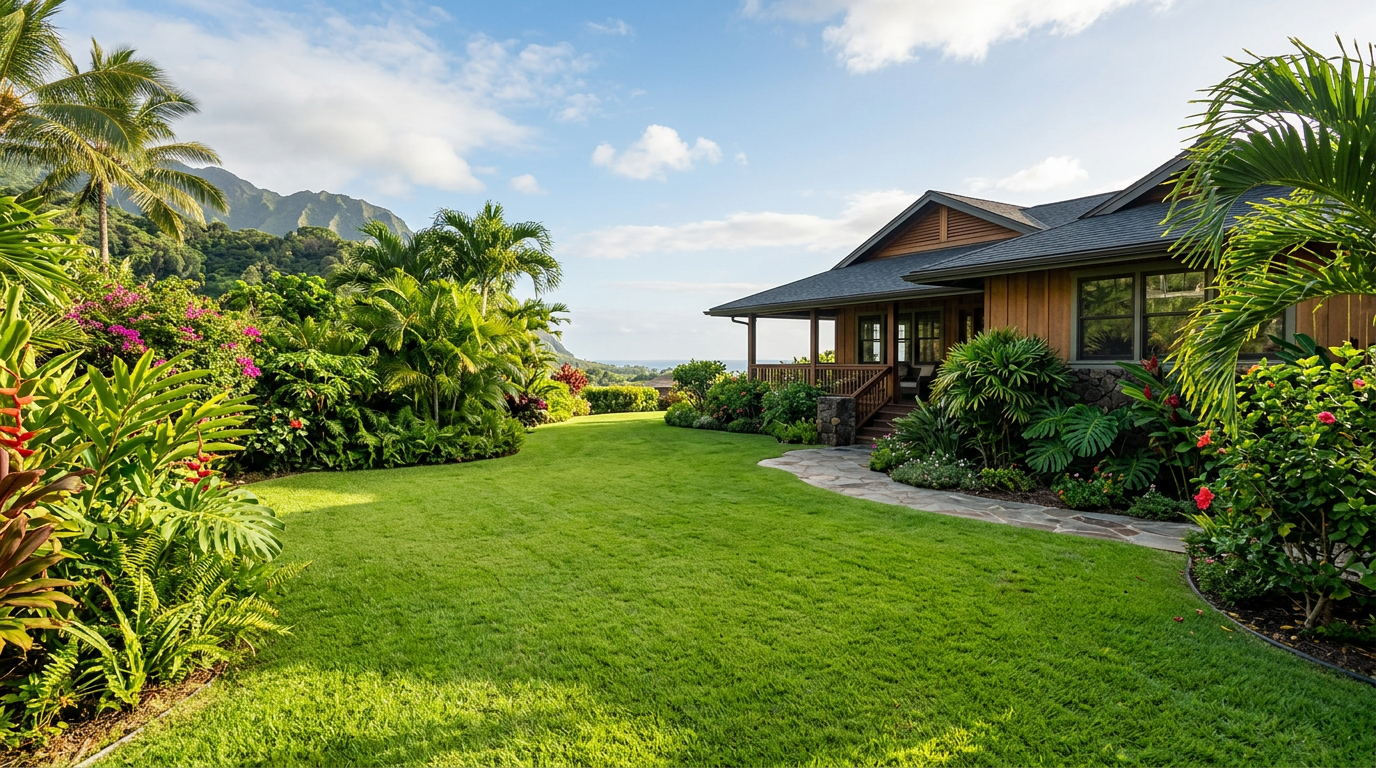
Living in Hawaii is paradise, but getting a perfect lawn here can feel like anything but. Between the intense equatorial sun, salty air, torrential rains, and confounding volcanic soil, the grass that worked for your cousin in Connecticut will shrivel up and die before you can say 'pau hana.' We're here to cut through the noise and give you the straight scoop on choosing the best grass for your Hawaiian home, whether you're in sunny Kailua-Kona, misty Hilo, or somewhere in between.
This isn't about chasing some mainland ideal of a perfect lawn. This is about choosing a tough, resilient turf that works with Hawaii's environment, not against it. Let's dig in.
Why Lawn Care in Hawaii is a Different Beast
Before we even name a single grass type, you have to respect the local conditions. They're unlike anywhere else in the US. You're not just picking a grass; you're picking a partner to battle the elements.
- Microclimates are Everything: The difference between the windward (wet) and leeward (dry) sides of any island is dramatic. A lawn in Hilo, which gets over 120 inches of rain a year, has vastly different needs than a lawn in Waimea on the Big Island, which might get less than 15. Elevation also plays a huge role, with cooler upcountry areas like Kula on Maui presenting their own unique challenges.
- Intense Sun & Heat: Hawaii sits in USDA hardiness zones 9b to 13a. The sun is direct and powerful year-round. You need a warm-season grass that can handle the heat without getting scorched.
- Salt Spray: If you live anywhere near the coast, salt tolerance isn't a bonus; it's a requirement. Salt-laden breezes can desiccate and kill less-adapted grasses in a hurry.
- Volcanic Soil: Pāhoehoe and ʻaʻā are great for geology tours, but the resulting soil can be a nightmare. It's often acidic (low pH), can be heavy clay or rocky, and may be low in organic matter. Soil testing and amendment are not optional steps here.
- Pests & Diseases: The year-round warmth and humidity create a paradise for lawn pests like chinch bugs, armyworms, and various fungal diseases. A dense, healthy turf is your best defense.
According to the University of Hawaii's College of Tropical Agriculture and Human Resources (CTAHR), which is the single best resource for local gardeners, successful turf management starts with selecting a grass species adapted to your specific location's climate and your desired level of maintenance. They've been researching this for decades, so we listen when they talk.
Our Top 5 Grass Types for Hawaiian Lawns
Forget the fescue and bluegrass you see at mainland big-box stores. In Hawaii, you need a tough, tropical, warm-season grass. Here are the five we recommend, time and time again.
1. Zoysia Grass ('El Toro' & 'Zeon')
If you want an all-around champion, this is it. Zoysia forms a dense, dark green carpet that feels great underfoot and is tough enough to handle foot traffic from kids and pets. It's the go-to for a reason.
- Pros: Excellent heat and drought tolerance once established, very good salt tolerance, chokes out weeds with its density, relatively low fertilizer needs.
- Cons: Slow to establish and recover from damage. Can go dormant and turn brown during extended dry spells (but it will green up again with rain).
- Best For: The vast majority of residential lawns in Hawaii. It's a fantastic middle-ground that balances beauty, toughness, and reasonable maintenance.
- Local Tip: The 'El Toro' Zoysia variety was actually developed right here at the University of Hawaii and is perfectly suited for our climate. 'Zeon' Zoysia is another popular fine-bladed variety.
2. Seashore Paspalum
As the name implies, this is the king of the coast. If you can smell the ocean from your lanai, this should be at the top of your list. It's what many of Hawaii's premier golf courses use on their fairways for a reason.
- Pros: Unmatched salt tolerance. It can literally be irrigated with brackish water. It also has decent shade tolerance compared to Bermuda grass and establishes quickly.
- Cons: Can require more frequent mowing and dethatching to prevent scalping. It doesn't love being ignored.
- Best For: Beachfront homes, properties near the water, or areas with poor quality irrigation water.
3. Bermuda Grass
Bermuda is the tough guy of the turf world. It's incredibly durable and loves, loves, loves full, direct sun. It creates a fine-textured, dense lawn that can repair itself from damage very quickly.
- Pros: Extremely drought and heat tolerant, stands up to heavy traffic, recovers rapidly from wear and tear.
- Cons: Absolutely requires full sun—it will thin out and die in shade. It's an aggressive grower and can easily invade flower beds and walkways if not edged properly. It also requires more fertilizer than Zoysia to look its best.
- Best For: Hot, dry, full-sun yards on the leeward side of the islands. Great for active families with lots of outdoor activity.
4. St. Augustine Grass
If your yard has beautiful, mature plumeria, mango, or monkeypod trees that cast a lot of shade, St. Augustine is your best bet. It's the most shade-tolerant of the common warm-season grasses.
- Pros: The best shade tolerance on this list. Establishes fairly quickly and has a unique, coarse, blue-green texture.
- Cons: It needs a consistent supply of water and is less drought-tolerant than Bermuda or Zoysia. It's also susceptible to pests, particularly the chinch bug, which can cause devastating damage. Its open, coarse structure can also allow for more weeds. You may find yourself wondering why is my grass turning yellow more often with this one.
- Best For: Yards with partial shade where Bermuda and Zoysia would struggle.
5. Centipede Grass
Often called "the lazy man's grass," Centipede is a low-growing, light green grass that requires less maintenance than the others. It's a good choice if you want a lawn but don't want to be a slave to it.
- Pros: Low fertilizer requirements. Its natural preference for acidic soil makes it a good match for unamended volcanic soils. It's slow-growing, which means less frequent mowing.
- Cons: It's not very salt-tolerant, so it's a poor choice for coastal areas. It has shallow roots, making it less drought-tolerant, and it doesn't stand up well to heavy foot traffic.
- Best For: Low-traffic areas where low maintenance is the primary goal.
Sourcing Your Grass in Hawaii: Sod vs. Seed
In Hawaii's climate, weeds grow with terrifying speed. For that reason, we almost always recommend sod over seed. Sod provides an "instant lawn" that will choke out weeds and establish much faster, which is critical during the rainy season to prevent soil erosion.
Your best bet is a local sod farm like Hawaiian Turfgrass on Oahu. They grow varieties like 'El Toro' Zoysia and 'Celebration' Bermuda that are proven winners for the islands. When we last checked, you could expect to pay around $0.90 to $1.60 per square foot for high-quality sod. A full pallet, which typically covers 450 square feet, will run you anywhere from $450 to $700, plus delivery. It's a significant upfront investment, but it saves you a world of headache.
You can find grass seed at big-box stores like Home Depot or Lowe's in Honolulu, Kahului, or Hilo, but be very careful about what you're buying. Ensure it's one of the species listed above. Trying to overseed a lawn with the wrong type of seed is a waste of time and money.
Basic Care for Your Hawaiian Lawn
Choosing the right grass is step one. Keeping it alive is step two.
- Soil Prep: Before you lay a single piece of sod, get a soil test. You can get kits from the University of Hawaii or garden centers. Most likely, you'll need to amend your soil with lime to raise the pH and add compost to improve its structure and fertility.
- Watering: The goal is deep, infrequent watering. This encourages deep root growth, making your lawn more drought-tolerant. Water early in the morning to reduce evaporation and prevent fungus. The best time to water grass is always before the sun gets too intense.
- Mowing: Follow the one-third rule: never cut more than one-third of the grass blade's height at a time. Mowing height varies: Zoysia and Bermuda can be kept shorter (1-2 inches), while St. Augustine prefers to be taller (2.5-3 inches).
- Fertilizing: Use a slow-release fertilizer formulated for southern lawns. How often you fertilize depends on your grass type—Bermuda is a heavy feeder, while Centipede needs very little.
Ultimately, the best lawn in Hawaii is one that's healthy and sustainable. By choosing a grass type that matches your specific island location and lifestyle, you'll spend less time fighting your yard and more time enjoying it. Aloha!
Frequently asked
What is the most common grass in Hawaii?+
Zoysia grass (especially the 'El Toro' variety) and Bermuda grass are the two most common and successful lawn grasses in Hawaii. Zoysia is favored for its balance of beauty and resilience, while Bermuda is prized for its toughness in full sun.
Is there a low-maintenance grass for Hawaii?+
Centipede grass is considered the lowest-maintenance option for Hawaii due to its slow growth and minimal fertilizer needs. However, it comes with tradeoffs: it's not very tolerant of salt or heavy foot traffic, making it unsuitable for many locations.
How much does sod cost in Hawaii?+
Quality sod in Hawaii typically costs between $0.90 and $1.60 per square foot. A full pallet, which covers around 450 square feet, will generally run from $450 to $700 from a local supplier like Hawaiian Turfgrass, not including delivery fees.
Can I grow Fescue or Kentucky Bluegrass in Hawaii?+
No. Fescue and Kentucky Bluegrass are cool-season grasses that are not adapted to Hawaii's tropical heat and humidity. They will not survive the year-round warmth and will quickly die off, so planting them is a complete waste of money and effort.
What is the best grass for a beachfront property in Hawaii?+
Seashore Paspalum is, by far, the best choice for beachfront properties in Hawaii. Its exceptional tolerance for salt spray and even brackish water is unmatched by any other common turfgrass. It's specifically adapted for coastal conditions where other grasses would fail.