
Best Grass for Hawaii: 5 Top Picks for Island Lawns
Life in paradise has its yard-work quirks. We'll cut through the noise and show you the five best types of grass that will actually thrive on your Hawaiian lawn.
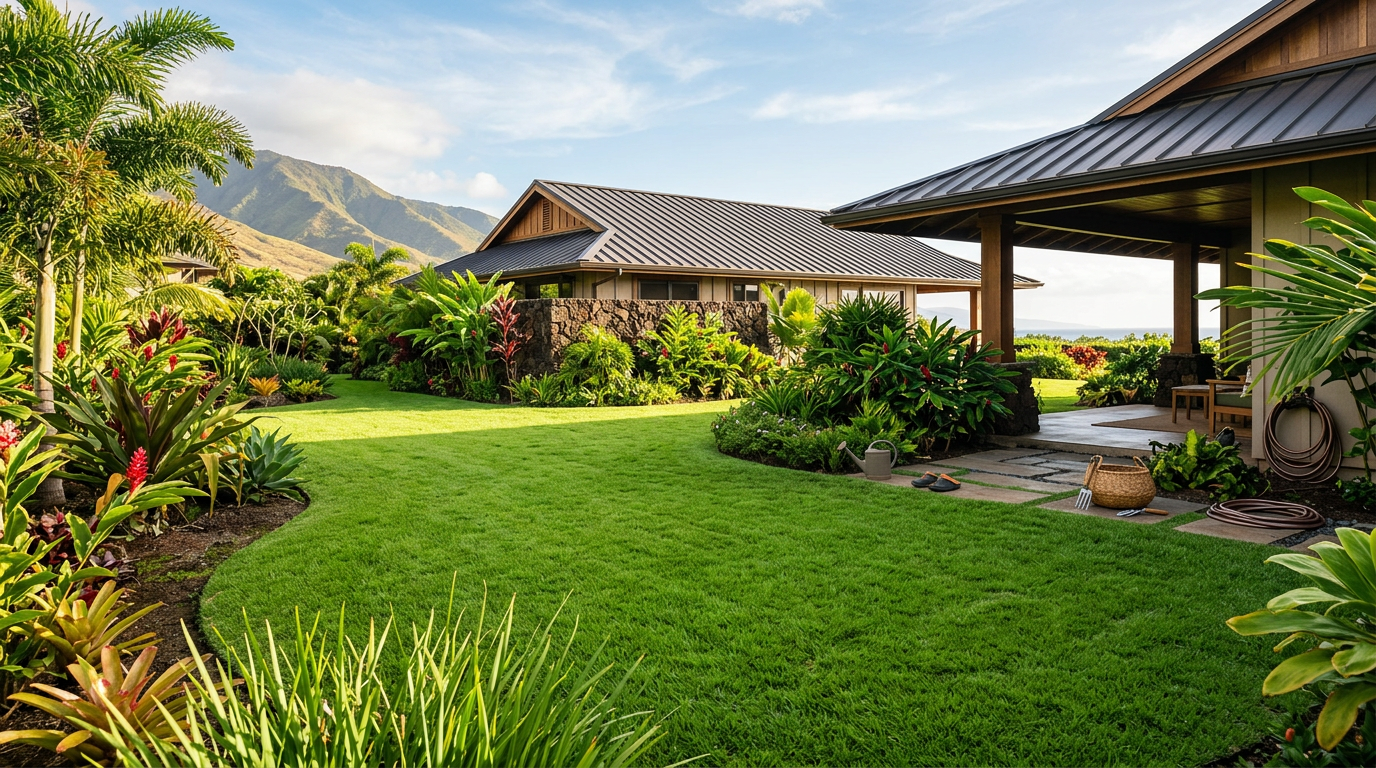
Let's be direct: growing a perfect lawn in Hawaii isn't as simple as just adding water and sun. Between the volcanic soil, the relentless salt spray near the coast, the torrential downpours on the windward side, and the blistering sun on the leeward side, your turf has a lot to deal with. Forget everything you've seen about lawns on the mainland. Cool-season grasses like Fescue and Kentucky Bluegrass will wither and die here faster than a tourist's sunburn fades.
You're in the tropics, and you need a tough, warm-season grass that can handle the pressure. We're here to break down the best grass types for Hawaii so you can spend less time fighting your yard and more time enjoying it.
The Best Grasses for a Hawaiian Lawn: Our 5 Picks
There's no single 'best' grass for all of Hawaii. The right choice for a beachfront home in Kailua, Oahu will be different from a yard in upcountry Kula, Maui. Here are the top contenders and where they shine.
1. Zoysia Grass ('El Toro', 'Zeon')
Best For: All-around performance, sunny yards, and good salt tolerance.
Zoysia is the workhorse of Hawaiian lawns, and for good reason. It forms a dense, carpet-like turf that feels amazing underfoot and is fantastic at choking out weeds. Varieties like 'El Toro' and 'Zeon' are extremely popular. It's tough, handles foot traffic well, and has good drought tolerance once established. Its salt tolerance is also quite good, making it a solid choice for many coastal homes.
We've laid a lot of Zoysia sod in our time, and the biggest mistake we see people make is letting thatch build up. Because it's so dense, it can create a thick layer of dead material that strangles the roots. You'll need to stay on top of your dethatching game. Plan to dethatch your lawn every year or two.
- Pros: Very dense, drought tolerant, salt tolerant, good for high traffic.
- Cons: Slow to establish, can build up heavy thatch.
2. Seashore Paspalum ('Salam', 'SeaIsle 1')
Best For: Oceanfront properties and extreme salt tolerance.
If your property gets significant salt spray, stop reading and choose Seashore Paspalum. This is the undisputed king of salt tolerance. It can literally be irrigated with brackish water and still look incredible. It produces a stunning, high-end, dark green lawn that you'll see on luxury resorts and coastal golf courses across the islands. It's the grass of choice when money is no object and you're right on the water.
But that quality comes at a price. It's one of the more expensive options and requires a bit more maintenance, including a lower mowing height and specific nutrient needs. You can't just treat it like any other grass.
- Pros: Unbeatable salt tolerance, beautiful fine texture, deep green color.
- Cons: Expensive, requires specialized maintenance and low mowing.
3. Bermuda Grass ('Tifway 419')
Best For: Blazing full sun, rapid repair, and drought resistance.
Bermuda grass loves two things: sun and heat. If your yard has zero shade and gets cooked all day long, Bermuda will thrive. It’s incredibly tough, drought-resistant, and repairs itself from damage faster than any other grass on this list. This is why it's used on athletic fields and golf course fairways. 'Tifway 419' is a classic, proven variety.
The downside? It's aggressive. It will creep into your flower beds, driveway cracks, and anywhere else you don't want it. It also requires frequent mowing to look its best—sometimes twice a week in the summer. If you have large shade trees, look elsewhere. Bermuda needs at least 6-8 hours of direct sun. Trying to grow it in the shade is a losing battle, and you'll end up asking 'Why is my grass turning yellow?'.
- Pros: Extremely heat/drought tolerant, fast-growing, durable.
- Cons: Very poor shade tolerance, invasive, needs frequent mowing.
4. St. Augustine Grass ('Raleigh', 'Floratam')
Best For: Yards with partial shade.
Got a big monkeypod or mango tree in your yard? St. Augustine is your best bet. While no warm-season grass truly loves deep shade, St. Augustine is the most shade-tolerant of the bunch. It has a coarse, broad blade and creates a beautiful, lush, blue-green lawn. It handles the Hawaiian humidity well and establishes relatively quickly.
However, it's not very drought-tolerant and needs consistent water to stay green. It's also susceptible to pests, particularly chinch bugs, and diseases like gray leaf spot. If you choose St. Augustine, be prepared to monitor it for signs of trouble.
- Pros: Best shade tolerance of warm-season grasses, beautiful color.
- Cons: Needs a lot of water, prone to chinch bugs and disease.
5. Centipede Grass
Best For: Low maintenance and low-fertility soils.
If you want a 'lazy man's lawn' and you're not near the coast, Centipede is the answer. It requires the least amount of fertilizer and is a slow grower, which means less time behind the mower. This makes it a popular choice for homeowners who want a lawn, but don't want to be a slave to it.
It has its weaknesses, though. Its salt tolerance is poor, so it's a non-starter for coastal lots. It's also sensitive to high-pH (alkaline) soils, which can be an issue in some parts of Hawaii with coral-based subsoil. When stressed, it can develop a reputation for being a bit yellow, so it doesn't always have the deep green color of the other grasses.
- Pros: Very low maintenance, needs little fertilizer, slow-growing.
- Cons: Poor salt tolerance, doesn't handle traffic well, can yellow easily.
Understanding Hawaii's Unique Lawn Challenges
You can't just throw down some seed and expect a miracle. The Hawaiian archipelago has incredibly diverse microclimates. The weather in Kaneohe is not the same as in Kihei. Hawaii's average annual rainfall varies dramatically by location. For example, Honolulu's airport gets about 18 inches of rain per year, while Hilo on the Big Island gets a staggering 126 inches. (Source: National Centers for Environmental Information, NOAA). This massive difference dictates everything from disease pressure to your irrigation schedule.
- Volcanic Soil: It can range from acidic and rich on the Hilo side to thin and rocky over lava on the Kona side. Before spending a dime on sod, get a soil test from the University of Hawaii's College of Tropical Agriculture and Human Resources (CTAHR). For a small fee, they'll tell you your soil's pH and what nutrients it's missing. It's the smartest money you'll ever spend on your yard.
- Salt Spray: If you're within a mile of the ocean, salt is your enemy. It will kill less-tolerant grasses. This is why Seashore Paspalum and Zoysia are dominant choices for coastal properties.
- Heavy Rain & Humidity: Windward areas face constant moisture, which is a breeding ground for fungus. Good drainage is non-negotiable.
Getting Started: Sod is King in Hawaii
On the mainland, you might start a lawn from seed. In Hawaii, that's a recipe for frustration. The combination of intense sun, heavy rains that wash seed away, and aggressive local weeds makes seeding nearly impossible for these grass types.
Sod is the way to go. It provides an instant lawn that shades out weeds and is ready for light use in just a few weeks.
Expect to pay for this convenience. Local suppliers on Oahu like Hawaiian Turfgrass in Mililani sell high-quality Zoysia, Bermuda, and Seashore Paspalum. A pallet of sod (which covers 400-500 sq ft) can cost anywhere from $450 to over $700, depending on the grass type and delivery fees. While it's a significant upfront investment, it saves you a year of headaches.
A Basic Lawn Care Calendar for Hawaii
The 'growing season' in Hawaii is basically January through December. Your lawn care tasks are consistent year-round.
- Mowing: You'll be mowing all year. How often depends on your grass type. Fast-growing Bermuda may need mowing every 4-5 days, while slow-growing Centipede might go 10-14 days. Follow the one-third rule: never remove more than one-third of the grass blade at a time. For a full breakdown, see our guide on how often to mow your lawn.
- Watering: Even with the rain, you'll need to irrigate, especially on the leeward sides. Water deeply and infrequently (1-2 times per week) in the early morning to encourage deep roots and reduce evaporation. Check our guide on the best time to water grass.
- Fertilizing: Use a slow-release fertilizer formulated for southern lawns. Because the growing season is year-round, a light application every 2-3 months is more effective than heavy, infrequent feedings.
- Weed Control: Weeds like honohono grass, nutsedge, and spurge are a constant battle. A healthy, dense lawn is your best defense. For spot-treating broadleaf weeds, the principles in our guide to getting rid of dandelions will apply, but always check that the product is safe for your specific grass type.
Frequently asked
What is the most low-maintenance grass for Hawaii?+
Centipede grass is the most low-maintenance option for Hawaii if you are not near the coast. It grows slowly (less mowing) and requires very little fertilizer to stay healthy. However, it does not have good salt tolerance and can struggle in high-traffic areas.
What is the best grass for salty, coastal areas in Hawaii?+
Seashore Paspalum is, without a doubt, the best grass for salty, coastal areas. It has superior salt tolerance and can even be irrigated with brackish water. Zoysia grass is a more common and slightly more budget-friendly alternative with good, but not elite, salt tolerance.
Can I grow cool-season grass like Fescue or Bluegrass in Hawaii?+
No. The climate in Hawaii is far too hot and humid year-round for cool-season grasses like Fescue, Kentucky Bluegrass, or Ryegrass. They will not survive the heat and will quickly die off. You must plant a warm-season grass variety on the islands.
How much does a pallet of sod cost in Hawaii?+
The cost of a pallet of sod (typically 400-500 square feet) in Hawaii generally ranges from $450 to over $700. The final price depends on the grass type, with premium options like Seashore Paspalum being more expensive, and the specific island and delivery logistics.
What grass is toughest against weeds in Hawaii?+
Zoysia grass is the toughest against weeds in Hawaii. Once established, it forms an incredibly dense, thick mat of turf that physically chokes out and prevents most weed seeds from germinating. Bermuda grass is also very competitive against weeds due to its aggressive growth.