
The 5 Best Grass Types for Georgia Lawns (2024 Guide)
From the punishing sun of the Coastal Plain to the tricky Transition Zone around Atlanta, picking the right turf is half the battle. We break down the 5 best grass types to keep your Georgia lawn green and healthy.
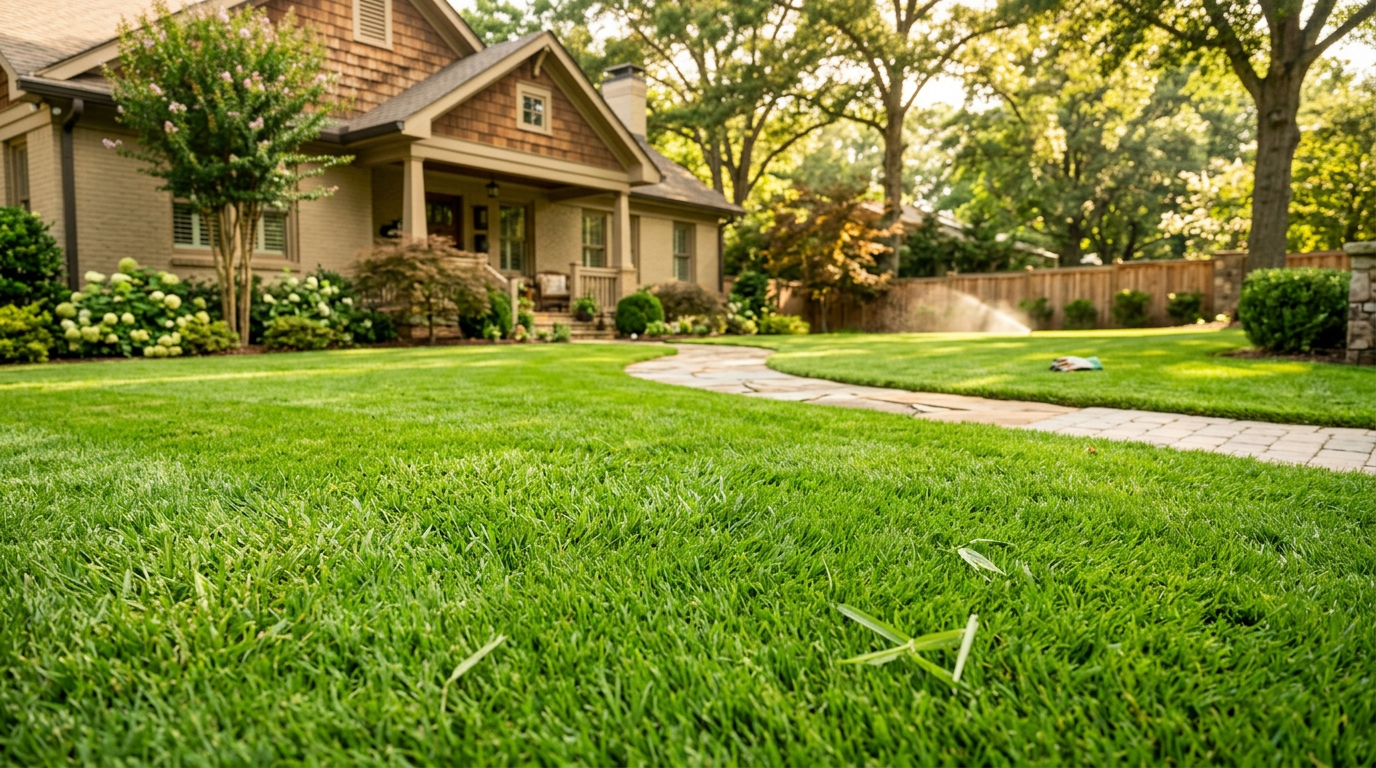
Welcome to Georgia, the land of peaches, peanuts, and punishing summer humidity that can turn a lawn into a science experiment. If you're trying to figure out the best grass for your Georgia home, you're in the right place. We're not here to gatekeep lawn care secrets. We're here to give you the straight-up, no-nonsense guide to getting a turf you can be proud of, whether you're in the mountains of Blue Ridge or on the coast near Savannah.
Choosing the right grass here is critical because Georgia is split. North Georgia, including the sprawling Atlanta metro, sits in the infamous 'Transition Zone.' This means it's a little too hot for cool-season grasses to be truly happy and a little too cold for warm-season grasses to avoid a long winter dormancy. South Georgia, however, is firmly in the warm-season camp. Don't worry, we'll break it all down.
Understanding Georgia's Climate & Your Lawn
Before you buy a single bag of seed, you need to know your battlefield. Georgia primarily falls into USDA Hardiness Zones 7a through 9a. The key takeaway is the North/South divide.
- North Georgia (Zones 7a/7b): This is the Transition Zone. Think Atlanta, Athens, Gainesville. Summers are brutal on cool-season grasses like Kentucky Bluegrass, but winters can be cold enough to cause significant browning and potential winterkill in less-hardy warm-season turf like St. Augustine.
- Middle & South Georgia (Zones 8a/8b/9a): This area, covering Macon, Columbus, Savannah, and the coastal plains, is prime warm-season grass territory. The mild winters and long, hot, humid summers are exactly what grasses like Bermuda and Zoysia are built for.
And let's not forget the soil. That famous Georgia red clay is everywhere. It's acidic, dense, and slow to absorb water. While some grasses tolerate it better than others, any new lawn project should involve a soil test (your local UGA Extension office is a fantastic resource) and likely some amendments to improve drainage and nutrient content.
The 5 Best Grass Types for Georgia Lawns
Alright, let's get to the main event. We've laid tons of sod and spread countless pounds of seed across Georgia. Based on our experience, these are the contenders for your yard.
1. Bermuda Grass: The Sun-Loving Champion
If you have a full-sun yard, Bermuda is the undisputed king of Georgia turf. It's incredibly tough, drought-tolerant, and repairs itself quickly from damage, making it perfect for families with active kids and pets.
Many of the world's best Bermuda varieties were developed right here in Georgia at the University of Georgia's Tifton campus. 'TifTuf' Bermuda is the star right now, famous for its exceptional drought tolerance, using 38% less water than other varieties once established. 'Tifway 419' is another classic, durable choice.
- Pros: Exceptional heat/drought tolerance, fast-growing, withstands heavy traffic.
- Cons: Must have 8+ hours of direct sun, aggressive growth can invade flower beds, goes completely dormant (brown) in winter.
- Best For: Full-sun lawns, high-traffic areas, homeowners who prioritize durability.
- Cost: Seed is available but can be tricky to establish. Sod is the preferred method, running approximately $0.70 - $1.10 per square foot from Georgia suppliers like Super-Sod.
2. Zoysia Grass: The Luxury Carpet
Zoysia is what you choose when you want that perfect, dense, carpet-like lawn. It's slower growing than Bermuda, which means less mowing. It also has better shade tolerance, making it a more versatile choice for yards with mixed sun and shade. Varieties like 'Zeon' and 'Emerald' are popular in Georgia for their fine texture and beautiful green color.
- Pros: Very dense growth chokes out weeds, good traffic tolerance, better shade tolerance than Bermuda (needs 4-6 hours of sun), feels great underfoot.
- Cons: Slower to recover from damage, prone to a disease called large patch, can develop thick thatch over time. Dethatching becomes important.
- Best For: Homeowners wanting a premium, beautiful lawn with moderate traffic and some shade.
- Cost: Zoysia is typically more expensive, with sod prices in the $0.85 - $1.30 per square foot range. Seed is generally not recommended for the finer-bladed varieties.
3. Centipede Grass: The Low-Maintenance Option
Often called "the lazy man's grass," Centipede is a solid choice for homeowners who want a decent-looking lawn without a ton of work. It spreads via stolons (above-ground runners) and is very well adapted to the acidic, low-nutrient clay soils common in Georgia. It requires significantly less fertilizer and mowing than Bermuda or Zoysia.
- Pros: Low fertilizer needs, slow growth, thrives in acidic soil, decent heat tolerance.
- Cons: Poor traffic tolerance (not for a soccer field), shallow root system makes it less drought-tolerant than Bermuda, can turn yellow due to iron deficiency (chlorosis).
- Best For: Low-traffic, full-sun to light-shade areas in Middle and South Georgia.
- Cost: Much more affordable. You can find a 5lb bag of Pennington Centipede seed for around $80, and sod is usually cheaper than Bermuda.
4. Tall Fescue: The North Georgia Green Standard
This is our cool-season exception, and it's strictly for North Georgia and the Transition Zone. If you live north of Macon, and especially around Atlanta, Tall Fescue is your best bet for a year-round green lawn. Modern Turf-Type Tall Fescue varieties like '4th Millennium SRP' or 'Rebel IV' have been bred for better heat and drought tolerance. However, it will still struggle during the peak of a Georgia summer.
- Pros: Stays green all year, good shade tolerance, deep roots (for a cool-season grass) provide some drought resistance.
- Cons: Requires more water in summer, susceptible to brown patch fungus, needs to be overseeded every few years to maintain density.
- Best For: Shady lawns in North Georgia where homeowners are committed to maintaining a green lawn year-round.
- Cost: Almost always grown from seed. A high-quality 50 lb bag of seed will cost $150 - $200 and cover about 5,000-6,000 sq ft for overseeding.
5. St. Augustine Grass: The South Georgia Shade Solution
For shady lawns in Middle and South Georgia, St. Augustine is often the go-to. It has wide, coarse blades and spreads aggressively to create a thick lawn. It handles the humidity well and is the most shade-tolerant of the warm-season grasses on our list. If you need something for a shady yard, this is a better fit than our general shade seed recommendations that often focus on cool-season grasses.
- Pros: Best shade tolerance among a-season grasses, vigorous growth, dense turf.
- Cons: Poor cold tolerance (do NOT plant this in North GA), susceptible to chinch bugs and gray leaf spot disease, requires plenty of water.
- Best For: Shady coastal and South Georgia lawns.
- Cost: Almost exclusively sold as sod or plugs. Expect prices similar to Zoysia, around $0.80 - $1.25 per square foot.
Planting and Establishing Your New Georgia Lawn
Timing is everything. Plant warm-season grasses (Bermuda, Zoysia, etc.) from late spring to early summer (May-July). This gives them the long, hot days they need to get established before winter. Plant Tall Fescue in the fall (September-October).
We've laid more sod in Georgia than we can count, and we've learned the hard way that skimping on soil prep is a recipe for a patchy disaster. That red clay is no joke. You absolutely must till the soil and amend it with several cubic yards of compost or topsoil to improve its structure and drainage. It’s the difference between a thriving lawn and a constant struggle.
Sod provides an instant lawn and is great for sloped areas, while seeding is much cheaper but requires more patience and diligence to keep moist.
Crucial Lawn Care & Watering Rules in Georgia
Once your lawn is in, the work isn't over. Proper care is what keeps it looking good.
- Watering: Don't sprinkle your lawn every day. Water deeply and infrequently (1-2 times per week) to encourage deep root growth. Always follow Georgia's Water Stewardship Act, which generally restricts outdoor watering to the hours between 4 p.m. and 10 a.m. to reduce evaporation. Many municipalities use an odd/even day system based on your address. Learning the best time to water grass is non-negotiable.
- Mowing: How often you mow depends on the grass. Mow Bermuda and Zoysia relatively short (1-2.5 inches), while Tall Fescue and St. Augustine prefer to be taller (3-4 inches) to help them survive summer stress.
- Fertilizing: Feed warm-season grasses during their growing season (late spring through summer). Feed Tall Fescue in the fall and early spring. A soil test will tell you exactly what your lawn needs, but a good all-purpose product is Scotts Southern Turf Builder, which costs about $45 for a 14,000 sq ft bag.
We're nerds about this stuff, so here are the numbers. The University of Georgia estimates that the turfgrass industry contributes over $9 billion to the state's economy and covers some 1.7 million acres. A typical 5,000 square foot lawn in the Atlanta suburbs might cost between $3,500 and $5,500 for professional sod installation with a premium grass like Zeon Zoysia, while DIY seeding the same area with Tall Fescue could run you $150-$200 for seed alone. (Source: https://extension.uga.edu/publications/detail.html?number=B1242)
Choosing the right grass is the single most important decision for a successful Georgia lawn. Match the grass to your region, sun exposure, and maintenance level, and you'll be well on your way to a beautiful, resilient yard that can handle whatever a Georgia summer throws at it.
Frequently asked
What is the most low-maintenance grass for Georgia?+
Centipede grass is widely considered the most low-maintenance option for Georgia. It requires less fertilizer and mowing than other warm-season grasses like Bermuda and is well-suited to the state's acidic clay soil. However, it does not tolerate heavy foot traffic well.
Can I have green grass year-round in Georgia?+
Yes, but it depends on your location and effort. In North Georgia, Tall Fescue stays green year-round naturally. In other areas, you can overseed a dormant Bermuda lawn with annual Ryegrass for winter color, but this creates a high-maintenance two-lawn system.
What is the best grass for dogs or high traffic in Georgia?+
Bermuda grass is the best choice for dogs and heavy traffic due to its rapid growth and self-repairing nature. TifTuf Bermuda is particularly tough. Zoysia is a second-best option, offering good durability and density, though it recovers from damage more slowly than Bermuda.
How much does it cost to lay sod in Georgia?+
The cost of sod itself in Georgia typically ranges from $0.70 to $1.30 per square foot, depending on the grass type. Zoysia and St. Augustine are usually more expensive than Bermuda or Centipede. Professional installation can add another $1.00 - $2.00 per square foot.
What grass grows best in the shade in Georgia?+
For South and Middle Georgia, St. Augustine is the most shade-tolerant warm-season grass. In North Georgia's cooler climate, Tall Fescue is the best choice for shady areas. Zoysia offers a good middle ground with moderate shade tolerance throughout the state.