
The 5 Best Grass Types for Georgia Lawns (2024 Guide)
Don't just throw down any old seed and hope for the best. We'll show you which grass types actually thrive in Georgia's unique climate, from the mountains of Blue Ridge to the coast of Savannah.
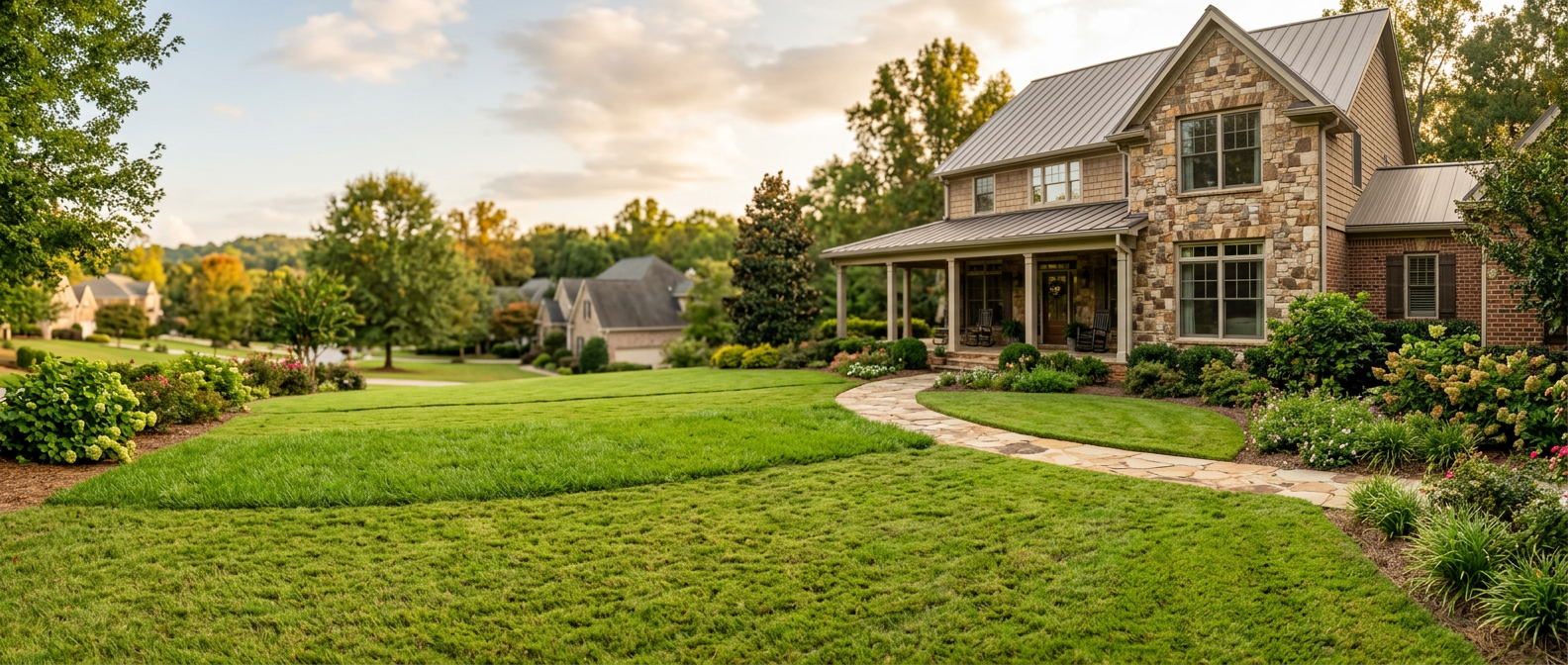
Let's get one thing straight: growing a lush, green lawn in Georgia is a battle. You're fighting scorching summer heat, oppressive humidity, and that infamous red clay that’s seemingly designed to suffocate grassroots. Just grabbing a random bag of seed from a big-box store is a recipe for a patchy, yellow mess. We're here to stop you from making that mistake. Choosing the right turfgrass for your specific corner of the Peach State is the most important decision you'll make for your yard.
Whether you're in the Atlanta metro, the foothills of the Appalachians, or down near the coast, there's a grass that will work for you. You just have to know what to look for. We'll break down the top contenders so you can spend less time fighting your lawn and more time enjoying it.
Understanding Georgia's Unique Lawn Climate
Georgia isn't a monolith. The state spans from USDA Hardiness Zone 6b in the mountainous north to a humid, subtropical 9a along the coast. This creates a challenging "transition zone," especially around Atlanta and northwards. Here, both warm-season grasses (that go dormant and brown in winter) and cool-season grasses (that can struggle and die in summer) are viable, but neither is perfect.
Then there's the soil. That rusty red Georgia clay is acidic and compacts easily, starving roots of oxygen and water. Before you even think about planting, you must get a soil test from your local UGA Extension office and amend your soil, usually by tilling in several inches of compost to improve its structure and nutrient profile. Don't skip this step.
The Best Warm-Season Grasses for Georgia
For most of the state, a warm-season grass is the way to go. These grasses thrive from May to September and go dormant after the first hard frost.
1. Bermudagrass
Best for: Full sun, high-traffic areas, and that classic golf course look.
Bermuda is the undisputed king of sun-loving turf in Georgia. It's tough, drought-tolerant once established, and repairs itself quickly from damage. If you have a yard with 8+ hours of direct sun, this is your top draft pick. Modern cultivars have come a long way from the scratchy stuff of the past.
- Pros: Extremely drought and heat tolerant, stands up to kids and pets, spreads rapidly.
- Cons: Requires full sun (will die in shade), high fertilizer needs, aggressive growth means more frequent mowing and edging to keep it out of flower beds.
- Recommended Cultivars: 'TifTuf' is the gold standard for drought tolerance. 'Celebration' has better shade tolerance (for a Bermuda) and a unique blue-green color.
- Cost: Sod typically runs from $300 to $450 for a 500 sq. ft. pallet.
2. Zoysiagrass
Best for: Homeowners wanting a premium, dense, carpet-like lawn with good shade tolerance.
Zoysia is the luxury option. It forms an incredibly dense, soft turf that feels great underfoot and naturally chokes out weeds. It has better shade tolerance than Bermuda, making it more versatile for typical suburban lots with mature trees. We've installed countless Zoysia lawns in the Athens and Alpharetta areas, and the results are consistently stunning.
- Pros: Excellent density, beautiful dark green color, good drought tolerance, better shade tolerance than other warm-season grasses.
- Cons: Expensive, establishes very slowly from plugs or seed (sod is highly recommended), can build up thatch over time.
- Recommended Cultivars: Fine-bladed varieties like 'Zeon' and 'Emerald' are popular for their beauty. 'Meyer' is a classic, durable option.
- Cost: This is a premium product. Expect to pay $450 to $600 for a 500 sq. ft. pallet of sod.
3. Centipedegrass
Best for: Low-maintenance, low-input lawns in Central and South Georgia.
Often called "the lazy man's grass," Centipede requires significantly less fertilizer and mowing than Bermuda or Zoysia. It's well-adapted to the acidic, sandy soils of the coastal plain. If you want a decent-looking lawn without a ton of work, Centipede is your friend.
- Pros: Very low maintenance, low fertilizer needs, slow growth rate.
- Cons: Shallow root system makes it less drought-tolerant than Bermuda, poor traffic tolerance, light apple-green color that some people dislike.
- Cost: One of the most affordable options. Sod can be found for $275 to $350 per 500 sq. ft. pallet.
4. St. Augustinegrass
Best for: Shady, humid coastal areas in South and Middle Georgia.
St. Augustine is the go-to grass for shady yards in the lower half of the state. It has coarse, broad leaves and spreads via powerful above-ground runners called stolons. Its salt tolerance also makes it a champ for coastal properties from Savannah to St. Marys.
- Pros: The best shade tolerance of all warm-season grasses, good salt tolerance.
- Cons: Poor cold tolerance (don't try it north of Macon), needs a lot of water, susceptible to chinch bugs and fungal diseases. Cannot be grown from seed.
- Cost: Sod prices are generally between $350 and $500 for a 500 sq. ft. pallet.
The Cool-Season Contender for North Georgia
5. Tall Fescue
Best for: North Georgia (north of the Fall Line) and heavily shaded lawns statewide.
If you live in the Atlanta metro, Dalton, or the mountains and demand a green lawn year-round, Tall Fescue is your primary option. As a cool-season grass, its main growing seasons are spring and fall. It stays green through winter but will struggle and may require extra watering during the peak of a Georgia summer.
According to the University of Georgia Extension's publication PAML-105, "Choosing a Lawn Grass," Tall Fescue is a good choice for the northern third of Georgia, particularly in lawns with moderate shade where warm-season grasses thin out. (Source: https://extension.uga.edu/publications/detail.html?number=PAML-105)
- Pros: Stays green year-round, good shade tolerance, establishes quickly from seed.
- Cons: Needs more water in summer, doesn't repair itself (bare spots must be reseeded), susceptible to a disease called brown patch.
- Pro Tip: Because it's a bunch-forming grass, you'll need to overseed a lawn every fall to maintain density. Brands like Pennington's The Rebels Tall Fescue mix are specifically bred for better heat tolerance.
- Cost: Relatively inexpensive to establish from seed, around $100-$150 for enough seed to cover 5,000 sq. ft.
Sod vs. Seed in Georgia: What's the Verdict?
For warm-season grasses like Bermuda, Zoysia, and Centipede, sod is almost always the better investment in Georgia. It gives you an "instant lawn" that's better at competing with weeds and handling the volatile weather. Expect to pay between $300 and $600 for a pallet (around 500 sq. ft.) from a reputable Georgia supplier like Super-Sod or NG Turf. It's a big upfront cost, but it dramatically increases your success rate.
Seeding is a viable and much cheaper option for Tall Fescue. For warm-season grasses, seeding is possible but much trickier and takes a long time to establish a mature stand, leaving it vulnerable to weeds and erosion on clay slopes.
A Basic Georgia Lawn Care Calendar
Your work isn't done after you plant. Proper maintenance is key.
- Mowing: Warm-season grasses are mowed lower (1-2.5 inches) while dormant-season fescue is mowed higher (3-4 inches). Adjusting your mower deck is critical. Our guide on how often to mow your lawn has the details.
- Watering: Water deeply and infrequently in the early morning to promote deep root growth. This is far better than a shallow sprinkle every day. Check out our guide on the best time to water grass for the full strategy.
- Fertilizing: Feed warm-season grasses from spring to late summer. Feed Tall Fescue in the fall and early spring. Don't fertilize warm-season grasses in the fall—it encourages weak growth that will be damaged by frost.
- Weed Control: Apply pre-emergent herbicides in the spring (for crabgrass) and fall (for poa annua). Tackle breakthrough weeds like dandelions as you see them. We have a whole guide on how to get rid of dandelions in your lawn.
Choosing the right grass is part science, part knowing your own tolerance for yard work. But by matching the species to your sunlight, your region of Georgia, and your budget, you're setting yourself up for a lawn that's the envy of the neighborhood, not a source of constant frustration.
Frequently asked
What is the most low-maintenance grass for Georgia?+
Centipedegrass is the king of low-maintenance in Georgia. It requires less frequent mowing and significantly less fertilizer than Bermuda or Zoysia. However, its low-maintenance nature comes at the cost of being less durable for high-traffic areas and having a lighter green color.
Can I have a green lawn year-round in Georgia?+
It's tough but possible. In North Georgia, a well-maintained Tall Fescue lawn stays green all year but needs extra care in summer. For the rest of the state, the only way is to [overseed a dormant warm-season lawn](/cluster/how-to-overseed-a-lawn) with annual ryegrass for winter color, which is a high-maintenance practice.
What's the best grass for Georgia shade?+
Fine-bladed Zoysia varieties ('Zeon', 'Emerald') offer the best shade tolerance among the desirable warm-season grasses. For deep shade, especially in North Georgia, a shade-tolerant Tall Fescue blend is your best bet, though no grass will thrive in complete darkness. TifTuf Bermuda is not a shade grass.
How do I fix Georgia's red clay soil for a new lawn?+
Red clay must be amended before planting. The best method is to till 4 to 6 inches of quality organic material, like compost or a sandy loam topsoil, into the top 6 inches of clay. This improves drainage, reduces compaction, and balances the acidic pH.
What's the toughest, most durable grass for Georgia?+
For pure durability against heat, drought, and heavy traffic from kids and pets, TifTuf Bermudagrass is the champion in Georgia. Its rapid growth allows it to self-repair quickly from damage, but it absolutely requires at least 8 hours of direct sunlight per day.