
The 5 Best Grass Types for Georgia Lawns (2024 Guide)
Forget the guesswork. We're breaking down the five best grass types that can actually handle Georgia's clay soil, high heat, and frustrating humidity.
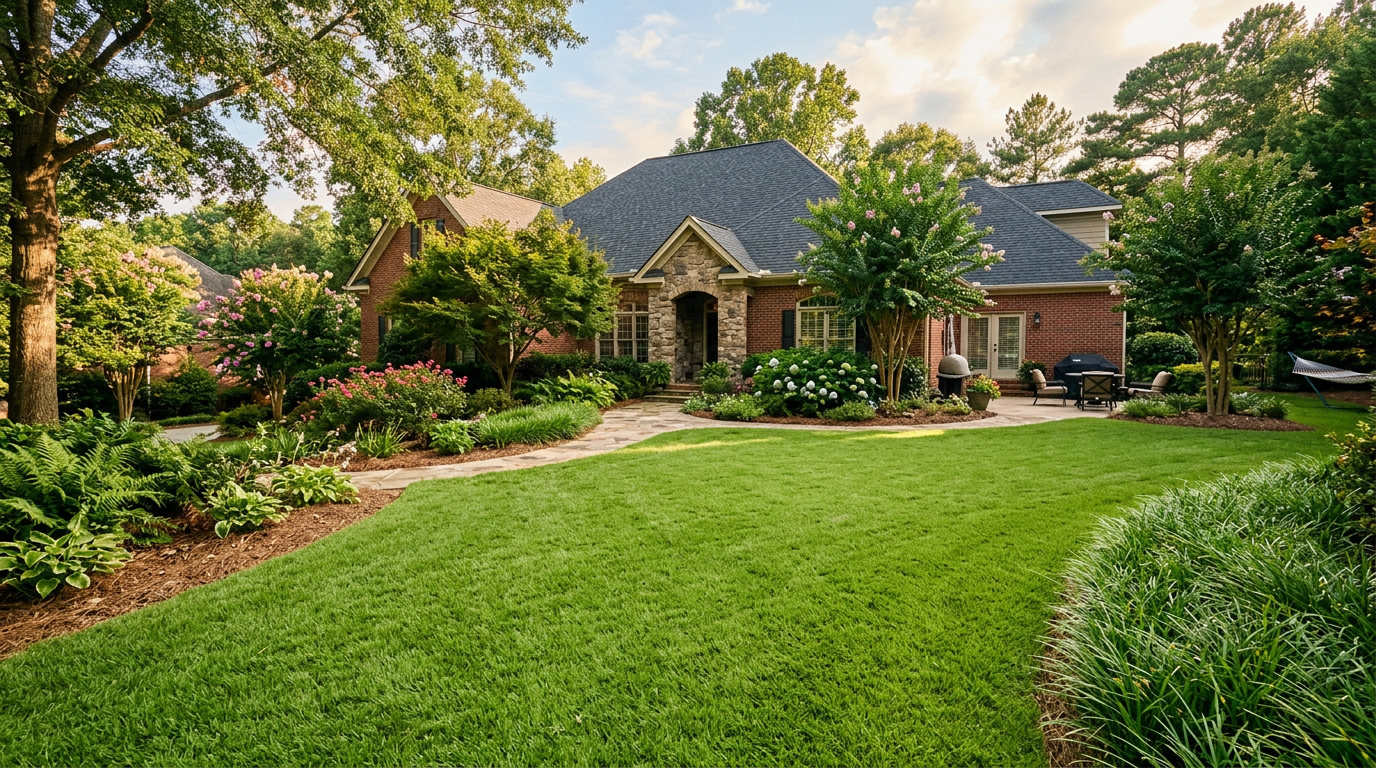
Let's be direct: growing a great lawn in Georgia is a challenge. Between the blast-furnace summers, surprise winter freezes, and that infamous red clay that doubles as pottery medium, you can't just throw down any old seed and hope for the best. We're here to cut through the noise and give you the straight dope on the best grass for Georgia, whether you're in the Atlanta metro, down in Macon, or up in the cooler mountains.
Choosing the right turf is the single most important decision you'll make for your yard. It's the foundation of everything. Get it right, and you're set up for years of a beautiful, relatively low-stress lawn. Get it wrong, and you're signing up for a frustrating, expensive, and unwinnable war against Mother Nature.
Understanding Georgia's Climate & Soil
Technically, most of Georgia sits in what turf nerds call the "transition zone." This sounds like a good thing, a place where anything can grow. It's not. It's a horticultural knife fight where both warm-season grasses (that go dormant and brown in winter) and cool-season grasses (that die in the summer heat) can struggle.
However, for 90% of the state, from the coastal plain to the Atlanta suburbs, warm-season grasses are the undisputed kings. The summer heat and humidity are just too intense for most cool-season varieties to survive without heroic effort. The例外 is the North Georgia mountains, where cooler temperatures make Tall Fescue a viable, even preferable, choice.
And then there's the soil. Georgia red clay is acidic, dense, and prone to compaction. It doesn't hold nutrients well and can be a nightmare for root development. The good news is, the best grasses for Georgia have adapted to these conditions. Before you do anything, we recommend getting a soil test from your local UGA Extension office. It costs around $20 and will tell you exactly what your soil needs in terms of lime (to raise the pH) and nutrients.
The 5 Best Grasses for a Georgia Lawn
We've laid a lot of sod in Georgia, and we've seen what works and what doesn't. Here are the top contenders, a breakdown of their pros and cons, and who they're best for.
1. Bermuda Grass (The Workhorse)
If Georgia had an official state grass, it would probably be Bermuda. You'll see it on every golf course, athletic field, and sun-drenched suburban lawn for a reason: it's tough as nails.
- Pros: Unmatched heat and drought tolerance, thrives in full sun, self-repairs from damage quickly, stands up to heavy foot traffic from kids and dogs.
- Cons: Needs at least 6-8 hours of direct sun daily. Very aggressive and will invade flower beds if not edged properly. Goes dormant and turns brown after the first frost.
- Best For: Sunny yards, families with active kids/pets, people who want a durable, resilient lawn.
- Popular Cultivars: TifTuf (our top pick for drought resistance), Tifway 419, Celebration®.
2. Zoysia Grass (The Luxury Choice)
Zoysia is what most people picture when they think of a perfect, dense, carpet-like lawn. It has a finer texture than Bermuda and feels fantastic under bare feet.
- Pros: Excellent density that chokes out weeds, good heat and drought tolerance (once established), more shade tolerant than Bermuda, beautiful dark green color.
- Cons: Expensive. A pallet of Zeon Zoysia from a Georgia supplier like Super-Sod can cost $325-$375. It's also slow to establish and recover from damage. Prone to thatch buildup.
- Best For: Homeowners who want a premium, high-end look and are willing to invest the time and money. Good for yards with moderate sun and shade.
- Popular Cultivars: Zeon (very fine-bladed), Emerald (an old classic), JaMur.
3. Centipede Grass (The Lazy Man's Grass)
Centipede is the go-to for a low-maintenance, low-input lawn. It thrives in the acidic, low-nutrient soils common in middle and south Georgia.
- Pros: Requires very little fertilizer, slow-growing (less mowing), forms a solid mat with decent weed control.
- Cons: Not very wear-tolerant; not for heavy traffic. Shallow root system makes it less drought-tolerant than Bermuda or Zoysia. Can turn yellow if over-fertilized, a condition called 'why is my grass turning yellow'.
- Best For: Homeowners who want a decent-looking lawn with minimal effort and expense. Best suited for the southern half of the state.
4. St. Augustine Grass (The Shade King of the South)
For shady yards in Central and South Georgia, St. Augustine is often the best warm-season option. It has a coarse, broad blade that creates a uniquely lush look.
- Pros: The most shade-tolerant warm-season grass. Establishes quickly and aggressively crowds out weeds.
- Cons: Poor cold tolerance, making it risky for the Atlanta area and north. Requires a lot of water. Susceptible to pests like chinch bugs and diseases like gray leaf spot.
- Best For: Shady properties in the southern two-thirds of Georgia.
- Popular Cultivars: Raleigh, Palmetto, Floratam.
5. Tall Fescue (The Cool-Season Contender)
Tall Fescue is the odd one out. It's a cool-season grass that stays green year-round. While it struggles in most of the state, it's the dominant choice for lawns in the cooler mountain counties and for very shady yards in the Atlanta metro where nothing else will grow.
- Pros: Stays green all year. The best shade tolerance of any grass on this list. Establishes well from seed.
- Cons: Struggles mightily in summer heat and drought. Needs a lot of water to survive July and August. Prone to brown patch fungus.
- Best For: North Georgia mountain homes, or heavily shaded lots in the Piedmont region. Often requires overseeding in the fall to keep it thick.
Bermuda vs. Zoysia: The Great Georgia Debate
For most sunny Atlanta-area lawns, the choice boils down to Bermuda or Zoysia. Here's a quick comparison:
| Feature | Bermuda Grass | Zoysia Grass | | :--- | :--- | :--- | | Sun Needs | Full Sun (8+ hours) | Full Sun to Partial Shade (4-5 hours) | | Durability | Excellent, rapid recovery | Good, but slow recovery | | Feel | Coarse but tough | Soft and dense | | Maintenance | Higher nitrogen needs | Less fertilizer, but prone to thatch | | Cost | $$ | $$$$ | | Winner For | High-traffic, full-sun yards | Premium look, mixed sun/shade |
Establishing Your New Georgia Lawn
You have two main options: sod or seed. For warm-season grasses like Bermuda, Zoysia, and Centipede, sod is almost always the better choice in Georgia. It provides an instant lawn, has better weed control, and you can lay it from spring through fall.
Seeding these grasses is possible but tricky. The window for planting is short (late May to July), and you'll battle weeds and washouts. The one exception is Tall Fescue, which is almost always planted from seed in the fall (September-October).
A pallet of sod (around 450-500 sq ft) in Georgia runs from about $200 for Centipede or Tifway 419 Bermuda up to $375+ for premium Zeon Zoysia. It's a big upfront cost, but it's the most reliable way to a beautiful lawn.
According to the University of Georgia's College of Agricultural & Environmental Sciences, proper lawn establishment is critical. They note that "Improper establishment practices will result in a lawn that is slow to mature and more prone to weeds and other pests." (Source: https://extension.uga.edu/publications/detail.html?number=C1063) This is why we almost always recommend sod for warm-season grasses—it shortcuts the most difficult part of the process.
Core Care for Your Georgia Grass
Once you've picked your poison, keeping it alive is a matter of following some basic rules. It's not complicated, but consistency is key.
-
Watering: Water deeply and infrequently. This encourages deep root growth. For most of the year, Georgia's EPD restricts outdoor watering to specific days. The best time to water grass is always early morning to reduce evaporation and fungal growth. One inch of water per week, including rainfall, is the standard target.
-
Mowing: How often to mow your lawn depends on the grass type and season, but the golden rule is never to remove more than 1/3 of the blade at once. Mow Bermuda and Zoysia lower (1-2.5 inches) and Tall Fescue and Centipede higher (2.5-3.5 inches).
-
Fertilizing: Get that soil test! It's the only way to know what your lawn actually needs. In general, warm-season grasses need fertilizer during their growing season (April-August). Avoid fertilizing them when they are dormant.
-
Weed Control: A healthy, dense lawn is the best weed defense. For breakthroughs, pre-emergent herbicides in the spring and fall are your best friends. For existing invaders like dandelions, we've got a guide on how to get rid of dandelions in your lawn for good.
-
Dethatching & Aeration: If you have Zoysia or Bermuda, you will eventually need to manage thatch—that layer of dead stuff between the soil and the green grass. Core aeration is also crucial for relieving compaction in our clay soils. A yearly aeration and dethatching as needed will keep your lawn breathing.
Frequently asked
What is the most low-maintenance grass for Georgia?+
Centipede grass is widely considered the most low-maintenance option for Georgia. It requires less mowing, less fertilizer, and is well-suited to the state's acidic soil. However, it does not tolerate heavy foot traffic well.
Can you have a green lawn year-round in Georgia?+
Yes, but it takes specific strategies. You can plant Tall Fescue, a cool-season grass, which stays green all year but struggles in summer. Alternatively, some people overseed their dormant Bermuda lawn with annual ryegrass for winter color.
What's the best grass for full sun in Georgia?+
Bermuda grass is the undisputed champion for full, hot sun in Georgia. It is incredibly heat and drought-tolerant and thrives in direct sunlight where other grasses would fail. TifTuf Bermuda is a particularly excellent and water-wise choice.
When should I plant grass seed in Georgia?+
For warm-season grasses like Bermuda, Zoysia, and Centipede, plant seed in late spring to early summer (May-July). For the cool-season Tall Fescue, the absolute best time to plant seed is in the fall (September-October).
What grass will grow in Georgia's red clay?+
Bermuda, Zoysia, and Centipede grass can all grow well in Georgia's red clay, provided the soil is properly prepared. Amending the soil and performing a soil test to correct the pH with lime is critical for success with any grass type on clay soil.