
The 5 Best Grass Types for Georgia Lawns (2024 Guide)
Stop fighting your lawn and start winning. We're cutting through the noise to give you the straight scoop on the best grass varieties for a lush, green Georgia yard.
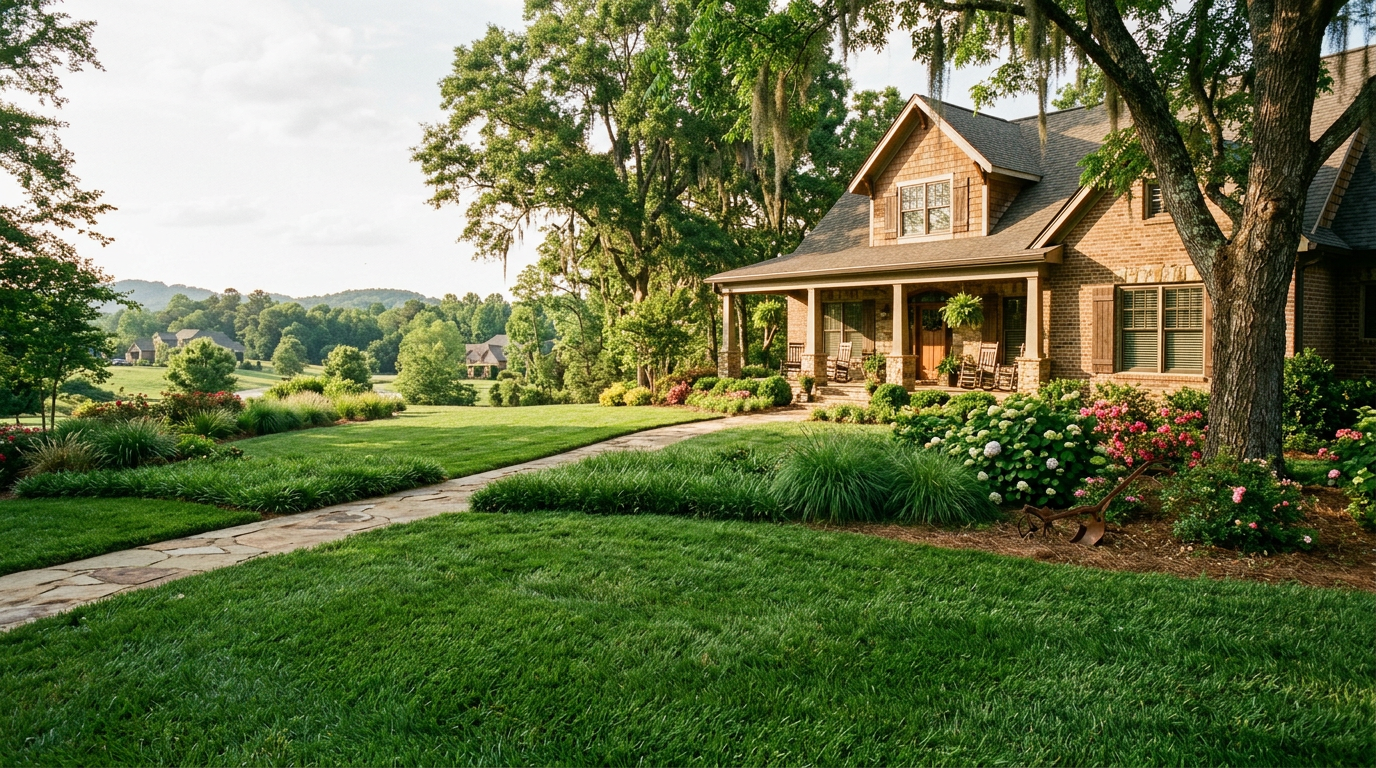
Choosing the right grass for a Georgia lawn feels like a puzzle with no right answer. You've got scorching, humid summers that cook cool-season grasses, and winters in the northern part of the state that can knock back tender warm-season varieties. Welcome to the 'transition zone,' the horticultural battleground where half the country's grass types come to die. It's a tough environment, but it's not impossible. Success isn't about finding a magical, do-it-all grass; it's about picking the right grass for your specific slice of the Peach State.
We're here to cut through the marketing fluff and give you the real-world breakdown of the handful of turfgrasses that actually thrive here. We'll talk about what works from the Blue Ridge Mountains down to the coastal plains, what they cost, and how much work they'll be. Let's get your Georgia lawn looking less like a dusty patch and more like the 18th green at Augusta.
Understanding Georgia's Climate: The Transition Zone Challenge
Georgia sits squarely in what lawn pros call the 'transition zone.' This means it's generally too hot for cool-season grasses like Kentucky Bluegrass to survive the summer, but it gets just cold enough in winter to send most warm-season grasses into brown dormancy or even kill less-hardy types. The state spans USDA Hardiness Zones 7a through 9a, a huge range.
This means a grass that thrives in Valdosta might struggle in Dalton. The infamous Georgia red clay soil is another factor; it's often acidic and compacted, making it tough for roots to establish. To win here, you need a grass that can handle heat, humidity, and your specific local conditions.
For 90% of Georgia, a warm-season grass is the right call. They are built for our summers. The only major exception is for lawns in the northernmost counties or for yards with significant shade, where one particular cool-season grass can be a lifesaver.
1. Zoysia Grass: The Top Pick for Most Georgia Lawns
If you want a truly beautiful, dense, and relatively low-input lawn in Georgia, Zoysia is your champion. It forms a thick carpet that feels amazing underfoot and is fantastic at choking out weeds once established. It's the gold standard for a premium Southern lawn.
- Pros: Excellent heat and drought tolerance, good shade tolerance (for a warm-season grass), dense growth, soft texture.
- Cons: Expensive, very slow to establish or recover from damage, turns completely brown after the first hard frost.
- Best For: Homeowners who want a top-tier look and are willing to pay for it. Good for yards with mixed sun and partial shade.
We're big fans of the finer-bladed varieties. 'Zeon' Zoysia is the star; it has great shade tolerance and a stunning look. 'Emerald' is another classic Georgia choice. You'll primarily buy Zoysia as sod. We've seen Zeon Zoysia from Georgia growers like NG Turf or Super-Sod running about $0.90 to $1.50 per square foot, depending on the quantity and delivery.
2. Bermuda Grass: The Full-Sun Champion in Georgia
If your yard is a sun-baked field with zero shade, Bermuda is your workhorse. This stuff thrives in the intense Georgia sun and heat that would scorch other grasses. It's incredibly tough, drought-tolerant, and repairs itself quickly, which is why it's used on so many athletic fields. The trade-off? It’s a high-maintenance beast.
- Pros: Unmatched heat and drought tolerance, rapid growth, stands up to heavy traffic, CURES itself from damage.
- Cons: Requires full sun (will die in shade), high fertilizer needs, needs frequent mowing, can be invasive in flower beds.
- Best For: Large, full-sun properties, homes with active kids and pets, or anyone who doesn't mind the extra upkeep.
'TifTuf' Bermuda is the miracle child of the University of Georgia's world-renowned turf program in Tifton. It uses significantly less water than other Bermudas and holds its color beautifully. Common Bermuda can be grown from seed for a cheaper option, but the hybrid sods are far superior. Expect to pay $0.75 to $1.20 per square foot for TifTuf sod. Due to its fast growth, you'll need to know how often to mow your lawn—likely every 4-5 days in peak summer.
3. Centipede Grass: The "Lazy Man's Grass" for South & Central Georgia
Centipede has earned its nickname for being famously low-maintenance. It requires less mowing, less fertilizer, and is generally a slow grower. It's a popular choice for large, rural yards where a perfect look isn't the top priority.
- Pros: Very low maintenance, low fertilizer needs, slow growth means less mowing, decent heat tolerance.
- Cons: Doesn't tolerate heavy traffic, slow to recover from damage, shallow roots make it less drought-tolerant than Bermuda or Zoysia, prone to iron chlorosis (why is my grass turning yellow?).
- Best For: South and Central Georgia; not cold-hardy enough for the mountains. Ideal for homeowners who want a decent-looking lawn with minimal effort.
You can establish Centipede from seed, which is a major cost saver. A 5-lb bag of Scotts Turf Builder Centipede Grass Seed & Mulch might cost around $35, but be warned: how long grass seed takes to grow for Centipede can feel like an eternity.
4. Tall Fescue: The Best Bet for Shade and North Georgia
Tall Fescue is the odd one out—it's a cool-season grass. In most of Georgia, it will suffer badly in the summer. But for the northern counties (think Atlanta and north) and for shady areas in the central part of the state where Bermuda won't grow, it's the best option.
- Pros: Best shade tolerance of any grass on this list, stays green year-round (with proper watering).
- Cons: Needs more water in summer than warm-season grasses, does not spread or self-repair, susceptible to brown patch fungus in high humidity.
- Best For: Shady lawns statewide and general use in the North Georgia mountains.
Because Tall Fescue is a bunch-type grass, it doesn't spread. This means you will absolutely need to plan on a yearly maintenance task: how to overseed a lawn every fall to keep it thick and full. We've had good luck with blends like Pennington's The Rebels Tall Fescue Blend, which you can find at any Lowe's or a local spot like Pike Nurseries.
5. St. Augustine Grass: A Coastal Favorite with Caveats
St. Augustine is the king of the coastal plains. It has very wide, broad leaves and creates a lush, tropical-looking lawn. Its claim to fame is its excellent tolerance for both shade and salt spray, making it a no-brainer near the coast.
- Pros: Very good shade tolerance, excellent salt tolerance, aggressive growth can out-compete weeds.
- Cons: Not cold tolerant at all (don't even try it north of Macon), requires a lot of water, prone to chinch bugs and fungal diseases, can only be grown from sod or plugs.
- Best For: Lawns in the coastal and southern-most regions of Georgia (Savannah, Brunswick, St. Simons).
Like Zoysia, you'll be buying St. Augustine as sod, and the price is comparable. Be prepared for a fairly intensive watering schedule to keep it looking its best. Knowing the best time to water grass—early in the morning—is critical to preventing disease with this grass.
The Cost Breakdown: Seeding vs. Sodding in Georgia
We've laid a lot of sod in our day, and while the upfront cost makes you wince, the immediate result and reduced weed pressure is almost always worth it if it's in the budget. But seed has its place, especially for large areas or for establishing Tall Fescue lawns.
Here are some hard numbers. According to the University of Georgia Extension, establishing a lawn from seed can cost as little as $0.05 per square foot for materials, while sodding can range from $0.50 to over $1.50 per square foot for premium varieties delivered. While seed is cheaper upfront, you also face higher risks of erosion, weed competition, and failure to establish. Sod provides an 'instant lawn' with a much higher success rate, but at a 10-20x material cost. For a typical 5,000 sq. ft. suburban lawn, you're looking at around $250 for seed vs. $3,750-$5,000+ for premium sod. (Source: https://extension.uga.edu/publications/detail.html?number=C1065)
So, What's the Verdict for Your Georgia Yard?
There's no single 'best grass for Georgia,' only the best grass for your yard. Here’s the final cheat sheet:
- For a show-stopping lawn with some shade: Zeon Zoysia.
- For a tough, full-sun, high-traffic yard: TifTuf Bermuda.
- For a low-maintenance setup in Central/South GA: Centipede.
- For a shady yard or a lawn north of Atlanta: Tall Fescue.
- For a coastal lawn near the ocean: St. Augustine.
Choose wisely, and you'll spend less time fighting your lawn and more time enjoying it with a glass of sweet tea.
Frequently asked
What is the most low-maintenance grass for Georgia?+
Centipede grass is widely considered the most low-maintenance option for Central and South Georgia. It requires less frequent mowing and has lower fertilizer needs than Bermuda or Zoysia. However, it doesn't handle foot traffic well and is not cold-tolerant enough for North Georgia.
What grass stays green all year in Georgia?+
Tall Fescue is the only common lawn grass that stays green year-round in Georgia. As a cool-season grass, it thrives in the fall and spring but will require extra water and may struggle during the peak heat and humidity of a Georgia summer.
When is the best time to plant grass seed in Georgia?+
For warm-season grasses like Bermuda and Centipede, the best time to plant seed is late spring to early summer (May-July), when soil temperatures are consistently above 70°F. For cool-season Tall Fescue, the ideal planting window is in the fall (September-October).
What is the average cost of sod in Georgia?+
Sod prices in Georgia vary by grass type and supplier, but you can generally expect to pay between $0.75 and $1.50 per square foot. Premium varieties like Zeon Zoysia are at the high end, while TifTuf Bermuda is often slightly less expensive.
Is Zoysia better than Bermuda for a Georgia lawn?+
It depends on your yard. Zoysia is better if you have partial shade, as it's more shade-tolerant. It's also softer and denser. Bermuda is better for yards with intense, all-day sun and heavy foot traffic due to its superior durability and rapid recovery.