
The 5 Best Grass Types for Georgia Lawns (2024 Guide)
Tired of a patchy yard? We're breaking down the absolute best grass types for Georgia's tricky climate, from the Atlanta suburbs to the coastal plains.
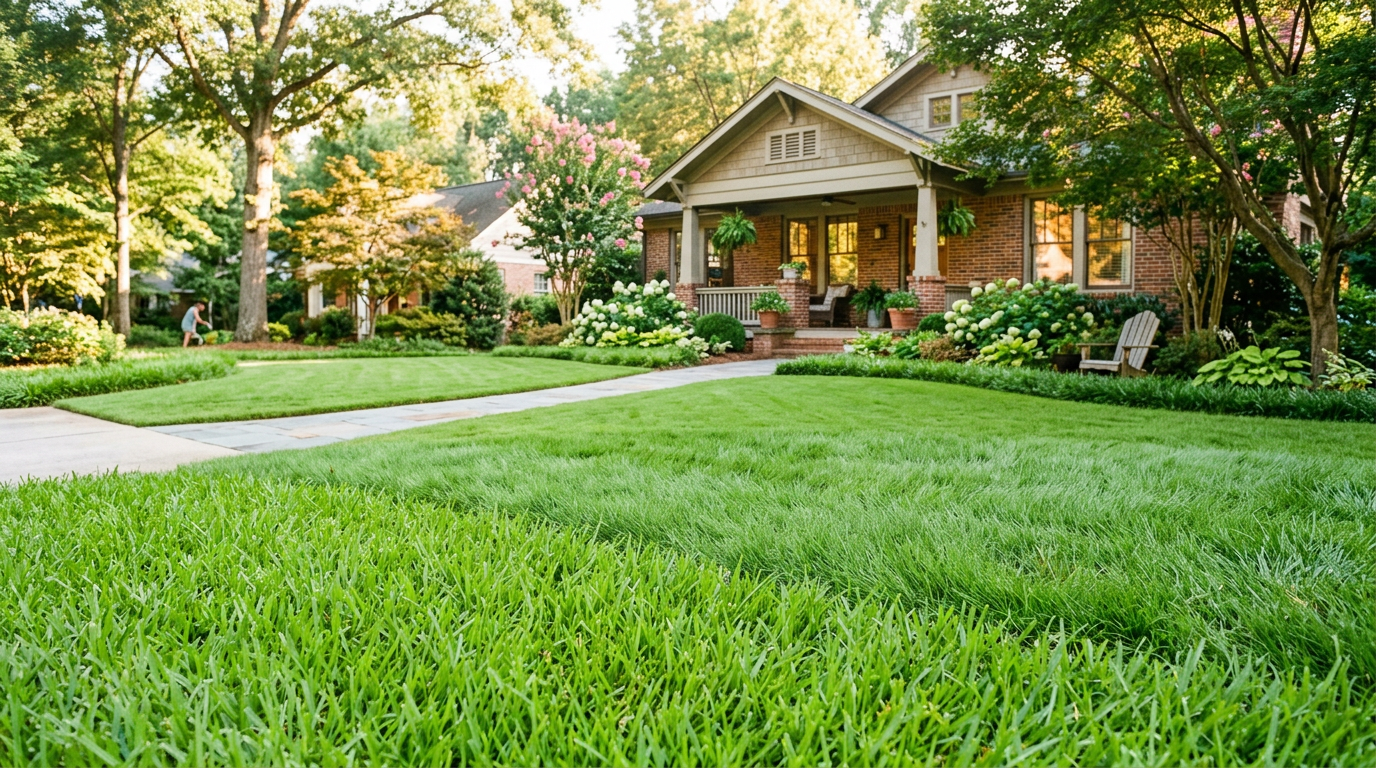
Let's get one thing straight: having a great lawn in Georgia is a battle. You're fighting scorching humidity, unpredictable cold snaps, and clay soil that can bake harder than a brick. If you've ever thrown down random seed from a big box store only to watch it wither, you're not alone. The secret isn't a magical fertilizer; it's choosing the right tool for the job. And in this case, the tool is the grass itself. This is our no-nonsense guide to picking the best grass for your Georgia home.
We're not gatekeeping the good stuff. We're going to break down the top contenders so you can finally get that lush, green carpet you've been dreaming of, whether you're in the Blue Ridge foothills or sweating it out near the Florida line.
Understanding Georgia's Tricky Climate Zone
Georgia sits squarely in what lawn pros call the "transition zone." It's a horticulturaltug-of-war. North Georgia (think Atlanta, Gainesville, Dalton) gets cold enough in winter to injure or kill many warm-season grasses. South Georgia (Valdosta, Savannah, Brunswick) has brutally hot summers that stress cool-season grasses to their breaking point.
This means you can't just copy what works in Florida or Tennessee and expect the same results. Your specific location within Georgia is the single most important factor.
- North Georgia (USDA Zones 7a/7b): You have options for both warm-season and cool-season grasses, but Tall Fescue often performs best for year-round color.
- Middle & South Georgia (USDA Zones 8a, 8b, 9a): Stick to warm-season grasses. They are built to thrive in the heat and humidity. Trying to grow something like Kentucky Bluegrass here is a fool's errand.
The Best Warm-Season Grasses for Georgia Lawns
These are the heat-loving champs that form the backbone of most Georgia lawns. They actively grow from spring through fall and go dormant (turn brown) after the first hard frost.
1. Bermudagrass
If your yard is a sun-drenched playground with zero shade, Bermuda is your MVP. It's incredibly tough, drought-tolerant, and repairs itself quickly from damage, making it ideal for families with kids and pets.
- Sun Needs: Full sun (8+ hours/day). It will not survive in shade.
- Maintenance: High. It's an aggressive grower, which means you'll need to know how often to mow your lawn—probably twice a week in peak summer. It also requires regular fertilization.
- Best For: Most of Georgia, especially in full-sun areas.
- Don't Use If: You have large trees or shaded areas.
- Our Favorite Cultivars: TifTuf™ Bermuda, developed right at the University of Georgia in Tifton, is the gold standard for drought resistance. Tifway 419 is another classic, durable choice. You can get a 500-sq-ft pallet of TifTuf sod from a Georgia supplier like Super-Sod for around $650-$750.
2. Zoysiagrass
Zoysia is the luxury option. It forms an incredibly dense, carpet-like turf that feels amazing underfoot and is fantastic at choking out weeds. It handles Georgia's heat well and has better shade tolerance than Bermuda.
- Sun Needs: Moderate sun to light shade (4-6 hours/day).
- Maintenance: Moderate. It grows slower than Bermuda, so mowing is less frequent. However, its density can lead to thatch buildup, so you may need to learn how to dethatch a lawn every few years.
- Best For: Homeowners who want a premium, dense look and have some light shade.
- Don't Use If: You're on a tight budget (it's one of the most expensive sods) or in deep shade.
- Our Favorite Cultivars: Zeon® Zoysia is famously shade-tolerant and fine-bladed. Emerald Zoysia is an older, beautiful variety but can be prone to thatch. Expect to pay a premium, often $700+ for a pallet of Zeon.
3. Centipedegrass
Known affectionately as "the lazy man's grass," Centipede is the king of low-maintenance. It requires less mowing, less fertilizer, and is generally happy to be left alone. It's very common in Middle and South Georgia.
- Sun Needs: Full sun to very light shade (6+ hours/day).
- Maintenance: Low. It doesn't like a lot of fertilizer and grows slowly. The biggest issue is its tendency to turn yellow from iron deficiency, a common problem known as Centipede Decline. If you notice this, that might be why is my grass turning yellow.
- Best For: South and Middle Georgia; homeowners who want a low-input lawn.
- Don't Use If: You have heavy foot traffic or live in North Georgia, as it has poor cold tolerance.
- Price: Much more affordable. You can often find a 5-lb bag of Centipede seed, like Pennington's, for around $60, which covers about 2,000 sq ft.
4. St. Augustinegrass
For shady lawns in the southern half of the state, St. Augustine is often the only answer. It has wide, coarse blades and spreads via aggressive above-ground runners called stolons. It's the most shade-tolerant of the warm-season grasses.
- Sun Needs: Shade to moderate sun (3-4 hours/day minimum).
- Maintenance: Moderate. It needs regular water and is susceptible to pests like chinch bugs and diseases like gray leaf spot.
- Best For: Shady coastal and South Georgia lawns.
- Don't Use If: You live north of Macon (it has very poor cold tolerance) or want to plant from seed (it's only available as sod or plugs).
- Our Favorite Cultivars: 'Palmetto' and 'Raleigh' are two common varieties that perform well in Georgia's climate.
The Cool-Season King: Tall Fescue in North Georgia
If you live in the Atlanta metro area or further north, you have another excellent option. Unlike the warm-season grasses that go brown in winter, Tall Fescue can stay green all year.
5. Tall Fescue
This is the workhorse for lawns in North Georgia. Modern Turf-Type Tall Fescues have a much finer texture than the old pasture grass and have good drought and heat tolerance for a cool-season variety. It's a bunch-forming grass, meaning it doesn't spread and repair itself. According to the University of Georgia Extension, a typical Georgia lawn requires about 1 inch of water per week during the growing season, and Tall Fescue is no exception, especially during summer stress. (Source: https://extension.uga.edu/publications/detail.html?number=B1318)
- Sun Needs: Full sun to moderate shade.
- Maintenance: High. It needs more water in the summer than warm-season grasses to survive. It also doesn't repair itself, so you'll need to know how to overseed a lawn every fall to fill in bare spots and keep it thick.
- Best For: North Georgia (north of a line from Athens to Atlanta to LaGrange).
- Don't Use If: You live in Middle or South Georgia; the summer heat will cook it.
- Our Favorite Cultivars: We've seen great results with blends specifically designed for the South, like The Rebels® brand from Pennington or Black Beauty® Ultra from Jonathan Green. A 50-lb bag of a quality fescue blend runs about $150-$220.
Sod vs. Seed in Georgia: The Million-Dollar Question
(Okay, maybe not a million dollars, but it feels like it.)
Sod: You're buying rolls of mature turf. This is what we use for most of our projects. It's an instant lawn. You lay it down, water it, and in a few weeks, it's rooted and ready. The downside is cost. A 500-sq-ft pallet of Bermuda or Zoysia can cost $600-$800, plus delivery and installation.
Seed: You're starting from scratch. It's way cheaper—a bag of seed for the same 500-sq-ft area might be just $20-$40. But it requires immense patience, careful soil prep, and consistent watering. For warm-season grasses, you plant in late spring/early summer. For Tall Fescue, you MUST plant in the fall (September-October). Spring seeding of fescue is a recipe for disaster.
For Bermuda, Centipede, and Tall Fescue, seeding is a viable DIY option. For Zoysia and St. Augustine, stick to sod or plugs. Their seed is notoriously difficult to establish.
Finding Your Grass: Where to Buy in Georgia
You have plenty of local options that beat the national chains on quality and advice.
- Super-Sod: With locations across the state (from Cartersville to Savannah), this is a go-to for high-quality sod and seed, including the UGA-developed TifTuf and Zeon Zoysia.
- Pike Nurseries: A reliable spot in the Atlanta area for fescue seed blends, fertilizers, and lawn care tools. Their staff is generally knowledgeable.
- NG Turf: Another major sod producer in Georgia with a wide selection of certified turfgrasses.
- Your Local Co-op/Feed & Seed: Don't sleep on these stores. They often carry seed blends specifically formulated for your county and can offer priceless, no-nonsense advice.
Ultimately, the best grass for your Georgia lawn is the one that fits your location, sunlight, budget, and how much time you really want to spend fussing over it. Be honest with yourself on that last point, and you'll be set up for success.
Frequently asked
What is the most low-maintenance grass for Georgia?+
Centipedegrass is widely considered the most low-maintenance grass for Middle and South Georgia. It requires less mowing, fertilization, and water than other warm-season grasses. However, it doesn't tolerate cold or heavy foot traffic well, making it unsuitable for North Georgia.
What grass stays green all year in Georgia?+
Tall Fescue is the best option for a year-round green lawn in Georgia, but it only thrives in the northern part of the state (Atlanta and north). Warm-season grasses like Bermuda and Zoysia will go dormant and turn brown from the first frost until spring.
When is the best time to plant grass in Georgia?+
For warm-season grasses (Bermuda, Zoysia, Centipede), the best time to plant seed or lay sod is late spring to early summer (May-July). For cool-season Tall Fescue, you must plant in the fall (September-October) to allow roots to establish before summer heat.
Can you mix grass types in a Georgia lawn?+
It's generally not recommended to mix warm-season and cool-season grasses, as they have different maintenance needs. However, overseeding a dormant Bermuda lawn with annual ryegrass for winter color is a common practice. Blends of different Tall Fescue cultivars are also very common and effective.