
The 5 Best Grass Types for Georgia Lawns (2024 Guide)
Stop guessing which grass can handle Georgia's brutal summers. We break down the top 5 turfgrasses that thrive in the Peach State, from Atlanta to the coast.
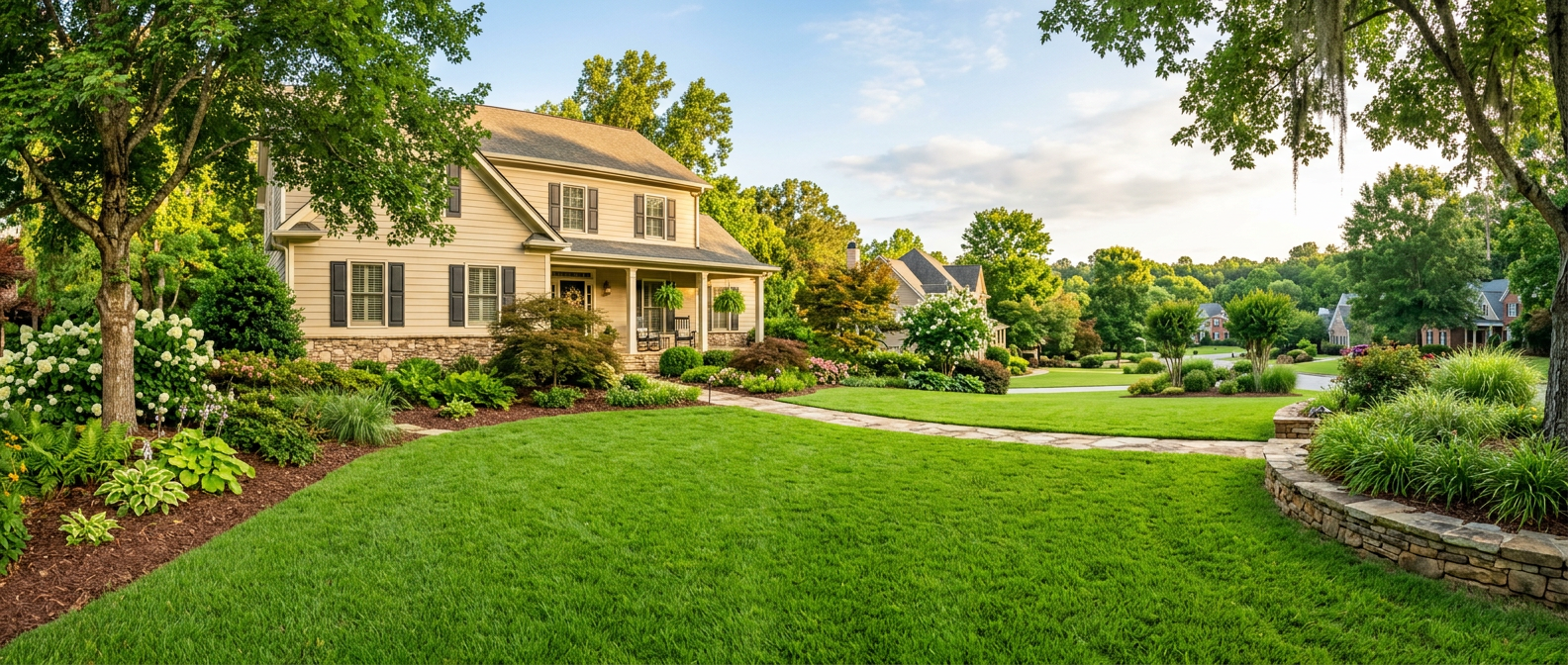
Let's be direct: growing a great-looking lawn in Georgia is a fight. You're wrestling with oppressive humidity, scorching summer sun, and that infamous red clay that laughs at delicate grass types. If you've ever thrown down some random bag of seed from the big box store only to watch it wither and die by August, you're not alone. The secret isn't more water or more fertilizer; it's choosing the right grass for Georgia in the first place.
We're here to cut through the noise. Forget the marketing hype and garden center myths. We're going to give you the no-nonsense guide to the best grass types that actually thrive in the Peach State, from the foothills of the Blue Ridge Mountains down to the coastal plains of Savannah.
Understanding Georgia's Unique Lawn Challenges
Before you can pick a winner, you have to understand the battlefield. Georgia's climate is the primary factor determining what will or won't grow. Most of the state sits in what's known as the 'transition zone' (USDA Hardiness Zones 7b and 8a), with colder pockets up north (6b/7a) and warmer coastal areas (8b/9a). This means our summers are brutally hot for cool-season grasses, and our winters can be just cold enough to damage less-hardy warm-season types. You can't just plant what your cousin in Ohio plants.
On top of the heat, you have:
- High Humidity: A perfect breeding ground for fungal diseases like brown patch and dollar spot.
- Georgia Red Clay: This soil is typically acidic (low pH) and compacted, making it hard for roots to get established and access nutrients.
- Drought and Downpours: We get periods of summer drought followed by intense thunderstorms that can cause runoff and erosion.
This is why your grass choice is so critical. You need a turf that can handle the heat, tolerate some drought, and won't immediately turn into a sad, yellow mess. Spoiler: this means you'll almost certainly be planting a warm-season grass.
The Best Warm-Season Grasses for Georgia Lawns
Alright, let's get to the main event. These are the workhorses of Georgia lawns. They actively grow from spring through fall and go dormant (turn brown) after the first hard frost in winter. This is normal and nothing to panic about!
1. Bermuda Grass
If you have a yard with full, unobstructed sun, Bermuda grass is the king. It's the same stuff you see on golf course fairways and athletic fields for a reason: it's tough as nails and recovers from damage at lightning speed.
- Pros: Unbeatable heat and drought tolerance, loves full sun, stands up to heavy foot traffic (kids, dogs), spreads quickly to fill in bare spots.
- Cons: High maintenance. It needs to be mowed frequently (sometimes twice a week in peak season) and requires regular fertilizing to look its best. It absolutely will not grow in the shade.
- Best For: Sunny yards, families with active kids and pets, anyone who wants a durable, self-repairing lawn and doesn't mind the upkeep.
- Cost & Cultivars: Common Bermuda can be grown from seed, which is cheap. A 5 lb. bag of Pennington Bermuda Grass Seed runs about $25 at an Atlanta Home Depot. For a truly top-tier lawn, you'll want a hybrid Bermuda sod like TifTuf™. Developed by UGA researchers, it's the most drought-tolerant grass on this list. A pallet of TifTuf sod (around 500 sq. ft.) from a Georgia supplier like Super-Sod will set you back about $350-$450.
2. Zoysia Grass
We've laid more pallets of Zoysia sod in the Athens area than we can count, and the results are consistently stunning. Zoysia is the grass for you if you want that perfect, dense, carpet-like lawn. It has good heat and drought tolerance and, crucially, handles moderate shade better than Bermuda.
- Pros: Extremely dense growth that chokes out weeds, good drought tolerance, feels great underfoot, better shade tolerance than Bermuda.
- Cons: Slow to establish and recover from damage. It's also one of the more expensive options. Zoysia is also prone to a thatch buildup over time. Dethatching your lawn every few years is a good idea.
- Best For: Homeowners who want a premium, beautiful lawn and have a mix of sun and light shade. It's the 'best of both worlds' option for many Georgia yards.
- Cost & Cultivars: Zoysia is typically established from sod or plugs. Popular varieties in Georgia include 'Emerald' and 'Zeon'. Expect to pay $300-$550 per pallet of Zoysia sod.
3. Centipede Grass
Often called the 'lazy man's grass,' Centipede is the go-to for a low-maintenance lawn, particularly in Middle and South Georgia. It's called this for a reason: it requires significantly less mowing and fertilizer than Bermuda or Zoysia.
- Pros: Low maintenance (less fertilizer, less mowing), thrives in acidic soil (hello, red clay!), good heat tolerance.
- Cons: Does not tolerate heavy traffic. It's slow to recover from damage and doesn't like wear-and-tear. It's also sensitive to certain herbicides and can have iron deficiency issues (which can make your grass turn yellow).
- Best For: Low-traffic yards, homeowners who want a decent-looking lawn with minimal effort.
- Cost & Cultivars: You can get Centipede as seed or sod. TifBlair™ Centipede is a common, reliable variety in Georgia. A pallet of sod will be in the $250-$400 range.
4. St. Augustine Grass
As you get closer to the coast and into South Georgia, St. Augustine becomes a dominant player. Its main advantage is that it's the most shade-tolerant of the common warm-season grasses. It has a coarse, broad leaf and creates a lush, blue-green lawn.
- Pros: Best shade tolerance among warm-season grasses, excellent salt tolerance (great for coastal areas), establishes quickly.
- Cons: Poor cold tolerance (not for North Georgia), requires a lot of water to stay green, susceptible to pests like chinch bugs and diseases like gray leaf spot.
- Best For: Shaded lawns in Middle and South Georgia, especially near the coast.
- Cost & Cultivars: St. Augustine is established via sod or plugs, not seed. 'Raleigh' and 'Palmetto' are common choices. Pricing is similar to Centipede, around $250-$400 per pallet.
What About Fescue in Georgia?
This is the million-dollar question for anyone who moves to Georgia from up north. Can you have a green lawn year-round? The answer is: maybe, but it's a chore. Tall Fescue is a cool-season grass that can survive in the northern half of Georgia (think I-20 and north). It's the best choice for shady lawns where warm-season grasses fail.
However, it will suffer in the summer. To keep a Fescue lawn alive through a Georgia summer, you will need to water it consistently and deeply. According to the University of Georgia's Extension office, Georgia covers USDA hardiness zones 6b to 9a, with the majority falling in zones 7 and 8. It's this transition zone climate that makes summer so tough on cool-season turf. (Source: https://extension.uga.edu/publications/detail.html?number=C893) If you're committed, you'll also likely need to overseed your Fescue lawn every fall to keep it thick.
Your Georgia Lawn Care Calendar: A Quick Guide
Choosing the right grass is half the battle. Caring for it properly is the other half. Here's a quick rundown.
- Early Spring (March-April): As your grass starts to green up, it's time to act. Apply a pre-emergent herbicide to stop crabgrass before it starts. This is also a good time to scalp your dormant Bermuda grass lawn, and consider dethatching if the layer is over 1/2 inch thick.
- Late Spring/Summer (May-August): This is peak growing season. Mow frequently, never removing more than 1/3 of the blade at a time. Water deeply but infrequently to encourage deep root growth. The best time to water is early morning to reduce evaporation and fungal risk. Fertilize according to your grass type's needs. Watch out for weeds like dandelions and treat them as needed. You can use a post-emergent or try manual methods to get rid of dandelions.
- Fall (September-November): Your lawn will start to slow down. This is the last chance to fertilize your warm-season grass for the year. Continue mowing as needed until growth stops. For Fescue lawns, fall is the prime time for aerating and overseeding.
- Winter (December-February): Your warm-season lawn is dormant (brown). All you need to do is keep it clear of leaves and debris. Avoid heavy traffic on the dormant turf.
Frequently asked
What is the most low-maintenance grass for Georgia?+
Centipede grass is often called the 'lazy man's grass' for a reason. It requires less mowing, less fertilizer, and thrives in Georgia's acidic soil. However, it doesn't tolerate heavy foot traffic or deep shade well, so it's best for low-use areas of your yard.
Can I grow Fescue grass in Georgia?+
Yes, but with conditions. Tall Fescue is a cool-season grass that can work in the northern parts of Georgia (Atlanta and north), especially in shaded areas. It will stay green year-round but struggles in the intense summer heat and will require more watering than warm-season grasses.
What is the best grass for dogs in Georgia?+
Bermuda grass is the top choice for dogs in Georgia due to its rapid growth and excellent durability. It repairs itself quickly from damage caused by running and digging. TifTuf™ Bermuda is particularly tough. Zoysia is a good second choice, but it recovers from damage more slowly.
How much does sod cost in Georgia?+
Sod prices in Georgia vary by grass type and supplier. Expect to pay between $250 to $400 for a pallet (450-500 sq ft) of Centipede or Bermuda. Zoysia is typically more expensive, ranging from $300 to over $550 per pallet from local farms like Super-Sod.