
The 5 Best Grass Types for Georgia Lawns (2024 Guide)
Don't let Georgia's infamous red clay and brutal humidity win. We're breaking down the absolute best grass types to give you a lush, green lawn that can handle the heat.
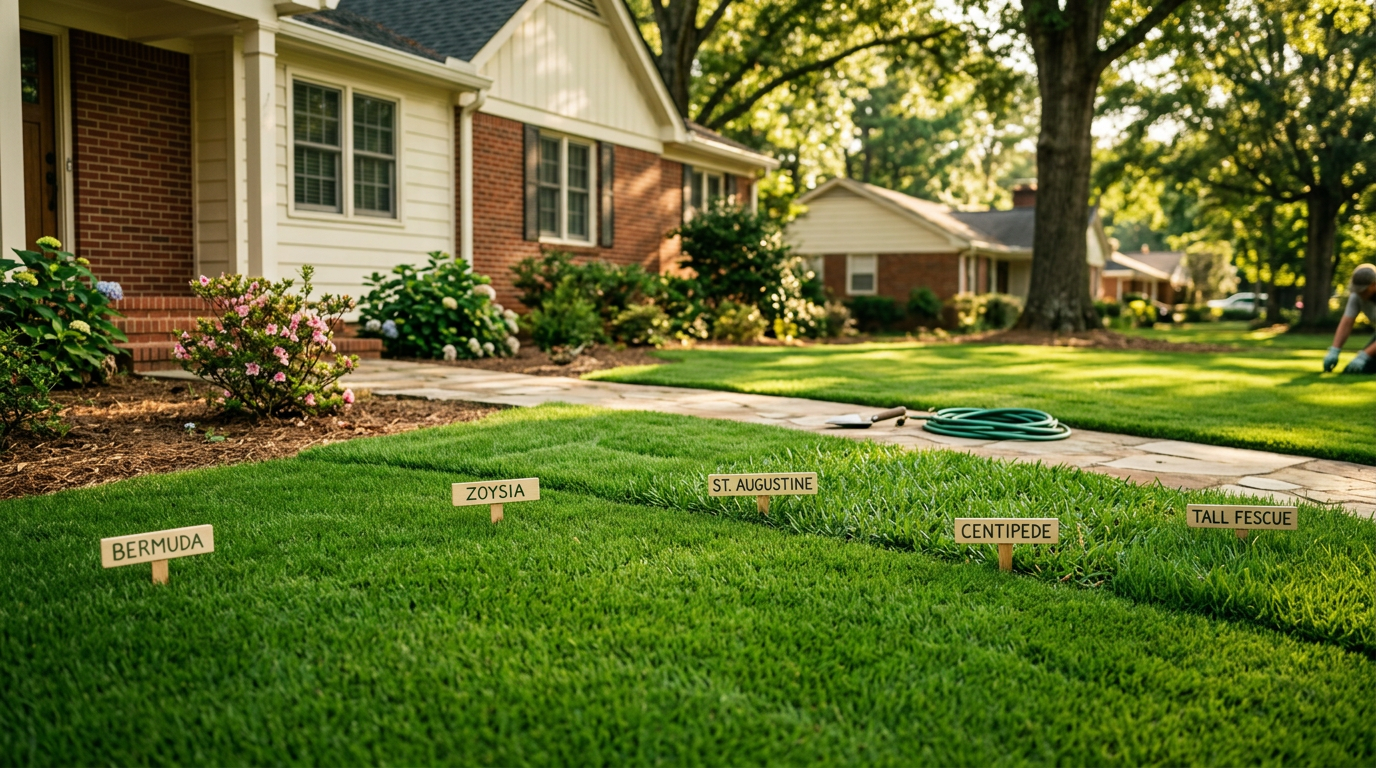
Let's get one thing straight: growing a great lawn in Georgia is a battle. A glorious, rewarding battle, but a battle nonetheless. Between the sweltering humidity, the legendary red clay that's either brick-hard or soupy mud, and the summer water restrictions, you can't just throw down any old seed and hope for the best. You need a strategy. You need the right grass.
We're here to help you win the war for your yard. We've laid sod and scattered seed from the foothills of the Blue Ridge to the suburbs of Savannah. We know what thrives and what dives in the Peach State. This is your no-nonsense guide to choosing the absolute best grass for your Georgia home.
Understanding Georgia's Unique Lawn Challenges
Before we pick a winner, you need to know your opponent. Georgia isn't one monolithic climate; it's a state with three distinct zones that directly impact your lawn's success.
- The Mountains (North Georgia): Cooler temperatures mean cool-season grasses are a real option here. Think Blue Ridge, Ellijay, Dahlonega.
- The Piedmont (Central Georgia): This is the infamous 'Transition Zone.' It gets hot enough for warm-season grasses but cold enough to challenge them in winter. This covers the massive Atlanta metro area, Athens, and Macon. Red clay is the dominant soil type.
- The Coastal Plain (South Georgia): Hot, humid, with sandier soil. Warm-season grasses are the only real choice here. Think Savannah, Valdosta, and Albany.
Your biggest hurdle, especially in the Piedmont, is the soil. Georgia's acidic red clay is often compacted, making it tough for roots to penetrate and for water to drain properly. A soil test from your local UGA Extension office (usually about $20) is the smartest money you'll ever spend. It will tell you exactly how much lime and fertilizer you need to turn your clay into a lawn-friendly foundation.
Our Top 5 Grasses for Georgia Lawns
Alright, let's get to the contenders. We've ranked these based on their performance, maintenance needs, and suitability for different parts of the state.
1. Bermuda Grass: The Full-Sun Champion
If your yard gets at least 8 hours of direct, blistering Georgia sun a day, Bermuda is your huckleberry. It's incredibly tough, drought-tolerant, and repairs itself quickly from damage, making it perfect for families with kids and pets.
- Pros: Thrives in heat and full sun, very durable, excellent drought tolerance once established.
- Cons: Hates shade, turns dormant and brown in winter, can be aggressive and creep into flower beds.
- Best For: Most of Georgia, especially in yards without large trees.
- Our Pick: We love the TifTuf Bermuda variety, developed right here at the University of Georgia in Tifton. It has superior drought tolerance and retains its color longer. A 500 sq. ft. pallet of TifTuf sod from a supplier like Super-Sod will run you about $300-$350. For seeding, a 5 lb. bag of Pennington Bermuda Grass Seed is around $40.
2. Zoysia Grass: The Barefoot Favorite
Zoysia is what you choose when you want that 'golf course' look and feel. It's a dense, carpet-like grass that feels amazing underfoot. It handles Georgia's heat well and has better shade tolerance than Bermuda, needing about 4-6 hours of sun.
- Pros: Very dense (chokes out weeds), good shade tolerance for a warm-season grass, feels great to walk on.
- Cons: Slower to establish and recover from damage, more expensive than Bermuda, can develop thatch buildup.
- Best For: Piedmont and Coastal Plain homeowners who want a premium lawn with some shade.
- Our Pick: Zeon Zoysia is the gold standard. It's fine-bladed, shade-tolerant, and beautiful. It's what you see on many high-end Atlanta properties. Expect to pay a premium; a 500 sq. ft. pallet of Zeon Zoysia is often in the $350-$450 range. Another great option is Emerald Zoysia. If you have a few shady spots, Zoysia is a much better choice than the options discussed in our best grass seed for shade guide, which focuses more on cool-season grasses.
3. Tall Fescue: The Year-Round Green for North Georgia
This is our primary cool-season recommendation. While most of Georgia is too hot for Fescue to thrive year-round, it's the undisputed king in the northern part of the state and a viable—if needy—option in the Atlanta metro. Its main selling point? It stays green all winter.
- Pros: Stays green year-round, good shade tolerance, deep roots provide some drought resistance.
- Cons: Struggles in the summer heat south of the Piedmont, needs more water than warm-season grasses, susceptible to brown patch disease.
- Best For: North Georgia mountains and motivated homeowners in the Piedmont willing to water in July and August.
- Our Pick: Look for heat-tolerant varieties like Rebel IV or Pennington's Smart Seed Tall Fescue blend ($60 for a 7 lb. bag). You'll need to learn how to overseed a lawn every fall to keep a Fescue lawn thick and lush through the seasons.
4. Centipede Grass: The Low-Maintenance Option
They call it "the poor man's grass" for a reason, and we mean that as a compliment. Centipede is the lowest-maintenance warm-season grass on our list. It requires less mowing and less fertilizer than Bermuda or Zoysia and loves the acidic, sandy soils of South Georgia.
- Pros: Very low maintenance, doesn't need much fertilizer, spreads slowly (less edging), good for acidic soil.
- Cons: Not very traffic tolerant, slow to recover, shallow roots make it less drought-tolerant than Bermuda, can turn yellow from iron deficiency (a common issue that can be mistaken for other problems discussed in why is my grass turning yellow).
- Best For: The Coastal Plain (South Georgia). It's a poor choice for the clay soils of the Piedmont.
- Our Pick: You'll typically buy Centipede as seed or sod. A 5lb bag from Scotts runs about $60, covering up to 2,000 sq ft.
5. St. Augustine: For Shade in the Deep South
If you live in the southern half of Georgia and have significant shade, St. Augustine is worth a look. It has the best shade tolerance of any warm-season grass. It creates a lush, blue-green lawn but comes with its own set of demands.
- Pros: The most shade-tolerant warm-season grass, establishes quickly, beautiful color.
- Cons: Needs a lot of water, not cold-tolerant (don't even try it in North Georgia), susceptible to chinch bugs and fungal diseases, must be planted as sod/plugs (no viable seed).
- Best For: Shady, well-irrigated lawns in the Coastal Plain.
Seeding vs. Sodding in Georgia: What's the Smart Play?
We get this question all the time. Should you seed or lay sod? The short answer: sod gives you an instant lawn and is almost always the better choice for warm-season grasses like Bermuda, Zoysia, and St. Augustine. These grasses can be tricky and slow to establish from seed, leaving your yard a weedy, muddy mess for months. Yes, sod is more expensive upfront (expect $250-$500 per 500 sq. ft. pallet), but it's a near-guaranteed success.
Tall Fescue is the exception. It grows readily from seed, and since you'll be overseeding every fall anyway, starting with seed is perfectly acceptable and much more cost-effective.
No matter what you choose, remember Georgia's watering rules. Most metro Atlanta counties operate under the Georgia Water Stewardship Act, which mandates odd/even day watering for outdoor irrigation. Knowing the best time to water grass—early in the morning—is crucial for minimizing evaporation and complying with these regulations.
According to the University of Georgia's College of Agricultural & Environmental Sciences, a typical Georgia lawn needs about 1 inch of water per week, either from rainfall or irrigation, during the growing season. However, clay soils can lead to significant runoff, meaning you may need to apply that inch over several short cycles instead of one long soaking. (Source: uga.edu) This is where knowing your soil and your grass type becomes critical.
Ultimately, the best grass for your Georgia lawn is the one that matches your sun exposure, your soil, your location, and your tolerance for maintenance. Choose wisely, put in the work upfront to prepare your soil, and you'll be rewarded with a yard that's the envy of the neighborhood—humidity and all.
Frequently asked
What is the easiest, lowest-maintenance grass for Georgia?+
Centipede grass is considered the easiest, lowest-maintenance option, especially for the sandy soils of South Georgia. It requires less frequent mowing and fertilizing than Bermuda or Zoysia. However, it doesn't tolerate heavy foot traffic well and is not suited for the Piedmont's clay soils.
What grass stays green all year in Georgia?+
Tall Fescue is the only common lawn grass that stays green year-round in Georgia. It's a cool-season grass best suited for North Georgia and the northern Piedmont. It requires significant watering during the summer heat and annual overseeding in the fall to maintain its density.
When should I plant grass in Georgia?+
For warm-season grasses like Bermuda and Zoysia, the best time to plant seed or lay sod is late spring through early summer (May to July). For cool-season Tall Fescue, the ideal planting window is in the fall (September to October), which allows roots to establish before summer heat.
Can you mix Bermuda and Fescue grass in Georgia?+
This is generally not recommended as a permanent solution. The grasses have different maintenance needs, textures, and growth habits. Homeowners sometimes overseed dormant winter Bermuda with ryegrass (not Fescue) for temporary winter color, but a pure stand of one grass type is usually easier to manage.
How do I fix my red clay soil for a new lawn?+
To improve Georgia's red clay, you must amend it before planting. Till or aerate the soil to a depth of 4-6 inches, then incorporate several inches of organic matter like compost or soil conditioner. A soil test will also tell you how much lime to add to correct the acidic pH.