
Best Grass for Georgia: 5 Pro Picks for Your Lawn
Don't gamble with your Georgia lawn. We break down the absolute best warm-season and cool-season grasses that can handle the heat, humidity, and red clay.
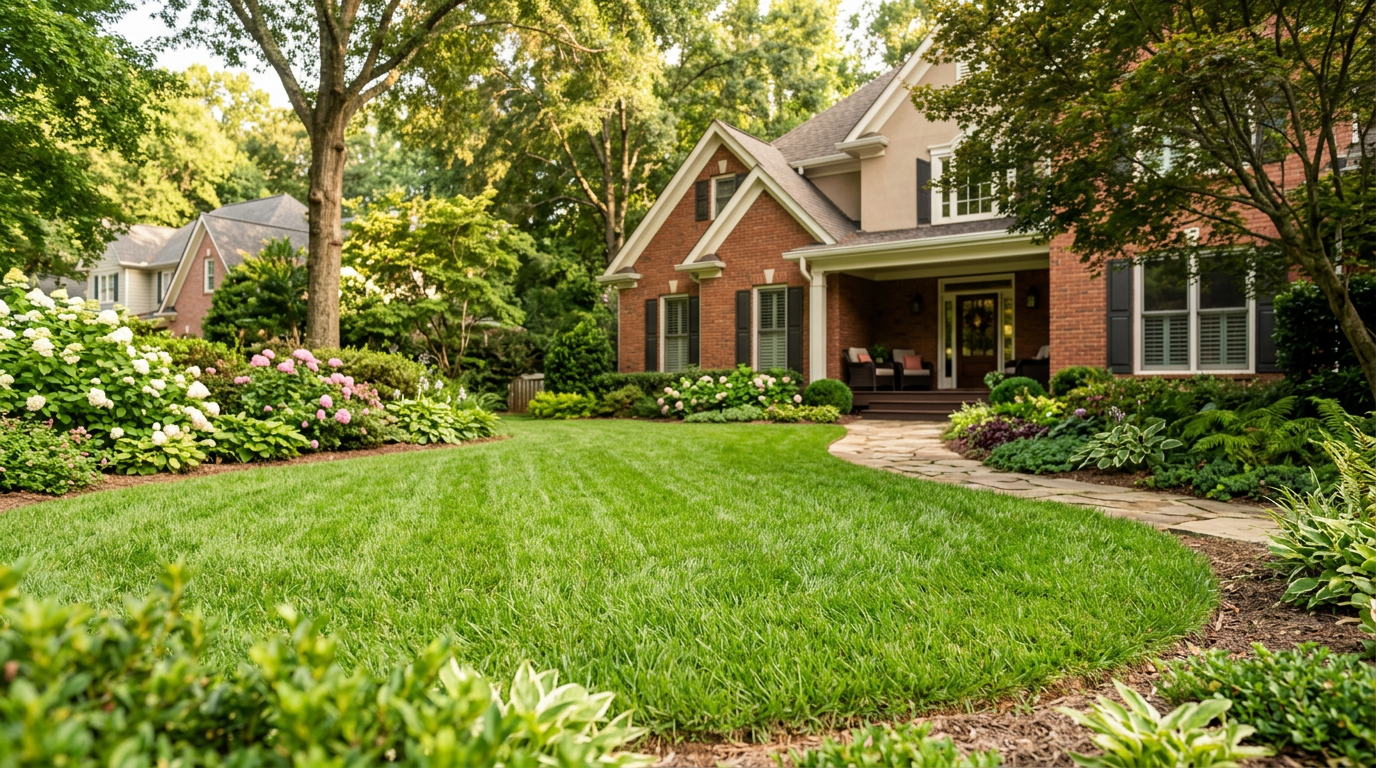
Let's be direct: growing the perfect lawn in Georgia is a special kind of challenge. Between the blast-furnace summers, the surprisingly cold winters in the mountains, and that infamous red clay masquerading as soil, you can't just throw down any old bag of seed and hope for the best. You need a grass type that’s as tough and resilient as the state itself. Good news—we’ve got you covered. This is your no-nonsense guide to choosing the absolute best grass for your Georgia home, whether you're in the heart of Atlanta, down on the coast, or up in the Blue Ridge.
Understanding Georgia's Unique Climate & Your Lawn's Needs
Georgia isn't a monolith. The climate varies significantly from the Tennessee border down to the Florida line, which is why picking the right grass is so critical. Most of the state, from Columbus to Augusta and south, sits comfortably in USDA Hardiness Zones 8a and 8b. The northernmost counties dip into 7a and even 6b. This northern stretch is part of the infamous 'Transition Zone,' a horticultural battleground where warm-season grasses get too cold in the winter, and cool-season grasses get fried in the summer.
Then there's the soil. That brilliant red Georgia clay is rich in iron oxide (hence the color), but it's also dense, acidic, and drains poorly. Before you do anything, we recommend getting a soil test. You can get a kit from your local UGA Extension office for about $20. It will tell you the pH and what nutrients you're missing, saving you hundreds of dollars in guessing games with fertilizer down the line.
Finally, consider your local conditions. Does your town have watering restrictions during summer droughts? How much sun does your yard get? Is the lawn for show, or will kids and dogs be tearing it up all day? Answering these questions first is key.
The Kings of Georgia Lawns: Best Warm-Season Grasses
For 90% of Georgia, a warm-season grass is the right answer. These grasses thrive in the heat and sun from May through September and go dormant (turn brown) after the first hard frost. They are tough, drought-tolerant, and built for a Southern summer.
1. Bermudagrass
- Best For: Full sun, high-traffic areas, drought tolerance.
Bermuda is the workhorse of Georgia. If you have a yard with zero shade and lots of activity, this is your grass. It establishes quickly, repairs itself aggressively, and can handle long periods without rain once established. The University of Georgia has been a leader in developing superior Bermuda cultivars, like TifTuf™, which is renowned for its exceptional drought tolerance.
- Pros: Extremely heat and drought tolerant, withstands heavy foot traffic, spreads quickly to fill in bare spots.
- Cons: Has zero shade tolerance, will go dormant and brown in winter, can be invasive and creep into flower beds.
- Cost & Sourcing: You’ll typically install Bermuda as sod. Expect to pay between $0.60 to $0.90 per square foot from a Georgia supplier like Super-Sod. TifTuf™ will be at the higher end of that range.
2. Zoysiagrass
- Best For: A premium, dense lawn with moderate shade tolerance.
If Bermuda is the workhorse, Zoysia is the show pony. It forms a lush, dense, dark green carpet that feels amazing under bare feet. It’s more shade tolerant than Bermuda (needing about 4-5 hours of direct sun) and is also very drought-resistant once its deep root system is established. We've laid our share of Zoysia sod in the Atlanta suburbs, and we can tell you, the upfront cost is higher, but the results are immediate and stunning.
- Pros: Beautiful, dense turf; good drought tolerance; more shade tolerant than Bermuda; feels great to walk on.
- Cons: Establishes slowly, more expensive than other types, can be prone to thatch buildup, which may require you to dethatch your lawn every few years.
- Cost & Sourcing: Popular varieties in Georgia include Emerald and Zeon Zoysia. Plan on sod costs ranging from $0.85 to $1.25 per square foot.
3. Centipedegrass
- Best For: Low-maintenance lawns, acidic clay soil.
Often called "the lazy man's grass," Centipede is the king of low-input lawns. It requires significantly less mowing and fertilizer than Bermuda or Zoysia. It’s also naturally well-suited to the acidic red clay soil found across the piedmont. If you want a decent-looking lawn without spending every Saturday working on it, this is a top contender.
- Pros: Very low maintenance, thrives in poor, acidic soil, requires little fertilizer, spreads by stolons to fill in patches.
- Cons: Does not tolerate heavy traffic, slow to recover from damage, pale green color, can develop issues if over-fertilized, leading to the dreaded question of 'Why is my grass turning yellow?'.
- Cost & Sourcing: Centipede can be established from seed, making it more affordable. A 5 lb bag of Pennington Centipede Grass Seed & Mulch costs around $60 at big box stores and covers up to 1,250 sq. ft. Sod is also available.
4. St. Augustinegrass
- Best For: Shady coastal and South Georgia lawns.
St. Augustine is the most shade-tolerant of the warm-season grasses, making it a go-to for yards in South Georgia with mature trees. It has broad, coarse leaves and creates a nice, dense turf. However, it's the least cold-tolerant on this list, so we do not recommend it for anywhere north of Macon.
- Pros: The best shade tolerance among warm-season grasses, competes well with weeds once established.
- Cons: Poor cold tolerance, requires a lot of water to stay healthy, susceptible to pests like chinch bugs and diseases like gray leaf spot.
- Cost & Sourcing: St. Augustine is almost exclusively established via sod or plugs. Expect sod prices similar to Zoysia, around $0.80 to $1.10 per square foot.
Can Cool-Season Grasses Really Work in Georgia?
For most of the state, the answer is a firm 'no.' The summer heat and humidity are simply too intense. But if you live in the mountainous regions of North Georgia (think Blue Ridge, Ellijay, Dahlonega), you have one viable option.
5. Tall Fescue
- Best For: North Georgia lawns (Zone 7a and colder) with shade; year-round green color.
Tall Fescue is the only grass on our list that stays green all year in Georgia. Modern turf-type Tall Fescue varieties have better heat tolerance and finer blades than the old K-31 pasture grass. It's the best choice for shady lawns in the northern third of the state.
- Pros: Stays green year-round, has the best shade tolerance of any grass type suitable for Georgia.
- Cons: Struggles mightily in summer heat and drought, requires a lot of water, susceptible to brown patch disease. You will likely need to overseed your lawn every fall to fill in summer damage.
- Cost & Sourcing: Tall Fescue is grown from seed. A high-quality seed like Jonathan Green Black Beauty Ultra runs about $45 for a 7 lb bag, which will cover about 1,000 sq. ft. for a new lawn.
Installation, Cost & The Power of Georgia Turf
Choosing your grass is half the battle. How you install it is the other. The University of Georgia College of Agricultural & Environmental Sciences estimates that the turfgrass industry contributes a staggering $7.8 billion to Georgia's economy annually, supporting nearly 90,000 jobs. (Source: georgiaturf.com/about/economic-impact). This massive industry means you have great options.
- Seed: The cheapest method, but also the slowest and most labor-intensive. Best for Centipede and Tall Fescue. Getting the timing and watering right is everything. For new seed, you need to follow a strict schedule as outlined in our guide on the best time to water grass.
- Sod: An instant lawn. It's expensive upfront but gives you immediate results and erosion control. This is the standard for Bermuda, Zoysia, and St. Augustine. A 5,000 sq. ft. yard could cost $3,000-$5,000 for sod alone.
- Plugs: A compromise. You buy trays of small grass squares and plant them 6-12 inches apart. They slowly fill in the space. It's cheaper than sod but faster than seeding from scratch.
The Final Verdict for Your Georgia Yard
Let's cut to the chase. Here's our recommendation based on your needs:
- For Full Sun, High Traffic (most of GA): Bermudagrass (TifTuf™). It's tough, drought-tolerant, and handles everything a Georgia summer can throw at it.
- For a Premium Lawn with Some Shade: Zoysiagrass (Zeon or Emerald). It's more expensive but delivers an unparalleled look and feel.
- For the Low-Maintenance Seeker: Centipedegrass. It loves the acidic clay and asks for very little in return.
- For Coastal/South GA with Shade: St. Augustinegrass. It's your best bet for staying green under those live oaks.
- For a Shady, North Georgia Mountain Yard: Tall Fescue. Just be prepared for the summer maintenance commitment.
No matter which grass you choose, a proper maintenance schedule is key. Understanding how often to mow your lawn to the correct height for your grass type is one of the easiest ways to keep it healthy and thriving in Georgia's demanding climate.
Frequently asked
What is the best low-maintenance grass for Georgia?+
Centipedegrass is by far the best low-maintenance grass for most of Georgia. It requires less mowing, less fertilizer, and is naturally adapted to the state's acidic clay soil. Its only major downsides are a lighter green color and poor traffic tolerance.
What grass stays green all year in Georgia?+
The only grass that stays green year-round in Georgia is Tall Fescue. However, it's only suitable for the cooler, mountainous regions of North Georgia (Zone 7a and colder) and requires significant watering and care to survive the intense summer heat.
When is the best time to plant grass seed in Georgia?+
For warm-season grasses like Bermuda and Centipede, the best time to plant seed is late spring to early summer (May-June), when soil temperatures are consistently above 70°F. For cool-season Tall Fescue, plant in the early fall (September-October) to allow roots to establish before winter.
How do I fix a lawn with Georgia red clay soil?+
To improve Georgia's dense red clay, you should aerate annually to reduce compaction and top-dress with a ½ inch layer of organic compost. This improves drainage and adds vital nutrients. Also, select a grass type tolerant of acidic soil, like Centipede or Zoysia.
Can you mix Zoysia and Bermuda grass in Georgia?+
We strongly advise against mixing Zoysia and Bermuda grass. They have different growth habits, textures, and colors. The more aggressive Bermuda will likely invade and create unsightly patches in the Zoysia, resulting in a splotchy, uneven lawn that's difficult to manage.