
The 5 Best Grass Types for Georgia Lawns (2024 Guide)
Stop guessing what to plant. We break down the top grass types that actually thrive in Georgia's unique climate, from full-sun monsters to shade-tolerant champs.
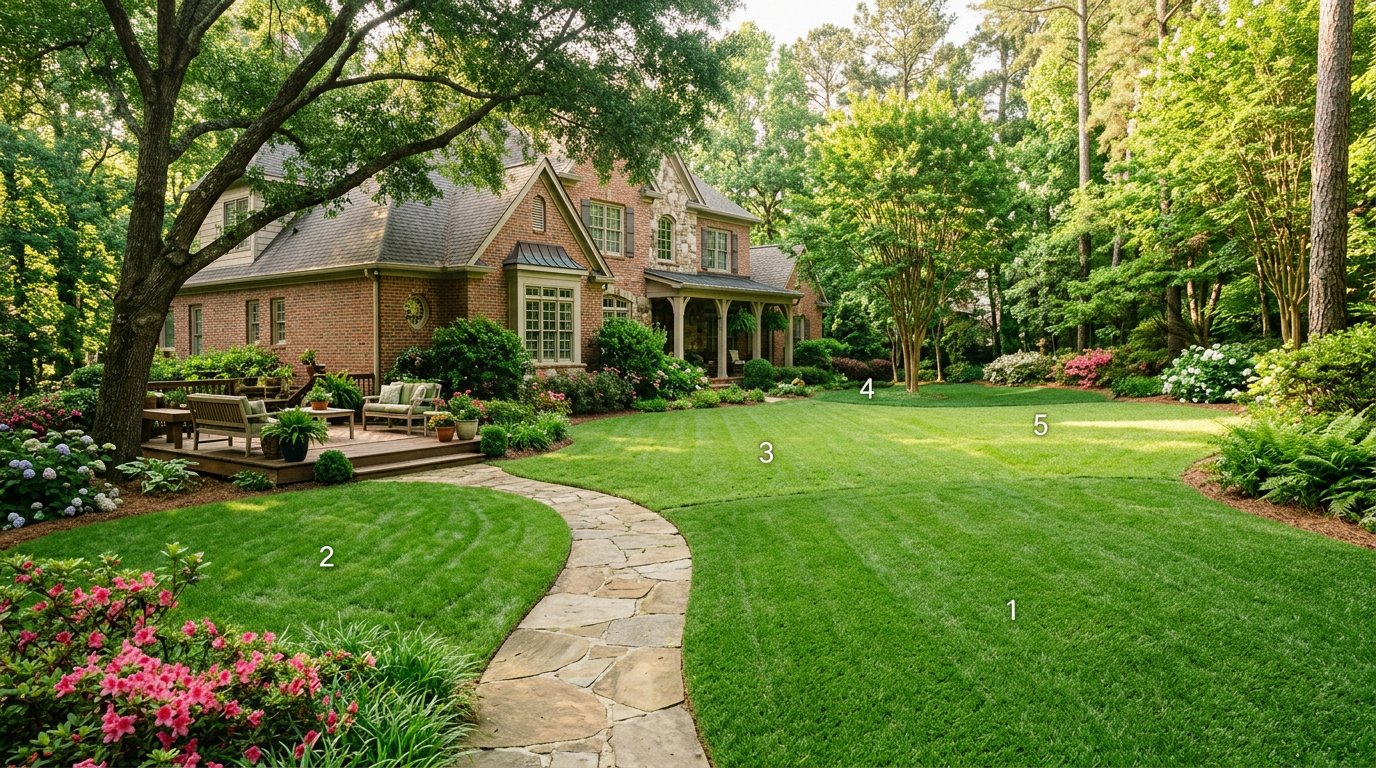
Let's be direct: growing a great lawn in Georgia is tough. You're fighting a battle on multiple fronts: blistering summer heat, oppressive humidity, and that infamous red clay soil that can bake as hard as a brick. It's a climate that chews up and spits out the wrong kind of grass. So many homeowners throw down the same seed their neighbor did, only to end up with a patchy, yellowing mess.
We're here to stop that cycle. Forget what the big box store is pushing this week. Choosing the right grass for Georgia isn't about luck; it's about matching a specific turfgrass to your specific conditions—sunlight, soil, location, and how much time you actually want to spend on lawn care.
We're going to break down the five best grass types that can handle the Peach State, from Atlanta's transition zone to the scorching southern plains.
Understanding Georgia's Climate & Soil
Georgia isn't one single growing environment. It's split. The northern third of the state (think Rome, Dalton, north of Atlanta) is in the "transition zone." This means it's a battleground where both warm-season and cool-season grasses can survive, but neither is perfectly happy year-round. The rest of the state—the vast majority—is prime warm-season grass territory.
Then there's the soil. That red Georgia clay is known for a few things:
- Compaction: It gets packed down easily, strangling grassroots and preventing water from soaking in.
- Poor Drainage: Water tends to pool on top rather than penetrating to the root zone.
- Acidity: It's often acidic (low pH), which some grasses love (like Centipede) and others tolerate.
Any grass you choose must be able to handle these conditions. Amending the soil with compost and regular aeration is non-negotiable for a truly top-tier lawn, but starting with the right grass gives you a massive head start.
1. Bermuda Grass: The Full-Sun Champion
If your yard gets at least 8 hours of direct, blistering sun, Bermuda is your MVP. No other grass stands up to Georgia's heat and drought quite like it. It establishes quickly, spreads aggressively via runners (stolons and rhizomes), and creates a dense, durable turf that can handle kids, pets, and backyard parties.
- Pros: Unbeatable heat/drought tolerance, high traffic resistance, fast recovery from damage, can be grown from seed.
- Cons: Needs full sun (will not survive in shade), aggressive growth can invade flower beds, requires frequent mowing.
- Best For: Large, sunny yards in any part of Georgia.
- Recommended Cultivars: TifTuf (exceptional drought tolerance), Celebration (good looks and durability), Arden 15.
Because it grows so fast in the summer, you'll need to stay on top of your mowing schedule. Plan on cutting it every 5-7 days to keep it healthy and prevent scalping. Check out our guide on how often to mow your lawn for the specifics.
2. Zoysia Grass: The Luxury Carpet
Walk barefoot on a well-maintained Zoysia lawn once, and you'll get it. Zoysia forms an incredibly dense, soft, carpet-like turf that feels amazing. It has good heat and drought tolerance (though not quite as bulletproof as Bermuda) and handles moderate shade far better. It's the premium choice for a show-stopping lawn.
- Pros: Extremely dense, great feel, good shade tolerance for a warm-season grass, good drought resistance.
- Cons: Expensive, slow to establish, prone to building up thatch.
- Best For: Homeowners who want a top-of-the-line look and are willing to invest the time and money. Good for yards with mixed sun and shade.
- Recommended Cultivars: Zeon (very popular, fine-bladed), Emerald (classic, fine-textured), EMPIRE (tougher, broader blade).
That thick growth habit means Zoysia is notorious for developing a thick layer of thatch. You'll likely need to rent a power rake or hire a pro every couple of years. We've got a whole guide on how to dethatch a lawn when the time comes.
3. Centipede Grass: The Low-Maintenance King
Often called "the lazy man's grass," Centipede is the go-to for anyone who wants a decent-looking lawn with minimal effort. It thrives in the acidic, poor soils common in middle and south Georgia and requires significantly less fertilizer and mowing than Bermuda or Zoysia. It spreads via creeping, above-ground stolons.
- Pros: Very low maintenance, low fertilizer needs, thrives in acidic/poor soil, slow growth means less mowing.
- Cons: Not very traffic tolerant, slow to recover from damage, prone to iron chlorosis (grass turning yellow), does not tolerate alkaline (high pH) soil.
- Best For: Central and South Georgia homeowners who prioritize low maintenance over a perfect, high-traffic surface.
- Recommended Cultivars: TifBlair (developed at UGA for improved cold tolerance and durability), Santee.
4. Tall Fescue: The North Georgia Option
Tall Fescue is the only cool-season grass on our list, and for good reason. It should only be considered if you live in the northernmost parts of the state (USDA zones 7a and cooler). Unlike the warm-season grasses that go dormant and brown in winter, Tall Fescue stays green year-round. It also has excellent shade tolerance.
- Pros: Stays green all year, best shade tolerance of any Georgia grass, can be grown from seed.
- Cons: Struggles mightily in summer heat and drought, requires more water than warm-season grasses, susceptible to brown patch disease.
- Best For: Shady yards in the mountains and northern metro Atlanta.
Many Georgians with Bermuda lawns will overseed with ryegrass (not fescue) for winter color, but a pure Fescue lawn is a high-maintenance proposition that requires a lot of babying through the summer.
5. St. Augustine Grass: The Shade Solution for the South
If you're in Middle or South Georgia and have a shady yard where Bermuda won't grow, St. Augustine is your best bet. It has the best shade tolerance among common warm-season grasses. It establishes quickly and has a coarse, broad-leaf texture that creates a thick, lush look.
- Pros: Best shade tolerance of warm-season grasses, spreads rapidly to fill in bare spots.
- Cons: Poor cold tolerance (don't plant it north of Macon), susceptible to chinch bugs and diseases like gray leaf spot, must be planted from sod or plugs (no quality seed available).
- Best For: Shaded lawns in Central and South Georgia where cold snaps are less of a concern.
- Recommended Cultivars: Palmetto (best all-around), CitraBlue (disease resistance), Raleigh.
Because it does so well in shade, it's often the answer for frustrated homeowners trying to solve a specific problem area. If that sounds like you, check out our other top picks for the best grass seed for shade.
The Numbers: Cost, Water & Installation
Deciding on a grass type also comes down to budget. Seeding is always cheapest, but it's only a great option for Bermuda, Centipede, and Fescue. Zoysia and St. Augustine are best installed as sod or plugs. A 5 lb. bag of quality Pennington Bermuda Grass Seed runs about $30 and covers 1,000 sq ft. Zoysia plugs from Zoysia Farm Nurseries can cost around $20-30 for a tray that covers about 64 sq ft. Sod is the most expensive upfront option, typically running between $0.60 to $1.10 per square foot installed. For a 5,000 sq ft lawn, you're looking at an investment of $3,000 to $5,500.
No matter which grass you choose, smart watering is key in Georgia's climate. According to the University of Georgia Extension, a properly managed lawn needs about 1 inch of water per week during the peak of summer, applied all at once to encourage deep root growth (Source: https://extension.uga.edu/publications/detail.html?number=B1318). This prevents the lawn from becoming dependent on daily, shallow watering. And be sure you know the best time to water grass to minimize evaporation and disease risk.
Our Take: Matching the Grass to the Ground
We've installed, repaired, and ripped out more lawns across the Southeast than we can count. Here's the honest truth we've learned: there is no single "best" grass for Georgia. It's a fool's errand to look for one.
The real secret is an honest assessment of your yard and your lifestyle. We put TifTuf Bermuda in a client's blistering hot, full-sun yard in Columbus, and it's the best-looking lawn on the block. A few years ago, we worked with a family in a heavily wooded lot in Roswell who were miserable with their thin, struggling Fescue. We switched them to Zeon Zoysia, and it completely transformed their yard into a lush, green oasis.
The best grass is the one that fits your light, your soil, your budget, and your tolerance for maintenance. Choose wisely, and you'll have a lawn that's the envy of the neighborhood instead of a constant source of frustration.
Frequently asked
What is the most common grass in Georgia?+
Bermuda grass is the most common and widely recommended grass in Georgia. Its superior heat and drought tolerance, coupled with its ability to withstand heavy traffic and recover quickly, makes it the default choice for sunny lawns across the state.
What is the lowest maintenance grass for Georgia?+
Centipede grass is hands-down the lowest maintenance turf for Georgia, especially in the central and southern regions. It requires very little fertilizer, infrequent mowing, and thrives in the state's naturally acidic soil, earning it the nickname 'lazy man's grass'.
Is Fescue or Bermuda better for Georgia?+
For at least 80% of Georgia, Bermuda grass is far superior. As a warm-season grass, it thrives in the state's intense summer heat. Tall Fescue is a cool-season grass that only performs well in the cooler, shadier, mountainous regions of North Georgia.
Can Zoysia grow in Georgia clay soil?+
Yes, Zoysia grass can grow well in Georgia's clay soil, but the ground must be prepared properly first. Tilling the soil and amending it with several inches of organic compost will improve drainage and reduce compaction, allowing Zoysia to establish a healthy, deep root system.
When should I plant grass seed in Georgia?+
Plant warm-season grass seed like Bermuda or Centipede from late spring to early summer (May through July). This timing provides the hot soil temperatures needed for germination and allows the lawn to establish before it goes dormant in the winter.