
The 5 Best Grass Types for Georgia Lawns (2024 Guide)
Choosing the right grass for Georgia means picking a winner that can handle our infamous heat and humidity. We'll walk you through the top contenders so you can build a lawn that's the envy of the neighborhood.
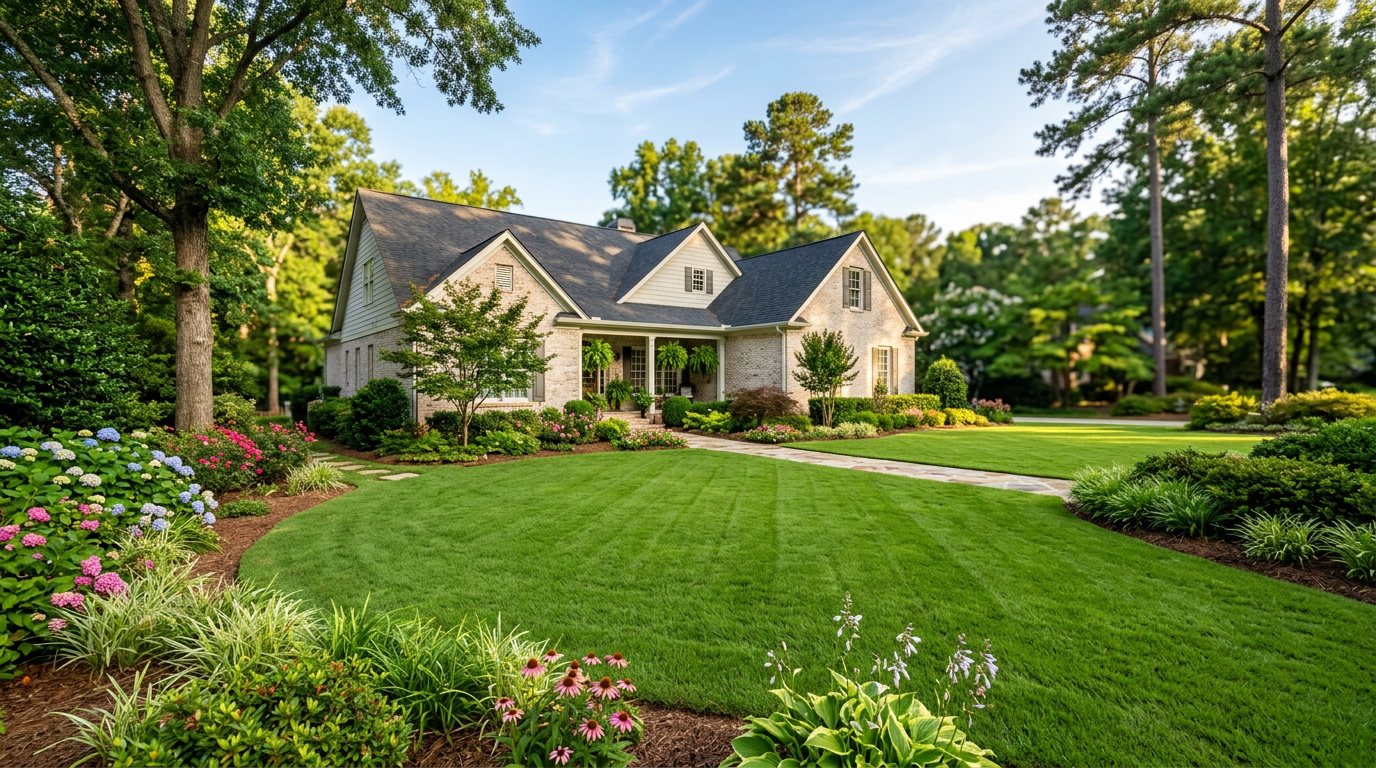
Let's get one thing straight: growing a great lawn in Georgia is a battle. You're fighting brutal humidity, summer heat that can cook an egg on the sidewalk, and weirdly mild winters that confuse your turf. Picking the right grass is your crucial first move. It’s the difference between a lush, green carpet and a patchy, yellowing mess that makes you want to pave the whole thing over.
We’re not here to sell you on some miracle seed. We’re here to give you the no-nonsense breakdown of the best grass types for Georgia so you can make a smart choice, whether you’re in the Blue Ridge foothills or down on the coast.
Understanding Georgia's Climate & Your Lawn
Georgia sits squarely in what lawn nerds call the "Transition Zone." This means it's a geographic battleground where it’s a little too hot for cool-season grasses to be truly happy and a little too cold for warm-season grasses to stay green all year. Your cousin in Ohio can just throw down Kentucky Bluegrass and call it a day. You don't have that luxury.
- North Georgia (Atlanta, Dalton, Gainesville): USDA Zones 7a-7b. This area can support cool-season grasses like Tall Fescue, especially if you have some shade. Warm-season grasses also do well, but they'll go dormant and turn brown for a longer period in winter.
- Middle & South Georgia (Macon, Augusta, Savannah, Albany): USDA Zones 8a-9a. This is prime territory for warm-season grasses. The heat and humidity are exactly what they love. Trying to grow Tall Fescue here is an exercise in futility and frustration.
Before you buy a single bag of seed, we highly recommend getting a soil test from your local UGA Extension office. For about $15, they'll tell you your soil's pH and what nutrients it's missing. It is the single best investment you can make for your lawn.
The Best Warm-Season Grasses for Georgia
These grasses are the workhorses of the South. They thrive from May through September and go dormant (turn brown) after the first hard frost. They are established by planting sod, sprigs, or plugs in the spring and early summer.
1. Bermudagrass
Best for: Full sun, high-traffic areas, and people who don’t mind mowing.
Bermuda is the undisputed king of sun-loving, tough-as-nails turf in Georgia. It establishes quickly, repairs itself from damage, and has excellent drought tolerance once established. Many of the world’s best Bermuda varieties, like TifTuf and Tifway 419, were developed right here in Georgia at the University of Georgia's Tifton campus. The downside? It needs at least 8 hours of direct sun a day and requires frequent mowing. Be prepared to learn how often to mow your lawn, because in summer, Bermuda might need a trim every 3-4 days.
- Cost: TifTuf Bermuda sod runs about $0.85 to $1.10 per square foot from major Georgia suppliers like Super-Sod.
- Pros: Extremely durable, heat/drought tolerant, self-repairing.
- Cons: Needs full sun, aggressive grower (can invade flower beds), requires frequent mowing.
2. Zoysiagrass
Best for: A showcase lawn with moderate traffic and some shade.
If you want a lawn that feels like a luxury carpet under your feet, Zoysia is your grass. It forms a dense, thick turf that naturally chokes out weeds. It’s more shade-tolerant than Bermuda (happy with 4-5 hours of sun) and grows slower, meaning less mowing. We've seen Zoysia lawns in the Atlanta suburbs that look like they belong on a golf course. The trade-offs are a slower establishment time and a higher price tag. It can also be susceptible to a disease called large patch, which is a key reason why your grass might be turning yellow in the spring and fall.
- Cost: Expect to pay a premium. Zoysia sod typically costs $1.00 to $1.30 per square foot.
- Pros: Dense and beautiful, good shade tolerance, less mowing than Bermuda.
- Cons: Expensive, slow to establish, prone to thatch and certain diseases.
3. Centipedegrass
Best for: Low-maintenance, low-fertility lawns in Middle and South Georgia.
Often called the "lazy man's grass," Centipede is the definition of low-input. It thrives in the acidic, sandy soils of South and Middle Georgia and requires very little fertilizer or mowing. It’s a great choice if you want a decent-looking lawn without spending every Saturday working on it. However, it's not very wear-tolerant and has a distinct light-green, almost lime color that some people don't love.
- Cost: More affordable than other options. A 5 lb bag of coated Centipede seed runs about $45 from big box stores, covering up to 2,000 sq. ft.
- Pros: Very low maintenance, low fertilizer needs, good for poor soil.
- Cons: Not wear-tolerant, sensitive to many herbicides, light green color.
4. St. Augustinegrass
Best for: Shady coastal lawns in South Georgia.
St. Augustine is the go-to choice for the coastal plains. It has the best shade tolerance of all the warm-season grasses and also tolerates salty air. It creates a coarse, broad-leafed lawn that grows vigorously. The main weaknesses are its poor cold tolerance (don't even think about it north of Macon) and its susceptibility to pests like chinch bugs and diseases. It can be a great problem-solver for shady yards where other grasses fail, making it a contender for the best grass seed for shade in the southern half of the state.
- Cost: Usually sold only as sod or plugs. Expect prices similar to Zoysia, around $0.90 to $1.20 per square foot.
- Pros: Excellent shade and salt tolerance, vigorous growth.
- Cons: Poor cold and drought tolerance, susceptible to pests and disease.
The Best Cool-Season Option for North Georgia
If you live in the northern third of Georgia and want a lawn that stays green all year, you really only have one good choice.
5. Tall Fescue
Best for: A year-round green lawn in North Georgia, especially with some shade.
Tall Fescue is the king of the Atlanta metro area and the mountain regions. Its biggest selling point is that it stays green 12 months a year. It has good shade tolerance and a deep root system that makes it more drought-tolerant than other cool-season grasses. However, it can struggle in the intense summer heat and will require more water than warm-season grasses. It's a bunch-type grass, so it doesn't repair itself. This means you’ll need to know how to overseed a lawn every fall to keep it thick and full.
- Cost: Relatively inexpensive. A 20 lb. bag of a quality blend like Pennington's The Rebels Tall Fescue will cost around $60-$70 and cover about 5,000 sq. ft. for overseeding.
- Pros: Green year-round, good shade tolerance, durable.
- Cons: Struggles in summer heat, requires more water in summer, needs annual overseeding.
How to Plant Your New Georgia Lawn
Timing is everything. Don't throw your money away by planting at the wrong time of year.
- Warm-Season Grasses (Bermuda, Zoysia, etc.): Plant from sod, plugs, or seed in late spring to early summer (May to July). This gives them the whole hot season to get established before winter.
- Cool-Season Grasses (Tall Fescue): Plant from seed in the fall (September to October). The warm soil helps germination, and the mild winter and spring give the young grass months to mature before facing its first brutal summer.
We’ve laid a lot of sod in our day, and trust us, preparing the soil is 90% of the battle. Kill off all existing grass and weeds, till the soil 4-6 inches deep, and rake it smooth. This is your one chance to get it right. Once your new grass is down, knowing the best time to water grass is critical—early morning is always the answer to reduce evaporation and prevent disease.
Georgia Lawn Care Nitty-Gritty: Weeds & Water Regulations
A Georgia lawn means dealing with some specific local challenges. Summer brings an onslaught of crabgrass, while winter is primetime for Poa annua (annual bluegrass). Using a pre-emergent herbicide in both spring and fall is non-negotiable.
Watering is another key issue. According to the University of Georgia Extension, most established lawns in Georgia need about 1 inch of water per week, either from rain or irrigation, to stay healthy during the growing season (Source: UGA Extension Publication B 1306). Be mindful of local regulations. Many metro Atlanta counties fall under the Georgia Environmental Protection Division's non-drought outdoor watering schedule, which often restricts landscape watering to specific days and times. Always check with your local water authority.
And while you're fighting the good fight against the climate, you'll still have to deal with common invaders. Learning how to get rid of dandelions is a rite of passage for any homeowner, but the principles of using post-emergent herbicides apply to many other broadleaf weeds you'll find.
The Final Verdict
So, what's the best grass for Georgia?
- For a sunny, durable, classic Southern lawn, go with Bermuda.
- For a shade-tolerant, high-end, beautiful lawn, choose Zoysia.
- For a low-maintenance lawn in Middle/South GA, it's Centipede.
- For a year-round green lawn in North GA, your best bet is Tall Fescue.
Choosing the right turf is the single most important decision for your landscape. It's a long-term commitment, so take a look at your yard, be honest about how much work you want to put in, and choose the grass that fits your life, not the one your neighbor has. Now get to it.
Frequently asked
What is the most low-maintenance grass for Georgia?+
Centipedegrass is widely considered the most low-maintenance grass for Georgia, especially in the central and southern parts of the state. It requires less mowing, less fertilizer, and is well-adapted to the acidic soils common in the region, earning it the nickname "the lazy man's grass."
What is the most common grass in Atlanta?+
In the Atlanta metro area, the two most common grasses are Tall Fescue and Bermudagrass. Tall Fescue is popular for its year-round green color and good shade tolerance, while Bermudagrass is chosen for its extreme durability and sun-loving nature in new, sun-drenched subdivisions.
Can you have a green lawn year-round in Georgia?+
Yes. The easiest way is to plant Tall Fescue in North Georgia, as it's a cool-season grass that stays green all year. For warm-season lawns (Bermuda, Zoysia), homeowners can overseed with perennial ryegrass in the fall for a temporary green color through the winter.
When is the best time to plant grass seed in Georgia?+
It depends on the grass type. The best time to plant warm-season grasses like Bermuda or Zoysia is late spring through early summer (May-July). For cool-season Tall Fescue, the ideal planting window is in the fall (September-October) to allow it to mature before summer.
Which grass is better for Georgia, Bermuda or Zoysia?+
It depends on your priorities. Bermuda is better for high-traffic, full-sun areas and is more drought-tolerant and recovers from damage faster. Zoysia is better for aesthetics, offers superior shade tolerance, and requires less frequent mowing, but it is more expensive and slower to establish.