
The 5 Best Grass Types for Georgia Lawns (2024 Guide)
Don't let Georgia's tricky transition climate intimidate you. We'll show you the exact warm-season and cool-season grasses that will thrive in your yard, from the Atlanta suburbs to the coastal plains.
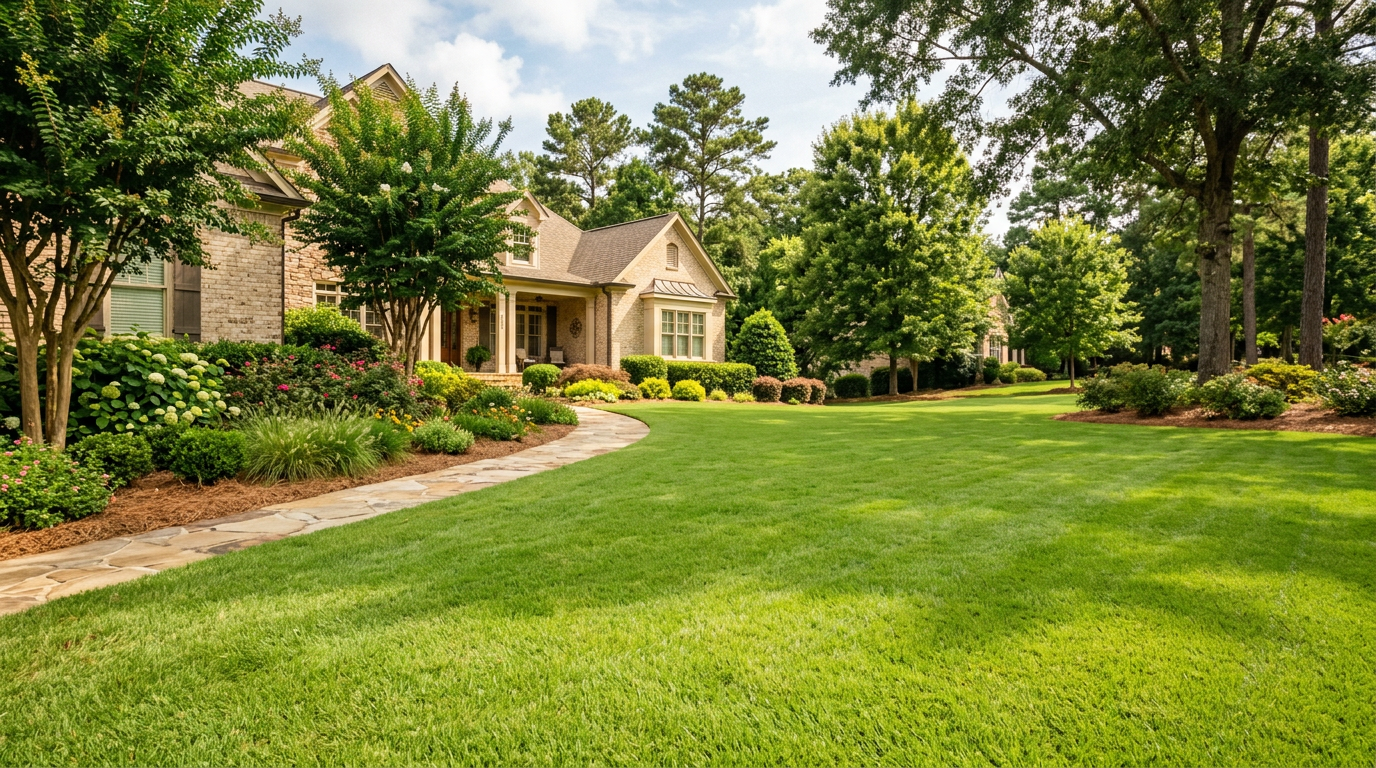
Trying to pick the best grass for Georgia feels like a trick question. Do you want something that survives the brutal August heat in Savannah or the surprise April frost in Blue Ridge? The Peach State sits in a climatic 'transition zone,' which is a fancy way of saying our weather can’t make up its mind. It’s too hot for cool-season grasses to be truly happy, and the winters can be too cold for some warm-season grasses to thrive without a little finesse.
But don't worry. This isn't gatekept rocket science. We've installed countless lawns across the state, from the Atlanta metro to the coastal plains, and we know exactly what works—and what turns into a crunchy, brown mess by July. Let's dig in and find the perfect turf for your Georgia yard.
Decoding Georgia’s Climate: The Transition Zone Explained
Before you buy a single bag of seed, you have to understand where you live. Georgia is split into a few key zones:
- The Mountains & North Georgia (USDA Zones 7a/7b): Think Atlanta, Athens, and northward. Here, you have a real choice. Warm-season grasses go dormant and brown in the winter, but cool-season grasses can stay green. Summers are still brutal, though.
- The Piedmont & Middle Georgia (USDA Zones 7b/8a): Macon, Columbus, Augusta. This is the heart of the transition zone. Warm-season grasses are the undisputed champs here.
- South Georgia & The Coast (USDA Zones 8b/9a): Valdosta, Savannah, Albany. It's hot and humid. Only the toughest warm-season grasses need apply. Forget about cool-season turf down here; it’ll melt.
Your location dictates your best options. Trying to grow a cool-season Tall Fescue lawn in Waycross is just setting a pile of money on fire.
The Best Warm-Season Grasses for Georgia Lawns
For 90% of Georgia, a warm-season grass is the right answer. These grasses thrive in the heat, go dormant (turn brown) after the first hard frost, and green up again in the spring. Here are the top contenders.
1. Bermuda Grass (The Sun-Loving Athlete)
If you have full sun and kids, pets, or just a lot of backyard football games, Bermuda is your MVP. It’s what you see on golf courses and sports fields for a reason.
- Pros: Unmatched heat and drought tolerance, withstands heavy traffic, spreads quickly to repair damage, deep green color with proper care.
- Cons: Needs at least 8 hours of direct sun, will not grow in shade, can be high-maintenance (frequent mowing and feeding), very invasive and will creep into flower beds.
- Best For: Full-sun yards, high-traffic areas, homeowners who want a picture-perfect lawn and don't mind the work.
- Recommended Cultivars: 'TifTuf' is the king for its superior drought tolerance. 'Celebration' has slightly better shade tolerance (but still needs sun). Common Bermuda is a cheaper seeded option but is less dense and a lighter color.
- Cost: Premium sod like TifTuf from a Georgia supplier like Super-Sod costs around $799 for a 500 sq. ft. pallet. Cheaper seeded varieties are available for a few hundred dollars to cover an entire lawn.
We've found Bermuda to be a fantastic choice for those classic suburban lots with no large trees. If you follow a good care schedule, it's nearly indestructible during a Georgia summer.
2. Zoysia Grass (The Barefoot Luxury Carpet)
Zoysia is what you get when you want a beautiful lawn that feels incredible underfoot. It grows into a thick, dense carpet that chokes out weeds and looks absolutely stunning.
- Pros: Excellent heat tolerance, good drought tolerance (once established), more shade tolerant than Bermuda (needs 4-6 hours of sun), feels amazing to walk on, very dense.
- Cons: Expensive to install (usually sod), very slow to establish and recover from damage, can be prone to thatch buildup.
- Best For: Homeowners who want a top-tier, luxurious lawn and have a mix of sun and partial shade. It's less ideal for those with very active dogs that cause a lot of damage, due to its slow recovery.
- Recommended Cultivars: 'Meyer' is the old-school standard. 'Zeon' and 'Emerald' are fine-bladed varieties that are very popular in upscale Atlanta neighborhoods. 'JaMur' is a good middle-of-the-road option.
- Cost: Expect to pay $600-$800 for a 450-500 sq. ft. pallet of Zoysia sod.
3. Centipede Grass (The Low-Maintenance Workhorse)
Often called the 'lazy man’s grass,' Centipede is the go-to for homeowners who want a decent-looking lawn without a ton of work. It’s the most common grass in Middle and South Georgia for a reason.
- Pros: Very low maintenance, requires less mowing and fertilizer than Bermuda or Zoysia, grows well in acidic and sandy soils (common in Georgia), fairly shade tolerant.
- Cons: Does not tolerate heavy traffic well, slow to recover, shallow root system makes it less drought-tolerant than Bermuda, prone to 'Centipede decline' if over-fertilized.
- Best For: Low-traffic yards, homeowners who prefer a low-input lawn, common in South Georgia.
- Recommended Cultivars: 'TifBlair' is a popular improved variety from UGA. You can also find generic Centipede seed at most big-box stores.
- Cost: Relatively cheap. A 5-lb bag of Scotts Turf Builder Centipede Grass Seed costs about $30 and covers 2,000 sq. ft.
4. St. Augustine Grass (The Coastal Champion)
St. Augustine is the most shade-tolerant of the warm-season grasses, making it a popular choice for yards with large, mature trees, especially in the southern half of the state.
- Pros: The best shade tolerance of any warm-season grass, deep blue-green color, grows aggressively to crowd out weeds.
- Cons: Poor cold tolerance (don't even think about it north of Macon), needs a lot of water to look good, susceptible to chinch bugs and fungal diseases like gray leaf spot, must be planted as sod or plugs (no seed available).
- Best For: Shaded lawns in Middle and South Georgia, especially along the coast. It’s a great choice if you have live oaks. Just like folks in Florida use it, it works great on the Georgia coast. For context, you can see how it compares to our picks for the best grass for Florida.
- Recommended Cultivars: 'Raleigh' is a cold-hardy standard. 'Palmetto' and 'CitraBlue' offer better disease resistance and color.
- Cost: Sod is your only option. A pallet will typically cost $550-$700.
What About Cool-Season Grass in North Georgia?
If you live in the Atlanta metro area or the mountains, you'll see a lot of lawns that stay green all year. That’s probably Tall Fescue. It's a cool-season grass that can survive Georgia's heat... with some serious help.
Tall Fescue (The Year-Round Green)
Tall Fescue stays green through the winter, which many people love. However, it's a bunch-type grass, meaning it doesn't spread and repair itself. Bare spots must be re-seeded.
- Pros: Stays green year-round, good shade tolerance, deep roots give it decent drought tolerance for a cool-season grass.
- Cons: Struggles mightily in July and August heat, requires a ton of water in the summer, needs to be overseeded every fall to stay thick, susceptible to brown patch disease.
- Best For: Shaded lawns in North Georgia (north of the Macon 'fall line') where the owner is committed to annual overseeding.
To keep a Fescue lawn alive, you absolutely must know the best time to water grass (early morning!) and be prepared to re-seed every single autumn. Our guide on how to overseed a lawn is essential reading for any Georgia Fescue owner.
According to the University of Georgia Extension, much of the state is in the 'transition zone,' meaning both warm-season and cool-season grasses can be grown, but neither is perfectly adapted. This means your choice is a trade-off. Georgia also averages about 45-55 inches of rainfall annually, but summer droughts are frequent, making drought tolerance a non-negotiable trait for a low-maintenance lawn. (Source: https://extension.uga.edu/publications/detail.html?number=C891)
Our Pick: The Best All-Around Grass for Georgia
If we had to pick one grass for the majority of Georgia homeowners, from the suburbs of Atlanta down to the state line, it would be a fine-bladed Zoysia like 'Zeon' or 'JaMur.'
Why? It strikes the perfect balance. It can handle a reasonable amount of shade from Georgia’s beloved pines and oaks, but still thrives in the sun. It’s dense enough to fight off weeds and feels incredible. And while it isn't as tough as Bermuda, it holds up to normal family use. Its heat and drought tolerance are excellent once established, which is key for surviving our summers without a sky-high water bill. It's an investment up front, but the result is a top-tier lawn that is the envy of the neighborhood.
Your Georgia Lawn Care Calendar Essentials
No matter what grass you choose, your success depends on your maintenance schedule. Here’s a quick-and-dirty calendar.
- Early Spring (March-April): Rake up winter debris. For warm-season grasses, scalp the lawn (mow it very low) just before it starts greening up. Apply pre-emergent herbicides to stop crabgrass and other weeds before they start. This is the time to tackle any lingering dandelions in your lawn.
- Late Spring/Summer (May-August): This is prime growing season. Mow high to encourage deep roots. Bermuda needs weekly mowing; Zoysia and Centipede can go a bit longer. Water deeply but infrequently (1 inch per week, all at once). Feed your warm-season lawn. Don't fertilize Fescue in the summer!
- Fall (September-November): This is the most important time for North Georgia's Fescue lawns—it’s time to aerate and overseed. For warm-season lawns, it's a good time to aerate to relieve compaction. Apply a final 'winterizer' fertilizer to warm-season grasses around early September. Keep mowing as needed until the grass goes dormant.
- Winter (December-February): Everyone rests. Your warm-season lawn will be brown and dormant. Your Fescue lawn should be looking its best. Rake leaves off the turf to prevent smothering it.
Frequently asked
What is the most low-maintenance grass for Georgia?+
Centipede grass is widely considered the most low-maintenance option for Georgia. It requires less fertilizer, less frequent mowing than Bermuda or Zoysia, and thrives in the acidic soils common to the state. However, it does not handle heavy foot traffic well.
What grass stays green all year in Georgia?+
Tall Fescue is the primary choice for a lawn that stays green year-round in Georgia. However, it only grows well in the northern half of the state (Atlanta and north) and requires significant watering in summer and annual overseeding in the fall to survive.
How much does a pallet of sod cost in Georgia?+
In Georgia, a pallet of sod (typically 450-500 sq. ft.) can range from $400 for Centipede or common Bermuda to over $800 for premium varieties like TifTuf Bermuda or Zeon Zoysia. Prices vary by supplier, location, and season.
Can you grow Kentucky Bluegrass in Georgia?+
No, growing a pure Kentucky Bluegrass lawn in Georgia is not recommended. The state's summer heat and humidity are far too intense for it to survive. You may find some Tall Fescue seed blends that contain a small percentage of bluegrass, but it will not be the dominant grass.
When is the best time to plant grass seed in Georgia?+
For warm-season grasses like Bermuda and Centipede, the best time to plant seed is from late spring to early summer (May to July). For cool-season Tall Fescue, the ideal planting window is in the fall, from September to October.