
Best Grass for Florida: 5 Types for Sun, Shade & Heat
Stop fighting your sandy, sun-scorched yard. We'll show you exactly which grass type is best for your Florida property, from the Panhandle to the Keys.
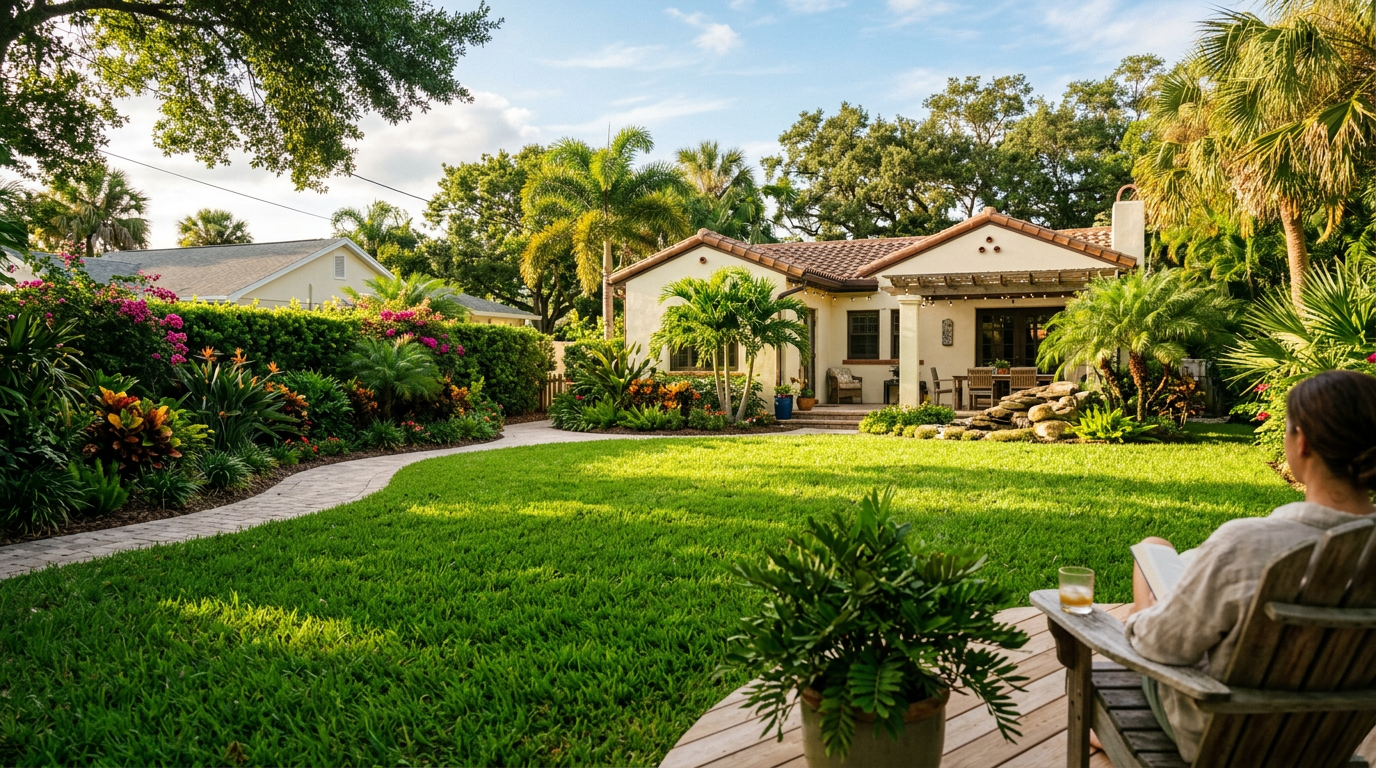
Let's be direct: growing a perfect lawn in Florida is a special kind of challenge. You're dealing with scorching sun, oppressive humidity, sandy soil that drains faster than your bank account on Amazon Prime Day, torrential summer rains, and a whole rogues' gallery of pests. It's not for the faint of heart.
But here’s the secret the lawn care companies don't want you to know: half the battle isn't about expensive treatments or constant watering. It's about picking the right grass in the first place. Trying to grow the wrong turf in Florida is like trying to ski in Miami—a frustrating and expensive failure. We're here to cut through the noise and help you choose the best grass for your specific slice of the Sunshine State.
Understanding Florida's Three Lawn Zones
Florida isn't a monolith. The best grass for a yard in Jacksonville is different from one in Naples. We can break the state into three general zones:
- North Florida (Panhandle, Jacksonville area): Experiences freezing temperatures and frosts in the winter. Grass here will likely go dormant (turn brown) for a short period.
- Central Florida (Orlando, Tampa, Daytona): The transition zone. Frosts are possible but rare. Grass can often stay green year-round.
- South Florida (Miami, Fort Myers, The Keys): A true subtropical/tropical zone. Frost is a non-issue. The challenges are heat, humidity, salt spray, and rainfall extremes.
Keep your zone in mind as we break down the top contenders.
1. St. Augustinegrass: The Florida Classic
If you picture a Florida lawn, you're probably picturing St. Augustinegrass. It's the most popular turf in the state for a reason. Its wide, blue-green blades form a dense, lush carpet that feels like pure suburbia.
- Pros: Excellent growth in hot, humid weather; arguably the best grass seed for shade among warm-season grasses; chokes out weeds when healthy; beautiful color and texture.
- Cons: Must be established from sod or plugs (no viable seed); susceptible to chinch bugs and St. Augustine Decline (SAD) virus; requires significant water and fertilizer; develops thatch quickly, which may require you to dethatch your lawn.
- Best For: Homeowners who want a classically beautiful lawn and don't mind the maintenance. Ideal for yards with mixed sun and shade.
- Top Varieties & Cost:
- 'Floratam': The old standby. Sun-loving and vigorous. A 400 sq. ft. pallet of Floratam sod from a big box store will run you about $600 - $700.
- 'Palmetto' & 'CitraBlue': Newer varieties with better shade tolerance and disease resistance. They often cost 10-20% more than Floratam.
2. Bahiagrass: The Low-Maintenance Workhorse
If St. Augustine is the pampered show poodle, Bahiagrass is the tough, independent mutt. It was originally introduced for cattle foraging, which tells you everything you need to know about its durability. It's the king of low-effort lawns.
- Pros: Incredible drought tolerance due to its deep root system; can be grown from seed; thrives in sandy, infertile soil; low water and fertilizer needs.
- Cons: Coarse texture; open growth habit can allow weeds; produces tall, distinctive 'Y'-shaped seed heads that can look messy and require frequent mowing.
- Best For: Large properties, roadsides, and anyone who values low maintenance over a perfectly manicured look. The ultimate choice for a 'set it and forget it' yard.
- Top Varieties & Cost:
- 'Pensacola': The most common variety, extremely tough but less dense.
- 'Argentine': A step up in quality. It's darker green, denser, and produces fewer seed heads. A 5 lb. bag of Scotts Turf Builder Bahiagrass Seed costs around $28 and covers up to 2,000 sq. ft.
3. Zoysiagrass: The Luxury Carpet
Walk on a healthy Zoysia lawn barefoot once, and you'll get it. This grass creates an incredibly dense, soft, carpet-like turf. It's what you'll find on high-end properties and a lot of golf course tee boxes. It's the luxury option, with a price tag to match.
- Pros: Superior soft texture; extremely dense growth crowds out weeds; good drought and traffic tolerance once established; slower vertical growth means less mowing.
- Cons: Very slow to establish (patience is required); one of the most expensive options; prone to thatch buildup over time.
- Best For: Homeowners who want the absolute best-looking and best-feeling lawn and are willing to pay the premium for it. Good for high-end residential yards.
- Top Varieties & Cost:
- 'Empire': A popular, durable variety with a wider blade. Sold as sod or plugs.
- 'Zeon': A fine-bladed variety that is the pinnacle of 'barefoot grass'. Expect to pay a premium for sod, often $750+ per pallet.
4. Centipedegrass: The "Lazy Man's Grass" (for North Florida)
Centipedegrass gets its nickname for a reason: it's a slow-growing, low-maintenance turf that's perfect for the slightly cooler, more acidic soils of North Florida and the Panhandle. It's not a great choice for Central or South Florida.
- Pros: Very low fertilizer requirements (too much will harm it); slow growth means you mow less; light green color is preferred by some.
- Cons: Not very tolerant of traffic, salt, or shade; shallow root system makes it less drought-tolerant than Bahia; prone to iron deficiency, which is a key reason why your grass might be turning yellow.
- Best For: North Florida homeowners looking for a simple, low-effort lawn.
- Top Varieties & Cost: It's often sold as a blend. A 5 lb. bag of Pennington Centipede Grass Seed & Mulch runs about $45 and covers 1,250 sq ft.
5. Bermuda Grass: The Full-Sun Athlete
If your yard gets at least 8 hours of direct, unfiltered sunlight per day and sees a lot of action from kids or pets, Bermuda grass is your champion. It's used on athletic fields for its ability to recover from damage quickly.
- Pros: The most drought- and heat-tolerant grass available; handles heavy traffic and recovers rapidly; grows a very dense turf.
- Cons: Absolutely zero shade tolerance (it will die in shade); very aggressive and can invade flower beds; requires very frequent mowing to look its best—sometimes twice a week in summer. You'll want to review how often to mow your lawn if you choose this grass.
- Best For: Properties in full, blazing sun with high traffic. The only choice for a durable, backyard playing field.
- Top Varieties & Cost:
- 'Celebration': A popular variety with good durability and a nice blue-green color.
- 'Tifway 419': The gold standard for athletic fields and golf courses. Both are typically sold as sod, with pricing similar to or slightly higher than St. Augustine.
Making the Right Choice: Sun, Soil, and Sanity
In our years of wrangling lawns from Pensacola to Key West, we've learned the hard way that fighting your site conditions is a losing battle. The happiest homeowners are those who match their grass to their yard, not the other way around. Don't plant St. Augustine in full sun unless you love watering bills. Don't plant Bermuda in the shade and expect it to live.
Florida's environment demands a pragmatic approach. According to the University of Florida's IFAS Extension, turfgrass is the largest irrigated 'crop' in the state, covering an estimated 2 million residential lawns. Irrigating just one inch of water onto a 1,000-square-foot lawn uses about 620 gallons of water (source: https://edis.ifas.ufl.edu/publication/LH025). Choosing a drought-tolerant grass like Bahia can make a huge impact on your water consumption and your utility bills. Figure out the best time to water your grass to maximize efficiency, but picking the right plant from the start is the ultimate money-saver.
Here's a quick cheat sheet:
| Grass Type | Sun Needs | Maintenance | Drought Tolerance | Best For... | | :--- | :--- | :--- | :--- | :--- | | St. Augustine | Sun to Part Shade | High | Medium | Classic look, yards with trees | | Bahiagrass | Full Sun | Low | Excellent | Low-effort, large areas, poor soil | | Zoysiagrass | Sun to Part Shade | Medium-High | Good | Luxury feel, high-end look | | Centipedegrass | Full Sun | Very Low | Low-Medium | North Florida, acidic soil | | Bermuda Grass | Full Sun ONLY | High | Very Good | High-traffic areas, athletic use |
Choose wisely. A little research now will save you years of frustration and hundreds of dollars. Your lawn—and your wallet—will thank you.
Frequently asked
What is the most low-maintenance grass for Florida?+
Bahiagrass is the most low-maintenance grass for Florida. Its deep root system makes it extremely drought-tolerant, and it requires less fertilizer and water than other types. Its main drawback is the tall, unsightly seed heads it produces in summer.
What grass stays green all year in Florida?+
Most warm-season grasses like St. Augustine, Zoysia, and Bahia can stay green year-round in Central and South Florida. In North Florida, they may go dormant and turn brown during a hard frost or freeze, but they will green up again in spring.
Can you grow Fescue grass in Florida?+
No, you generally cannot grow Fescue in Florida. Fescue is a cool-season grass that cannot tolerate Florida's intense summer heat, humidity, and sandy soil. It will quickly die off, making warm-season grasses the only viable choice for a permanent lawn.
What is the softest grass for Florida?+
Zoysiagrass, particularly fine-bladed varieties like 'Zeon' or 'Emerald', is considered the softest grass for Florida. Its dense, carpet-like growth creates a luxurious, barefoot-friendly lawn. However, it's also one of the more expensive and slower establishing options.
Is it better to sod or seed a lawn in Florida?+
In Florida, sodding is generally better for St. Augustine and Zoysia, which are not reliably grown from seed. Sod provides an instant lawn and out-competes weeds. Seeding is a cost-effective option for Bahiagrass and Centipedegrass but requires more time and effort to establish.