
The 5 Best Grass Types for Delaware Lawns (2024 Guide)
Stop guessing what grass to plant in your Delaware yard. We break down the top contenders that can actually handle our state's tricky climate, from Wilmington to Seaford.
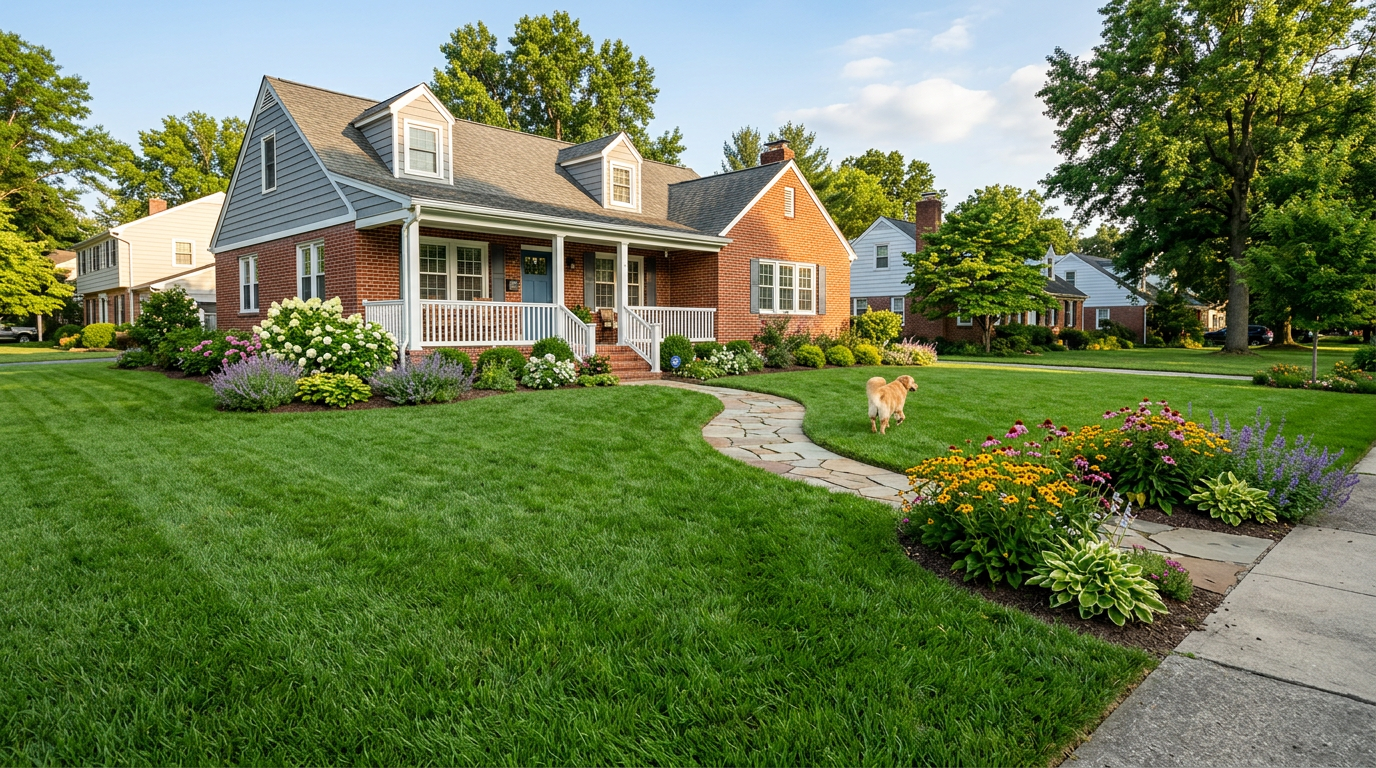
Let's get one thing straight: having a great lawn in Delaware is a battle. We're stuck in the dreaded 'transition zone,' a horticultural no-man's-land where summers can be too hot and humid for cool-season grasses, and winters are too cold for warm-season grasses to survive. It’s the worst of both worlds. But we’re not here to complain; we’re here to win. Choosing the right grass seed is 90% of that battle.
We've laid sod and sown seed all over the First State, from the hilly northern suburbs of Wilmington to the flat, sandy soils near Rehoboth Beach, and we keep coming back to the same conclusion: you need tough, adaptable, cool-season grasses. Forget what works in Florida or Maine. This is your definitive guide to the best grass for Delaware.
Decoding Delaware's Climate: The Transition Zone Challenge
Before you spend a dime on seed, you need to understand the battlefield. Delaware sits primarily in USDA Hardiness Zones 7a and 7b. This means our winters get cold enough to kill off most warm-season grasses like St. Augustine, but our summers bring on heat and humidity that can bake traditional cool-season varieties like fine fescues if they're out in the open sun.
This is why you see so many lawns struggling by August. They're either the wrong species entirely or a weak cultivar that can't handle the pressure. The secret isn't finding one magic grass type; it's about choosing elite varieties of cool-season grasses that have been bred specifically for improved heat and disease resistance.
The 5 Best Grass Types for Your Delaware Lawn
After years of trial and error, these are the champs that consistently perform across the state. We're focusing on cool-season grasses because they stay green for more of the year and are the most practical choice for 99% of Delaware homeowners.
1. Turf-Type Tall Fescue (TTTF)
The All-Around Champion. If you can only choose one, this is it. Modern Turf-Type Tall Fescues are lightyears ahead of the old, clumpy 'Kentucky 31' your grandpa used. TTTF has been bred to have a finer texture, a beautiful dark green color, and, most importantly, an incredibly deep root system. Those roots can stretch 2-3 feet down, allowing the plant to find water deep in the soil during our dry summer spells.
- Pros: Excellent heat and drought tolerance, good disease resistance (especially to brown patch), stands up well to foot traffic, requires less water and fertilizer than Kentucky Bluegrass.
- Cons: Doesn't self-repair; bare spots need to be reseeded.
- Product Pick: Jonathan Green Black Beauty Ultra. This is a killer blend of TTTF, Kentucky Bluegrass, and Perennial Ryegrass. A 7-lb bag runs about $45-$55 and can be found at local garden centers and big box stores like Lowe's in Dover.
2. Kentucky Bluegrass (KBG)
The Beauty Queen. When you picture a perfect, lush, deep-green lawn, you're probably picturing Kentucky Bluegrass. It has a fine texture, beautiful color, and the unique ability to spread and self-repair via underground stems called rhizomes. If your dog creates a small bare patch, KBG can often fill it in on its own.
However, this beauty comes at a price. KBG has a shallow root system, making it thirsty during the summer. It's also slower to germinate and requires more fertilizer to look its best.
- Pros: Superior color and soft texture, self-repairing, very cold-hardy.
- Cons: High water and fertilizer needs, poor shade and drought tolerance, susceptible to summer diseases.
- Our Advice: We almost never recommend a 100% KBG lawn in Delaware. Instead, use it as a 10-20% component in a blend with Turf-Type Tall Fescue. You get the benefit of its color and repair ability without relying on it entirely.
3. Perennial Ryegrass
The Sprinter. Perennial Ryegrass is the fast-food of the grass world—it germinates in as little as 5-7 days. This makes it an essential part of any seeding project for quick ground cover that helps prevent soil erosion and weed growth while the slower Fescues and KBG get established. It also has a nice, shiny green color.
- Pros: Extremely fast germination, good traffic tolerance, fine texture.
- Cons: Lowest heat and drought tolerance of the three; tends to struggle in mid-July and August. It's a bunch-type grass, so it doesn't spread.
- Our Advice: Use it sparingly in a mix (5-10%). It's a fantastic tool for overseeding a thin lawn for a quick green-up, but it's not a long-term survivor on its own in Delaware summers.
4. Fine Fescues (Creeping Red, Chewings, Hard)
The Shade Specialist. Have a lot of mature trees on your property in Newark or Hockessin? Fine Fescues are your best friend. These grasses, which include varieties like Creeping Red Fescue and Chewings Fescue, are the most shade-tolerant of all the cool-season grasses. They also have very low fertilizer and water needs. They are the star players in any quality seed mix for shady areas.
- Pros: Best shade tolerance, low maintenance, good drought resistance.
- Cons: Do not tolerate heat, sun, or heavy foot traffic well.
- Our Advice: Use a dedicated shade mix containing several types of Fine Fescue for those areas under dense trees where nothing else will grow. Don't use it for the sunny part of your yard.
5. Zoysia Grass (A Warm-Season Consideration)
We're including Zoysia as an honorable mention for homeowners in southern Delaware, particularly in the coastal areas of Sussex County. Zoysia is a warm-season grass that thrives in heat and sun and is incredibly drought-tolerant. The catch? It turns a very noticeable straw-brown color after the first hard frost and doesn't green up again until late spring (May). You'll have a brown lawn for about half the year. It's also very invasive and can be tough to control. It's a specific choice for a specific situation, not a general recommendation.
Seeding Your New Delaware Lawn: When and How
Timing is everything. The absolute best time to plant grass seed in Delaware is from late August through early October. The soil is still warm from the summer, which encourages fast germination, but the cooling air temperatures reduce stress on the new seedlings. Weed competition is also much lower in the fall.
Spring seeding (April to mid-May) is a distant second. You'll be in a constant race against summer heat and crabgrass. If you must seed in spring, do it as early as possible.
Before you start, do this one non-negotiable step: get a soil test. The University of Delaware's Soil Testing Program is an affordable and invaluable resource. For about $20, they'll tell you your soil's pH and nutrient levels and give you specific recommendations on what to add. This simple step can be the difference between success and failure.
A Basic Lawn Care Calendar for Delaware Lawns
- March-May: Apply a pre-emergent herbicide to prevent crabgrass (timing is critical!). Perform your first mow when the grass reaches 3-4 inches. This is also when you'll start battling broadleaf weeds. If you see yellow flowers, you need to know how to get rid of dandelions before they take over.
- June-August: Raise your mower height to 3.5-4 inches to shade the soil and conserve water. Water deeply but infrequently—this is the best time to water grass, early in the morning. According to the University of Delaware Extension, our state's lawns face significant stress from 'brown patch' disease, especially in humid summers when nighttime temperatures stay above 68°F—a common occurrence from Dover to Newark. Taller grass and proper watering help prevent it. (Source: https://www.udel.edu/academics/colleges/canr/cooperative-extension/fact-sheets/managing-brown-patch-in-turf/)
- September-November: This is the prime season for lawn renovation. If your soil is compacted, now is the time to aerate. Dethatch if the thatch layer is over 1/2 inch thick. This is the optimal window to overseed your lawn and apply a fall fertilizer to build strong roots for next year.
- December-February: Your lawn is dormant. Keep it clear of leaves and debris, and stay off it when it's frozen or soggy.
Ultimately, success with a Delaware lawn comes down to choosing the right seed—a high-quality blend of Turf-Type Tall Fescue, Kentucky Bluegrass, and a touch of Perennial Ryegrass—and planting it at the right time. Do that, and you'll have the best-looking lawn on the block.
Frequently asked
What is the most low-maintenance grass for Delaware?+
Turf-Type Tall Fescue is the most low-maintenance option for sunny areas in Delaware. It has deep roots, requires less water and fertilizer than other grasses, and has good natural disease resistance. For shady areas, Fine Fescues are the lowest maintenance choice.
When is the best time to plant grass seed in Delaware?+
The ideal time to plant grass seed in Delaware is from late August to early October. The warm soil and cool air create perfect growing conditions for cool-season grasses, with less weed competition. Spring planting is possible but much more challenging due to summer heat.
Should I use sod or seed in Delaware?+
Sod provides an instant lawn but is significantly more expensive (around $0.80 - $1.50 per sq. ft.). Seeding is much cheaper and allows you to choose a high-quality, custom seed blend. For most Delaware homeowners, seeding is the more practical and effective long-term solution.
Is Zoysia grass a good choice for Delaware?+
Zoysia grass is generally not recommended for Delaware because it's a warm-season grass that turns brown and goes dormant from the first frost until late spring. While it tolerates heat well, most homeowners prefer a lawn that stays green for more of the year.
How long does new grass seed take to grow in Delaware?+
Germination time depends on the seed type. Perennial Ryegrass can sprout in 5-7 days. Tall Fescue typically takes 7-14 days, while Kentucky Bluegrass is the slowest, often needing 14-21 days. A consistent watering schedule is crucial for the first few weeks after planting.