
The 5 Best Grass Types for a Delaware Lawn (2024)
Stop guessing which grass seed to buy. We break down the top 5 grass types that will actually survive and thrive in a Delaware yard, from Wilmington to Rehoboth Beach.
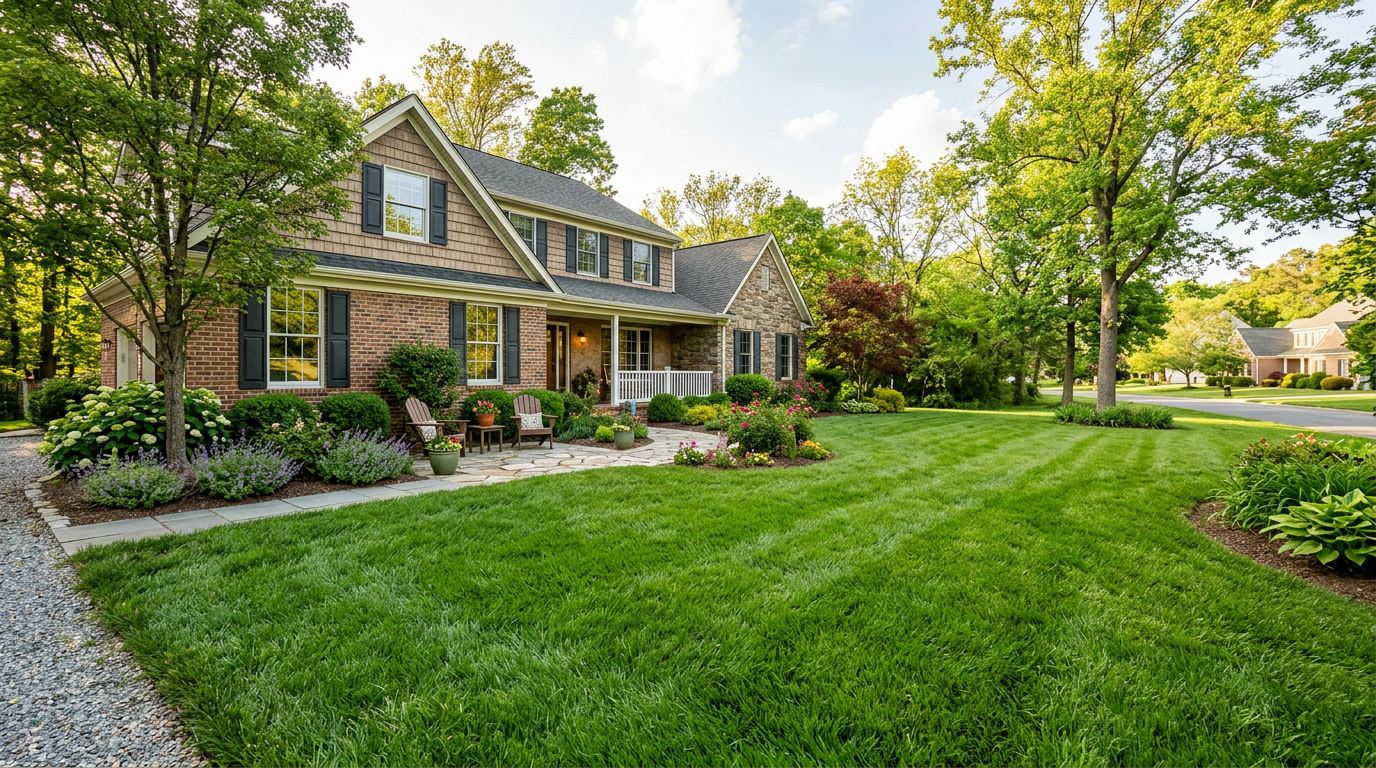
Let’s be honest. Growing a great lawn in Delaware can feel like a fool's errand. One minute it’s lush and green in May, the next it’s a crispy, brown mess by August. You’re not a bad landscaper; you’re just fighting one of the trickiest climates in the country for turfgrass. But don't despair. Picking the right grass for your Delaware lawn is 90% of the battle, and we're here to give you the battle plan.
We’ve seen it all, from postage-stamp yards in Wilmington to sprawling lawns down in Sussex County. The good news is that a beautiful, resilient lawn is entirely possible without breaking your back or your bank account. You just need to work with Delaware’s climate, not against it.
Understanding Delaware's Climate: The Dreaded 'Transition Zone'
Delaware sits squarely in what lawn pros call the 'transition zone.' This isn't just a fancy term; it’s the root of all your lawn problems. It means our winters are too cold for warm-season grasses (like Bermuda) to stay green year-round, and our summers are too hot and humid for many cool-season grasses to survive without a fight.
This zone stretches across the country, and Delaware is right in the heart of it. Whether you're in New Castle, Kent, or Sussex county, you experience this same fundamental challenge. The key is to choose grasses that can handle a Delaware summer without completely checking out, and then bounce back strong in the fall and spring. This means, with very few exceptions, you should be planting cool-season grasses.
Warm-season grasses like Zoysia might look tempting in a catalog, but they'll be straw-brown from October to May, which is most of the year. Stick with the winners.
1. The Workhorse for Delaware Lawns: Turf-Type Tall Fescue (TTTF)
If you could only pick one grass type for Delaware, this would be it. Modern Turf-Type Tall Fescues are the undisputed champions of the transition zone. They’re not the coarse 'K-31' pasture grass of your grandpa's day. These are beautiful, dark green grasses engineered for resilience.
Why it works for Delaware:
- Deep Roots: TTTF can grow roots up to 3 feet deep, allowing it to tap into moisture deep in the soil. This is its secret weapon for surviving Delaware's summer heat and periodic droughts.
- Heat & Drought Tolerant: It's the most heat-tolerant of all the cool-season grasses. It may go dormant and look stressed during the absolute worst of a July heatwave, but its deep root system ensures it will recover when temperatures cool.
- Good Shade Tolerance: It's not the absolute best grass seed for shade, but it handles partial shade far better than Kentucky Bluegrass or Ryegrass. This is a huge plus for yards with mature trees.
Downsides: It’s a bunch-type grass, meaning it doesn't spread and self-repair like Kentucky Bluegrass. If you get a bare spot, you'll need to reseed it. That's why seeding it densely from the start is crucial.
- Product Pick: Jonathan Green Black Beauty Ultra Grass Seed. It's a mix of elite TTTF, Kentucky Bluegrass, and Perennial Ryegrass that we love. A 25 lb bag costs around $120 and covers about 5,000 square feet for overseeding.
- Seeding Rate: For a new lawn, aim for 8-10 lbs per 1,000 sq. ft. For overseeding, 4-5 lbs per 1,000 sq. ft.
- Mowing Height: Mow tall, between 3.5 and 4 inches. This encourages deep roots and shades out weeds.
2. The High-End Choice: Kentucky Bluegrass (KBG)
Kentucky Bluegrass is what many people picture when they think of a perfect, carpet-like lawn. It has a beautiful dark green color, a fine texture, and—its superstar trait—the ability to spread and self-repair via underground stems called rhizomes. This means it can fill in minor bare spots on its own.
Why it works for Delaware:
- Superior Quality: It creates a dense, beautiful turf that feels great underfoot.
- Cold Hardy: It handles Delaware winters with zero issues.
- Self-Repairing: That rhizomatous growth is a game-changer for active yards.
Downsides: KBG is higher maintenance. It needs more water during the summer to stay green and is less tolerant of heat stress than TTTF. It also requires more nitrogen fertilizer to look its best and is slower to establish from seed. It's often best suited for the slightly cooler temps of northern New Castle County than the blazing sun of coastal Sussex.
We've found that KBG rarely works as a standalone grass in Delaware. It’s almost always best when mixed with Tall Fescue.
- Product Pick: Scotts Turf Builder Kentucky Bluegrass Mix. It's readily available and contains quality KBG varieties. A 7 lb bag runs about $45.
- Seeding Rate: 2-3 lbs per 1,000 sq. ft. for a new lawn.
- Maintenance: Expect to provide at least 1-1.5 inches of water per week during the summer. Knowing the best time to water grass (early morning) is critical to avoid disease.
3. The Quick Starter: Perennial Ryegrass
Perennial Ryegrass is the sprinter of the grass world. It germinates incredibly fast, often sprouting in just 5-7 days. This makes it invaluable for getting quick ground cover to prevent erosion and weeds.
However, it's not a great choice for a 100% Perennial Ryegrass lawn in Delaware. It has the poorest heat and drought tolerance of the bunch. It shines as a smaller component (10-20%) in a seed mix.
Why it's useful in a Delaware mix:
-
Fast Germination: Provides a 'nurse grass' that pops up quickly while the slower KBG and TTTF get established. This is a huge psychological boost. Curious how long does grass seed take to grow? Ryegrass has the answer in under a week.
-
Great for Overseeding: Its quick growth is perfect for fall overseeding to thicken up a tired lawn ahead of winter.
-
Product Pick: It's usually found in mixes, not sold alone. Look for it as a percentage on the seed tag of a high-quality Tall Fescue or KBG blend.
4. The Shade Specialist for Delaware Yards: Fine Fescues
If you have areas under big oak or maple trees where nothing seems to grow, Fine Fescues are your answer. This category includes Creeping Red, Chewings, and Hard Fescue. They thrive in conditions where other grasses fail.
Why they work for Delaware:
- Excellent Shade Tolerance: They are the best of the cool-season grasses for shady, dry conditions.
- Low Maintenance: They require less fertilizer, less water, and less frequent mowing than the other grasses on this list.
- Drought Tolerant: Once established, their low water needs make them a great eco-friendly choice.
The downside is that they don't tolerate heavy foot traffic well and can struggle in full, direct sun.
- Product Pick: Pennington Smart Seed Dense Shade Mix or outsidepride.com's Legacy Fine Fescue Blend. Perfect for seeding those problem areas under trees or on the north side of your house.
- Pro Tip: We use Fine Fescue to fix struggling patches in older, established Delaware neighborhoods with lots of mature trees.
5. The Secret Weapon: The Right Blend for Delaware
We almost never recommend seeding a single type of grass. A monoculture is a magnet for disease and pests. The smartest approach for any Delaware lawn is a high-quality blend of seed.
A blend of Turf-Type Tall Fescue, Kentucky Bluegrass, and a touch of Perennial Ryegrass gives you the best of all worlds:
- TTTF provides the foundation of heat and drought tolerance.
- KBG fills in the gaps and provides that premium, self-repairing quality.
- Perennial Ryegrass pops up fast for quick green and erosion control.
This genetic diversity makes your lawn more resilient to whatever a Delaware season throws at it. Instead of grabbing a generic bag at a big box store, consider visiting a local supplier like Clark Seed Company in Kenton or a SiteOne Landscape Supply location. They often have blends specifically formulated for our region's soils and climate.
According to the Delaware Department of Natural Resources and Environmental Control (DNREC), excess nutrients from lawn fertilizer are a major pollutant in local waterways, including the Delaware River and Chesapeake Bay. By choosing the right grass blend, you establish a dense turf that outcompetes weeds and requires less fertilizer and water. This directly helps protect Delaware's environment, proving that a great lawn can also be a green lawn. (Source: Delaware.gov, DNREC homeowner lawn care guides).
When you overseed a lawn in the fall—the absolute best time to plant in Delaware (late August through early October)—using a quality blend will transform your yard from patchy and tired to thick and resilient by the following spring.
Frequently asked
What is the best low-maintenance grass for Delaware?+
Fine Fescues are the best low-maintenance option for Delaware, especially in shade. They need less water, fertilizer, and mowing. For sunny areas, a Turf-Type Tall Fescue lawn is relatively low-maintenance once established due to its deep root system and drought tolerance.
Can you grow Zoysia or Bermuda grass in Delaware?+
While Zoysia can survive in southern Delaware, it's not recommended. As a warm-season grass, it will be dormant and straw-brown from the first frost until late spring, which is more than half the year. Stick with cool-season grasses for a greener lawn.
When is the best time to plant grass seed in Delaware?+
The absolute best time to plant grass seed in Delaware is from late August to early October. The soil is warm, but cooling air temperatures reduce seedling stress and weed competition. Spring seeding is a distant second-best and often struggles with summer heat.
How much does grass seed cost in Delaware?+
Prices vary by type and quality. Expect to pay around $4-$6 per pound for a quality Tall Fescue blend. A 50 lb bag, covering about 6,000 sq. ft. for a new lawn, will typically cost between $120 and $180 from retailers or local landscape suppliers.
Are clover lawns a good idea in Delaware?+
Yes, adding clover to your lawn is an excellent, eco-friendly strategy in Delaware. Microclover mixes well with cool-season grasses, fixes nitrogen in the soil (reducing fertilizer needs), stays green during summer drought, and supports pollinators. It's a great low-input option.