
The 5 Best Grass Types for Delaware Lawns (2024 Guide)
Choosing the right grass for your Delaware lawn is tricky. We'll cut through the noise and show you the exact seed types that thrive in the First State's transition zone climate.
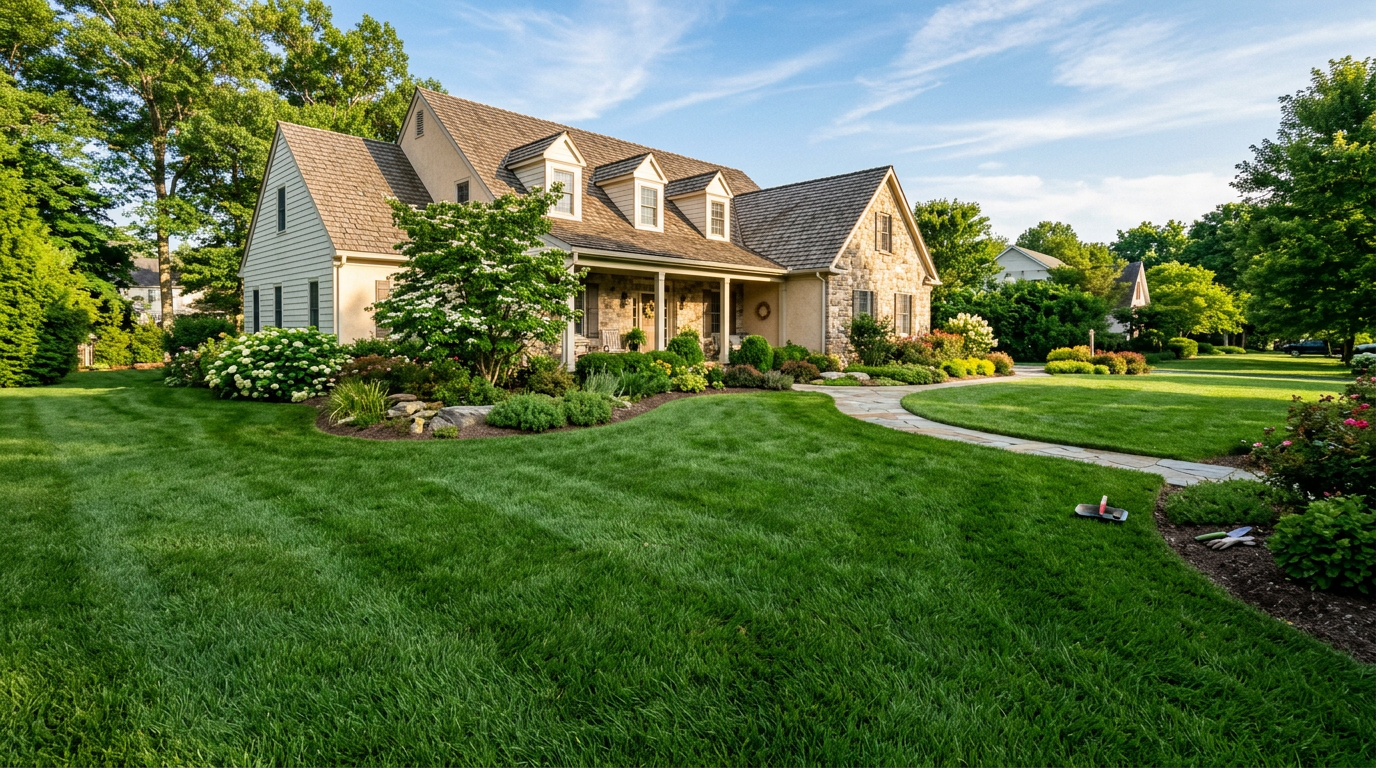
Let's be blunt. Growing the perfect lawn in Delaware is a special kind of challenge. You’re not quite in the North, not quite in the South. You’re in the dreaded "transition zone," a place where landscapers go to test their mettle. The summers get hot and humid enough to stress cool-season grasses, and the winters are cold enough to kill off most warm-season grasses. It's the worst of both worlds, and your lawn pays the price.
But don't despair and pave it all over. We've seeded, managed, and fixed countless lawns in fussy climates just like Delaware's. The secret isn't a miracle product; it's choosing the right player for the game. Get the grass type right, and you're 90% of the way to a yard that looks great from Memorial Day in Rehoboth to Christmas in Wilmington.
Understanding Delaware's Tricky Lawn Climate
To win the war, you need to know the battlefield. Delaware sits primarily in USDA Hardiness Zones 7a and 7b. This means the average minimum winter temperature hovers between 0°F and 10°F. What that simple number doesn't tell you is the summer story: brutal humidity and stretches of 90°F+ days, especially south of the C&D Canal.
This is why Delaware is the quintessential transition zone. Here’s the breakdown:
- Cool-Season Grasses: (Fescue, Bluegrass, Ryegrass). They love the spring and fall in Delaware but can get stressed, go dormant, or even die during a hot, dry summer.
- Warm-Season Grasses: (Zoysia, Bermuda). They thrive in the summer heat but go completely dormant and turn a straw-brown color from the first frost until late spring. That means a brown lawn for at least half the year.
For 99% of homeowners in Delaware, the answer is a cool-season grass, or more accurately, a blend of cool-season grasses. You just need the right ones that have been bred to handle summer stress.
The Best All-Around Grass for Delaware: Turf-Type Tall Fescue
If you only remember one grass type from this article, make it this one. Modern Turf-Type Tall Fescue (TTTF) is the undisputed champion for Delaware lawns. Forget the old, wide-bladed Kentucky 31 that your grandpa used. Today's TTTF varieties are darker, finer, and significantly more resilient.
Why it's #1 for Delaware:
- Deep Roots: This is its superpower. TTTF can grow roots 2-3 feet deep, allowing it to find water long after other grasses have given up. This is your best defense against summer drought.
- Heat & Drought Tolerance: While still a cool-season grass, it handles Delaware's summer heat and humidity far better than Bluegrass or Ryegrass.
- Good Traffic Tolerance: It's a bunch-type grass, but it holds up well to kids, pets, and backyard parties.
- Shade Tolerance: It's more shade tolerant than Kentucky Bluegrass, though not as much as Fine Fescues.
Our Pick: We've had consistent, outstanding results with Jonathan Green Black Beauty Ultra. It's a mix of elite TTTF varieties, Kentucky Bluegrass, and Perennial Ryegrass that's basically tailor-made for the transition zone. A 25 lb. bag costs around $120-$140 and covers about 6,250 sq. ft. for a new lawn. It's not dirt cheap, but it's a genius investment in your yard.
The Supporting Cast: Other Great Grasses for Delaware Lawns
While Tall Fescue is the star, a great lawn is often an ensemble performance. Blending other grasses in with your fescue can enhance color, texture, and resilience.
2. Kentucky Bluegrass (KBG)
KBG is the grass you picture when you think of a pristine, dark green, carpet-like lawn. It has a beautiful color and a secret weapon: rhizomes. These are underground stems that allow the grass to spread and fill in bare spots on its own.
- Pros: Elite color, self-repairing, great cold tolerance.
- Cons: High maintenance. It needs more water and fertilizer than Fescue and is more susceptible to disease in the summer heat. It's also slow to establish from seed. How long does grass seed take to grow? KBG takes the longest.
- Delaware Strategy: Don't plant a 100% KBG lawn. Use it as part of a blend, typically 10-15% KBG to 85-90% Tall Fescue. You get the color and repair benefits of KBG with the durable backbone of the Fescue.
3. Perennial Ryegrass
Perennial Ryegrass is the sprinter of the grass world. It germinates and establishes faster than any other cool-season grass.
- Pros: Germinates in 5-7 days, provides quick green color, fine texture.
- Cons: It's the least heat and drought-tolerant of the bunch. It's also a bunch grass and won't spread.
- Delaware Strategy: Use it to your advantage for a quick fix. It's excellent for overseeding in the fall to thicken up a thin lawn, and its inclusion in seed mixes (like the Black Beauty Ultra) helps provide quick ground cover to protect the slower-growing Fescue and KBG seedlings. It's a key part of any good overseeding strategy.
4. Fine Fescues (Creeping Red, Chewings)
Got big, shady oak trees in your North Wilmington yard? Meet your new best friend. Fine Fescues (a group that includes Creeping Red, Chewings, and Hard Fescue) are the champions of low light.
- Pros: The a href="/cluster/best-grass-seed-for-shade">best grass seed for shade</a>, period. Low fertilizer needs, very fine texture.
- Cons: Don't tolerate heat, drought, or foot traffic well at all. They get stressed and check out in full sun.
- Delaware Strategy: Use a dedicated shade mix containing these grasses only for the shady parts of your lawn. Don't use them for the sunny areas.
5. Zoysia Grass
We have to mention the warm-season option. Zoysia can and does grow in Delaware, particularly in the sun-drenched coastal communities of Sussex County. It creates an incredibly thick, dense turf that chokes out weeds and is fantastic in the summer.
- Pros: Loves heat, extremely drought-tolerant once established, very dense.
- Cons: It's a deal-breaker for most. It will be straw-brown from about October through mid-May. The contrast with your neighbors' evergreen fescue lawns is stark. It's also very slow to establish and a monster to remove if you change your mind.
- Delaware Strategy: Only consider this if you live in southern Delaware, have full sun, and you are mentally prepared for a brown lawn for more than half the year.
Planting Your Delaware Lawn for Success
Timing is everything. For cool-season grasses in Delaware, the absolute best time to plant seed is late summer to early fall (mid-August to mid-October). The soil is still warm from the summer, which speeds up germination, but the cooling air temperatures reduce stress on the young seedlings. Weed competition is also much lower than in the spring.
- Test Your Soil: Before you do anything, get a soil test. The University of Delaware's Cooperative Extension offers affordable soil testing that will tell you your pH and what nutrients you're missing. Delaware soils can be acidic, and you'll likely need to apply lime.
- Prep the Area: Kill any existing weeds. Rake up debris. For an existing lawn, dethatching can help ensure seed-to-soil contact.
- Spread the Seed & Starter Fertilizer: Use a broadcast spreader for even coverage. Follow the rates on the seed bag. A starter fertilizer is high in phosphorus and crucial for root development.
- Water, Water, Water: This is the most critical step. The new seed must be kept consistently moist until it germinates. This might mean light watering 2-3 times a day for 15-20 minutes. Find the best time to water grass to minimize evaporation.
- First Mow: Once the new grass is about 3-4 inches tall, it's time for its first trim. Make sure your mower blade is sharp! Check our guide on how often to mow your lawn for tips on maintaining your new turf.
Where to Buy Grass Seed in Delaware
While big box stores like Lowe's in Dover or Home Depot in Newark have seed, we recommend looking for quality. For top-tier seeds like the Jonathan Green blends, you'll have better luck at local garden centers and landscape suppliers.
- Northern Delaware: Check out Gateway Garden Center (Hockessin) or Old Country Gardens (Wilmington).
- Central/Southern Delaware: Places like Wharton Landscape Supplies (Rehoboth Beach) or East Coast Garden Center (Millsboro) often carry higher-quality seed and can offer localized advice. Don't be afraid to call ahead and ask if they carry specific Turf-Type Tall Fescue cultivars.
According to the University of Delaware's own climate data, average summer high temperatures across the state have been trending upward, with July and August highs frequently sitting between 85-88°F. This multi-degree increase over historical averages is why modern, heat-tolerant Turf-Type Tall Fescue has become essential for a green lawn, as older grass varieties simply can't cope with the prolonged thermal stress. (Source: udel.edu, Delaware's Climate)
Choosing the right grass for Delaware is about playing the percentages. And the overwhelming favorite, the smart money bet, is a high-quality blend dominated by Turf-Type Tall Fescue. It gives you the best chance of having a lawn you can be proud of without a constant, losing battle against Mother Nature.
Frequently asked
What is the best low-maintenance grass for Delaware?+
Turf-Type Tall Fescue is the best choice for a low-maintenance lawn in Delaware. Its deep root system makes it relatively drought-tolerant once established, and it requires less frequent fertilization than Kentucky Bluegrass. A Fescue lawn is the closest you'll get to a 'set it and forget it' lawn in the transition zone.
Can you grow Bermuda grass in Delaware?+
Technically, yes, but we strongly advise against it. Bermuda grass is a warm-season grass that will be dormant and brown for more than half the year in Delaware's climate. It is also extremely aggressive and can easily invade flower beds, making it a liability for most residential lawns.
When is the best time to plant grass seed in Delaware?+
The ideal time to plant cool-season grass seed in Delaware is from mid-August to mid-October. The warm soil promotes quick germination, while the cooling air temperatures reduce stress on new seedlings. This window gives the grass time to establish before winter.
How do I fix patchy spots in my Delaware lawn?+
Use a good quality seed blend, like a Tall Fescue/KBG mix, to [overseed a lawn](/cluster/how-to-overseed-a-lawn) in the early fall. Rake the patchy area to loosen the soil, apply the seed and some starter fertilizer, and keep it consistently moist until the new grass is established.
Is Kentucky 31 a good grass for Delaware?+
No. Kentucky 31 (K-31) is an old, pasture-type tall fescue with a wide blade and light green color. While it is tough, modern Turf-Type Tall Fescue (TTTF) varieties offer much better color, a finer texture, and superior disease and drought resistance. Always choose a TTTF blend over K-31.