
The 5 Best Grass Types for Delaware Lawns (2024 Guide)
Don't gamble on your Delaware lawn. We're cutting through the noise to give you the straight dirt on the best grass types that actually thrive in the First State, from Wilmington to Rehoboth.
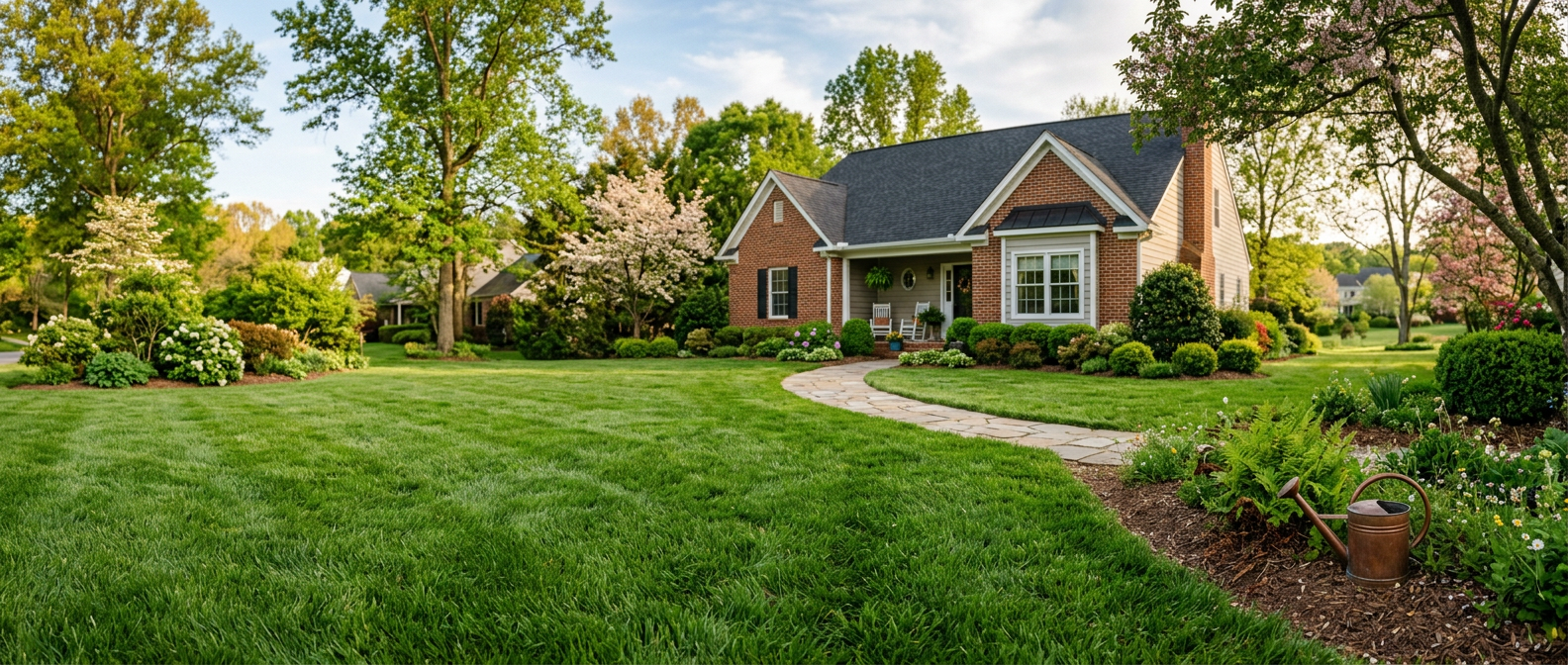
Let's be real: growing a great lawn in Delaware can feel like a losing battle. You're stuck in the infamous 'transition zone,' a brutal proving ground for grass. Our summers get hot and humid enough to scorch northern grasses, while our winters are cold enough to kill off southern ones. It’s the worst of both worlds, and it’s why your neighbor’s lawn looks amazing in May and like scorched earth by August.
But we're here to tell you it's not impossible. You just have to stop fighting the climate and start working with it. Choosing the right grass seed is 90% of the battle. We're cutting through the marketing fluff to give you the no-nonsense guide to the best grass types for a thriving Delaware lawn, whether you're in the rolling hills of New Castle County or the sandy soil near the Sussex beaches.
Understanding Delaware's Climate: The Transition Zone Challenge
Before we pick a winner, you need to understand the battlefield. Delaware is smack in the middle of the transition zone. This means it’s a constant tug-of-war between weather systems. We get the muggy, 87°F summer days that cool-season grasses hate, and the 20°F winter nights that warm-season grasses can't survive.
This is why you can't just throw down the same seed they use in New England or Florida and expect success. You need grasses that are tough, adaptable, and bred for this specific kind of fight. For 99% of Delaware homeowners, this means focusing on cool-season grasses that have been specifically developed for better heat and drought tolerance. Forget warm-season grasses like Bermuda unless you're okay with a brown lawn for more than half the year. The goal is to choose a grass that looks good from March through November, not just June and July.
1. Tall Fescue: The Delaware Workhorse
If you could only choose one grass for your Delaware lawn, this would be it. Turf-Type Tall Fescue (TTTF) is the undisputed champion of the transition zone. We recommend it constantly because it just works.
Modern TTTF varieties have been bred to have deep root systems, some reaching 2-3 feet down. This is their superpower. It allows them to access water deep in the soil long after other grasses have given up during a July dry spell. They have a wider blade than Kentucky Bluegrass, but what you lose in delicate texture, you gain tenfold in durability.
Pros:
- Excellent Heat & Drought Tolerance: The best of any cool-season grass.
- Good Disease Resistance: Less prone to common issues like brown patch, especially compared to ryegrass.
- Low Maintenance: Requires less water and fertilizer than KBG.
- Good Traffic Tolerance: Stands up well to kids, pets, and backyard parties.
Cons:
- Bunch-Forming: It doesn't self-repair. If you get a bare spot, you need to reseed it. This is why dense seeding is critical.
Recommended Product: We've seen fantastic results with blends like Jonathan Green Black Beauty Ultra. A 7 lb bag runs about $45 and covers up to 2,800 sq. ft. for overseeding. It’s a mix of Tall Fescue, Kentucky Bluegrass, and Perennial Ryegrass, giving you the best of all worlds.
2. Kentucky Bluegrass (KBG): The Beauty Queen
Kentucky Bluegrass is the grass you see on golf course fairways and luxury home commercials. It has a beautiful, fine texture and a rich, dark green color. Its biggest advantage is its ability to spread via underground stems called rhizomes. This means it self-repairs, filling in small bare spots on its own.
So why isn't it #1 for Delaware? It's a bit of a diva. KBG has a shallow root system, making it thirsty and vulnerable to summer heat and drought stress. To keep it looking good in a Delaware summer, you’ll be watering and fertilizing more often. It’s also slower to establish from seed.
Pros:
- Elite Color & Texture: The best-looking cool-season grass, hands down.
- Self-Repairing: Fills in damaged areas over time.
- Excellent Cold Tolerance: Handles Delaware winters with ease.
Cons:
- High Maintenance: Needs more water, fertilizer, and sun.
- Poor Heat & Drought Tolerance: Will go dormant (turn brown) quickly in a dry summer without irrigation.
Pro Tip for Delaware: Don't plant a 100% KBG lawn. Use it in a blend, where it can make up 10-20% of the mix. The Tall Fescue acts as the durable base, and the KBG fills in the gaps, creating a dense, beautiful, and more resilient turf.
3. Perennial Ryegrass: The Fast Fixer
Perennial Ryegrass is the sprinter of the grass world. If you need green grass fast, this is your tool. It can germinate in as little as 5-7 days under ideal conditions. This makes it an essential component for overseeding and repairing bare patches.
However, it's not a great long-term solution on its own in Delaware. It has the poorest heat tolerance of the three main cool-season grasses and is susceptible to diseases in our humid summers. Think of it as a valuable role player, not the star of the team. It shines in the fall and spring, providing quick green-up.
Pros:
- Fastest Germination: Provides quick ground cover to prevent erosion and weeds.
- Good Wear Tolerance: Holds up well to traffic initially.
- Fine Texture and Good Color.
Cons:
- Poor Heat and Drought Tolerance: Often the first grass to die off in a Delaware summer.
- Susceptible to Disease: Prone to fungal issues like gray leaf spot.
How to Use It: Buy a bag of high-quality Perennial Ryegrass to have on hand for patching areas. When you're ready for a full-scale renovation, this is your secret weapon. Check out our guide on how to overseed a lawn for the full game plan.
4. Fine Fescues: The Shade All-Stars
Got a lot of mature trees? A north-facing yard? Fine Fescues (a group that includes Creeping Red, Chewings, and Hard Fescue) are your answer. These grasses are the most shade-tolerant of all the cool-season varieties. They also have very low maintenance requirements, needing less water, fertilizer, and mowing than the others.
Their weakness is that they don't do well with heavy foot traffic and can get pushed out by other grasses in full sun. They're not meant for a soccer field, but they are perfect for that part of your yard where nothing else will grow.
Pros:
- Best Shade Tolerance: The go-to choice for low-light areas.
- Very Low Maintenance: Drought tolerant and requires little fertilizer.
- Fine, Wispy Texture.
Cons:
- Poor Traffic Tolerance: Not for high-use areas.
- Can struggle in hot, wet conditions.
Local Tip: Many older homes in Wilmington and Newark have yards with massive, old trees. A dedicated shady mix, like Scotts Turf Builder Dense Shade Mix, which costs about $25 for a 3 lb bag, can be a lawn-saver. If you only have a few shady spots, it's a great tool to have. Check out our deep dive on the best grass seed for shade for more options.
5. Zoysia Grass: The Warm-Season Exception for Delaware
We said to avoid warm-season grasses, but there's one exception we have to mention: Zoysia. If you live in southern Delaware (think Sussex County) and prize a perfect summer lawn above all else, Zoysia is an option. It is incredibly dense, heat-loving, and drought-proof once established. It feels like a plush carpet underfoot.
The massive trade-off? It turns a dormant, straw-brown color from the first hard frost in October until mid-May. You will have a brown lawn for at least six months of the year. It's also very slow to establish from seed and expensive to install as sod. You might find Zoysia sod from suppliers on the Delmarva Peninsula for around $8 to $12 per 10-sq-ft roll. It's a specific choice for a specific homeowner.
A Lawn Care Calendar That Works for Delaware
Having the right grass is only half the job. You need the right playbook. According to the University of Delaware Cooperative Extension, the ideal time to seed cool-season grasses in Delaware is from August 15th to September 30th. This window allows the seed to germinate and establish strong roots before the winter frost, giving it a massive head start over spring-seeded lawns that have to compete with summer heat and crabgrass. (Source: https://www.udel.edu/academics/colleges/canr/cooperative-extension/fact-sheets/lawn-renovation-and-overseeding/)
Here's a simplified calendar for your cool-season Delaware lawn:
-
Spring (March-May): Apply a crabgrass pre-emergent in early spring (when forsythia bushes bloom). Start mowing as needed. Now is a good time to dethatch your lawn if the thatch layer is over a half-inch thick. Avoid seeding if you can.
-
Summer (June-August): Raise your mower height to 3.5-4 inches to shade the soil and conserve water. Water deeply but infrequently; check out our guide on the best time to water grass. Monitor for fungal diseases and signs of grubs, which can cause patches of yellowing grass.
-
Fall (September-November): This is the money season. Core aerate in early September. Overseed with a high-quality Tall Fescue blend. Apply a starter fertilizer with your seed, and another winterizer fertilizer around Thanksgiving. This is the single most important time for lawn care in Delaware.
-
Winter (December-February): The lawn is dormant. Keep traffic to a minimum, and enjoy your break. We've certainly earned it.
Frequently asked
What is the absolute best grass for Delaware?+
Tall Fescue is the best all-around choice for most Delaware lawns. Its deep roots make it tolerant to the state's hot, humid summers and potential droughts. It's relatively low-maintenance and durable, making it a reliable performer from New Castle County down to Sussex County.
When should I plant grass seed in Delaware?+
The best time to plant cool-season grass seed in Delaware is late summer to early fall, typically from mid-August through September. The warm soil encourages quick germination, and the cooler air temperatures reduce stress on new seedlings, allowing them to establish fully before winter.
Is Kentucky Bluegrass good for Delaware?+
Yes, Kentucky Bluegrass can do well in Delaware, especially in northern counties, creating a beautiful lawn. However, it requires more sun, water, and fertilizer than Tall Fescue and is less tolerant of summer heat. It is almost always best used in a blend with Fescue.
Can I grow Bermuda grass in Delaware?+
While possible in southern Delaware, warm-season grasses like Bermuda or Zoysia are generally not recommended. They will turn brown and go dormant for a long period, from the first fall frost until late spring, leaving your lawn looking dead for nearly half the year.
What's the most common lawn mistake in Delaware?+
The most common mistake is seeding in the spring. Spring-seeded grass doesn't have time to mature its root system before Delaware's summer heat and humidity arrive, leading to die-off and weed competition. Fall seeding is always the superior strategy for long-term success in the transition zone.