
The 5 Best Grass Types for Delaware Lawns (2024 Guide)
Stop guessing which grass seed to throw down. We're cutting through the noise to give you the definitive guide to the best turfgrass for your Delaware yard, from Wilmington to Rehoboth.
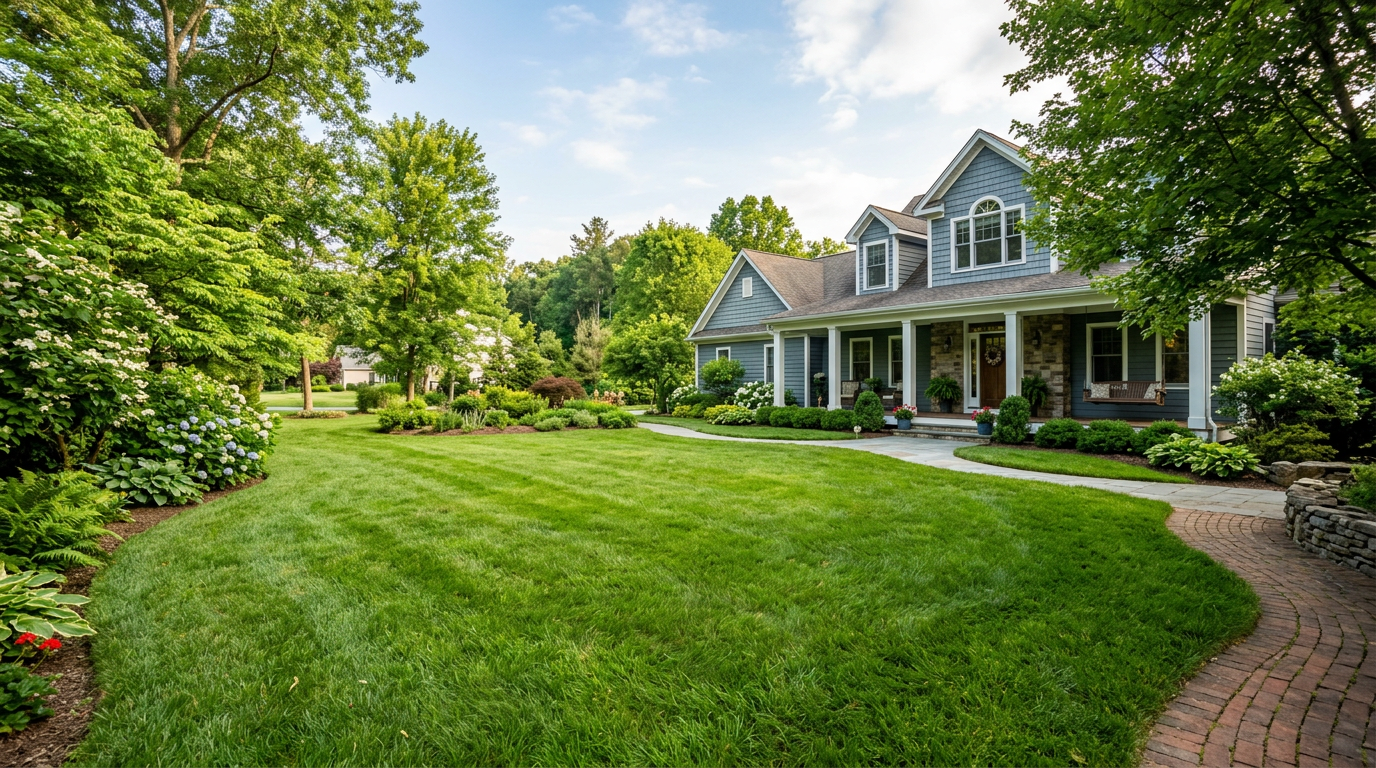
Let's get straight to it. Choosing the right grass for your Delaware lawn can feel like a trick question. Your buddy in Pennsylvania swears by Kentucky Bluegrass, while a cousin in Maryland is trying out Zoysia. Who's right? Here in the First State, we get the 'best' of both worlds: hot, humid summers that stress out cool-season grasses and cold winters that kill off many warm-season grasses. Welcome to the infamous transition zone.
But this isn't a reason to give up and pave the yard. It just means you have to be smarter than the weather. We've seeded, sodded, and fixed enough lawns from New Castle County down to Sussex to know exactly what works, what survives, and what actually looks good without demanding your entire weekend. This is our definitive guide to the best grass for Delaware.
Understanding Delaware's Climate: The Transition Zone Problem
Before you rip open a bag of seed, you need to understand why Delaware is a special case. Most of the state falls into USDA Hardiness Zone 7a and 7b. This is the heart of the "transition zone" of turfgrass management. It's a strip of the country where it's not consistently cold enough for cool-season grasses to thrive year-round, and not consistently hot enough for warm-season grasses to avoid a very long, brown winter dormancy.
This means the lush, green Kentucky Bluegrass that looks amazing in May can get scorched and go dormant by August in Kent County. On the flip side, a Zoysia lawn that loves the July heat on the coast might be brown from October all the way through May, which most people find unacceptable.
So, what's a Delawarean to do? You lean into the best cool-season grasses that have been bred for better heat and drought tolerance. That's the secret. You aren't going to grow the same lawn as someone in Vermont or Florida. You're going to grow a tough, resilient Delaware lawn.
The 5 Best Grass Types for Delaware Lawns
There is no single "best" grass, only the best grass for your yard's specific conditions (sun, shade, traffic, and how much work you want to do). Here are the top contenders we recommend for Delaware.
1. Turf-Type Tall Fescue (The Workhorse)
If we had to pick one champion for the entire state, this is it. Modern Turf-Type Tall Fescues (TTTF) are light-years ahead of the old, clumpy Kentucky 31 variety your grandpa used. These new cultivars have a darker green color, a finer leaf blade, and, most importantly, a deep root system that can stretch 2-3 feet down into the soil. This makes them the most heat- and drought-tolerant of all the cool-season grasses.
- Pros: Great wear tolerance (good for kids and dogs), best heat/drought tolerance of the cool-season bunch, good shade tolerance, relatively low maintenance.
- Cons: It’s a bunch-type grass, so it doesn't self-repair. Damaged spots need to be reseeded. Overseeding every other fall is a good practice.
- Best For: All-purpose lawns across the entire state. The go-to choice for most situations.
- Recommended Cultivar: Look for blends like Jonathan Green Black Beauty Ultra or Pennington The Rebels Tall Fescue Blend. A 25 lb. bag will run you about $90-$120 at a local Home Depot in Wilmington or Lowe's in Dover and covers around 6,000 sq. ft. for overseeding.
2. Kentucky Bluegrass (The Beauty Queen)
Kentucky Bluegrass (KBG) is what most people picture when they think of a perfect, emerald-green, carpet-like lawn. It has a beautiful fine texture and the ability to spread and self-repair via underground stems called rhizomes. This means it can fill in minor bare spots on its own.
- Pros: Excellent color and density, self-repairing, feels great underfoot.
- Cons: Needs at least 6 hours of direct sun, requires more water and fertilizer than fescues, slow to germinate, susceptible to disease in hot, humid weather.
- Best For: High-visibility front yards with full sun and owners who don't mind a bit more maintenance. It's often mixed with Tall Fescue to get the best of both worlds—the durability of fescue with the repair-ability of KBG.
3. Fine Fescues (The Shade Masters)
This isn't one grass, but a family of them: Creeping Red, Chewings, and Hard Fescue. If you have large shade trees or a yard that just doesn't get much sun, Fine Fescues are your best friend. They have the best shade tolerance of any cool-season grass and have very low needs for water and fertilizer.
- Pros: Unmatched shade tolerance, low maintenance, very fine texture, good drought tolerance.
- Cons: Does not tolerate foot traffic well, can get matted and diseased if overwatered or over-fertilized.
- Best For: Shady, low-traffic areas. Perfect for that part of the yard under the big oak tree where nothing else will grow. If you're struggling with shade, check out our full guide to the best grass seed for shade.
4. Perennial Ryegrass (The Sprinter)
Perennial Ryegrass is the speed demon of the grass world. It germinates in as little as 5-7 days, making it fantastic for getting quick ground cover. It has a beautiful dark green color and good traffic tolerance. However, it's not as heat-tolerant as Tall Fescue and doesn't spread like KBG.
- Pros: Germinates very quickly, great for overseeding, good wear resistance.
- Cons: It's a bunch grass (doesn't spread), less heat and drought tolerant than Tall Fescue, can struggle in the peak of a Delaware summer.
- Best For: Primarily used as a component in a seed mix (usually with KBG and Fescue) to provide quick cover while the other grasses establish. Excellent for fall overseeding to thicken up a tired lawn.
5. Zoysia Grass (The Southern Contender)
For those in the southern half of Delaware, especially in coastal Sussex County, Zoysia is a viable warm-season option. When it's active in the summer, it forms an incredibly dense, light-green carpet that chokes out weeds and feels amazing to walk on. It loves heat and is very drought-tolerant.
- Pros: Thrives in heat, excellent drought and salt tolerance, very dense mat crowds out weeds.
- Cons: Goes dormant and turns a straw-brown color after the first frost (usually October) and doesn't green up until late spring (May). It's a very long dormancy period. Spreads aggressively and can invade flower beds.
- Best For: Southern Delaware homeowners, especially near the coast, who want a low-maintenance summer lawn and don't mind a long brown season.
What a Delaware Lawn Really Costs: A Numbers Breakdown
The average lot size in Delaware is around a quarter-acre, but once you subtract the house, driveway, and patios, the actual lawn area is often closer to 8,000-10,000 sq. ft. For an average 8,000 sq. ft. lawn, seeding yourself will cost between $0.10 and $0.20 per square foot in materials. That's a total of $800 to $1,600 for high-quality seed, starter fertilizer, and maybe some topsoil. If you opt for sod from a regional supplier like Tuckahoe Turf Farms (which delivers to DE), you're looking at $0.60-$0.90 per square foot for the sod itself, plus installation fees, often totaling $5,000 or more for the same area. The upfront cost of seeding is dramatically lower, provided you're willing to do the work. (Source: HomeAdvisor landscaping cost data, adjusted for 2024 prices).
We Tried It: Our Delaware Grass Seed Experience
A few years back, we were helping with a lawn renovation project on a classic suburban lot in Newark. The yard was a mess of patchy, unidentified grasses and a ton of weeds. The soil was a classic Delaware mix—part clay, part sand. After a soil test from the University of Delaware (a service we strongly recommend for just $20), we knew we needed to adjust the pH and add organic matter.
We decided on a premium Tall Fescue and Kentucky Bluegrass blend. We did the hard work in early September: scalped the old lawn, dethatched, core aerated, and spread a thin layer of compost. We put down the seed, raked it in, and followed a strict watering schedule. The first two weeks were nerve-wracking. Then, the green haze appeared. By mid-October, we had a solid carpet of new grass. The following summer was hot, and some spots did get stressed and started to look a bit off-color. We ran into some classic summer patch fungus, which is a common reason for why grass turns yellow in our humid climate. But because of the deep roots of the Tall Fescue, the lawn bounced back beautifully in the fall. It proved that with the right seed choice and proper prep, you can absolutely have a killer lawn in northern Delaware.
Planting Your Delaware Lawn: Best Practices & Timing
You can buy the most expensive seed in the world, but if you just toss it out at the wrong time, you've wasted your money. Timing is everything in the transition zone.
The undisputed best time to seed a lawn in Delaware is from late August through September.
Why? The soil is still warm from the summer, which encourages fast germination. But the air is getting cooler, which is a relief for young cool-season grass seedlings. More importantly, weed pressure (especially from crabgrass) is dramatically reduced. The young grass has the entire fall and the following spring to mature before it has to face the stress of a hot Delaware summer.
Spring seeding (April to mid-May) is a distant second choice. You're racing against the clock. As soon as temperatures rise in June, crabgrass will explode and can easily out-compete your new grass. If you absolutely must seed in the spring, be prepared to water diligently and manage weeds carefully.
Regardless of timing, your steps are:
- Test Your Soil: Use the University of Delaware's Soil Testing Program.
- Kill Existing Weeds: Address any major weed problems first.
- Prepare the Ground: Dethatch and/or core aerate to ensure good seed-to-soil contact.
- Seed and Fertilize: Use a broadcast spreader for even coverage and apply a starter fertilizer.
- Water: Keep the top inch of soil consistently moist until the grass is established. This isn't a suggestion; it's a requirement. Check our guide on the best time to water grass for a pro schedule.
Frequently asked
What's the easiest grass to grow in Delaware?+
For low-maintenance and shady areas, Fine Fescues are the easiest. For overall durability and a balance of good looks and resilience across most of Delaware, Turf-Type Tall Fescue is the best and most forgiving choice for homeowners.
When is the absolute best time to plant grass seed in Delaware?+
The best time to plant cool-season grass seed in Delaware is late summer to early fall, specifically from late August through the end of September. This allows the grass to establish in cool weather with less weed competition before summer stress.
Is Bermuda grass a good choice for a Delaware lawn?+
Generally, no. Bermuda grass is very aggressive and its long dormancy period (often October to May) results in a brown lawn for more than half the year. While it can survive, Turf-Type Tall Fescue offers a much better year-round appearance.
Can I have a green lawn year-round in Delaware?+
Yes. By choosing a cool-season grass like Tall Fescue, Kentucky Bluegrass, or a blend of the two, your lawn will stay green throughout Delaware's typically mild winters. Warm-season grasses like Zoysia will go dormant and turn brown in the winter.
What is the best grass for shady areas in Delaware?+
Fine Fescues (a group including Creeping Red, Chewings, and Hard Fescue) are the champions for shade. They require less sun, water, and fertilizer than other grasses. Turf-Type Tall Fescue also has good shade tolerance, better than Kentucky Bluegrass.