
Best Grass for Delaware: 5 Expert-Approved Lawn Types
Stop guessing what grass to plant in your Delaware lawn. We break down the top cool-season and warm-season grasses that can handle the First State's unique climate.
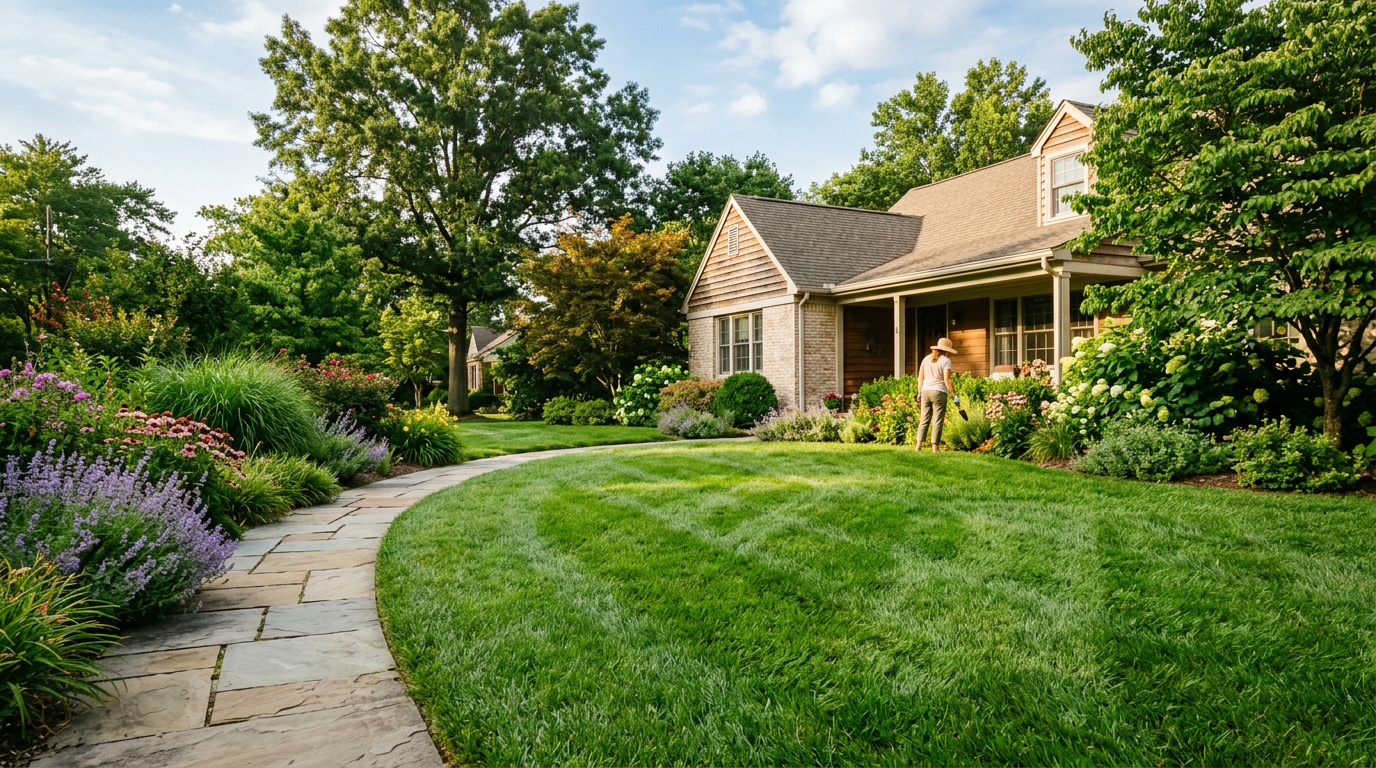
What's the Best Grass for a Delaware Lawn?
Let's get straight to it. You live in Delaware, and you want a great-looking lawn. But one July week feels like you're in Florida, and one January week feels like you're in Maine. Your lawn is confused, and frankly, you probably are too. You're in what turf experts call the 'transition zone,' the awkward middle child of American climates. This makes picking the right grass type absolutely critical.
Don't worry. We're here to cut through the noise. We've seeded and managed lawns up and down the I-95 corridor and know exactly what thrives from Wilmington to Rehoboth Beach. The single best grass type for the vast majority of Delaware is Turf-Type Tall Fescue. But that's not the whole story. Let's dig into the details and find the perfect seed for your specific piece of the First State.
Why Picking Grass for Delaware Is So Tricky
Delaware sits squarely in USDA Hardiness Zones 7a and 7b. This means it's too hot in the summer for many cool-season grasses (like those popular in New England) and too cold in the winter for most warm-season grasses (like the ones in Florida) to stay green year-round. This is the classic transition zone problem.
Here's what you're up against:
- Hot, Humid Summers: This weather puts immense stress on cool-season grasses, making them susceptible to disease and turning them yellow. Why is my grass turning yellow? It's often the summer heat.
- Cold Winters: Frigid temperatures and potential snow cover will kill off or cause damage to unprepared warm-season grasses.
- Variable Soil: Delaware has everything from the heavy clay of New Castle County to the sandy soils of Sussex County. Your soil type will heavily influence your choice.
This is why you can't just grab any bag of seed off the shelf at a big-box store and expect miracles. You need a grass—or, more likely, a blend of grasses—selected specifically for this challenging environment.
Our #1 Pick for Delaware: Turf-Type Tall Fescue (TTTF)
If you only choose one grass, make it a high-quality Turf-Type Tall Fescue. This isn't the coarse, ugly 'Kentucky 31' pasture grass your grandpa used. Modern TTTF varieties have been bred to have a darker green color, a finer texture, and, most importantly, incredible resilience.
Why it works for Delaware:
- Deep Roots: TTTF can grow roots 2-3 feet deep, sometimes deeper. This lets it tap into moisture far below the surface, giving it fantastic heat and drought tolerance. It's the key to surviving a Delaware July and August.
- Heat Tolerance: While still a cool-season grass, it handles heat far better than its cousins, Kentucky Bluegrass or Perennial Ryegrass.
- Disease Resistance: Modern cultivars have good resistance to common turf diseases like brown patch, which thrive in our humid summers.
We've seeded countless lawns in the transition zone, and trust us, a good TTTF blend is the workhorse you need for a Delaware yard. Look for named varieties known for performance. For example, a bag of Jonathan Green Black Beauty Ultra Grass Seed (about $190 for a 50 lb bag) is a fantastic, widely available mix that is predominantly TTTF, with some Kentucky Bluegrass and Perennial Ryegrass for good measure. You can find it at local garden centers like Concord Pet or larger hardware stores.
The Gold Standard Blend for Delaware: TTTF + Kentucky Bluegrass
While TTTF is great on its own, its one weakness is that it's a 'bunch-type' grass. It grows in clumps and doesn't spread sideways to fill in bare spots. To solve this, we blend it with a little bit of Kentucky Bluegrass (KBG).
KBG is the beautiful, dark green, self-repairing grass you see on sports fields. It spreads via underground stems called rhizomes, constantly filling in thin areas. The problem? It has shallow roots and hates extreme heat. By mixing 85-90% TTTF with 10-15% KBG, you get the best of both worlds:
- The TTTF provides the durable, heat-tolerant foundation.
- The KBG acts as a living, self-repairing carpet, filling in gaps and creating a dense, luxurious feel.
This is the premium mix for a showcase lawn in Hockessin or a durable family play space in Middletown. When you're ready to plant, make sure to read up on how to overseed a lawn to get the best results.
For Quick Germination & Overseeding: Perennial Ryegrass
Perennial Ryegrass is the sprinter of the grass world. It germinates incredibly fast (sometimes in just 5-7 days), which is great for getting cover quickly and preventing weeds. It also has a lovely dark green color.
However, it has poor heat and drought tolerance compared to TTTF. That's why we almost never recommend a 100% Perennial Ryegrass lawn in Delaware. Instead, we use it as a 'booster' in our seed mixes, typically no more than 10% of the blend.
Its roles in a Delaware lawn:
- Nurse Grass: It pops up fast, providing shade and stability for the slower-germinating TTTF and KBG seeds.
- Quick Repair: It's excellent for fall overseeding to fill in summer damage.
- Winter Color: It stays green longer into the cold than other grasses.
Most premium 'sun and shade' mixes you'll find already include a bit of ryegrass for exactly these reasons.
Got Shade in Delaware? You Need Fine Fescues
If your property in North Wilmington or near the Brandywine has big, beautiful, mature trees, TTTF and KBG will struggle. They need at least 4-6 hours of direct sun. For shady lawns, your best friend is the Fine Fescue family.
This group includes Creeping Red Fescue, Chewings Fescue, and Hard Fescue. They are the most shade-tolerant cool-season grasses available. Check out our full guide to the best grass seed for shade.
Why Fine Fescues work for shady Delaware spots:
- Low Light Champions: They can thrive on as little as 2-4 hours of dappled sunlight per day.
- Low Input: They require less water and fertilizer than TTTF or KBG.
- Drought Tolerant: Once established, they're surprisingly good at handling dry shade.
Look for a dedicated shade mix, like Seed Super Store's SS1002 Shade Mixture (around $10/lb), which is a high-quality blend of different Fine Fescue varieties. Be aware: Fine Fescues don't tolerate heavy foot traffic well, so they're best for areas of the yard that are more for looking at than playing on.
The Southern Delaware Option: Zoysia Grass
If you live south of the C&D Canal, particularly in the beach communities of Sussex County, you can consider one warm-season grass: Zoysia. Zoysia is a tough, dense, spreading grass that loves summer heat. It forms a thick carpet that chokes out weeds and feels great underfoot.
According to the University of Delaware, zoysiagrass can perform well in the southern part of the state, but it comes with a major trade-off. Delaware's Nutrient-Compliant Fertilizer Applicators must pass an exam on turf management, and a key piece of that is understanding the different seasonal needs of warm-season vs. cool-season grasses. (Source: Delaware.gov, Nutrient Management Program)
The big catch with Zoysia in Delaware: It's a warm-season grass. This means it will be gorgeously green and vibrant from June through September, but it will go completely dormant and turn a straw-brown color from the first hard frost (usually October/November) until late spring (May). You'll have a brown lawn for roughly half the year.
Some people don't mind the seasonal color change, valuing the low maintenance and performance during the summer. But if you want green grass for Thanksgiving and Christmas, Zoysia is not for you. We generally recommend sticking with TTTF blends even in Southern Delaware for year-round color and consistency. Making sure you know the best time to water grass is key to keeping any of these types healthy through the summer.
Frequently asked
When is the best time to plant grass seed in Delaware?+
The absolute best time to plant cool-season grass seed (Fescue, Bluegrass, Ryegrass) in Delaware is from late August to early October. The soil is warm, but the air is cooling, which is perfect for germination without the stress of summer heat. Spring planting is a distant second best.
What grass grows best in sandy soil in Delaware?+
Turf-Type Tall Fescue is an excellent choice for sandy soil due to its incredibly deep root system, which can find water and nutrients deep down. Fine Fescues also handle sandy soil well, especially in shady areas where moisture retention is better.
Can I plant Zoysia grass in northern Delaware?+
We strongly advise against it. While it might survive, the growing season in New Castle County is too short for Zoysia to truly thrive. It will stay brown for more than half the year (October to late May) and will be more susceptible to winter damage.
What's the best no-maintenance grass for Delaware?+
There's no truly 'no-maintenance' grass. However, a Fine Fescue blend comes closest. It requires less water, less fertilizer, and less frequent mowing than other types, especially if you have a shady property. Just be aware it doesn't handle heavy traffic well.
How do I know what kind of grass I currently have?+
Look at the leaf blades. A wide blade (1/4 inch) is likely Tall Fescue. A fine blade with a 'boat-shaped' tip is Kentucky Bluegrass. A glossy underside points to Perennial Ryegrass. You can also pull up a clump a take it to a local garden center or your county's UD Cooperative Extension office for identification.