
The 5 Best Grass Types for Delaware Lawns (2024 Guide)
Stop guessing what grass to plant in your Delaware yard. We're cutting through the noise to give you the straight facts on the best grass types that can handle the First State's tricky climate.
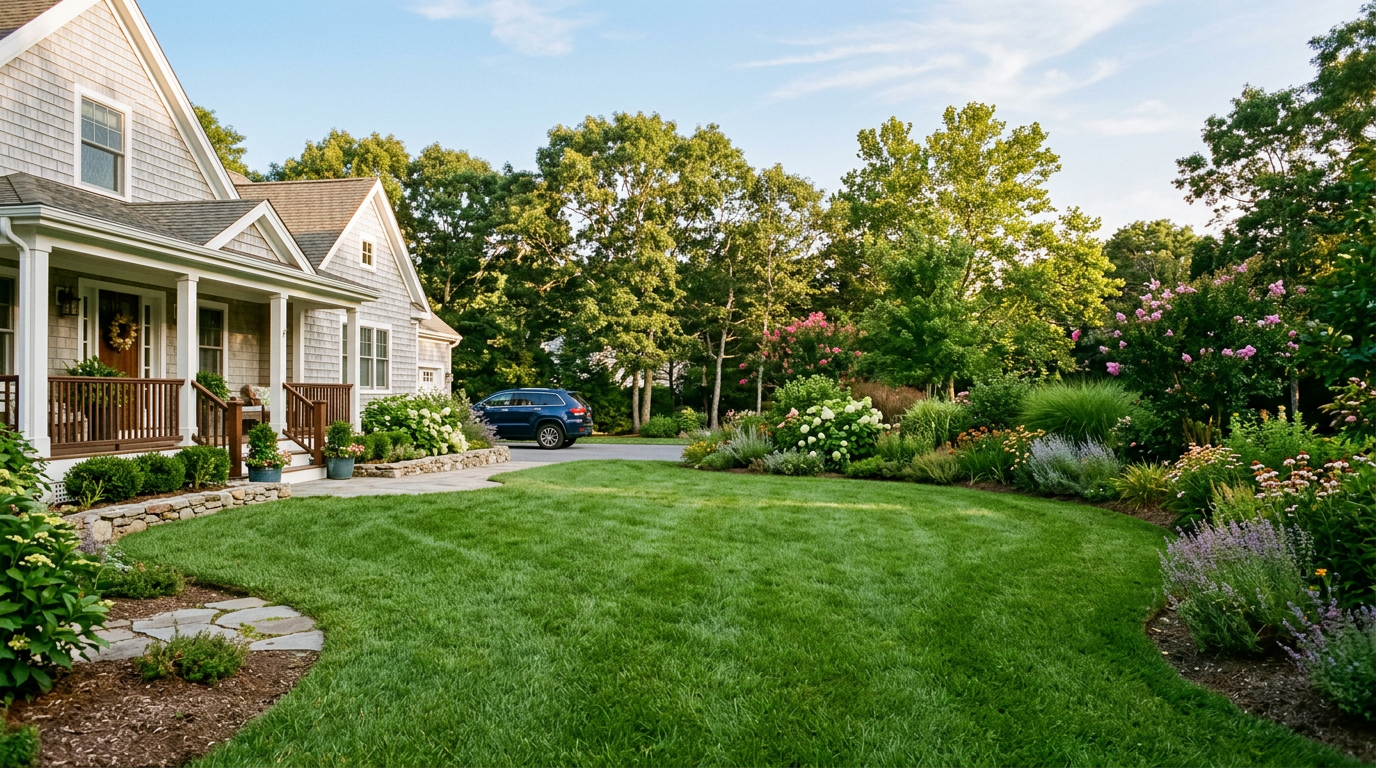
Let's get one thing straight: growing a great lawn in Delaware can feel like a full-time job with a boss you can't stand. One minute it's scorching hot and humid, the next you're staring down a winter freeze. This isn't Florida or Alaska; you're in the infamous 'transition zone,' a horticultural battleground where both northern and southern grasses struggle. But don't despair and pave over your property just yet.
We're here to give you the real, no-nonsense guide to choosing the best grass for your Delaware home, whether you're in the rolling hills of New Castle County or down by the beaches in Sussex. Forget the marketing fluff. These are the workhorse grasses that will give you the best shot at a green, durable lawn.
Understanding Delaware's Tricky Transition Zone Climate
Before you buy a single seed, you need to understand why Delaware is so particular. The USDA Plant Hardiness map places most of Delaware in zones 7a and 7b. This means our summers are hot enough to seriously stress or kill cool-season grasses (like they have up in New England), but our winters are too cold for most warm-season grasses (like the ones in Alabama) to reliably survive.
You're fighting a war on two fronts. High summer humidity also creates a paradise for fungal diseases. This is why your neighbor's perfect-looking lawn in May can turn into a patchy, brown mess by August. Picking the right grass type isn't just a suggestion here; it's the foundation of your entire lawn care strategy.
The Best Cool-Season Grasses for Your Delaware Lawn
For 95% of Delaware homeowners, a cool-season grass is the right call. These grasses have their main growth spurts in the spring and fall and go semi-dormant in the peak of summer heat. Here are the top players.
1. Turf-Type Tall Fescue (TTTF)
This isn't your grandad's pasture grass. Modern Turf-Type Tall Fescues are the undisputed champions of the transition zone. They've been bred to have a finer texture and darker color than older varieties while retaining their legendary toughness.
- Pros: The deepest root system of any cool-season grass, giving it superior drought and heat tolerance. It's relatively low-maintenance, has good disease resistance, and stands up well to foot traffic from kids and pets.
- Cons: It's a bunch-forming grass, meaning it doesn't spread and self-repair. If you get a bare patch, you'll need to reseed it. Overseeding in the fall is pretty much required to keep a TTTF lawn thick.
- Our Take: This should be the backbone of almost every lawn in Delaware. It's the most reliable and forgiving choice.
2. Kentucky Bluegrass (KBG)
When you picture a perfect, lush, dark-green lawn, you're probably thinking of Kentucky Bluegrass. It's the sod of choice for high-end sports fields and golf course fairways for a reason.
- Pros: Spreads via underground stems called rhizomes, allowing it to self-repair bare spots. It has that premium 'barefoot' feel and beautiful color.
- Cons: It's a bit of a diva. KBG has a shallow root system, making it thirsty and less tolerant of heat and drought. It's also slow to germinate and establish. Yellowing patches are common in summer stress.
- Our Take: Rarely should you plant a 100% KBG lawn in Delaware. Its strength lies in being part of a blend, where it can fill in the gaps between Tall Fescue bunches.
3. Perennial Ryegrass
Perennial Ryegrass is the sprinter of the grass world. It's known for one thing above all else: speed.
- Pros: Germinates incredibly fast (5-7 days), making it fantastic for quickly establishing a lawn or overseeding for rapid results. It has good wear tolerance and a fine texture.
- Cons: It's the least tolerant of heat, drought, and cold of the three. It's a short-term solution that often struggles to survive a tough Delaware summer or winter.
- Our Take: Use it like a pinch hitter. A small percentage (5-10%) in a seed mix provides quick green-up while the more durable Fescue and Bluegrass take their time getting established.
The Ultimate Solution for Delaware: A High-Quality Blend
Here at Dirt Cheap Genius, we've seen it all, and for a place like Delaware, a monoculture lawn is a recipe for heartache. The smartest move is to plant a high-quality seed blend that leverages the strengths of each grass type.
A classic, battle-tested Delaware blend looks something like this:
- 80-90% Turf-Type Tall Fescue: The durable, drought-tolerant base.
- 5-10% Kentucky Bluegrass: The self-repairing filler that adds density and color.
- 5-10% Perennial Ryegrass (Optional): The catalyst for quick germination.
This mix gives you a lawn that can handle a bit of everything. The Fescue handles the heat, the KBG fills in minor damage, and the Ryegrass gives you fast results. If you have shady spots, look for a blend that incorporates Fine Fescues, which are the best grass seeds for shade.
Product Picks:
- Jonathan Green Black Beauty Ultra ($105 for a 25 lb bag): A very popular and effective blend of TTTF, KBG, and Perennial Ryegrass that performs exceptionally well in our region.
- Your Local Garden Center: Don't sleep on local suppliers like Gateway Garden Center in Hockessin or Old Country Gardens in Wilmington. They often carry custom seed blends specifically formulated for Delaware's soils and microclimates.
What About Warm-Season Grass in Southern Delaware?
If you live in a coastal area of Sussex County, you might be tempted by warm-season grasses. There's really only one contender worth discussing: Zoysia Grass.
- Pros: Once established, Zoysia is incredibly drought-tolerant, heat-loving, and forms a dense carpet that chokes out weeds. It requires less water and mowing than cool-season grasses in the summer.
- Cons: The dealbreaker for most. Zoysia turns a very noticeable straw-brown color after the first hard frost and doesn't green up again until late spring. You will have a brown lawn from roughly October/November through May. It's also extremely slow to establish from seed and is best installed as expensive sod (expect to pay $0.70 to $1.20 per square foot).
Our Verdict: Zoysia is a viable, low-maintenance summer lawn for southern Delaware, but you must be willing to accept a brown yard for more than half the year.
Your Delaware Lawn Establishment and Maintenance Calendar
Planting the right seed is only half the battle. You need to manage it correctly through the seasons.
Late Summer / Early Fall (The MVP Season): This is the single best time to plant new grass seed in Delaware. The soil is warm from the summer, but the cooling air temperatures reduce stress on new seedlings. Weed pressure is lower than in the spring.
- Action Items: Core aerate and dethatch if your soil is compacted or you have over 1/2 inch of thatch. Overseed with a high-quality blend. Fertilize with a starter or fall-specific fertilizer.
Spring:
- Action Items: Mow as needed, following the one-third rule. Learn how often you should mow your lawn to keep it healthy. Apply a pre-emergent herbicide around mid-March to mid-April to prevent crabgrass. Do a soil test to check your pH.
Summer:
- Action Items: Raise your mower height to 3.5-4 inches. Taller grass shades the soil, keeping it cooler and conserving water. Water deeply but infrequently. The best time to water your grass is between 4 AM and 9 AM. Monitor for brown patch fungus.
According to the Delaware Department of Agriculture, a significant portion of the state's soil is Sassafras sandy loam, which is well-drained but often acidic. This makes soil testing crucial. A simple home test kit from a hardware store costs about $15, but for a truly detailed analysis, you can send a sample to the University of Delaware Soil Testing Program for about $20. Getting your soil pH into the 6.2 to 7.0 range is absolutely critical for cool-season grasses to absorb nutrients properly.
Choosing the right grass for Delaware is about playing the odds. By picking a blend dominated by Turf-Type Tall Fescue, you're not hoping for a miracle; you're using a proven strategy to build a resilient, beautiful lawn that can take what the transition zone throws at it.
Frequently asked
What is the single best grass seed for Delaware?+
There isn't one single 'best' seed. The best option for Delaware is a high-quality seed blend, typically containing 80-90% Turf-Type Tall Fescue for durability and 10-20% Kentucky Bluegrass for density and repair. This combination provides the best defense against Delaware's varied climate.
When should I plant grass seed in Delaware?+
The ideal time to plant grass seed in Delaware is from late August to early October. The soil is still warm, which promotes germination, while the cooling air temperatures reduce stress on young grass. Seeding in the spring is a distant second-best option.
Can I grow Bermuda grass in Delaware?+
It is not recommended. While Bermuda is heat-tolerant, most varieties are not cold-hardy enough to survive a typical Delaware winter. It would likely die off, leaving you with large dead patches. Stick with cool-season grasses for better year-round results.
What is the most low-maintenance grass for Delaware?+
A Turf-Type Tall Fescue dominant lawn is the most low-maintenance option for Delaware. Its deep root system makes it more drought-tolerant than other cool-season grasses, and it has good natural resistance to common diseases, reducing the need for fungicide and excess watering.
How do I fix bare spots in my Delaware lawn?+
For fescue-dominant lawns, you must reseed bare spots as the grass doesn't spread on its own. The best time is early fall. Rake the spot to loosen the soil, apply a high-quality seed blend, cover lightly with topsoil or compost, and keep it consistently moist until it's established.