
The 5 Best Grass Types for Lawns in Delaware
Delaware sits in the tough 'transition zone,' but don't worry. We'll show you the exact grass types that will not just survive, but thrive in your First State yard.
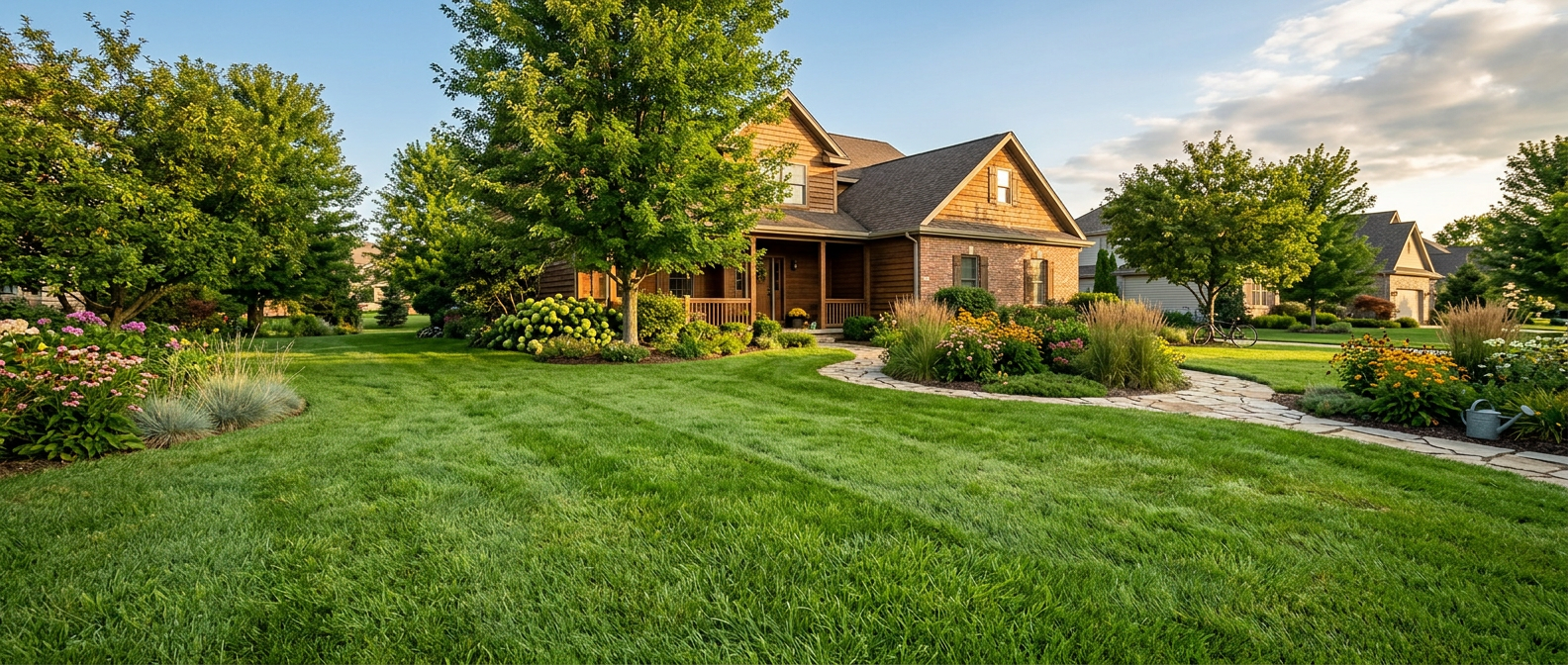
Let's get straight to it. Growing a great lawn in Delaware can feel like a losing battle. One minute it's freezing in Newark, the next it's a humid swamp down in Seaford. Your lawn gets cooked in the summer and frozen in the winter. What gives? Welcome to the 'transition zone,' the awkward middle child of American climate regions. But here's the good news: getting a durable, green lawn here isn't about luck or some secret chemical sauce. It's about choosing the correct grass from the start. We're going to break down the best grass for Delaware so you can stop wasting time and money on seed that's destined to fail.
Understanding Delaware’s Tricky Transition Zone Climate
Before you rip open a single bag of seed, you need to understand the battlefield. Delaware is firmly planted in the USDA's transition zone. This means it's a place where cool-season grasses from the north get stressed by our hot, humid summers, and warm-season grasses from the south can't handle our cold winters.
Think about it: summers often see temps soar into the high 80s and 90s with oppressive humidity, especially in July and August. This is prime time for fungal diseases like brown patch and massive stress on cool-season grasses. Then, winter comes, with average lows dipping into the 20s, which is enough to kill off many popular southern grasses like St. Augustine.
The key to success in Delaware is picking a grass—or, more accurately, a blend of grasses—that can take a punch from both sides. You need something that can handle the heat without immediately dying and survive the winter without leaving you with a dirt patch until May. This is why a one-size-fits-all approach from a national big-box store often fails. Your lawn in Wilmington has different needs than a lawn in Myrtle Beach or Boston, and it's time we started acting like it.
1. Tall Fescue: The Workhorse for Delaware Lawns
If you're looking for one grass to be the backbone of your Delaware lawn, it's Turf-Type Tall Fescue (TTTF). Don't confuse this with the old, wide-bladed Kentucky 31 Fescue you see in pastures. Modern TTTF cultivars have a much finer blade and a beautiful dark green color.
Why it works for Delaware:
- Deep Roots: This is Tall Fescue's superpower. Its root system can dig down 2-3 feet, tapping into moisture deep in the soil. This makes it significantly more drought and heat-tolerant than any other cool-season grass. When your neighbor's bluegrass is turning into crispy, yellow straw in August, your fescue will still be green.
- Good Disease Resistance: It generally holds up well against common Delaware lawn diseases like brown patch and dollar spot.
- Shade Tolerance: While not a miracle worker, it handles moderate shade better than Kentucky Bluegrass or Ryegrass.
The downside: Tall Fescue is a 'bunch-type' grass. It grows in clumps and doesn't spread to fill in bare spots. This means you absolutely must overseed your lawn every fall to keep it thick and prevent it from looking clumpy over time. It's a non-negotiable part of the deal.
Our Pick: Look for blends containing top-performing cultivars like 'Titanium 2LS,' 'Rhambler SRP,' or '4th Millennium SRP.' Brands like Jonathan Green's Black Beauty are widely available and contain excellent varieties of TTTF.
2. Kentucky Bluegrass (KBG): The Premium Player
Kentucky Bluegrass is what most people picture when they think of a perfect, dark green, dense lawn. It's the sod of choice for sports fields and high-end homes for a reason.
Why it works for Delaware:
- Self-Repairing: Unlike Tall Fescue, KBG spreads via underground stems called rhizomes. This allows it to actively fill in bare patches and recover from damage, creating that signature thick, carpet-like feel.
- Excellent Color and Density: It has a rich, deep blue-green color that's considered the gold standard.
- Cold Hardy: It has zero problems with Delaware winters.
The downside: KBG is higher maintenance. It has a shallower root system than Tall Fescue, so it needs more water during summer droughts. It's also more susceptible to heat stress and disease pressure in the peak of a Delaware summer. It’s a thoroughbred that needs pampering.
Our advice: We almost never recommend a 100% Kentucky Bluegrass lawn in Delaware. It’s too risky. Instead, use it as a key component in a seed mix.
3. Perennial Ryegrass: The Fast Starter
Perennial Ryegrass is the sprinter of the grass world. It germinates incredibly fast, often sprouting in just 5-7 days. This makes it an essential part of any seeding project for quick stabilization and color.
Why it works for Delaware:
- Rapid Germination: When you're overseeding, a little Perennial Rye in the mix gives you that quick green-up, which is psychologically rewarding and helps crowd out weeds.
- Good Traffic Tolerance: It holds up well to foot traffic, making it great for areas where kids and pets play.
The downside: Perennial Ryegrass has the lowest heat and drought tolerance of the three main cool-season grasses. It will be the first to check out during a hot, dry spell. Like Tall Fescue, it’s also a bunch-type grass.
Our advice: Use Perennial Ryegrass sparingly, typically making up no more than 10-15% of a seed blend. It's there to provide rapid cover while the more durable Fescue and KBG establish themselves.
4. Fine Fescues: The Shade Specialists
If your yard is dominated by mature oak and maple trees, Fine Fescues are your best friend. This category includes varieties like Creeping Red, Chewings, and Hard Fescue. They are the absolute champions of low-light conditions.
Why it works for Delaware:
- Superior Shade Tolerance: This is their number one trait. They will grow in shady spots where other grasses fail miserably. If you need help picking, check out our guide to the best grass seed for shade.
- Low Maintenance: They require less fertilizer and less water than the other cool-season grasses.
The downside: Fine Fescues don't love full, blazing sun and can get stressed in high-traffic areas. They also tend to be a bit wispy and don't form the same robust turf as Tall Fescue or KBG.
Our advice: Use a dedicated shade mix heavy in Fine Fescues for those specific problem areas under trees or along the north side of your house. Don't expect it to perform like Tall Fescue in full sun.
Building the Perfect Grass Seed Mix for Delaware
Alright, so here's the secret: for 90% of Delaware lawns, a monoculture is a bad idea. The winning strategy is to use a high-quality seed mix that leverages the strengths of each grass type. This creates a more resilient, adaptable lawn that can handle the state's variable conditions.
Here’s a recipe we recommend for an all-purpose Delaware lawn:
- 80-90% Turf-Type Tall Fescue: This forms the foundation, providing drought tolerance and durability.
- 5-10% Kentucky Bluegrass: This is your filler and repairer, spreading to create density and heal minor damage.
- 5-10% Perennial Ryegrass: This gives you fast germination for quick ground cover and erosion control.
We've personally seen fantastic results with mixes like this. A great off-the-shelf option is Jonathan Green Black Beauty Ultra. A 7-pound bag costs around $45-$55 at local ACE Hardware stores or big-box retailers like Home Depot in Wilmington. It combines all three types in a proven ratio and uses elite cultivars.
Your Basic Delaware Lawn Care Calendar
Having the right grass is half the battle. The other half is timing. Here’s a stripped-down calendar:
- Spring (March-May): Focus on prevention. Apply a crabgrass pre-emergent (like Scotts Turf Builder Halts Crabgrass Preventer) around mid-April when soil temps hit 55 degrees. Spot treat for broadleaf weeds like dandelions. Read our guide on how to get rid of dandelions if they're taking over.
- Summer (June-August): Survival mode. Raise your mower blade to 3.5-4 inches. Taller grass shades the soil, keeps it cooler, and conserves water. Water deeply but infrequently. Knowing the best time to water grass (early morning) is crucial to avoid fungal disease. You might need to check our guide on how often to mow your lawn as growth slows in the heat.
- Fall (September-November): CHAMPIONSHIP SEASON. This is when you do all the important work for cool-season lawns. Late August to late September is the absolute best time to seed in Delaware. The soil is warm, but the air is cool. If your lawn is compacted, aerate and dethatch first. Then, overseed and apply a starter fertilizer. This is the work that pays off all next year.
- Winter (December-February): Rest. The lawn is dormant. Just keep it clean of leaves and debris.
Costs and Local Delaware Regulations
Budgeting is key. Quality grass seed isn't cheap, but it's an investment that pays off. Expect to pay $6-$9 per pound for a high-quality TTTF blend. A 50 lb. bag from a professional supplier like SiteOne Landscape Supply in New Castle or Bear might cost you $220-$280, which is enough to overseed about 10,000 sq. ft. Sod is a much higher initial cost, often running $0.60-$0.90 per square foot for fescue, plus installation.
Lastly, you need to be aware of Delaware's Nutrient Management Law. As stated by the University of Delaware Cooperative Extension, which is a fantastic local resource, ideal soil pH for turfgrass is 6.0-7.0, and our soils are often acidic, requiring lime. (Source: https://www.udel.edu/academics/colleges/canr/cooperative-extension/fact-sheets/liming-delaware-soils/). The law primarily restricts when and how much nitrogen and phosphorus you can apply, especially on frozen ground or near waterways, to protect the Delaware Bay and Chesapeake Bay watersheds. You can't apply phosphorus without a soil test proving a deficiency. This isn't just a suggestion; it's the law. Be a good steward of the land.
Ultimately, a beautiful Delaware lawn is completely achievable. It just requires a smart approach: pick a Tall Fescue-based mix, do your heavy lifting in the fall, and pay attention to what your specific yard is telling you. You got this.
Frequently asked
What is the single best grass for Delaware?+
Turf-type Tall Fescue is the most recommended all-around grass for Delaware. Its deep root system gives it superior drought and heat tolerance compared to other cool-season grasses, making it ideal for the state's hot summers and a great choice for a durable lawn.
Can I grow Bermuda grass in Delaware?+
While Bermuda grass can technically survive in southern Delaware, it's generally not recommended. As a warm-season grass, it will be dormant and brown for over half the year (roughly October to May), which most homeowners find visually unappealing in a home lawn setting.
When should I plant grass seed in Delaware?+
The absolute best time to plant cool-season grass seed in Delaware is late summer to early fall, from late August through September. The combination of warm soil temperatures and cooling air creates the perfect environment for quick germination and strong seedling establishment before winter.
How much does sod cost in Delaware?+
Sod prices in Delaware generally range from $0.60 to $0.90 per square foot for a Tall Fescue blend. Specialty grasses like Zoysia can be more expensive, from $0.80 to $1.20 per square foot. These prices typically do not include delivery or installation costs.
Do I need to fertilize my lawn in Delaware?+
Yes, but it's important to follow Delaware's Nutrient Management Law. Fertilize primarily in the fall to promote root growth. A soil test is recommended and legally required before applying phosphorus. Avoid fertilizing in mid-summer or on frozen ground to protect local waterways.