
Best Grass for Delaware: 5 Top Picks for First State Lawns
Don't guess what grass to plant in your Delaware yard. We break down the top 5 grass types that can handle the First State's humid summers and chilly winters.
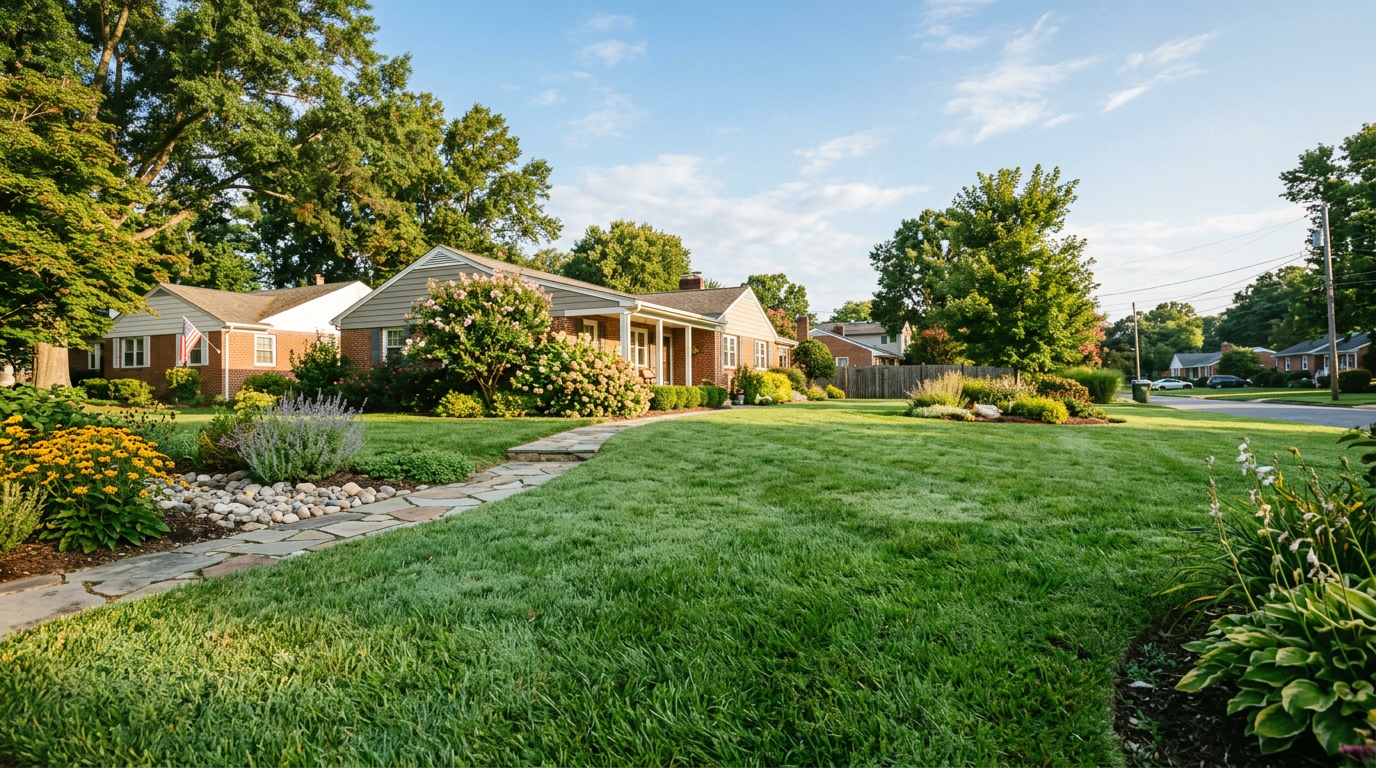
Let's be direct. Getting a great lawn in Delaware is a special kind of challenge. You've got humid, sticky summers that can cook delicate grasses and winters cold enough to send others into a permanent dirt nap. Welcome to the 'transition zone,' the Bermuda Triangle of American lawn care. If you've been throwing down random bags of seed from the big box store and hoping for the best, you're probably looking at a patchy, weed-filled mess by August.
We're here to stop the madness. Choosing the right grass seed isn't about luck; it's about understanding the unique climate of Delaware and picking a grass type that's built for it. We're going to break down the absolute best grass types for your Delaware lawn, from Wilmington to Rehoboth Beach, so you can spend less time fighting your yard and more time enjoying it.
Understanding Delaware's "Transition Zone" Climate
Before we name names, you have to understand the battlefield. The entire state of Delaware sits squarely in what lawn experts call the transition zone (and what we call a giant pain). This strip of the country, which includes USDA Hardiness Zones 7a and 7b, is where the northern cool-season climate gets into a fistfight with the southern warm-season climate.
What does this mean for your lawn?
- Hot Summers: Typical cool-season grasses, like the fine fescues and ryegrasses that thrive up in New England, get stressed and can go dormant or die off during Delaware's hot, humid summers.
- Cold Winters: Warm-season grasses, like the Bermuda and St. Augustine that dominate the Deep South, can't handle Delaware's freezing winter temperatures and often fail to survive.
So, the 'best' grass for Delaware needs to be a tough-as-nails contender that can tolerate both extremes. It needs deep roots to find water in July and enough cold hardiness to survive a January freeze. Thankfully, modern turf science has given us some excellent options.
The 5 Best Grass Types for Delaware Lawns
Alright, let's get to the main event. After years of testing, seeding, and observing lawns across the state, we've zeroed in on the species that consistently perform best in Delaware. Here are our top picks.
1. Tall Fescue (The All-Around Champion)
If you want one answer, this is it. Turf-Type Tall Fescue (TTTF) is the undisputed king of Delaware lawns, and for good reason. It's the most well-adapted, versatile, and forgiving choice for the average homeowner.
- Why it Works: Modern TTTF varieties have incredibly deep root systems—we're talking 2-3 feet deep—that make them the most drought- and heat-tolerant of all the cool-season grasses. They also have a decent tolerance for shade and foot traffic.
- Best For: Just about everyone. Full sun, partial shade, high-traffic areas. It's the workhorse of Delaware grass.
- Our Pick: Forget generic seed. Invest in a top-tier cultivar. We love Jonathan Green's Black Beauty Ultra Grass Seed. It combines several elite Tall Fescue varieties with a touch of Kentucky Bluegrass and Perennial Ryegrass for the perfect mix. A 25 lb bag will run you about $140 and covers up to 5,000 sq. ft. for overseeding.
2. Kentucky Bluegrass (As a Teammate)
Kentucky Bluegrass (KBG) is the grass everyone pictures: a lush, dark green, dense carpet. It has the fantastic ability to spread and self-repair via underground stems called rhizomes. The problem? On its own, it hates Delaware's summer heat.
- Why it Works (in a mix): When you mix a small amount of KBG (10-20%) with a majority of Tall Fescue (80-90%), you get the best of both worlds. The Fescue provides the durable foundation, and the KBG fills in any bare spots and adds that premium color and density.
- Best For: Homeowners who want a top-of-the-line, self-repairing lawn and are willing to put in a bit more effort with watering and feeding. Most premium 'Tall Fescue' seeds are actually this kind of mix.
- Our Pick: If you're buying a pre-made mix, Scotts Turf Builder Tall Fescue Mix contains a blend of fescue and KBG that establishes well. A 20 lb bag costs around $90.
3. Perennial Ryegrass (The Sprinter)
Perennial Ryegrass is the speed demon of the grass world. It germinates faster than any other cool-season grass, often showing sprouts in just 5-7 days. However, it's not the most durable for the long haul.
- Why it Works: Its speed makes it invaluable for specific jobs. It's fantastic for temporary winter coverage on a sports field or for getting quick green-up in the fall. It's a key component in many seed mixes for this reason. A lawn of 100% Perennial Ryegrass won't hold up well long-term in Delaware, as it has weaker heat and drought tolerance than Tall Fescue.
- Best For: Overseeding a thin lawn in the fall for a rapid boost in thickness. It's also great for patching bare spots quickly before winter sets in. Check out this guide if you're wondering how long grass seed takes to grow.
4. Fine Fescues (The Shade Specialist)
Do you have big, mature trees that cast a lot of shade? Are you tired of watching grass struggle and fade away in those darker corners of your yard? Fine Fescues are your secret weapon.
- Why it Works: This group of grasses (including Creeping Red, Chewings, and Hard Fescue) has the best shade tolerance of any common lawn grass. They also have lower needs for water and fertilizer than Tall Fescue or KBG. They don't love wet soil or heavy foot traffic, though.
- Best For: Dry, shady areas under trees or on the north side of your house where nothing else will grow. They are a core component of any quality grass seed for shade.
- Our Pick: Pennington Smart Seed Dense Shade Mix is a widely available and effective blend. It contains several Fine Fescue varieties that work together to create a carpet in low-light conditions. A 7 lb bag costs about $35.
5. Zoysia Grass (The Warm-Season Contender)
Here's our curveball. Zoysia is a warm-season grass, but it's the most cold-tolerant of its class, allowing it to survive in Delaware, especially in Sussex and Kent counties. In the summer, it's a thing of beauty: a dense, light-green, carpet-like turf that chokes out weeds and feels amazing underfoot.
- The Big Catch: Zoysia goes dormant and turns a very distinct tan/brown color at the first hard frost in the fall and doesn't green up again until mid-to-late May. You will have a brown lawn for at least half the year. In our experience, this is a deal-breaker for most Delaware homeowners.
- Best For: Full-sun, high-traffic areas, especially near the coast where sandy soil and salt spray are concerns. If you have a beach house in Rehoboth or Bethany and only use it in the summer, Zoysia is a fantastic, low-maintenance choice.
- Establishment: Zoysia is almost always established from sod or plugs, not seed. It's a significant upfront investment. A 500 sq. ft. pallet of Zoysia sod can cost $500-$700 before delivery and installation.
A Note on Delaware's Soil and Regulations
Choosing the right seed is only half the battle. You need to prep the soil and follow local rules. According to the University of Delaware Cooperative Extension, proper soil pH for turfgrass in our state should be between 6.0 and 6.5. Many Delaware soils are naturally more acidic, requiring lime applications to raise the pH and improve nutrient availability for the grass. A single soil test costs just $20 through UD's program and is the single best investment you can make for your lawn. (Source: https://www.udel.edu/academics/colleges/canr/cooperative-extension/environmental-stewardship/soil-testing/)
Furthermore, be aware of Delaware's Nutrient Management Law. This law restricts when you can apply nitrogen fertilizer (not between December 7 and February 15) and prohibits applying phosphorus without a soil test that proves a deficiency. This is to protect the Chesapeake and Delaware Bays. You can find these soil tests and advice at local garden centers like Frank's Lawn & Garden Center in Wilmington or East Coast Garden Center in Millsboro.
Your Lawn Care Calendar for Delaware
Timing is everything. Here’s a no-nonsense schedule for managing your cool-season Delaware lawn.
- Spring (March-May): Your lawn is waking up. Apply a pre-emergent herbicide (with fertilizer, if your soil test allows) in early April to prevent crabgrass. Start mowing as needed. Spot-treat broadleaf weeds like dandelions. If you see them popping up, here's how to get rid of dandelions for good.
- Summer (June-August): Defend your turf. Raise your mower blade to 3.5-4 inches to shade the soil and conserve water. Water deeply but infrequently—once or twice a week for a long duration is better than a short sprinkle every day. Find out the absolute best time to water grass to minimize evaporation. Watch for signs of fungal disease like brown patch.
- Fall (September-November): This is PRIME TIME for lawn care in Delaware. The period from late August to early October is the single best window to seed, aerate, and fertilize. The soil is warm, the air is cool, and weed pressure is low. This is when you'll perform your most important tasks like core aeration and overseeding to build a thick, resilient lawn for the following year.
- Winter (December-February): Let it rest. The lawn is dormant. Keep foot traffic to a minimum, especially when the ground is frozen, to avoid damaging the grass crowns. Rake up any leaves or debris to prevent snow mold.
Ultimately, the best grass for your Delaware lawn is Turf-Type Tall Fescue. It offers the best combination of heat tolerance, cold hardiness, and durability for our unique transition zone climate. By pairing this champion seed with smart, timely maintenance practices, you can finally win the war and build a lawn that's the envy of your neighborhood.
Frequently asked
What is the most common grass in Delaware?+
Tall Fescue is the most common and recommended grass for home lawns in Delaware. Its ability to handle the state's hot summers and cold winters, combined with good drought and shade tolerance, makes it the best all-around choice for durability and appearance throughout the year.
Can I grow Bermuda grass in Delaware?+
While Bermuda grass can survive in the hottest parts of southern Delaware, it's generally not recommended. It's very aggressive and will go dormant and turn brown for a long period, from the first frost in fall until late spring, which most homeowners find unappealing.
When should I plant grass seed in Delaware?+
The absolute best time to plant grass seed in Delaware is late summer to early fall, from about August 15th to October 1st. Seeding during this window allows the grass to establish its root system before winter without the extreme heat and weed competition of summer.
What grass stays green year-round in Delaware?+
Cool-season grasses like Tall Fescue, Kentucky Bluegrass, and Perennial Ryegrass will stay green year-round in Delaware, although their growth slows significantly in winter. Warm-season grasses like Zoysia will turn brown and go dormant from the first frost until late spring.